What a Parent Risks Letting a 6-Year-Old Ride
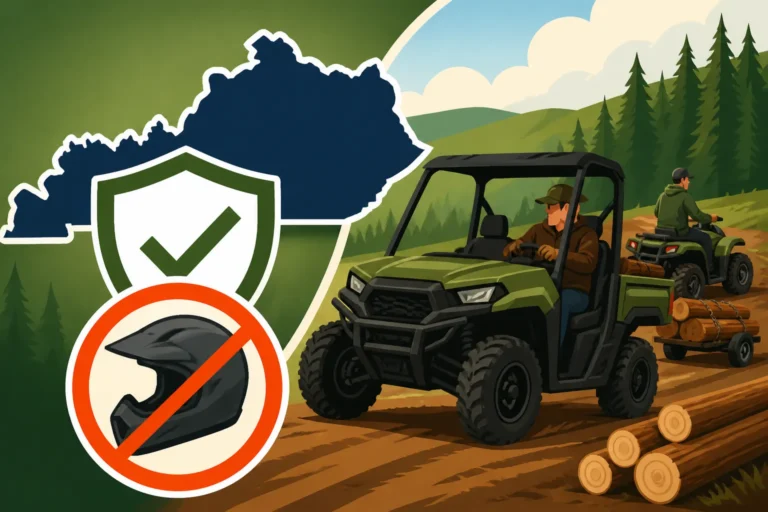
It’s a situation many of us have seen, perhaps even experienced: a proud parent letting their child, sometimes incredibly young, take the handlebars of an ATV. Maybe it’s on the family farm, or a private plot of land, far from public roads. The sight can evoke a mix of nostalgia, admiration, or sometimes, a deep knot of worry. For a six-year-old in Kentucky, however, letting them ride an ATV isn't just a concern for their safety; it carries a significant weight of risk, both physically and legally, that every parent needs to understand deeply before making such a decision. This guide is here to walk you through the stark realities and crucial considerations.
The Stark Reality: Why Six is Too Young in Kentucky (and Everywhere Else)
The temptation to introduce children to the thrill of off-road riding early can be strong. You might have fond memories of your own youth, or you see other families doing it. Perhaps your child is naturally coordinated for their age, or they've been begging to try "just a little bit." But when it comes to a six-year-old and an ATV, no matter how small or seemingly docile the machine, the risks are overwhelmingly against their favor.
The Impulse is Understandable: Family Tradition and the Lure of the Outdoors
For many Kentuckians, riding ATVs and UTVs is more than a hobby; it’s a way of life, woven into the fabric of family traditions and rural living. Kids grow up watching their parents and older siblings tackle trails, haul equipment on the farm, or simply enjoy the freedom of the outdoors on a machine. It's natural for a child to want to emulate their heroes, and for a parent to want to share that experience. You might think, "I'll just let them sit on it, or drive it slowly on flat ground, right next to me." This instinct to share passion and create memories is powerful, but it needs to be tempered with a realistic assessment of a child's capabilities and the inherent dangers of these powerful machines.
The Hard Truth of Physics and Power: ATVs Are Not Toys
Despite their smaller size, youth ATVs are still powerful pieces of machinery, far removed from backyard pedal cars or electric ride-ons. They have engines, suspensions, and a significant amount of weight. A six-year-old child's physical stature, cognitive development, and reaction time are simply not equipped to handle the demands of operating such a vehicle, even at low speeds. Think about the sudden lurch when hitting an unseen rut, the force required to turn the handlebars, or the quick thinking needed to avoid an obstacle. These are complex tasks that require strength, coordination, and judgment that haven't fully developed in a six-year-old. The consequences of underestimating these factors can be severe, leading to rollovers, collisions, or impact injuries that can be life-altering.
Kentucky's Legal Stance: The Manufacturer's Age Label
Kentucky law has a clear, albeit often misunderstood, position on ATV age limits. It doesn't set a blanket minimum age in the same way it might for a driver's license on a public road. Instead, Kentucky defers to a critical piece of information: the manufacturer's age label.
The Manufacturer's Age Label in Kentucky Law
Kentucky Revised Statute (KRS) 189.515, which governs ATV use, specifically refers to the manufacturer's warning label. This means that for any ATV sold, its recommended minimum operating age, as determined by the manufacturer, is the standard. Most youth ATVs are designed for riders 10, 12, or 16 years old, depending on their engine size and features. It's extremely rare to find an ATV, even a youth model, that is rated for a six-year-old. This statute provides a clear guideline, even if your riding is confined to private property. The law effectively adopts the safety standards set by the very companies that design and build these machines. This isn't just a suggestion; it carries legal weight. [The Manufacturer's Age Label in Kentucky Law] is the bedrock of ATV age regulations here.
What the Manufacturer's Age Label Means
The age label isn't just a random number printed on a sticker. It's the result of extensive research, testing, and industry standards (like those from the Specialty Vehicle Institute of America – SVIA) that assess a child's developmental stages in relation to the machine's capabilities. It considers factors such as:
- Physical Strength: Can the child physically turn the handlebars, operate the brakes, and control the throttle effectively?
- Balance and Coordination: Can they shift their weight appropriately to prevent rollovers, especially in turns or over uneven terrain?
- Cognitive Ability: Can they understand and react to hazards, follow instructions, and make quick decisions under pressure?
- Attention Span: Can they maintain focus for the duration of a ride, especially when fatigued?
A six-year-old is generally lacking in several of these critical areas. The label is there to protect them, based on expert evaluation, not to arbitrarily restrict fun. Ignoring it means you're operating outside of these established safety guidelines. Understanding [What the Manufacturer's Age Label Means] is crucial for responsible ownership.
Removing a Label and Breaking the Law
Sometimes, people might be tempted to remove or ignore these warning labels, perhaps believing they're just an unnecessary formality. However, actively altering or disregarding these labels doesn't remove the inherent risks or the legal implications. In fact, if an accident were to occur and it was discovered that the manufacturer's age label was ignored or removed, it could compound the legal consequences for the parent or guardian responsible. [Removing a Label and Breaking the Law] doesn't make a child safer; it only complicates matters. The machine remains designed for an older, more capable rider.
Beyond the Law: Physical and Cognitive Risks
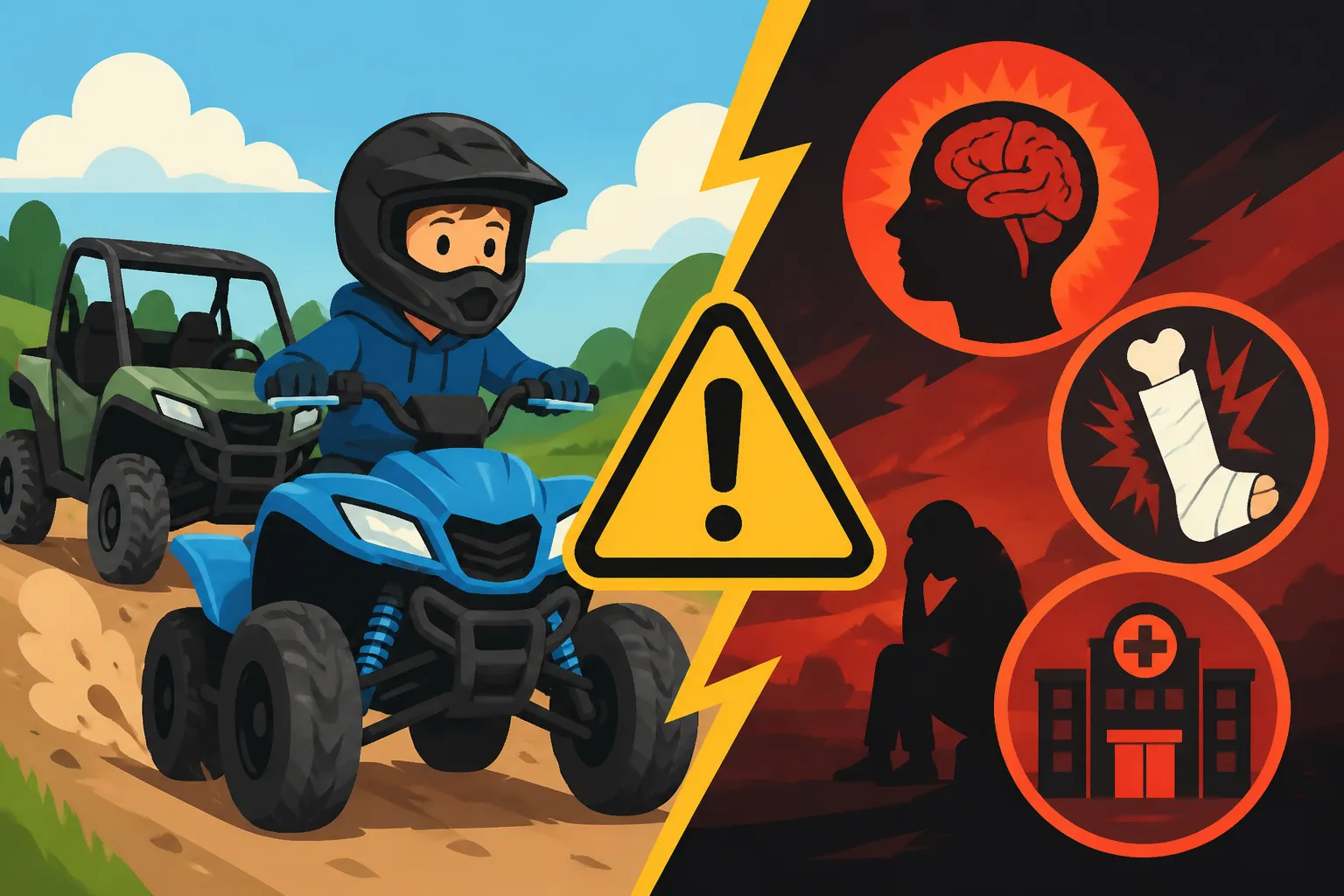
While legal ramifications are serious, the most heartbreaking risks of letting a six-year-old ride an ATV are the potential for severe physical injury and the long-term cognitive and emotional trauma that can result from an accident.
Developmental Limitations: Lack of Judgment, Coordination, Strength
A six-year-old's brain is still developing crucial areas related to risk assessment, impulse control, and complex motor skills. They might understand "don't go too fast" in theory, but in practice, the thrill of speed or a moment of distraction can override their limited judgment.
- Judgment: They can't anticipate hazards like an unexpected dip, a hidden rock, or another rider appearing around a blind corner. Their understanding of cause and effect is still very concrete.
- Coordination: Operating the throttle, steering, and braking simultaneously, while also managing body weight for balance, is a multi-tasking feat. A six-year-old's fine motor skills are still developing, making precise control difficult.
- Strength: Even on youth models, squeezing brake levers, maintaining throttle control over bumps, and muscling the handlebars through turns requires hand, arm, and core strength that a small child typically lacks. This can lead to them losing control because they simply can't physically operate the machine effectively.
Imagine trying to steer a large, heavy machine with controls designed for an adult, while having the physical strength and reaction time of a first-grader. It's a recipe for disaster.
Emergency Reaction Time: Inability to Respond Quickly to Hazards
The speed at which an ATV accident can unfold is terrifying. A split-second decision can mean the difference between avoiding a collision and a serious injury. A six-year-old's reaction time is significantly slower than an older child's or an adult's. This delay means they may not be able to:
- Brake quickly enough to avoid an obstacle.
- Steer sharply enough to prevent a rollover.
- React to a loss of balance before the machine tips over.
- Understand the immediate danger of a situation like a steep drop-off or deep water.
This delayed response, combined with their lack of judgment, makes them extremely vulnerable in any unexpected situation on an ATV.
The Weight and Speed Disparity: What Happens in a Rollover or Collision
Consider the sheer weight of an ATV. Even a small youth model can weigh several hundred pounds. A six-year-old might weigh 40-50 pounds. In the event of a rollover, the child is often pinned or crushed beneath the machine. The impact forces in a collision, even at seemingly low speeds, are immense when you consider the difference in mass between the child and the ATV. Fractures, head injuries, internal organ damage, and spinal cord injuries are all too common outcomes of ATV accidents involving young children. These aren't just minor bumps and bruises; they are often life-altering events.
The Ripple Effect: Liability and Consequences for Parents
Beyond the immediate tragedy of an injury, parents face a daunting array of legal and emotional consequences if they permit an underage child to ride an ATV and an accident occurs. This is not just about avoiding fines; it's about the profound responsibility of care.
Civil Liability and Lawsuits: If a Child is Injured or Injures Another
If your six-year-old is injured while riding an ATV you provided, you could face significant civil liability. This means you could be sued by other family members, or even by the child themselves once they reach adulthood, for medical expenses, pain and suffering, and long-term care needs. If the child injures another person, or damages property, while operating the ATV, the liability extends to those damages as well. Insurance policies often have exclusions for activities that violate safety guidelines, especially those related to age recommendations, potentially leaving you personally responsible for huge costs. It’s a devastating scenario that can bankrupt families and destroy relationships.
Potential for Criminal Negligence: Extreme Cases
In extreme cases, particularly if the child's injuries are severe or fatal, and there is clear evidence of reckless disregard for safety or a direct violation of established safety guidelines (like the manufacturer's age label), a parent or guardian could face charges of criminal negligence. While less common, this is a very real possibility and underscores the seriousness of the responsibility involved. Law enforcement, especially in the tight-knit communities of Kentucky, will investigate thoroughly to determine if negligence contributed to the incident. No one wants to imagine this possibility, but it's a consequence that underlines the immense risk.
The Emotional Toll: Beyond Legal or Financial
Even if legal and financial repercussions are somehow minimized, the emotional toll on a family after an ATV accident involving a young child is immeasurable. The guilt, the grief, the trauma of witnessing an injury, and the long-term impact on the child’s quality of life can leave scars that never truly heal. This is a burden far heavier than any financial or legal penalty. Prioritizing safety, even if it means delaying the fun, protects not just the child's body, but the entire family's well-being.
Safer Alternatives and Responsible Riding for Youngsters
The good news is that there are responsible ways to introduce children to the world of off-road riding, but it requires patience and adherence to safety guidelines. It’s about building skills gradually and ensuring the right machine for the right age.
Proper Training and Supervised Riding: When They Are Older
Once a child reaches the manufacturer-recommended age for a youth ATV (typically 10 or 12), formal training becomes paramount. The ATV Safety Institute (ASI) offers hands-on courses designed to teach proper riding techniques, safe operating procedures, and essential judgment skills. This isn't just about how to accelerate and brake; it's about understanding terrain, anticipating hazards, and respecting the machine's power. Enrolling your child in one of these courses, like those sometimes offered around Kentucky's trail parks or at local dealerships, is an investment in their safety. After training, continuous, close adult supervision is essential, especially in the early years. [Kentucky Parental Supervision Rules Explained] become relevant here, focusing on appropriate oversight rather than outright prohibition.
Appropriate Sized Machines: Starting Small, Slowly
When the time is truly right, choose an ATV that is specifically designed for their age and size category. Do not buy a machine they can "grow into." The child must be able to:
- Reach and operate all controls (throttle, brakes, gear shift if applicable) comfortably while seated.
- Maintain a stable posture and shift their weight easily.
- Have enough ground clearance to operate safely.
Starting with the smallest, lowest-powered machine appropriate for their age, and gradually progressing as their skills and physical development advance, is the safest approach. Brands like Polaris and Can-Am offer a range of youth models that adhere to age recommendations. For those looking for aftermarket parts or safety upgrades for age-appropriate machines, companies like SuperATV offer a wide selection, from improved protection to enhanced visibility, to make future rides even safer.
Non-Motorized Options: Building Skills Safely
Before jumping to motorized vehicles, consider non-motorized alternatives to build essential balance, coordination, and judgment skills. Bicycles, mountain bikes, dirt bikes with very small engines and automatic clutches (still adhering to age recommendations), or even pedal go-karts can help develop the foundational abilities needed for off-road riding in a much lower-risk environment. These activities teach children how to read terrain, react to obstacles, and understand their own physical limits without the added dangers of an ATV's weight and power. This gradual progression can make a significant difference when they are finally old enough and capable enough to safely handle an ATV. You might also want to explore [Kentucky Rules for a Rider Under 16] for more details on age-specific regulations.
Importance of Full Safety Gear
When the time does come for age-appropriate riding, insist on a complete set of safety gear for every single ride. This includes:
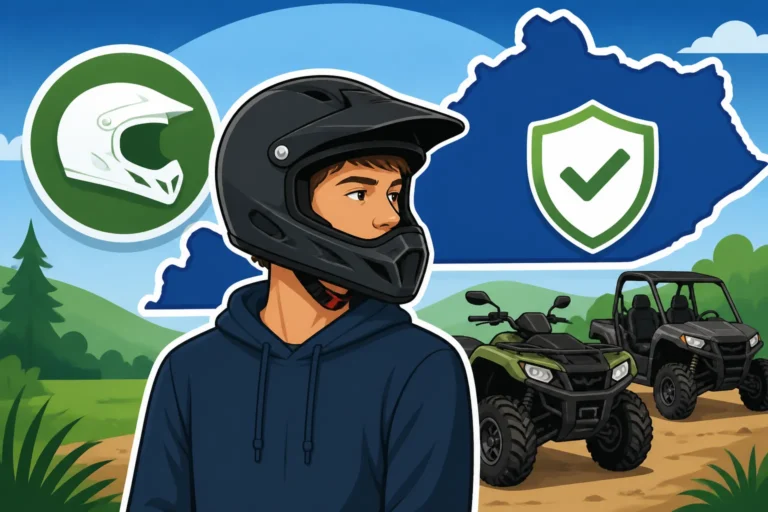
- DOT-compliant helmet: This is non-negotiable and often legally mandated for riders under 16 in Kentucky, even on private land in some contexts. Make sure it fits snugly and is in good condition. [Kentucky Helmet Law for ATV Riders] is very clear on this.
- Eye protection: Goggles or a helmet visor to protect against dust, debris, and branches.
- Over-the-ankle boots: To protect feet and ankles from impact and engine heat.
- Long-sleeved shirt and pants: Durable materials like denim or specialized riding gear to protect against scrapes, cuts, and minor impacts.
- Gloves: To protect hands and improve grip.
- Chest protector/body armor: Especially recommended for youth riders to protect vital organs. High-quality options for all sorts of protective gear can be found through retailers like SuperATV, which prioritizes rider safety.
No piece of safety gear is a substitute for proper age, training, and supervision, but together, they form the crucial last line of defense should an incident occur. Protecting your children starts with making the right choices about when and how they ride.
Disclaimer
This article is for general informational purposes only and does not constitute professional advice. Laws, prices and regulations vary by location and change over time. Consult a qualified professional for guidance on your specific situation.