Kentucky Open Container Rules on an ATV
There’s nothing quite like the feeling of heading out on your ATV or UTV for a day of adventure in Kentucky’s stunning landscapes. Whether you’re exploring the winding trails of Black Mountain or making your way to a favorite fishing spot, the call of the wild is undeniable. But as much as we all love a relaxed ride, it's incredibly easy to misunderstand the rules, especially when it comes to something as seemingly simple as having a drink. This guide is here to clear up the confusion around Kentucky’s open container laws specifically for ATV and UTV riders, helping you stay on the right side of the law and ensuring your outings remain safe and enjoyable for everyone.
The Legal Landscape of Open Containers in Kentucky
Kentucky's laws around open containers can feel a bit like navigating a winding trail – sometimes straightforward, sometimes with unexpected turns. For those of us who enjoy the outdoors, it’s crucial to understand these rules, especially since they don't just apply to cars on paved roads. When you're out on your ATV or UTV, the same principles often come into play, and misunderstanding them can quickly turn a fun day into a costly headache.
What Exactly Constitutes an "Open Container" in the Bluegrass State?
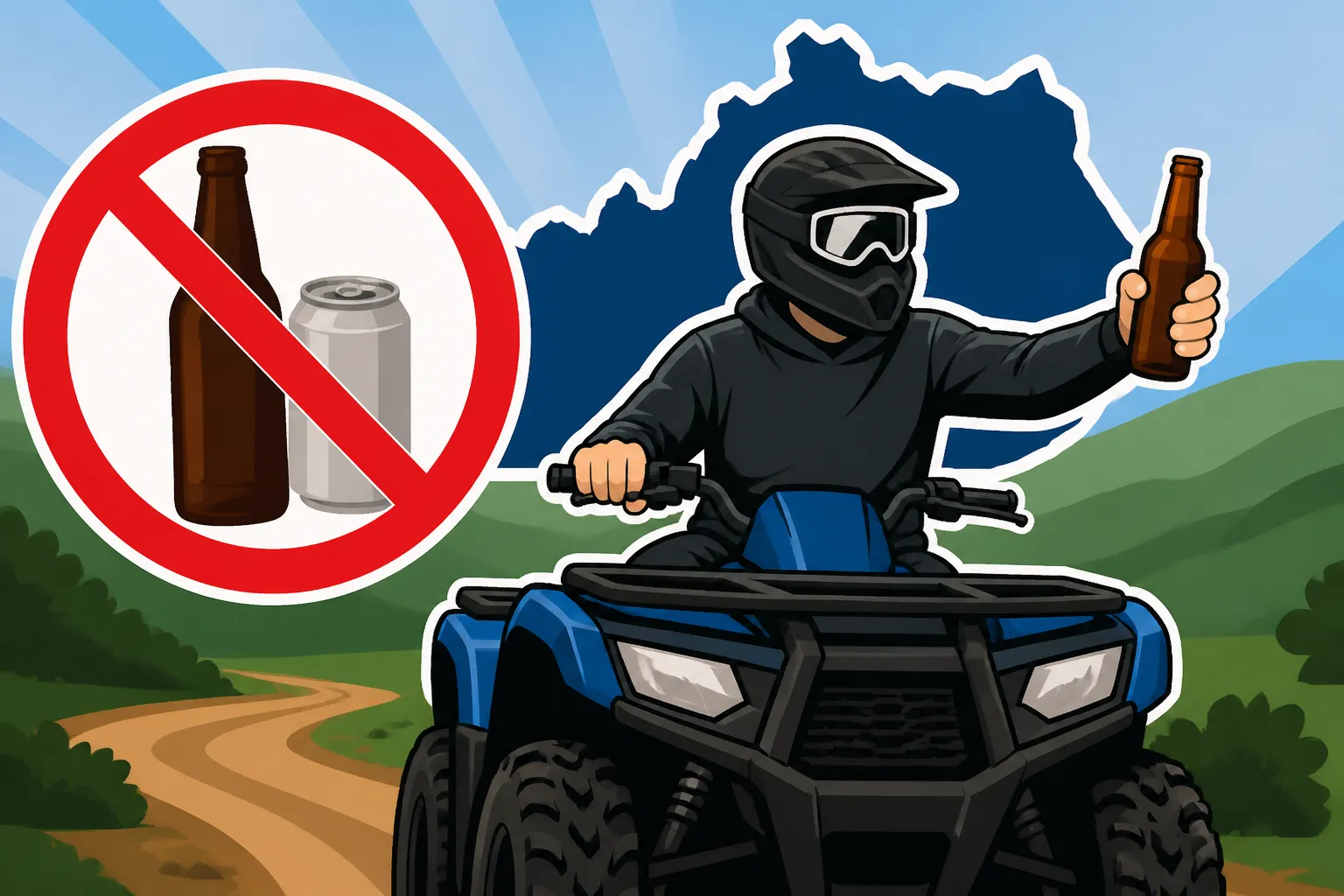
Let's start with the basics, because what the law considers an "open container" might be broader than you think. In Kentucky, an open container is generally defined as any container of alcohol (beer, wine, spirits) that has been opened, has a broken seal, or has had its contents partially removed. This isn't just about a half-empty beer can rolling on the floorboard of your truck; it applies to any beverage that is readily accessible to the driver or passengers in the passenger area of a motor vehicle on a public highway.
Think about it this way: if you've popped the top on a cold one and taken a sip, that’s an open container. If you have a bottle of spirits with a broken seal, even if you put the cap back on, that’s an open container. It doesn't matter if it's sitting in a cup holder, on the seat beside you, or tucked into a cooler that isn't completely secured in a separate compartment. The key is "open" and "accessible." Many riders might think that as long as they're not actively drinking, it's fine. However, the law focuses on the state of the container and its location within the vehicle. If a deputy pulls you over and sees an open bottle or can within reach, even if you swear you just forgot it there from last night's campfire, it's likely to be considered a violation.
Where Kentucky's Open Container Laws Apply (and Where They Might Not)
This is where things can get a little tricky for ATV and UTV riders. Kentucky's open container laws primarily apply to public highways, which include state roads, county roads, and city streets. The intent is to prevent impaired driving and ensure public safety. So, if you're riding your ATV down a county road, even for a short distance to get to a trailhead, these laws absolutely apply to you. It's the same as if you were in your car. Many riders are familiar with [Kentucky Rules for Riding a County Road] or [Kentucky Rules for Riding a City Street], and these often come with the implicit understanding that traffic laws, including those around alcohol, are in effect.
However, the application can differ significantly on private land. If you're riding exclusively on your own private property, or on private land where you have explicit permission from the landowner, state open container laws generally do not apply in the same way. This is because the land is not considered a "public highway." That said, this doesn't mean it's a free-for-all. Many privately owned trail parks, such as [Black Mountain Off-Road Adventure Area in Kentucky], [Leatherwood Off-Road Park in Kentucky], or [Rush Off-Road in Eastern Kentucky], have their own specific rules and regulations regarding alcohol. While the state open container law might not technically apply there, the park can enforce its own "no alcohol" policies, and violating them could lead to expulsion from the park, loss of your permit, or even trespass charges. It’s always critical to check the specific rules of any park or private property you plan to ride on. Simply assuming "it's not a road, so it's fine" can lead to disappointment and penalties.
How These Rules Impact Your ATV and UTV Adventures
The distinction between public roads and private trails is a crucial one, and it's where many ATV and UTV riders get into trouble. Your machine, whether it's a nimble sport quad or a versatile side-by-side, exists in a unique legal space that can shift depending on where you're riding. Understanding this fluid classification is key to responsible and worry-free riding in the Bluegrass State.
When Your ATV is Considered a "Vehicle" Under Kentucky Law
Here's the often-overlooked truth: when you take your ATV or UTV onto any public road in Kentucky, even just to cross it, it is generally treated as a motor vehicle for the purposes of traffic laws. This means that rules designed for cars and trucks, including open container laws, can suddenly apply to you. Many riders use their machines to get from one section of a trail to another, to access a gas station, or to simply [Kentucky Rules for Riding to a Trailhead]. During these brief moments on pavement, you are operating under the same scrutiny as any other driver.
Imagine you're at a popular riding area. You've just finished a fantastic stretch of trail, and you need to cross a short section of state highway to get to the next part. If you have an open container of alcohol in your ATV's cup holder or within easy reach, you are now in violation of Kentucky's open container law. It doesn't matter that you're only on the road for two minutes; the law applies the moment your tires hit the public asphalt. This also ties into broader regulations like [Kentucky Rules for ATVs on Public Roads], which specify how and when ATVs can even be on public roadways, often with strict limitations on distance and purpose. The point is, your ATV isn't magically exempt from these rules just because it's an off-road machine. When it's on a public road, it's a vehicle in the eyes of the law, and you need to act accordingly.
Navigating Park Rules and Private Property on Your Machine
While Kentucky's general open container laws focus on public roads, the world of off-road riding often involves private land, managed trail systems, and leased properties. Each of these can have its own set of rules, and they can sometimes be more stringent than state law. As we touched on earlier, a private landowner has the right to prohibit alcohol on their property entirely, regardless of whether it's an open container or not. This is particularly true for commercial trail parks.
For example, many popular riding destinations strictly prohibit alcohol anywhere on their premises, or they might limit it to designated camping areas only. They do this for safety, to maintain a family-friendly environment, and to mitigate their own liability. Riding while impaired, even if not legally drunk, increases the risk of accidents, which is a major concern for park operators. Furthermore, having an open container could be seen as an intention to drink and ride, which is exactly what these parks want to prevent. When you purchase a permit or entry to a park, you are agreeing to abide by their rules. Violating them could lead to immediate removal, bans, and even forfeiture of your permit. So, even if you're on private land, you still need to be acutely aware of the specific rules of that property. Always check websites, read posted signs at entry points, or call ahead to clarify the alcohol policy before you load up your cooler with anything other than non-alcoholic beverages. And when you do load up, consider a sturdy cooler from a brand like SuperATV to keep your drinks secure and away from the driver's immediate reach.
Serious Consequences Beyond the Ticket
While it might seem like a minor infraction to have an open container, especially if you're not actually drinking while operating your machine, the reality is that the consequences in Kentucky can be significant. It's not just about a simple fine; there can be a ripple effect that impacts your wallet, your driving record, and even your ability to enjoy future rides.
Penalties, Fines, and the Ripple Effect
Getting caught with an open container on your ATV or UTV on a public road in Kentucky can result in a citation, which typically carries a fine. While the exact amount can vary depending on the jurisdiction and the officer's discretion, it's usually considered a moving violation. This means it could go on your driving record, potentially affecting your insurance premiums, much like a typical traffic ticket. Beyond the initial fine, there are court costs and administrative fees that can quickly add up, turning a casual ride into a surprisingly expensive endeavor.
But it can get worse. If the presence of an open container is coupled with any signs of impairment, you could face much more serious charges, such as a DUI. [Kentucky DUI Rules for ATV Riders] are very clear: operating an ATV or UTV while under the influence of alcohol or drugs carries severe penalties, including hefty fines, potential jail time, suspension of your driver's license (even if you weren't operating a car), and mandatory alcohol education programs. These consequences are far-reaching and can have a lasting impact on your life, affecting employment, travel, and personal freedom. So, even if you think you're just enjoying a casual ride, the line between an open container violation and a DUI can be thin and quickly crossed, especially if you've consumed any alcohol before or during your ride. It's simply not worth the risk.
The Critical Importance of Rider Safety and Legal Liability
Beyond the legal penalties, the most important aspect of open container laws and alcohol consumption while riding is safety. Operating an ATV or UTV, even on familiar trails, requires quick reflexes, good judgment, and a clear head. The terrain can change in an instant, obstacles can appear unexpectedly, and other riders or hazards can emerge from around a blind turn. Alcohol, even in small amounts, impairs judgment, slows reaction time, and diminishes coordination – all critical factors for safe off-road riding. You're not just risking your own safety; you're putting passengers and other trail users at risk too. This is also why rules like [Kentucky ATV Helmet Law for ATV Riders] exist, to protect you from the physical consequences of an accident, but sound judgment helps prevent them in the first place.
Consider the legal liability in the event of an accident. If you are involved in an incident while operating an ATV or UTV with an open container, even if you weren't legally impaired, the presence of alcohol can severely complicate matters. Your insurance company might deny claims, leaving you personally responsible for damages, medical bills, and any legal fees. If another party is injured, you could face civil lawsuits that could financially devastate you for years. Furthermore, if the open container leads to a DUI charge, you could face [Kentucky Fines for Illegal ATV Road Use] that extend far beyond the initial ticket, including vehicle impoundment and potentially the permanent loss of your machine if it's deemed part of a criminal act. The long-term costs of one seemingly small decision can be astronomical. The best advice for any rider, whether they are navigating the backroads or hitting the trails, is to keep alcoholic beverages completely separate from your riding experience. Enjoy your ride, then enjoy a cold one responsibly after you've parked your machine for the day and are no longer operating it.
Riding an ATV or UTV in Kentucky offers incredible freedom and access to some of the most beautiful natural areas. But with that freedom comes a significant responsibility to understand and respect the laws, especially when it comes to open containers. These rules are in place not just to issue tickets, but to keep everyone safe on our roads and trails. By keeping your alcoholic beverages sealed and stored away in a non-passenger compartment when on public roads, and by adhering to the specific alcohol policies of private parks and landowners, you can avoid unnecessary fines, ensure your safety, and truly enjoy all that Kentucky's off-road scene has to offer. Ride smart, ride safe, and ride sober!
Disclaimer
This article is for general informational purposes only and does not constitute professional advice. Laws, prices and regulations vary by location and change over time. Consult a qualified professional for guidance on your specific situation.