Kentucky Rules for Towing With a UTV
It's incredibly frustrating when you've got a utility task vehicle, or UTV, that's perfectly capable of hauling a small trailer or a piece of equipment, but you're unsure where and how Kentucky law lets you use it for towing. Many folks assume that because a side-by-side has a hitch, it's fair game for any towing task, only to find themselves looking at a potential citation. This guide will walk you through the nuances of Kentucky's towing rules for UTVs, making sure you understand where you can legally put your machine to work and where you need to be cautious.
The Reality of Towing with a UTV in Kentucky: What You're Really Up Against
Let's be real, the idea of hooking up a small trailer to your UTV and running down the road to help a neighbor or move some brush sounds incredibly convenient. You see these machines everywhere, designed with beds and hitches, clearly built for work. But Kentucky law, when it comes to UTVs and public roads, often has a different idea than what seems like common sense. The biggest hurdle is that a UTV isn't classified like a truck or even a car, which means its road use, and by extension, its towing capabilities on those roads, are severely restricted. It's a disconnect that many of us in the ATV and UTV community constantly grapple with.
Understanding Kentucky's Vehicle Classifications
One of the core issues here lies in how Kentucky defines and classifies different types of vehicles. Your UTV, despite having a steering wheel and often multiple seats, falls under a different umbrella than a passenger car or even a farm tractor in many contexts. It's generally grouped with ATVs, even though its design and purpose are quite distinct. This often puts UTVs in a tricky legal limbo, especially when you consider their utility. The law hasn't always caught up to the versatile nature of modern side-by-sides. This is why you'll often hear discussions about [What Kentucky Counts as an ATV] and why [Kentucky's Narrow ATV Definition] can unintentionally sweep UTVs into categories that don't quite fit their capabilities.
For example, a traditional ATV is typically seen as a straddle-seat vehicle, whereas your UTV has a steering wheel, side-by-side seating, and often a roll cage. Despite these differences, the state's statutes often apply similar restrictions. This fundamental difference in legal classification is why using your UTV for towing on public roads is rarely as simple as just hooking up a trailer and driving off. It's not about the UTV's power or its built-in towing capacity; it's about its legal identity in the eyes of the state. It really highlights [Why a Side-by-Side Sits Awkwardly in Kentucky Law].
The Core Legal Restrictions on Public Roads
When we talk about public roads, we're talking about state highways, county roads, and city streets. The default rule in Kentucky is that off-road vehicles, including UTVs, are generally prohibited from these thoroughfares. This means that if you're pulling a trailer, whether it's empty or full, on a public road, you're likely in violation of the law. This can be a tough pill to swallow, especially if you're just trying to move something a short distance down a quiet county road. The law isn't designed to gauge your intent or the practicality of the situation; it's about where the vehicle is operating.
There are specific, very limited exceptions for UTVs on public roads, which we'll delve into shortly. But outside of those narrow allowances, operating your UTV on pavement, let alone towing something, is considered illegal. This applies even if you're only going a few hundred feet. The intent is to keep vehicles not designed for highway travel off high-speed, high-traffic roads for safety reasons. While you might have a heavy-duty hitch from a company like SuperATV on your UTV, built for serious hauling, the law doesn't care about the quality of your equipment as much as the classification of your vehicle. Ignoring these restrictions can lead to tickets and fines, which can quickly turn a simple chore into an expensive headache. Understanding [Kentucky Rules for ATVs on Public Roads] is crucial here, as many of these rules apply directly to UTVs.
Private Property and Farm Use: Where Towing with Your UTV Shines
Now, let's talk about where your UTV truly excels at towing – and where the law is generally on your side. This is where the "utility" in Utility Task Vehicle really comes into play. On private land, or land where you have explicit permission, your UTV becomes an invaluable workhorse. This is where you can freely hook up that log splitter, the small utility trailer, or even a livestock cart without worrying about state regulations regarding road use.
Towing on Your Own Land and Leased Property
If you own the land, or you're operating on property you've leased with permission, the rules are pretty straightforward: you can use your UTV to tow to your heart's content, provided you're doing so safely and within the machine's capabilities. This is where that heavy-duty hitch and robust engine truly pay off. Think about hauling firewood from the back forty, moving tools around a sprawling homestead, or dragging a deer out of the woods during hunting season. [Kentucky Rules for Riding Private Land] are quite permissive, allowing you to utilize your UTV's full potential for tasks like these.
Many of us rely on our UTVs for daily chores – from carrying fencing supplies to clearing brush. On your own property, you're not restricted by the classifications that govern public roads. You can pull that small trailer loaded with feed for the animals, transport lumber for a new project, or even move a stranded vehicle (within reason, of course!). This freedom is a huge part of the appeal of owning a UTV in rural Kentucky. It’s the kind of practical, hard-working use that these machines were truly designed for, and it’s completely within your legal rights when on your own turf.
Agricultural Exemptions: Hauling on the Farm
Kentucky law provides specific exemptions for ATVs and UTVs used for agricultural purposes, particularly on farms. If your UTV is primarily used for farm work, it falls under a special category that allows for certain movements on public roads that would otherwise be illegal. This is a critical distinction for many Kentuckians who rely on their side-by-sides to manage their farms. This "farm exception" allows for the operation of these machines, including towing, on public roads when directly related to agricultural duties. This means you can often drive your UTV, with a trailer in tow, between fields, to a barn, or to other parts of your farm that might be separated by a public road. This is covered under [Kentucky's Farm Exception With No Mileage Cap].
However, it's vital to remember that "agricultural purposes" means just that. It's not a free pass to drive your UTV to the grocery store with a trailer behind it. You should be actively engaged in farm work – for instance, hauling feed, moving equipment, or transporting harvested crops. Documentation of your farm operations and clear justification for the road use is always a good idea, just in case you're questioned. The state intends for this exemption to facilitate farming, not recreational use on public thoroughfares. So, if you're hauling hay or fencing materials from one part of your property to another, even if it involves a short stretch of public road, you're generally within your rights. This specific exemption is a huge relief for many farmers who find their UTVs indispensable for day-to-day operations. When using your UTV for farm tasks, a robust hitch, perhaps from SuperATV, ensures you can tackle those demanding pulls.
Navigating Public Roads for Brief Towing: The "Ifs, Ands, and Buts"
While the general rule is "no UTVs on public roads," Kentucky law does carve out a couple of very specific, highly limited exceptions. These aren't broad permissions; they are narrow allowances meant to address practical necessities or emergencies. Understanding these distinctions is key to avoiding legal trouble.
The 0.2-Mile Crossing Rule and Towing
One of the most frequently discussed exceptions is Kentucky's "0.2-mile crossing rule." This rule allows UTVs (and ATVs) to cross a public road or highway at an angle of approximately ninety degrees to the direction of the road, for a distance not exceeding two-tenths of a mile. This is intended to allow riders to get from one section of private property to another, or to access a trail. The crucial question for our topic is: does this apply when you're towing something?
While the law doesn't explicitly mention towing within the 0.2-mile rule, the spirit of the rule is about minimal, necessary transit across a road. If you are legitimately crossing from one piece of property to another, and doing so with a small trailer attached (perhaps moving a mower or a feed cart), it could arguably fall under this exception, provided you are strictly adhering to the "two-tenths of a mile" and "ninety-degree" requirements. You can read more about this in [Kentucky's 0.2-Mile Crossing Rule]. However, stretching this rule to justify a longer haul, even with a trailer, is a risky endeavor. An officer might view the act of towing as extending the scope of the vehicle's "crossing" beyond the intent of the law. Always err on the side of caution. If it looks like more than a brief, direct crossing, you could be in violation.
Emergency Situations and Road Maintenance
Another set of specific allowances exists for UTVs involved in emergency situations or road maintenance. For instance, if you are an authorized first responder, utility worker, or involved in a legitimate emergency response, your UTV might be permitted to operate on public roads, and this would logically extend to necessary towing tasks. Imagine a utility crew using a UTV to tow equipment to a downed power line in an inaccessible area after a storm. This is a clear case where the machine's utility, including its towing capability, is critical.
Similarly, UTVs used by highway or county road departments for maintenance or construction within their official capacity are often exempt from general road restrictions. If you're part of a crew clearing debris from a roadside or performing maintenance on a utility corridor, and your UTV is needed to tow a small piece of equipment or materials, this usage is generally allowed. These are very specific, job-related scenarios, not general public use. For the average UTV owner, these exceptions rarely apply, but they do demonstrate that the state recognizes the practical value of these machines in certain controlled, essential contexts.
Safety Considerations and Best Practices for UTV Towing
Beyond the legalities, safety should always be your number one priority when towing with a UTV. These machines are incredibly capable, but they have limits, and pushing those limits can be dangerous. Whether you're on your own property or making a permissible short road crossing, a little common sense and proper preparation go a long way.
Equipment Matters: Hitches, Trailers, and Brakes
The right equipment isn't just about getting the job done; it's about doing it safely.
First, ensure your UTV has a properly installed hitch. Many UTVs come with a receiver hitch from the factory, but if you're adding one, make sure it's rated for your machine and the loads you anticipate. Aftermarket options, like those from SuperATV, often provide stronger, more versatile hitch setups.
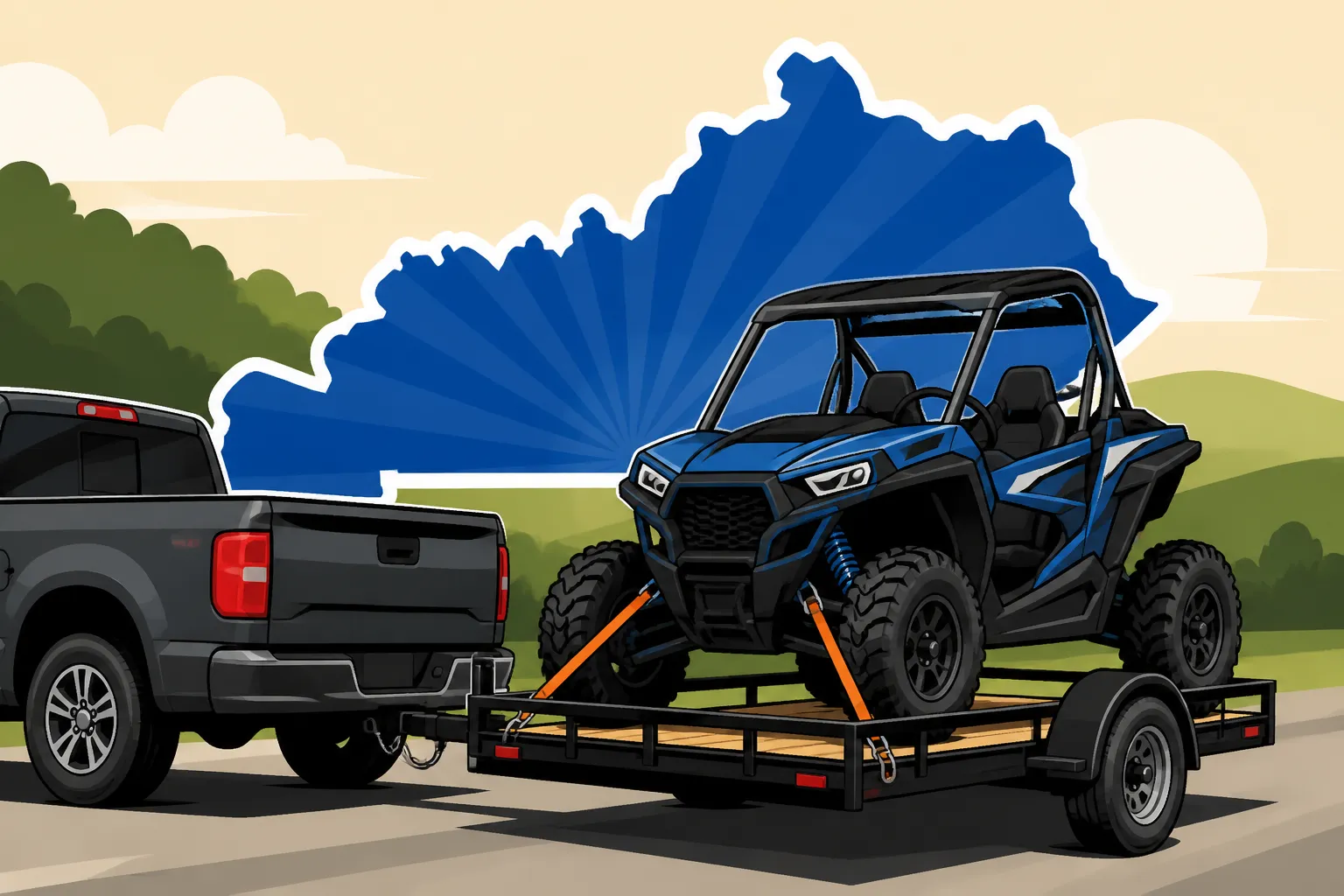
Second, consider the trailer. A small, lightweight utility trailer designed for ATVs/UTVs is ideal. If you're using a larger trailer, ensure it's not excessively wide or heavy for your UTV. The trailer itself should be in good condition, with working lights and appropriate tires. If you're towing on a road where the trailer is legally required to have its own lights (which is almost always the case on public roads), make sure they're connected and functional.
Third, think about brakes. Your UTV's braking system is designed for the weight of the UTV itself, plus its passengers and bed cargo. When you add a heavy trailer, you're significantly increasing the stopping distance. For heavier loads, consider a trailer with its own braking system. This could be surge brakes or electric brakes, which connect to your UTV. It's an investment, but one that could prevent an accident.
Weight Limits and Common Sense
Every UTV has a maximum towing capacity, which is usually listed in the owner's manual. This isn't just a suggestion; it's a critical safety limit. Exceeding this limit can put undue stress on your UTV's engine, transmission, frame, and brakes, leading to premature wear, mechanical failure, or a loss of control. Always know your machine's towing capacity and stay well within it.
Here's a quick table to illustrate typical UTV towing capacities, though yours will vary:
| UTV Class / Size (Approx.) | Typical Towing Capacity (lbs) | Examples of Towable Items (Safe) | Examples of Towable Items (Potentially Unsafe/Over Capacity) |
|---|---|---|---|
| Compact (e.g., 500cc) | 1,000 – 1,200 lbs | Small utility trailer, firewood, garden cart, deer | Large boat, car, heavy equipment trailer |
| Mid-Size (e.g., 700cc-800cc) | 1,200 – 1,500 lbs | Small livestock trailer, small camper, riding mower, brush | Medium tractor, excavators |
| Full-Size (e.g., 900cc+) | 1,500 – 2,000 lbs | Medium utility trailer, small ATV/UTV on trailer, logs | Larger tractors, multi-horse trailers |
This table is illustrative; always consult your UTV's specific owner's manual for exact capacities.
Beyond the numbers, use common sense. Is the load balanced on the trailer? Is it secured so it won't shift? Are you traveling at a speed appropriate for the terrain and the load? Are you aware of how the added weight affects your turning radius and braking? Steep inclines, rough terrain, and slippery conditions all magnify the challenges of towing. If you're working on a farm, or just moving equipment around your private property, [Kentucky Rules for Riding a Farm Road] also emphasize the need for safe operation. Remember, a UTV is not a full-sized pickup truck, and it shouldn't be treated as one, especially when towing heavy loads.
Disclaimer
This article is for general informational purposes only and does not constitute professional advice. Laws, prices and regulations vary by location and change over time. Consult a qualified professional for guidance on your specific situation.