Riding a Ridge Road in Rain
Wet-weather ridge road riding safely requires checking trail conditions, preparing the machine, and handling changing traction.
Legal here, illegal one county over.
What each state allows, the mirrors, horn and signals a conversion requires, and the county and city overrides that quietly change the answer.

Wet-weather ridge road riding safely requires checking trail conditions, preparing the machine, and handling changing traction.

Kentucky holler fog reduces visibility and muffles sound, requiring specific ATV checks, lighting adjustments, and safe riding decisions.

Heavy rain washes gravel onto Kentucky mountain roads, creating hazards that cause loss of traction and rollovers for riders.

Crossing one-lane bridges on Kentucky mine roads requires safety, right-of-way awareness, and navigation strategies for ATVs and UTVs.

Kentucky off-road vehicle laws explain whether ATVs and UTVs can legally cross or travel on public state routes.

Kentucky ATV laws and the zero-point-two-mile crossing rule explain where off-highway vehicles may legally travel across public roads.
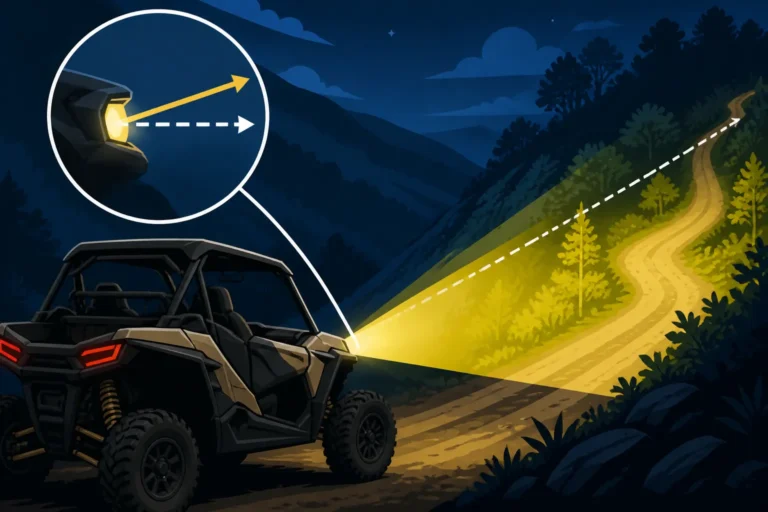
Proper ATV and UTV headlight adjustment on Kentucky holler roads helps riders see further and avoid nighttime hazards.

Kentucky ATV and UTV laws require daylight road use, creating risks and legal questions for riders after dark.

Kentucky ATV citation appeals require reading the ticket closely, identifying the specific infraction, and weighing court costs.
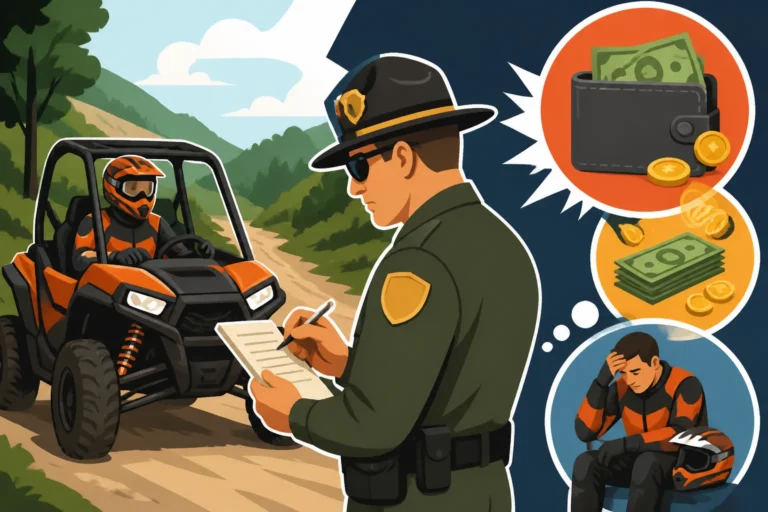
A Harlan County ATV road ticket brings base fines, court fees, surcharges, and machine towing and impoundment.