Where a Holler Road Meets the State Route
Ah, the classic Kentucky dilemma: you're out enjoying your ATV or UTV, cruising down a winding gravel road or a familiar path through a holler, and suddenly, there it is – a paved state route stretching out before you. Maybe your destination is just across the blacktop, or perhaps you need to travel a short distance along it to connect to another trail. The question inevitably pops into your head: can I legally take my machine onto that state road, even for a moment? It's a common point of confusion and frustration for riders across our beautiful Commonwealth, and navigating these intersections, literally and legally, can feel like a minefield. This guide is here to untangle the nuances of Kentucky law regarding off-road machines and public roads, especially when a rustic "holler road" meets the more formal "state route."
The Core Rule: Why Most Kentucky Roads Are Off-Limits by Default
Let's face it, we love our ATVs and UTVs for the freedom they offer – the ability to tackle rough terrain, explore the deep woods, and get to those remote fishing spots. But that very freedom often bumps up against the structured world of public roads. It's a fundamental tension, and understanding Kentucky's baseline stance is the first step to staying out of trouble.
Understanding Kentucky's Stance on Off-Road Machines
At its heart, Kentucky law classifies ATVs and UTVs as off-road vehicles. This means, by default, they are simply not intended or permitted for use on public highways, including state routes, county roads, or city streets. This isn't just a quirky rule; it stems from a practical place. These machines lack many of the safety features, like crumple zones, turn signals, and robust brake systems, that are mandatory for vehicles designed to share the road with cars and trucks. Imagine an ATV, designed for low-speed, agile maneuverability over uneven ground, trying to keep pace or safely stop in 55 mph traffic. It's a recipe for disaster.
This default prohibition can feel incredibly frustrating, especially for those of us who live in rural areas where the property lines and natural paths often crisscross state routes. You might own land on both sides of a road, or a fantastic trail system might be bisected by a paved stretch. It feels counterintuitive when your machine is perfectly capable of handling the terrain, but the law draws a hard line. Many riders just want to connect the dots, not commute to work on their quad, but the law isn't always built for that convenient hop. It’s important to remember that this isn't just about the major interstates or parkways; [Why Kentucky Roads Are Closed by Default] applies to almost any road maintained by public funds that isn't specifically designated for off-road use.
The "Holler Road" Reality and Your Dilemma
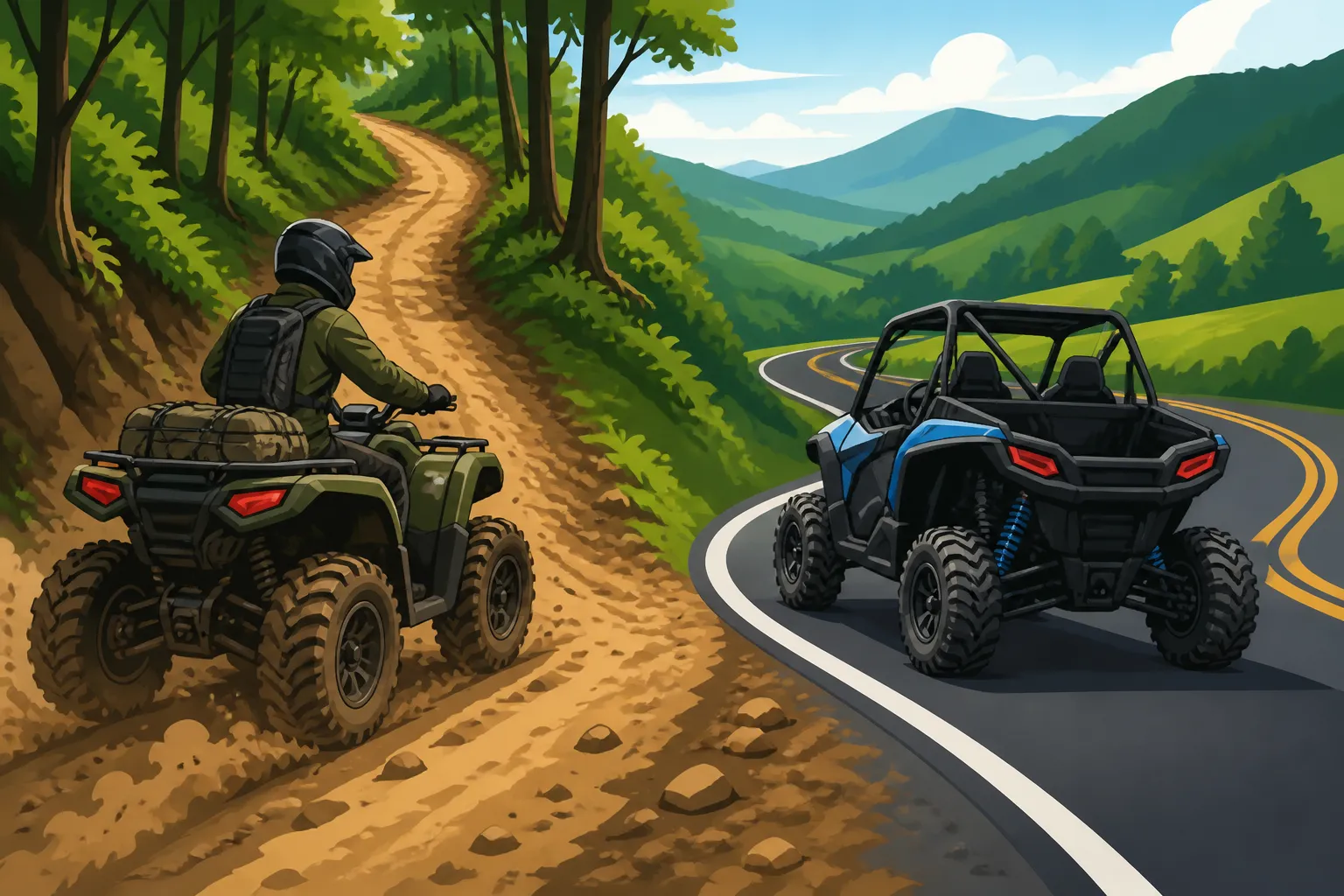
In Kentucky, the term "holler road" conjures a very specific image: a winding, unpaved, often gravel or dirt track that snakes through valleys and up hillsides, connecting homes, farms, and hunting camps. These roads are the lifeblood of many rural communities, and they're precisely where our ATVs and UTVs shine. You might be riding legally and safely on one of these, perhaps a private drive or an unmaintained county road, only to find it dead-ends or intersects abruptly with a state route.
This is where the dilemma hits. You're not trying to drive your UTV to the grocery store. You're simply trying to get from Point A (the holler road) to Point B (another section of holler road, a neighbor's farm, or a continuation of your private property) that just happens to require a brief interaction with a state route. It's a legitimate need for many Kentuckians, not just a desire for recreational road use. The law understands this practical necessity to a degree, and that's where the exceptions come into play. But these exceptions are narrow, specific, and come with strict conditions. Don't assume that because it's "just a holler," you have free rein on the paved roads it touches.
Kentucky's Limited Exceptions for Road Use and Crossing
While the general rule is "no ATVs or UTVs on public roads," Kentucky law does make provisions for very specific circumstances. These aren't loopholes to exploit, but rather carefully defined permissions for essential tasks or brief transitions. Understanding them precisely is crucial to avoid a ticket or, worse, an accident.
The Critical "0.2 Mile Crossing" Rule
This is perhaps the most common exception that riders try to utilize, and it's also one of the most misunderstood. Kentucky law allows for an ATV or UTV to cross a public road, including a state route, for a distance of up to 0.2 miles. Now, 0.2 miles might not sound like much, and believe me, it isn't. To put it in perspective, 0.2 miles is approximately 1,056 feet, or just over two football fields. That's a very short hop, and it goes by incredibly fast when you're on a machine. [0.2 Mile and Not a Yard More] means precisely that – not a yard more.
Furthermore, this rule comes with stringent conditions:
- Ninety-Degree Crossing: You're not meant to cruise down the shoulder or travel parallel to the road. The statute requires you to cross the road "at ninety degrees." This means you should aim to cross directly perpendicular to the flow of traffic, getting from one side to the other as quickly and directly as possible. Think of it as crossing a creek – you go straight across, not upstream or downstream. This is vital for safety, minimizing your time in active traffic lanes. [Crossing a Two-Lane at Ninety Degrees in Kentucky]
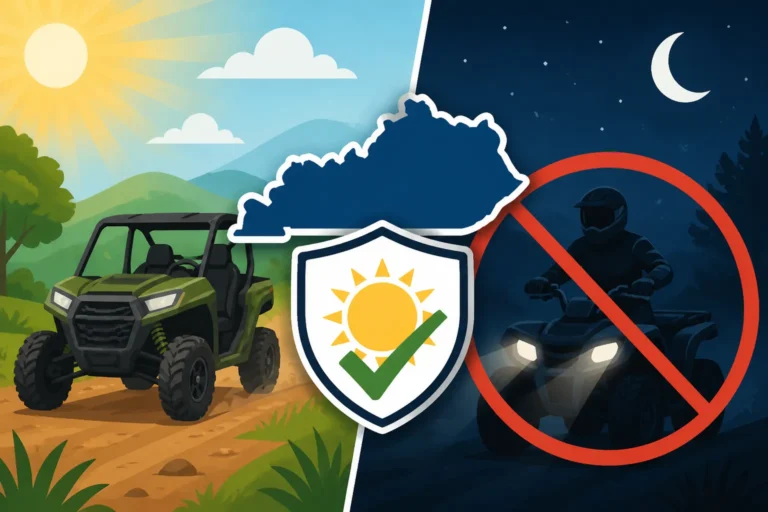
- Daylight Only: This exception is strictly for use during daylight hours. No crossing after sunset or before sunrise. Visibility is key, and operating an off-road machine in low light on a public road is extremely dangerous. [Daylight Only Under the Statute]
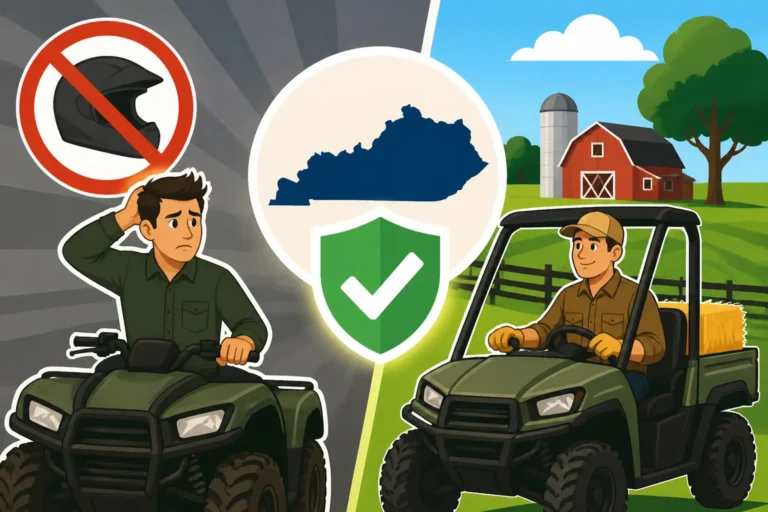
- Helmet Requirement for Minors: If the rider (or a passenger) is under the age of 16, they must wear a helmet during this road crossing. While Kentucky's general helmet laws for off-road riding have specific exemptions for farm, mining, and logging work, when you interact with a public road, even for a moment, the state's concern for safety increases. [Kentucky Helmet Rules on Public Property at 16]
Actionable Advice: Before you even think about using this exception, try to physically measure out 0.2 miles from your intended entry point. You'll quickly see how little distance that actually covers. It's truly for a quick connect, not a short jaunt down the highway. Ensure you have clear sightlines in both directions and pick a safe spot to cross.
Beyond the Crossing: Farm, Utility, and Emergency Exemptions
Kentucky law also recognizes that ATVs and UTVs are often essential tools for specific types of work, and in these cases, limited road use might be permitted, often with more flexibility than the 0.2-mile crossing.
-
Farm Use: This is one of the broadest and most commonly cited exemptions in rural Kentucky. If your ATV or UTV is being used "in the course of farming operations," the rules become more lenient regarding public road use. This could mean driving a UTV a few miles down a state route to get from one field to another, hauling tools, or checking livestock on different parcels of land. The key here is "in the course of farming operations" – it's about bona fide agricultural work, not recreational riding disguised as farm chores. [Why a Farm Run Has No Mileage Ceiling]
- Scenario Example: Imagine you have two hay fields separated by a state route. Instead of trailering your UTV, you might legally drive it the necessary distance on the road, slowly and safely, to move between the fields to spread fertilizer or check for pests. Or you might use it to haul feed down a long "holler road" that occasionally intersects with a main route on your property. This exemption is designed to make practical farm life feasible, recognizing that these machines are often indispensable for daily tasks. However, it's not a blanket pass for a joyride on a Sunday afternoon.
-
Utility & Construction Work: Machines used by public utility companies or for highway/right-of-way construction and maintenance can also operate on public roads when performing their duties. This allows crews to access work sites and transport equipment necessary for maintaining our infrastructure.
-
Emergency Situations: Law enforcement, fire, and emergency medical services personnel can use ATVs and UTVs on public roads when responding to emergencies. This is common in remote, rugged areas where traditional vehicles might struggle to reach an accident scene or a person in distress.
-
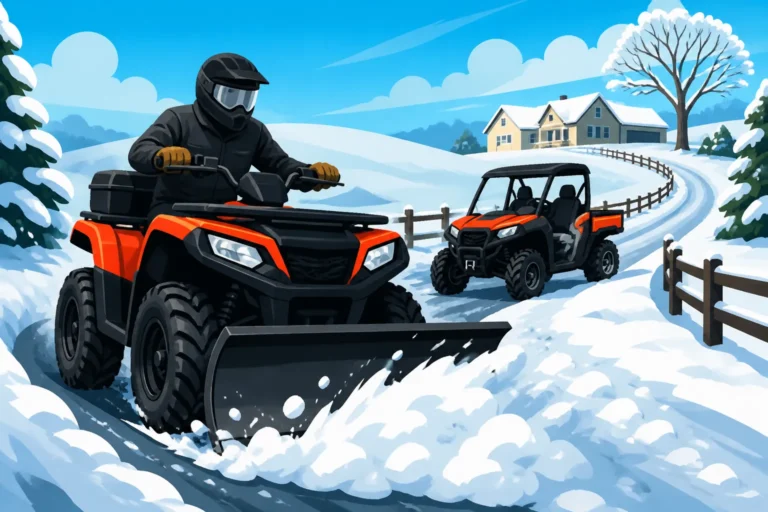
Snow Removal: In certain circumstances, especially in rural areas, ATVs and UTVs equipped for snow removal can be used on public roads during severe weather events to clear paths, often under local ordinances or emergency declarations.
Important Caveat: Even with these exemptions, the spirit of the law emphasizes safety and the purpose of the travel. These aren't invitations for high-speed travel or recreational cruising. You're expected to operate the machine safely, prudently, and with maximum visibility. While the mileage cap might not apply for farm use, the expectation of "daylight only" often still holds true for practical safety, and it's always wise to have appropriate lighting, such as a strong LED light bar (you can find great options from brands like SuperATV), to ensure you're seen by other motorists, even if the law doesn't explicitly require street-legal lighting for these specific exemptions. [One Headlight and Two Taillights Burning] are always a good idea if your machine has them.
Practical Steps and What to Expect When Encountering Law Enforcement
Even when you believe you're operating within the confines of Kentucky's exceptions, interacting with public roads on an off-road machine is a high-visibility activity. Law enforcement officers are trained to uphold the rules, and they might not immediately know your specific circumstances (e.g., if you're truly on a farm errand). Being prepared, polite, and informed can make all the difference.
Preparing for a Road Encounter
It's always better to be proactive than reactive. If you anticipate needing to use a public road, even briefly, take these steps:
- Documentation in Hand: Always carry your ATV or UTV's title or proof of ownership with you. A valid driver's license for yourself is also highly recommended, even if the letter of the law for off-road operation doesn't always mandate it for crossings. When you're on a public road, the expectation of licensed operation can quickly come into play. [Kentucky ATV Title Paperwork] and [Do You Need a Driver's License to Cross Pavement?] are key articles to review.
- Insurance: While Kentucky doesn't require liability insurance for ATVs or UTVs used off-road, it's a wise personal decision. If you have an accident on a public road, even if you're technically legal under an exception, you'll want coverage. Check your homeowner's or auto policy; some may offer limited coverage for off-road machines, or you might need a separate policy.
- Visibility is King: Make yourself as visible as possible. Wear bright clothing, especially blaze orange or neon colors. If your machine has headlights and taillights, make sure they are clean and functioning, and use them even during the day for added visibility. Consider aftermarket lighting accessories. SuperATV, for instance, offers a range of auxiliary lights and mirrors that can significantly improve your machine's visibility to other drivers, even if you're not going full street-legal. While not always required by law for these specific exceptions, being seen is your best defense against an accident.
- Map Your Route: If you're using the 0.2-mile crossing, know exactly where you're entering and exiting. If you're using a farm exemption, be prepared to clearly explain your intended purpose and destination.
What Happens If You're Stopped
Despite your best efforts, you might still encounter a law enforcement officer who needs to verify your legal status. Here's how to handle it:
- Remain Calm and Courteous: Pull over safely, turn off your engine, and keep your hands visible. Be respectful and cooperative.
- Explain Your Purpose: Clearly and concisely state why you are on the road and which exception you believe applies. For example, "Officer, I'm just crossing to my property using the 0.2-mile rule," or "I'm moving equipment between my fields for farming operations."
- Provide Documentation: Have your ID, proof of ownership, and any other relevant documents ready to present.
- Know the Consequences: If you are found to be operating outside the legal exceptions, you could face fines. These fines vary, but they can be significant. [Getting Ticketed at Black Mountain for an Untitled Quad] might be about a different offense, but the principle of facing a citation on public land remains the same. It's an expensive lesson to learn.
The Gray Areas and Local Ordinances
It's important to acknowledge that interpretation of these laws, particularly the farm use exemption, can sometimes have gray areas. What one officer considers "farming operations," another might question. Always err on the side of caution.
Furthermore, while state law sets the baseline, some local jurisdictions (cities or counties) can adopt ordinances that modify certain rules. For instance, some cities have "opted-in" to allow UTVs (often classified as Special Purpose Vehicles or SPVs) on certain city streets. However, this is distinct from the state's general exceptions for crossing or farm use, and it's almost always limited to UTVs, not ATVs, and within very specific speed and road limits. [Why a Kentucky City Must Opt In] sheds more light on this. These local ordinances rarely affect state routes, which remain under state jurisdiction.
Therefore, if you're regularly traveling near or on public roads, especially in an area with a lot of traffic, it's always a good idea to check with your local county clerk's office or sheriff's department for any specific local rules that might apply in addition to state law. The more informed you are, the better equipped you'll be to navigate the intersection of a rugged holler road and a busy state route.
| Feature | General Public Road Use (Default) | 0.2 Mile Crossing Exception | Farm/Utility Work Exception |
|---|---|---|---|
| Legality | Generally Prohibited | Permitted Under Strict Rules | Permitted for Specific Purposes |
| Distance Allowed | N/A | Max 0.2 miles (approx. 1056 ft) | No specific mileage cap for bona fide work |
| Direction | N/A | Ninety-degree crossing | Direct travel for work |
| Time of Day | N/A | Daylight only | Often implied daylight, but critical work may extend |
| Helmet Required | N/A (implied off-road) | For riders under 16 | For riders under 16 (often exempt on private farm land, but this is on public roads) |
| Driver's License | N/A (implied off-road) | Recommended/Good Practice | Recommended/Good Practice |
| Primary Purpose | Recreational Riding | Transition between off-road areas or property access | Essential work functions |
| Machine Type | Off-Road Vehicles | ATVs & UTVs | ATVs & UTVs |
Disclaimer
This article is for general informational purposes only and does not constitute professional advice. Laws, prices and regulations vary by location and change over time. Consult a qualified professional for guidance on your specific situation.