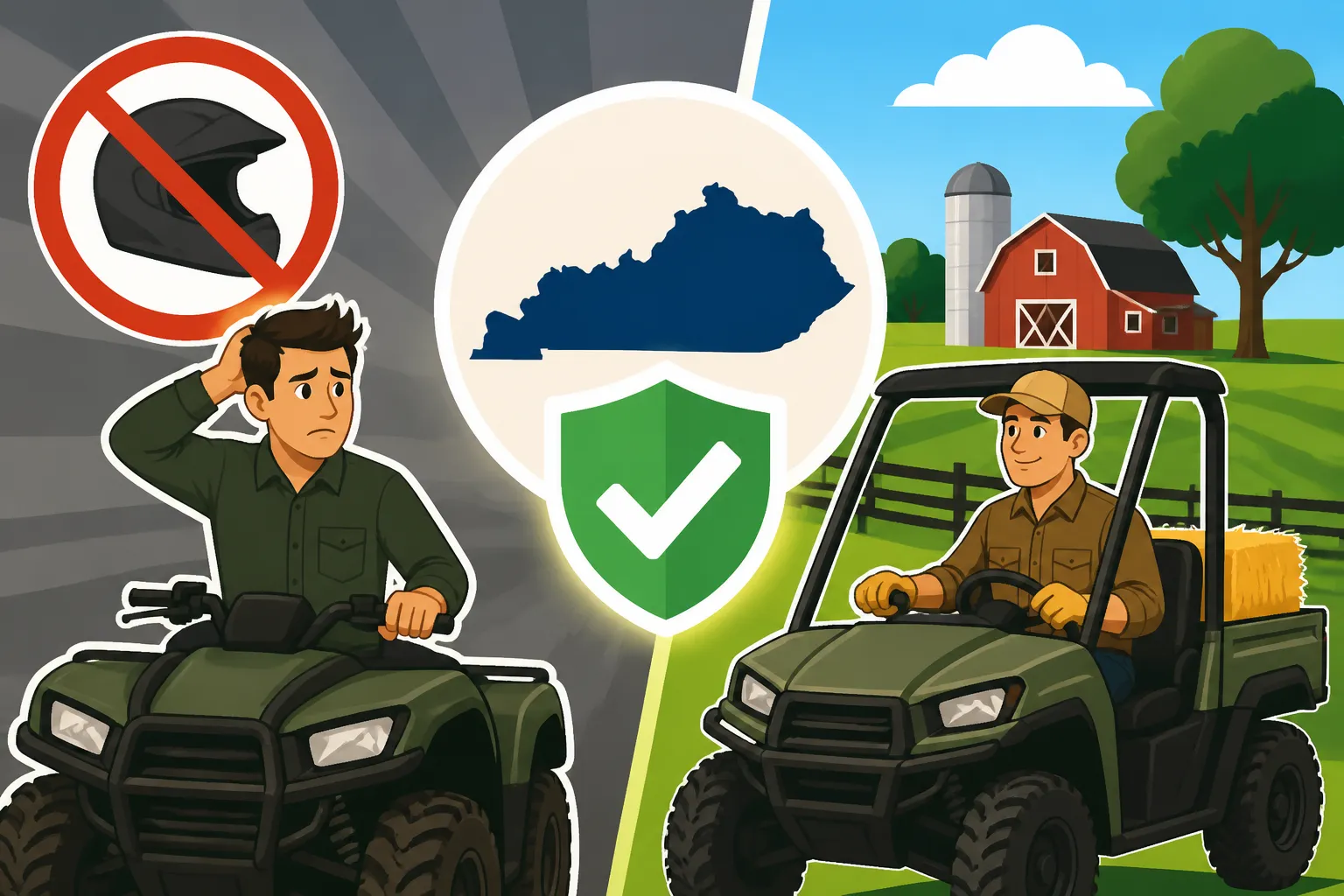
Why Farm Work Exempts a Kentucky Helmet
It can be incredibly frustrating to keep up with all the different rules and regulations for ATVs and UTVs here in Kentucky, especially when it feels like one minute you need a helmet, and the next you don't. A lot of folks assume a helmet is always mandatory, but there are indeed specific situations where the law carves out an exception. This guide is going to dive deep into one of the most common and often misunderstood exemptions: why farm work exempts a Kentucky helmet, helping you understand when you can legally ride without one while working the land.
Kentucky's Broad Helmet Requirement for ATV & UTV Riders
Let's start with the basics, because understanding the general rule makes the exception stand out even more. For the most part, when you're out riding your ATV or UTV in Kentucky, especially on public lands or designated trails, the expectation is that you and any passengers are wearing an approved helmet. This isn't just a suggestion; it's a legal requirement aimed at keeping everyone safer.
The General Rule: When a Helmet is Mandatory
If you're hitting the trails at Black Mountain Off-Road Adventure Area or exploring Land Between the Lakes at Turkey Bay OHV Area, for instance, a helmet is absolutely essential. The law is pretty clear: if you're operating or riding as a passenger on an ATV or UTV, you need to have that helmet securely fastened. This applies to most public recreation areas, state parks, and any time you might find yourself on a public road where an ATV is permitted for a limited purpose, like crossing. It's truly the default setting for ATV safety in Kentucky.
This widespread requirement is rooted in a desire to reduce serious head injuries, which, let's be honest, can happen even on seemingly easy terrain. While riding can be exhilarating, it also carries inherent risks, and a helmet is your first line of defense against the unexpected. For any recreational ride or organized event, always plan on wearing your helmet. You can learn more about the broader rules in our guide on [Kentucky Helmet Rules for ATV Riders].
Penalties for Non-Compliance
Ignoring the helmet law when it's applicable can lead to more than just a stern talking-to. Law enforcement, whether it's a state trooper, a county deputy, or a park ranger, can issue citations for helmet violations. These tickets come with fines, and while they might not break the bank, they're certainly an unwelcome expense that could have been easily avoided by simply wearing the proper gear.
Beyond the financial hit, there's the much more serious consequence of an injury. A helmet is a small inconvenience compared to a traumatic brain injury, and many riders who've experienced an accident will tell you that their helmet saved their life or prevented a debilitating injury. So, while we're discussing exemptions, it's always worth remembering that safety should be paramount, regardless of what the law might permit.
Unpacking the Kentucky Farm Work Exemption
Now, let's get into the nitty-gritty of why Kentucky law carves out a specific exception for those of us putting our machines to work on the farm. It's not a blanket pass to ride helmet-free anytime you're near a field, but a focused allowance for legitimate agricultural tasks.
What the Statute Actually Says
Kentucky Revised Statute 189.515, which governs ATV use, includes a specific clause that exempts individuals operating an ATV "in the course of farming or agricultural operations" from the helmet requirement. This isn't some loophole or a commonly ignored rule; it's written directly into the law. The legislature recognized that ATVs and UTVs are indispensable tools on Kentucky farms, used for everything from hauling tools to checking on livestock in remote pastures.
The intent here wasn't to diminish safety, but to acknowledge the unique operational environment of a farm. Farmers are constantly getting on and off their machines, often in varied conditions, and sometimes a helmet can impede visibility or communication in specific, low-speed, high-task farm operations. It's about balancing practical necessity with safety, specifically within the context of agricultural work. This distinction is crucial, and it's what separates a farmer doing chores from a recreational rider.
Defining "Farm Work" Beyond the Obvious
So, what exactly constitutes "farm work" in the eyes of the law? It's more than just driving across a field. Think of tasks like hauling feed to cattle pastures, checking fences that crisscross large properties, moving small equipment or tools between barns, spraying crops, or transporting supplies for field maintenance. If you're using your ATV or UTV as an integral part of your agricultural operation, whether it's a cattle farm, a tobacco field, or a vegetable patch, that's generally considered "farm work."
The key is that the primary purpose of your ride must be directly related to the operation and maintenance of the farm. This isn't about going for a joyride on your farm property; it's about using the machine as a utility vehicle. If you're headed down a long driveway on your private land to pick up a forgotten tool for a tractor repair, that fits. If you're simply cruising around the perimeter of your property for leisure, even if it's farmland, the exemption likely wouldn't apply. Our article [A Quad That Only Works a Kentucky Farm] expands on this concept.
Practical Scenarios: When the Exemption Applies and When It Doesn't
The line between "farm work" and other activities can sometimes feel a little blurry, especially when your farm might be bisected by a public road or you need to run a quick errand. Let's look at some real-world examples to help clarify.
Riding on Private Farmland Versus Public Roads
This is where many people get confused. The farm work exemption primarily applies when you're operating on private farmland. If your farm is a sprawling property and you're moving between different fields or checking on livestock deep in the holler, you're covered. However, if your farm spans both sides of a county road, and you need to cross that road to get to another pasture, the situation changes slightly. Kentucky law does allow for very specific, limited use of ATVs on public roads, such as crossing a two-lane road at ninety degrees. In these fleeting moments, while the farm purpose is still there, the exemption's application can get tricky.
Generally, the farm work exemption is strongest when you are entirely on private land. While you can make very brief, direct crossings of public roads to access other parts of your farm, the spirit of the helmet exemption is for the work done on the farm itself. Prolonged travel on a public road, even if your ultimate destination is another part of your farm, might push the limits of the exemption. It's often best to err on the side of caution or explore alternatives for road travel. For specific guidance on using your machine on public roads, consult [Kentucky Rules for Riding a County Road] or [Crossing a Two-Lane at Ninety Degrees in Kentucky].
The "Purpose" Test: Is It Truly Farm-Related?
Imagine this scenario: you've been working hard all morning hauling hay bales with your UTV. You're hot, tired, and decide to make a quick run into the nearest small town for a cold drink and some lunch. You jump on your UTV, still in your work clothes, and head down the county road. Is this covered by the farm work exemption? Probably not. Even though you're coming from farm work, the purpose of this specific trip is personal leisure, not agricultural operation.
Now, consider another scenario: you're out in the far pasture and realize a critical part on your combine has broken, and you need to fetch a specific tool from the main barn. You hop on your ATV and make the trip. This is clearly for farm work. The "purpose test" is about the reason for your ride. If an officer stops you and asks what you're doing, your explanation should clearly point to a necessary agricultural task. The Kentucky farm exception for road use has [Kentucky's Farm Exception With No Mileage Cap] for farm activities on specific roads, which further highlights the focus on the purpose of the journey.
Comparing Farm Use to Other Exemptions: Mining and Logging
It's helpful to look at the farm work exemption alongside other similar allowances in Kentucky law. The state also recognizes specific helmet exemptions for certain industrial activities, namely mining and logging. These parallel exemptions help illustrate the legislative intent behind carving out these specific exceptions.
Helmet Exemptions in Mining Operations
Just like farming, mining is a heavy industry with its own set of specialized equipment and safety protocols. Kentucky law extends a helmet exemption to individuals operating ATVs or UTVs "in the course of mining operations." This means if you're working on a mine site, perhaps checking equipment, transporting personnel, or moving supplies across a coal bench, you may not be required to wear a typical ATV helmet.
However, it's important to remember that mine sites often have their own stringent safety regulations, which might include hard hats or other specialized head protection that are more appropriate for the specific hazards of a mining environment. The state exemption simply means you're not held to the recreational ATV helmet rule. Our article on [Kentucky Helmet Exemption for Mining] dives deeper into this specific area.
Logging Work and Helmet Rules
Similarly, logging operations are also recognized by Kentucky law for a helmet exemption. If you're using your ATV or UTV as part of felling trees, hauling timber, or maintaining a logging site, you're likely exempt from the general helmet requirement. This makes sense when you consider the dynamic and often dangerous nature of logging work, where heavy machinery and falling timber present unique risks that an ATV helmet might not adequately address, or might even hinder other necessary safety gear.
Again, like mining, logging sites have their own sets of safety standards, often requiring hard hats or other specific protective equipment for forestry work. The Kentucky exemption for logging is designed to allow workers to use the most appropriate safety gear for their job without being in violation of the general ATV helmet law. Find out more about this specific exemption in [Kentucky Helmet Exemption for Logging].
Here's a quick comparison of these industrial and agricultural exemptions:
| Criteria | Farm Work Exemption | Mining Work Exemption | Logging Work Exemption |
|---|---|---|---|
| Location | Private farmland, specific short road crossings adjacent to farm property | Designated mining sites and associated haul roads | Designated logging sites and associated haul roads |
| Activity | Actively engaged in agricultural tasks (hauling feed, checking fences, spraying, etc.) | Actively engaged in mining operations (inspection, transport, maintenance) | Actively engaged in logging operations (felling, hauling, site maintenance) |
| Purpose | Essential for agricultural productivity | Essential for mining productivity | Essential for logging productivity |
| Public Road Use | Limited to specific, short crossings directly related to farm tasks; not for extended public road use. | Generally restricted to private property or specific designated industrial roads. | Generally restricted to private property or specific designated industrial roads. |
| Underlying Principle | Facilitates necessary agricultural tasks without undue burden, recognizing unique farm environment. | Recognizes specific industrial safety protocols and working conditions unique to mining. | Recognizes specific industrial safety protocols and working conditions unique to logging. |
Responsible Riding: Beyond the Exemption
While the farm work exemption provides legal relief from helmet requirements, it doesn't diminish the importance of safety. Just because you can ride without a helmet on the farm doesn't always mean you should.
Why Safety Gear Still Matters on the Farm
Farm environments are inherently hazardous. Uneven terrain, hidden obstacles, livestock, and heavy machinery all pose risks. Even at low speeds, a rollover or impact can cause serious injury. This is why, even when legally exempt, many experienced farmers still choose to wear a helmet, especially for tasks that involve higher speeds or more challenging ground. Beyond helmets, other gear like eye protection, gloves, sturdy boots, and long pants can offer significant protection from brush, debris, and impacts.
Consider your specific task: if you're moving a sprayer across a flat field at 5 mph, the risk might feel minimal. But if you're navigating a steep, rocky section of pasture to check on a calf, that risk increases dramatically. Making good decisions about safety gear, perhaps even investing in a heavy-duty winch or protective skid plates from a brand like SuperATV, can make your farm machine safer and more functional for the demanding work it performs.
Educating Yourself and Your Farm Hands
It's your responsibility as a farm owner or operator to understand these nuances, and if you have employees or family members helping out, they need to understand them too. Simply telling someone, "You don't need a helmet on the farm," isn't enough. Explain why the exemption exists, what "farm work" truly entails, and the limits of the exemption, especially concerning public roads.
Consider establishing your own farm-specific safety policies. For younger riders, even if they're helping with chores, it's often wise to insist on helmets. The manufacturer's age label on ATVs often comes into play here, and children are particularly vulnerable to head injuries. You can find more information about these considerations in [Kentucky Rules for a Rider Under 16]. Thorough training, regular maintenance of machines, and a clear understanding of safety protocols will go a long way in preventing accidents, regardless of what the law strictly requires.
Navigating Enforcement and Proving Your Case
Despite the clear legal exemption, you might still encounter a situation where law enforcement questions your helmet-less ride. Knowing how to handle these encounters can save you a lot of hassle and potential fines.
What to Do If Stopped by Law Enforcement
If you're stopped by an officer while operating an ATV without a helmet on your farm or during a permissible road crossing, remain calm and polite. Clearly and concisely explain that you are engaged in farm or agricultural operations. Describe the specific task you were performing or are on your way to perform. For example, "Officer, I'm just moving my fencing tools from the lower pasture to the upper one to repair a broken section of fence."
While not always required, having some form of documentation that identifies you as a farmer or your property as a farm might be helpful, though usually your word and the context of your location should suffice. The key is to be respectful and explain the nature of your activities as they relate to the farm work exemption. This is different from the situation where you might be [Kentucky Fines for Illegal ATV Road Use] if you're just out for a casual ride.
When in Doubt: Err on the Side of Caution
The farm work exemption is specific, not a general license to go helmet-free. If there's any ambiguity about whether your activity truly falls under "farm work," or if you're venturing off your immediate private property for anything more than a direct, short crossing, the safest and smartest course of action is to wear a helmet. The law can be interpreted differently by various individuals, and avoiding a citation is always better than trying to argue your case.
Ultimately, your personal safety should always be a top priority. A helmet is a relatively small investment in protecting yourself from severe injury. While it's good to know your legal rights regarding the farm work exemption, it's even better to make informed choices about your safety and the safety of anyone else riding on your property. Many riders even enhance their machines with durable components like heavy-duty axles or lift kits from a company like SuperATV to better handle the tough demands of farm work, prioritizing machine integrity as much as personal safety.
Disclaimer
This article is for general informational purposes only and does not constitute professional advice. Laws, prices and regulations vary by location and change over time. Consult a qualified professional for guidance on your specific situation.