Why Mining Work Exempts a Kentucky Helmet
It’s a common sight across Kentucky: riders of ATVs and UTVs out on the trails or even just crossing a short stretch of pavement, almost always with a helmet strapped on. We know the rules are generally pretty clear when it comes to head protection, and for good reason – these machines are powerful, and the terrain can be unforgiving. But then you might see someone on a mine site, perhaps a seasoned veteran of the coalfields, operating a side-by-side without a helmet, and it makes you wonder: what’s the deal? This guide is here to untangle the specific legal allowances that exempt individuals engaged in mining work from Kentucky's standard ATV helmet requirements, helping you understand the nuances of this important exception.
The Foundation of Kentucky's ATV Helmet Law
Before we dive into any exceptions, it's crucial to understand the baseline. Kentucky, like many states, has established rules regarding the use of helmets for ATV and UTV riders. These laws are not arbitrary; they are put in place with public safety as the top priority, aiming to protect riders from the inherent risks associated with off-road vehicle operation.
General Helmet Requirements for ATV Riders
Generally speaking, if you’re riding an ATV in Kentucky, especially on public lands or properties that aren’t specifically designated as private farm fields, a helmet is a non-negotiable piece of gear. The law typically states that anyone operating or riding as a passenger on an ATV must wear an approved safety helmet. This isn't just a suggestion; it’s a legal mandate that carries consequences if ignored. Think about the winding trails, the sudden dips, and the unexpected obstacles you encounter on a typical ride – a helmet provides a critical layer of defense against serious injury. You can learn more about the specifics of these requirements in [Kentucky Helmet Law for ATV Riders].
This blanket rule applies to the vast majority of recreational riders, whether they're tackling the challenging climbs at Black Mountain Off-Road Adventure Area or simply enjoying a leisurely cruise through a local park. The focus is on ensuring that anyone interacting with these machines, which can accelerate quickly and traverse varied terrain, has the fundamental protection needed. For riders under the age of 16, these rules are even more stringent, often requiring helmets in almost all scenarios, regardless of location, further emphasizing the state's commitment to rider safety.
The Rationale Behind Helmet Laws
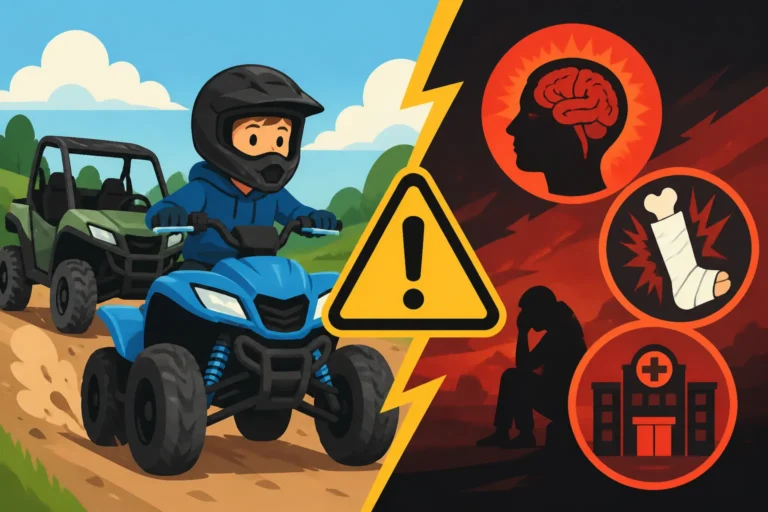
So, why are helmets such a big deal? The reasoning is straightforward: brain injuries are devastating. A helmet is designed to absorb impact, distributing forces across a wider area and protecting your skull and brain from direct trauma. Off-road riding, by its very nature, involves risks like rollovers, collisions with trees or rocks, and falls from the machine. Even at relatively low speeds, a fall can result in a significant head injury if your head strikes the ground or another hard surface.
Consider a scenario where you're navigating a rocky section of trail, and suddenly your front tire catches an unseen obstacle, throwing you over the handlebars. Without a helmet, that impact with the ground could be life-altering. With a properly fitted, DOT-approved helmet, you dramatically increase your chances of walking away with nothing more than a few scrapes and a story to tell. These laws aren't meant to spoil your fun; they're there to help ensure you can keep having fun for many years to come by preventing preventable tragedies. It's a pragmatic approach to a popular, but inherently risky, pastime.
Unpacking the Mining Work Exemption
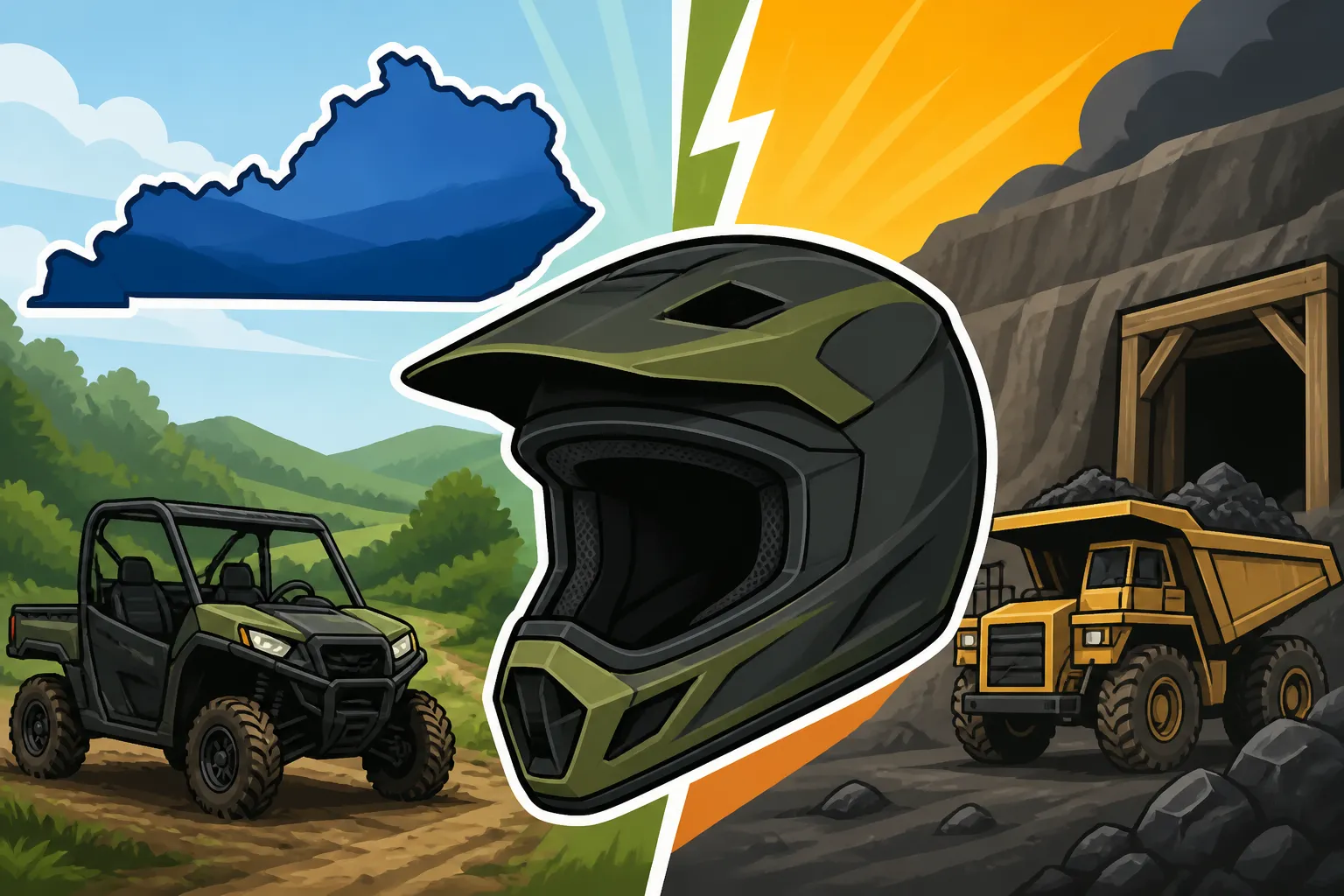
Now we get to the core of the matter: the specific exemption for mining work. Kentucky, with its rich history in the coal industry and other mining operations, recognizes that ATVs and UTVs are not just recreational vehicles in certain sectors; they are essential tools for a specific type of labor. The law makes a clear distinction between riding for leisure and riding for necessary industrial operations.
Defining "Mining Work" in the Context of ATVs
The critical element here is understanding what "mining work" truly encompasses. This isn't about someone riding their ATV to visit a friend who works at a mine, nor is it about taking a joyride on an old strip mine bench if you're not actually engaged in mining operations. The exemption applies specifically to individuals actively involved in the exploration, extraction, processing, or transportation of minerals within a designated mine site. This could include licensed miners, surveyors, safety inspectors, equipment maintenance personnel, or anyone whose job directly requires the use of an ATV or UTV as part of the mining process.
Imagine a mine foreman needing to quickly assess a new section of the mine, or a safety officer performing inspections across a vast, rugged property. An ATV or UTV is often the most efficient, and sometimes the only, way to traverse such challenging terrain. These machines are not recreational toys in this context; they are specialized utility vehicles facilitating critical industrial tasks. The exemption recognizes the practical necessity of operating these vehicles as part of the job, where traditional safety gear might sometimes interfere with other required personal protective equipment or the immediate demands of the work environment.
Practical Scenarios on a Mine Site
Let's picture some real-world situations where this exemption comes into play. You might see a surveyor using a side-by-side to transport specialized equipment across a vast, unpaved mine property in Pike County. Their focus is on precision mapping, and the machine is simply a means of transport to carry heavy instruments. Or perhaps a blasting crew chief needs to quickly inspect a series of charges spread across a wide area before detonation. These individuals are moving with purpose, often in a highly controlled, albeit rugged, environment.
In these scenarios, the ATV or UTV is treated less like a recreational vehicle and more like a piece of industrial equipment, similar to a bulldozer or an excavator, albeit smaller and more agile. The operators are trained professionals, usually adhering to stringent mine-specific safety protocols that might prioritize other forms of personal protective equipment, such as hard hats with integrated lights, specific respiratory gear, or highly visible clothing, depending on the immediate task and environment. While a helmet might be part of an overall safety strategy for some operations, the state's ATV helmet law specifically carves out this exception, deferring to the mine's own comprehensive safety standards for these particular operations. For example, a heavy-duty UTV, perhaps equipped with robust skid plates and a winch from a brand like SuperATV, might be used to haul tools or materials over rough terrain, where the focus is on utility and getting the job done safely under mine supervision.
Navigating the Nuances and Practicalities
Understanding the mining work exemption isn't just about knowing it exists; it's about appreciating its boundaries and the broader safety landscape it operates within. This isn't a free pass to ditch your helmet on any property that used to be a mine. There are specific conditions that must be met.
When the Exemption Applies and When It Doesn't
The crucial distinction lies in the activity being performed and the location where it's happening. The exemption is strictly tied to "mining work" on an active or designated mine site. This means if you are, for example, a geologist employed by a mining company, using an ATV to collect samples within the boundaries of a permitted mining operation in Letcher County, then the exemption would likely apply to you. You are directly engaged in the process of mineral extraction or assessment.
However, let’s say you own a piece of land that once housed a small, defunct coal mine, and you decide to ride your ATV around for fun on your own property. Even though it's technically old mining land, you are not engaged in "mining work." In that recreational scenario, the general helmet laws would apply to you. Similarly, if you're riding through a public trail system that happens to traverse areas with historical mining activity, but you're not performing a job related to a current mining operation, the exemption does not apply. It's about the purpose of the ride and the nature of the employment, not just the topography. The law is quite specific and doesn't bend for casual riders exploring old mine roads, even if those roads are incredibly rugged and could benefit from aftermarket heavy-duty parts like those offered by SuperATV.
Safety Considerations Beyond the Law on Mine Sites
While the law offers an exemption for helmets during mining work, it's absolutely vital to remember that an exemption from a specific legal requirement does not equate to an exemption from risk. Mine sites, by their very nature, are often incredibly dangerous environments. They feature steep grades, unstable surfaces, heavy machinery traffic, potential for collapses, and various environmental hazards. Therefore, even when legally exempt from wearing an ATV helmet, other safety measures become even more paramount.
Mining companies typically have their own rigorous safety protocols and requirements for personal protective equipment (PPE). These might include hard hats (which serve a similar purpose to ATV helmets in protecting against falling objects or head impacts, and are often required regardless of vehicle), steel-toed boots, high-visibility clothing, safety glasses, and hearing protection. Operators using ATVs or UTVs on a mine site are usually highly trained in both vehicle operation and mine safety procedures. They understand the terrain, the movement of other equipment, and the specific hazards present. Always adhere to the mine’s safety rules, which are often far more comprehensive than general state ATV laws. Just because you don't legally have to wear an ATV helmet in this specific context doesn't mean it wouldn't be a wise choice in some situations, especially if it doesn't interfere with other critical PPE.
Comparing Exemptions: Farm Work vs. Mining Work
Kentucky's legal framework for ATVs and UTVs includes a few key exemptions to the general rules, and it's easy to confuse them. Understanding the similarities and, more importantly, the differences between the mining work exemption and the farm work exemption can clarify when and where you need to wear a helmet.
Similarities with Farm Work Exemptions
The most significant similarity between the mining and farm work exemptions is their core philosophy: both recognize that ATVs and UTVs are often used as essential utility vehicles for specific industrial or agricultural tasks, not just for recreation. For farm work, the law typically allows for helmet-free operation when a machine is being used for legitimate farming purposes on farmland. This could mean hauling feed, checking fences, or transporting tools across fields. You can find more details in [Kentucky Helmet Exemption for Farm Work].
In both cases, the intent is to avoid unduly burdening workers with regulations designed primarily for recreational use, where the environment and purpose are quite different. Both exemptions also generally require that the activity be directly related to the specific work (farming or mining) and take place on property designated for that work. So, if you're a farmer riding to the local store for groceries, the farm exemption doesn't apply, and if a miner is riding to a fishing spot after their shift, the mining exemption is off the table. It's about the "working" context.
Key Differences and Specific Mine Site Risks
While sharing a philosophical basis, the practical applications and underlying risks for mining and farm work exemptions diverge significantly. Farm environments, while not without their dangers, typically don't involve the same scale of heavy machinery, blasting, or the extreme geological instability often found on mine sites.
Here’s a breakdown of the key differences:
| Feature | Farm Work Exemption | Mining Work Exemption |
|---|---|---|
| Primary Use | Agricultural tasks, livestock, property maintenance | Mineral exploration, extraction, processing, transport |
| Environment | Fields, pastures, rural landscapes | Open-pit mines, underground mines, haul roads, processing plants |
| Common Hazards | Uneven terrain, livestock, farm equipment, weather | Heavy machinery, unstable ground, rockfalls, blasting, confined spaces, hazardous materials |
| Regulatory Body | General state laws, agricultural safety standards | MSHA (Mine Safety and Health Administration), stringent mine-specific protocols |
| Required PPE | Varies by task, generally less prescriptive | Highly specific, often includes hard hats, safety glasses, steel-toed boots, high-vis |
| Operator | Farmer, farmhand, landowner | Licensed miner, surveyor, safety officer, specialized personnel |
Mine sites present a unique set of hazards that mandate extremely strict safety protocols, often governed by federal agencies like the Mine Safety and Health Administration (MSHA), in addition to state laws. The dangers of a mine site, such as interacting with massive haul trucks, navigating active blasting zones, or operating in areas with gas buildup, far exceed those typically found on a farm. Therefore, while a helmet might be legally optional for ATV use during mining work, the overall safety regime on a mine site is often far more comprehensive and rigidly enforced than what's typically encountered on a family farm. For instance, an ATV on a mine site might be equipped with advanced lighting or communication systems, often supplied by companies like SuperATV, to enhance visibility and coordination with other heavy equipment.
Ensuring Compliance and Best Practices
Navigating exceptions to safety rules can feel like walking a tightrope. Even when a legal exemption exists, upholding the highest standards of safety and compliance is always the smartest approach. For those working in mining, understanding how to prove their eligibility for this exemption, and when to prioritize safety beyond the minimum legal requirement, is crucial.
Documentation and Proof of Mining Work
If you are operating an ATV or UTV on a mine site without a helmet, relying on the mining work exemption, you should be prepared to demonstrate that you are indeed engaged in legitimate mining activities. This means having proper identification and documentation readily available. Law enforcement or mine safety officials may inquire about your presence and activities.
This documentation could include:
- Employee ID: A valid identification badge from the mining company you work for.
- Company Vehicle Documentation: Proof that the ATV or UTV is a company-owned or leased vehicle being used for work purposes.
- Work Orders or Schedules: Documents outlining your current tasks or work schedule on the mine site, confirming your active engagement in mining operations.
- Permits: Any required permits for the mining operation itself, showing that it's an active, legitimate site.
While it's unlikely a regular traffic stop officer would be patrolling deep inside a mine site, situations can arise where your status might be questioned. Having clear, concise proof that you are performing "mining work" on a "mine site" will save a lot of hassle and potential misunderstanding. Remember, the burden of proof often falls on the individual claiming an exemption. When riding on a mine haul road, for instance, there's a specific context that sets it apart from a public road, and that context is tied to your work. More on that distinction can be found in [Kentucky Rules for Riding a Mine Haul Road].
Prioritizing Safety Even When Exempt
The legal exemption for helmets during mining work does not, in any way, diminish the inherent risks of ATV or UTV operation, particularly in a demanding industrial environment like a mine. It simply acknowledges the unique circumstances of that work. Therefore, prioritizing safety should always be at the forefront of every operator's mind, regardless of the legal requirements.
Here are some best practices:
- Adhere to Mine-Specific Safety Protocols: These protocols are often more stringent than general state laws and are designed for the specific hazards of that mine. Always follow them without exception.
- Wear Appropriate PPE: If a hard hat, safety glasses, steel-toed boots, or high-visibility clothing are required for your work, wear them. Sometimes, a hard hat can offer head protection even if it's not a powersports helmet.
- Assess the Task and Environment: Before each ride, quickly evaluate the specific conditions. Is the terrain particularly challenging today? Is there heavy equipment traffic? Will a helmet offer an additional layer of protection that doesn't hinder your other duties?
- Maintain Your Machine: Ensure the ATV or UTV is in top working condition. Regular checks of brakes, tires, lights, and steering are critical. Aftermarket parts, especially heavy-duty ones from a reputable brand like SuperATV, can significantly enhance the durability and safety of a work machine in harsh conditions.
- Stay Trained and Vigilant: Mine work often involves continuous training. Stay current on all safety certifications and maintain constant vigilance while operating vehicles, especially around other machinery and personnel.
- Consider a Helmet Voluntarily: Even if legally exempt, if the specific task allows and a helmet doesn't interfere with other crucial PPE or communication, choosing to wear one is always a valid and often wise safety decision. Your safety is ultimately your responsibility, and going above and beyond the minimum legal requirement is a proactive approach to protecting yourself.
By understanding both the letter of the law and the spirit of safety, individuals performing mining work in Kentucky can ensure they are compliant while still prioritizing their well-being in a challenging and essential industry.
Disclaimer
This article is for general informational purposes only and does not constitute professional advice. Laws, prices and regulations vary by location and change over time. Consult a qualified professional for guidance on your specific situation.