Kentucky Rules for Riding a City Street
It’s a common fantasy for many ATV and UTV owners: just hopping on your machine and zipping down the road to grab some milk, visit a neighbor, or simply access a different trail. But when it comes to riding your all-terrain or utility task vehicle on city streets in Kentucky, that dream often crashes into a wall of legal complexities and local ordinances. This guide will meticulously break down why riding your ATV or UTV on Kentucky city streets isn't as straightforward as you might hope, and what specific conditions and requirements absolutely must be met for it to ever be a possibility.
The General Rule: Why City Streets Are Often Off-Limits
For most Kentuckians, the idea of taking their ATV or UTV directly from their driveway onto a city street is simply a non-starter. This isn't just about general decorum; it's deeply rooted in how Kentucky law classifies these machines and the specific rules governing public roadways. The default position of the Commonwealth is that these vehicles are designed for off-road use, not for navigating traffic alongside cars and trucks.
The Default Position of Kentucky Law
Kentucky law, generally speaking, views ATVs and UTVs as off-road vehicles. This means they are not equipped by the manufacturer—nor are they typically intended—for highway or street use. Think about it: most ATVs don't have turn signals, rearview mirrors, a proper horn, or even a speedometer that's easily visible and accurate for street speeds. These aren't minor oversights; they're fundamental differences that separate them from vehicles legally permitted on public roads. The legal framework starts from a place of "no," making any street use an exception, not the rule. This is why you often hear the question, [Are ATVs Street Legal in Kentucky?], and the short answer is almost always a resounding "no" without significant hoops to jump through.
This default prohibition isn't meant to be punitive; it's a matter of public safety. Mixing fast-moving, heavy automobiles with machines that lack the same safety features, visibility, and handling characteristics as street-legal vehicles creates a hazardous situation for everyone. The state's primary concern is ensuring that vehicles on its public roads meet a certain baseline for safety equipment and operational standards, and most ATVs and UTVs simply don't fit that mold right off the dealer lot.
The Frustration of Short Distances
We've all been there. You're at your buddy's house, or maybe just a few blocks from a convenience store, and your ATV is right there, ready to go. Why load it onto a trailer, or walk, when you could just take the quad for a quick hop? This frustration is incredibly common among riders who live in or near small towns, rural areas, or even just suburban neighborhoods where they feel a short, low-speed jaunt on a paved road wouldn't hurt anyone. However, the law doesn't make exceptions for convenience or short distances in most cases. A short ride on a prohibited street is still a prohibited ride.
This particular frustration often leads to riders taking risks, assuming they won't get caught for just "a minute down the road." But that minute can turn into a ticket, or worse, an accident. Many cities have specific ordinances that prohibit ATVs on any public street, regardless of how minor the transgression might seem to the rider. Understanding [Kentucky Fines for Illegal ATV Road Use] is crucial before you ever decide to risk that short trip.
The "Off-Road Vehicle" Definition
To really grasp why ATVs and UTVs are typically barred from city streets, we need to look at how Kentucky defines them. An all-terrain vehicle, or ATV, is generally defined as a motor vehicle that is:
- Designed to travel on four low-pressure tires.
- Has a seat designed to be straddled by the operator.
- Has handlebars for steering.
Utility task vehicles (UTVs), often referred to as side-by-sides, have a slightly different definition but share the core characteristic of being designed for off-road travel, usually featuring side-by-side seating and a steering wheel. Because these machines are purpose-built for navigating rough terrain, mud, and trails, their design sacrifices certain attributes considered essential for safe street operation, such as robust crash protection, specific lighting configurations, and predictable on-road handling. This clear classification as "off-road" machines is the bedrock of their general exclusion from city pavement.
Navigating City Streets: Exceptions and Local Ordinances
While the general rule is "no," Kentucky law does provide a narrow pathway for certain UTVs to potentially gain street-legal status, but it's not a free pass. This pathway involves a specific classification as a "Special Purpose Vehicle" (SPV) and, critically, requires local municipalities to explicitly "opt-in" to allow them on their roads. It's a two-stage process: your machine must qualify, and your city must allow it.
The Specificity of the Special Purpose Vehicle SPV Law
Kentucky's Special Purpose Vehicle (SPV) law creates a distinct category for certain UTVs, allowing them to be titled, insured, and potentially operated on public roads under very specific conditions. It's important to note that this pathway primarily applies to UTVs, not traditional ATVs. An SPV designation requires the vehicle to undergo an inspection and meet a comprehensive list of equipment requirements that essentially bring it up to par with conventional street-legal vehicles. This isn't just a suggestion; it's a mandatory checklist.
The intent behind the SPV law was to give communities the flexibility to integrate these vehicles where appropriate, particularly in areas where UTVs might be beneficial for local transport, tourism, or farm access. However, qualifying your UTV as an SPV is just the first hurdle. You'll need to research [Kentucky SPV Equipment List] thoroughly to understand what modifications might be necessary, from proper headlights and taillights to turn signals, a horn, and even specific tire tread depth. Many riders turn to aftermarket suppliers like SuperATV for these necessary components, ensuring their UTV meets all the lighting and safety requirements for inspection.
The "Opt-In" Requirement for Cities
Here's the critical piece that often trips up riders: the SPV law does not automatically make your qualified UTV street legal everywhere in Kentucky. Instead, it places the decision in the hands of individual local governments. A city council or county fiscal court must actively pass an ordinance to "opt-in" and allow SPVs on its roads. If a city hasn't passed such an ordinance, then even a fully equipped, inspected, and titled SPV cannot legally operate on its streets.
This "opt-in" mechanism acknowledges the diversity of Kentucky's communities. What works for a small, rural town might not be suitable for a bustling metropolitan area. For example, a city with heavy traffic or complex road networks might deem SPVs unsafe for its streets, while a smaller community might see them as a way to boost local recreation or provide convenient transportation for residents. This local control means that the rules for [Kentucky Rules for Riding a City Street] can vary dramatically from one municipality to the next, even within the same county.
What "Opting In" Means for Riders
If a city does opt-in to allow SPVs, it will typically define the specific roads, times, and conditions under which these vehicles can operate. This could mean:
- Designated Roads: SPVs might only be allowed on certain city streets, often those with lower speed limits, and typically excluding state highways or busy arterial roads.
- Speed Limits: There's usually a maximum speed limit for SPVs, often capped at 35 mph or 45 mph, regardless of the posted limit for other vehicles. [Kentucky Cities That Cap SPV Roads at 45 mph] provides some insight into this.
- Time of Day: Some ordinances might restrict SPV use to daylight hours, even if the vehicle is fully lit.
- Equipment Beyond State Minimums: A city might impose additional equipment requirements beyond what the state mandates for SPVs, though this is less common.
- Permits or Decals: Some local ordinances may require a local permit or decal in addition to the state SPV registration.
For a rider, this means you can't just assume. You absolutely must verify the specific ordinances for every city you plan to ride through. Calling the local city hall or police department, or checking the city's official website, is the only way to get accurate, up-to-date information. Ignoring these local rules can lead to citations, fines, and even your machine being impounded, even if you've done everything right at the state level to make it an SPV.
Equipment and Operational Requirements for Street Use (When Allowed)
So, you've confirmed that your city has opted in to allow Special Purpose Vehicles (SPVs) on its streets. Fantastic! But your journey to legal street riding isn't over yet. Now, your machine itself must meet a stringent set of equipment requirements, and you, as the operator, must adhere to specific operational rules designed for safety. This isn't a suggestion; it's a legal mandate to transform your off-road machine into something suitable for public roads.
The SPV Equipment Checklist
To be considered a Special Purpose Vehicle in Kentucky, your UTV must pass an inspection and be outfitted with specific safety equipment. This list is comprehensive and leaves little room for interpretation. If your machine doesn't have these items, it simply won't qualify. Here’s a breakdown of the typical requirements:
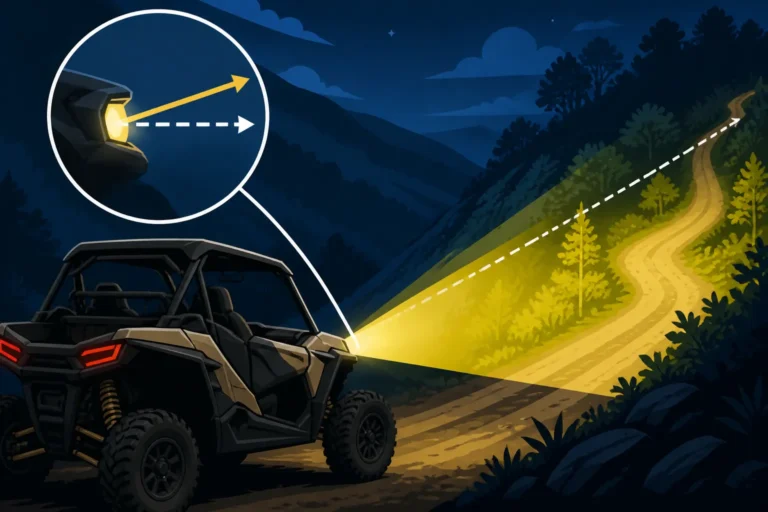
- Headlights: At least one, but usually two, functional headlights that illuminate the road effectively.
- Taillights and Brake Lights: Two operational taillights and two brake lights that activate when the brakes are applied.
- Turn Signals: Front and rear turn signals that are clearly visible and functioning correctly. Many riders find durable, easy-to-install turn signal kits from companies like SuperATV to be a great solution for this requirement.
- Horn: A functional horn that can be heard from a reasonable distance.
- Mirrors: At least one rearview mirror, though often two (one on each side) are preferred for better visibility, especially if you're navigating city traffic. SuperATV also offers a range of robust side mirrors designed for UTVs that can meet these standards.
- Windshield: A safety glass windshield is typically required to protect the occupants from debris.
- Wipers: If a windshield is present, windshield wipers are usually necessary.
- Seatbelts: Factory-installed or equivalent seatbelts for all seating positions.
- Roll Cage: A factory-installed roll cage or equivalent occupant protection system.
- Tires: Tires must have at least 2/32 inch tread depth and be in good condition.
- Fenders/Mud Flaps: To prevent debris from being thrown by the tires.
- Speedometer: An illuminated speedometer that is visible to the operator at all times.
- License Plate Light: A light to illuminate the rear license plate.
Meeting this checklist can be an investment, but it's non-negotiable for legal street operation. Remember, even after all these modifications, you'll need to get an [The $25 Kentucky Inspection] and then secure your SPV registration.
Operational Restrictions on City Streets
Even with a fully compliant SPV, there are still rules about how and when you can operate it on city streets. These restrictions are put in place to ensure safety and minimize disruption:
- Speed Limits: As mentioned earlier, even if the posted speed limit for cars is higher, SPVs are often capped at a lower maximum speed, frequently 35 mph or 45 mph, within city limits.
- Time of Day: While your SPV will have headlights and taillights, some local ordinances might still restrict operation to daylight hours only, or specific hours of operation. Always check the local rules.
- Road Types: SPVs are generally restricted to roads with speed limits below a certain threshold (e.g., 55 mph) and are typically prohibited on state highways or interstates. You might find limits on [Kentucky Rules for Riding a County Road] as well, which could affect how you access city streets.
- Helmet Rules: While not universal for all SPV operators, some local ordinances might still mandate helmet use, especially for riders under a certain age. It’s always best to be prepared and understand [Kentucky Helmet Law for ATV Riders].
These operational rules are as important as the equipment requirements. Ignoring them, even with a street-legal SPV, can result in a citation.
Licensing and Insurance for Street-Legal Machines
Just like any other vehicle on Kentucky's public roads, operating an SPV requires proper licensing and insurance. You can't just jump behind the wheel without these essentials.
- Driver's License: To operate an SPV on city streets, you must possess a valid Kentucky driver's license. The same rules apply as if you were driving a car or truck. You cannot operate an SPV with only an ATV safety course certificate or without a proper license. Understanding [Kentucky Driver's License Rules for ATVs] is key here, as they make it clear a standard driver's license is required for any street-legal operation.
- Insurance: Kentucky law mandates that all vehicles operating on public roads must carry minimum liability insurance. This absolutely includes SPVs. You will need to obtain specific SPV insurance, which is often comparable to motorcycle insurance, to cover potential damages or injuries in the event of an accident. Do not assume your off-road or homeowner's policy will cover you for street use; you need a dedicated policy for your street-legal SPV. [Kentucky SPV Insurance Requirement] outlines these mandates.
Failing to have a valid driver's license or adequate insurance can lead to significant penalties, including fines, license suspension, and potential impoundment of your vehicle. It's not worth the risk.
Practicalities and Pitfalls of City Street Riding
Even with all the state-level information, the real-world application of Kentucky's SPV laws on city streets can feel like navigating a maze. The local "opt-in" requirement introduces a layer of complexity that riders must diligently research. Making assumptions about legality can lead to unnecessary headaches, citations, and a quick end to your street-riding dreams.
How to Confirm a City's Rules
Because Kentucky's SPV law relies on individual cities and counties to "opt-in," the burden is entirely on the rider to confirm the specific rules in any given municipality. There's no statewide list or universal map that says "SPVs allowed here, not there." So, how do you find out?
- Contact the City Clerk's Office or Local Police Department: This is your most reliable source. Call the non-emergency line of the local police department or the city clerk's office and directly ask about ordinances regarding Special Purpose Vehicles on city streets. Be specific: ask if they have opted in, what roads are allowed, what the speed limits are, and if any local permits are required.
- Check the City's Official Website: Many cities publish their ordinances online. Look for sections related to traffic laws, vehicle codes, or recreational vehicles. Use keywords like "Special Purpose Vehicle," "UTV ordinance," or "off-road vehicle street use."
- Local Rider Groups/Forums: While these can be a good starting point for anecdotal information, always cross-reference anything you hear with official sources. Laws change, and what was true for one rider last year might not be accurate today.
- Visit in Person (if feasible): For some, a trip to the local city hall might be the best way to get direct answers and even pick up copies of relevant ordinances.
Never rely on hearsay or what "everyone else is doing." [Kentucky Rules for Riding a City Street] are only enforceable if they're clearly defined, and it's your job to find those definitions.
The Risk of Assuming Legality
The biggest pitfall for riders is assuming that because their UTV is an SPV, it's automatically legal to ride on any city street in Kentucky. This is a dangerous assumption that can quickly lead to trouble. Imagine you've invested heavily, purchasing all your [Kentucky SPV Equipment List] from places like SuperATV, passed the inspection, and have your SPV plate, only to receive a ticket the first time you leave your driveway in a city that hasn't opted in. It's a frustrating, expensive lesson.
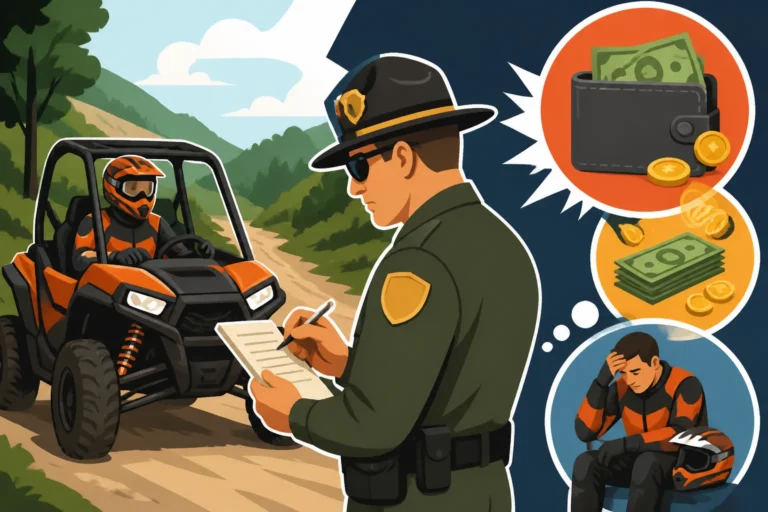
Local law enforcement officers are tasked with enforcing their specific city's ordinances. If their city has not opted into the SPV program, or if you're violating specific operational rules (like riding on a prohibited road or exceeding a speed limit), they will issue a citation. These tickets can carry significant fines, and repeated violations could lead to more severe consequences, including impoundment of your vehicle. It's a risk that far outweighs the convenience of a short ride.
The Ever-Changing Landscape of Local Laws
One final consideration is that local ordinances are not static. City councils and county fiscal courts can amend or repeal ordinances. What was legal last year might not be legal this year. This is particularly true for newer types of vehicles like SPVs, as communities sometimes experiment with pilot programs or adjust rules based on community feedback or safety concerns.
This means that even if you've confirmed a city's rules in the past, it's wise to do a quick check every so often, especially if you haven't ridden there in a while, or if you hear of local discussions about off-road vehicle use. Staying informed protects your investment and ensures your continued legal enjoyment of your SPV on the few city streets where it's truly welcomed.
Summary of Kentucky ATV/UTV Street Legality
To help clarify the differences between a standard ATV/UTV and a Kentucky Special Purpose Vehicle (SPV) regarding city street use, here's a handy comparison:
| Feature | Standard ATV/UTV (Off-Road Only) | Kentucky Special Purpose Vehicle (SPV) |
|---|---|---|
| Designed For | Off-road recreation, trails, work | Primarily off-road, can be adapted for street |
| Street Legal By Default | No | No |
| Requires "Opt-In" by City | Not applicable; generally prohibited | Yes, mandatory for street use |
| Required Equipment | Basic lights (often not street-compliant) | Extensive list (headlights, turn signals, horn, mirrors, windshield, etc.) |
| State Inspection Required | No | Yes, for SPV designation and registration |
| State Title | Yes, for machines bought after 2010 | Yes, specific SPV title |
| Insurance Required for Street | No (unless riding private land by law) | Yes, liability insurance for street operation |
| Driver's License for Street | No (unless crossing certain roads) | Yes, valid Kentucky driver's license |
| Typical Operation | Trails, private property, farm use | Designated city/county roads (if opted-in), trails, private property |
| Common Frustration | Inability to cross/access nearby streets | Navigating complex, varying local ordinances |
| Aftermarket Parts (e.g., SuperATV) | For performance, protection, accessories | Essential for converting to meet SPV equipment requirements |
Disclaimer
This article is for general informational purposes only and does not constitute professional advice. Laws, prices and regulations vary by location and change over time. Consult a qualified professional for guidance on your specific situation.