Kentucky Rules for Riding Private Land
Many ATV and UTV enthusiasts in Kentucky dream of having endless trails to explore, and for many, the allure of riding on private land is strong. However, simply seeing an open field or a stretch of woods doesn't automatically grant you permission to ride. The rules around private property can be confusing, and mistakenly riding where you shouldn't can lead to some real headaches, not to mention legal trouble and strained relationships with landowners. This comprehensive guide will help you understand the ins and outs of legally and responsibly riding your machine on private land here in Kentucky.
Understanding "Private Land" in Kentucky
When we talk about private land in Kentucky, it’s not just a blanket term. It encompasses a wide variety of property types, each with its own owner and, critically, its own set of implied boundaries. It’s crucial to have a clear understanding of what constitutes private property and to dispel any common myths about access before you even think about dropping your tailgate and unloading your machine. Knowing whose ground you're on is the very first step toward responsible riding.
What Constitutes Private Property?
In the simplest terms, private property is any land that is not owned by the government—be it federal, state, or local. This definition covers everything from the small suburban lot with a meticulously kept lawn to the sprawling agricultural operations of the Bluegrass region, vast timber tracts in Eastern Kentucky, or even undeveloped land in the mountains passed down through generations. For ATV and UTV riders, the most common private lands you're likely to encounter are farms, family-owned woodlots, or perhaps large parcels leased for specific purposes like coal mining or logging, which might have different agreements for access.
The key takeaway is that there is always a private owner, whether it’s an individual, a family, a business, or a large corporation. This ownership is legally documented through deeds and surveys, defining clear property lines that, while sometimes unmarked on the ground, are nonetheless real and legally binding. Sometimes, you might think a piece of land looks abandoned or unused, especially if it's overgrown, but it almost certainly has an owner. For example, some riders might see an old dirt road winding into the trees near a small town and assume it's fair game, but that road often has a specific owner, or it might be on property subject to specific usage rights. Understanding this fundamental concept is the bedrock of riding legally. Many of these insights can be found in discussions around [Kentucky Rules for Riding a Farm Road] and [Kentucky Rules for Riding a Mine Haul Road].
Common Misconceptions About Access
One of the biggest pitfalls for ATV and UTV riders is operating under false assumptions about land access. Just because a property isn't completely fenced off, or doesn't have "No Trespassing" signs plastered everywhere, doesn't mean it's open for public recreation. That inviting-looking trail leading into a dense forest might traverse several private parcels, each requiring explicit permission. It’s a common and unfortunate mistake to assume that if you're riding with someone who claims they have permission, you're automatically covered. Always make sure that the person granting access is indeed the owner or has the legal authority to permit riding, and that your name is included in that permission.
Another frequent misconception revolves around utility corridors or old railroad beds. While these paths might seem like public access routes, they are often on private land with easements granted to utility companies or defunct rail lines. These easements typically allow the company to maintain their infrastructure, but the underlying property still belongs to the private landowner. Riding on these without direct permission from the property owner can still be considered trespassing. Relying on the old adage, "we've always ridden here," won't hold up in court if a landowner decides to press charges. The legal landscape prioritizes clear ownership and explicit permission over historical use or assumptions.
The Golden Rule: Permission is Paramount
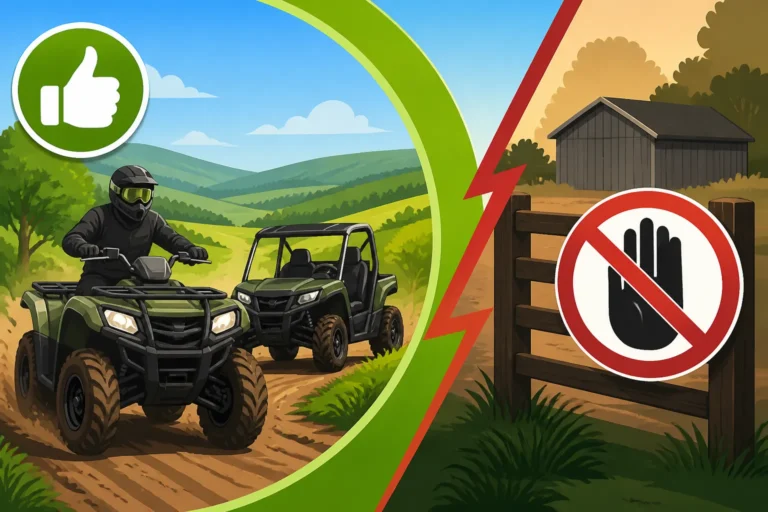
There’s absolutely no substitute for obtaining direct permission from the landowner when you plan to ride your ATV or UTV on their private property. This isn't just a polite suggestion; it's the most critical legal and ethical requirement. Without it, you're putting yourself at risk of fines, legal action, and seriously damaging the relationship between the riding community and private landowners. Think about it from the landowner's perspective: their property is a significant investment and part of their livelihood or personal space. They have a right to control who accesses it and for what purpose. This is where topics like [Kentucky Landowner Permission Rules] become incredibly relevant.
Verbal Versus Written Permission
While a casual "sure, go ahead" from a landowner might feel like enough in the moment, it’s always, always best practice to get that permission in writing. Verbal agreements can be easily forgotten, misinterpreted, or difficult to prove if there’s a dispute down the line. What if the landowner sells the property, or if a new family member inherits it and is unaware of any prior verbal agreement? A written record—even a simple text message, email, or a signed note—provides a clear, undeniable record of your agreement. It should ideally outline who is allowed to ride, which areas of the property are accessible, and the duration of the permission.
For situations involving long-term access, like an annual riding privilege, written consent becomes even more crucial. It protects both you, the rider, by clearly establishing your right to be there, and the landowner, by defining the scope of that permission. Imagine facing a county deputy on private land: being able to produce a signed note from the owner instantly clarifies your situation and can prevent a lot of unnecessary hassle. It’s a small step that offers immense peace of mind and reinforces your commitment to responsible riding.
Specifics of Gaining Landowner Permission
So, you've identified a promising piece of private land and want to ride there. How do you go about getting permission? The first step is often to identify the landowner, which you can typically do through public county property records at the local PVA (Property Valuation Administrator) office. Once you have their name, approach them respectfully and directly. Be clear about your intentions: explain that you’d like to ride your ATV or UTV, specify which parts of their property you're interested in, and for how long.
Demonstrate your commitment to safety and respect for their property. Emphasize that you will stay on designated trails (if applicable), avoid sensitive areas, leave no trace, and generally be a good steward of their land. Be prepared for questions about liability; some landowners might be hesitant due to concerns about potential injuries. Offering to provide proof of your ATV insurance or signing a liability waiver can often alleviate their worries. Be flexible and accommodating to their requests: they might only allow riding during certain hours, on specific days, or restrict access to certain fields or areas where livestock graze. Building a relationship of trust and respect with the landowner is paramount. Sometimes, offering to help with a small chore, like clearing brush or repairing a fence, can go a long way in earning their trust and securing your riding privilege.
Important Legal Considerations for Riders
Even with permission in hand, riding on private land in Kentucky still involves a few legal nuances you should be aware of. It's not a free-for-all just because the owner said yes. These considerations are in place to protect everyone involved: you, the landowner, and the wider community's perception of ATV and UTV riders. Understanding them ensures that your ride is not only fun but also completely within the bounds of the law.
Trespassing Laws and Penalties
Even if you have permission for one parcel, accidentally veering off onto an adjacent property for which you don't have permission can still constitute trespassing. In Kentucky, trespassing can lead to legal consequences ranging from a minor violation, resulting in a fine, to a misdemeanor, depending on the severity and specific circumstances. For example, knowingly entering or remaining on private property without permission, especially if it's clearly posted or fenced, can lead to a citation by local law enforcement. It's not unheard of for landowners, fed up with previous unauthorized riding, to call the sheriff on sight.
The fines associated with trespassing can be significant, and having a legal record can be a hassle. This is why having a clear understanding of your riding boundaries and perhaps even a map provided by the landowner is incredibly helpful. Straying even a few feet across a property line can put you in a tough spot. While [Kentucky Fines for Illegal ATV Road Use] specifically addresses public roads, the concept of unauthorized entry and the penalties for [Kentucky Trespass Rules for Riders] apply equally to private property. Always be vigilant about where you are riding to avoid any accidental infractions that could sour relations with landowners and give all riders a bad name.
Liability and Insurance on Private Land
This is a critical area that many riders overlook. What happens if you get injured or accidentally cause damage to the landowner's property while riding? In Kentucky, landowners generally have a duty to keep their property reasonably safe for invited guests. However, riding an ATV or UTV is an inherently risky recreational activity, and you, as the rider, assume many of those risks yourself. This is precisely why many landowners might require you to sign a liability waiver, releasing them from responsibility for injuries you might sustain.
More importantly, your own ATV insurance policy becomes your primary safeguard here. While Kentucky does not legally mandate insurance for ATVs ridden exclusively on private land, having it is incredibly wise. A good policy can cover your medical expenses if you're injured, as well as property damage you might inadvertently cause—for instance, if you accidentally hit a fence, damage a crop, or destroy a piece of equipment. Without insurance, these costs would fall directly on you. While investing in durable components from companies like SuperATV can certainly enhance your machine's resilience against trail hazards, insurance remains your ultimate financial protection against unforeseen incidents. It's crucial to check your policy's specifics regarding off-road recreational use and to discuss your riding habits with your insurance agent to ensure you have adequate coverage, as detailed in [Kentucky ATV Insurance Requirement].
Specific Machine Regulations
While many specific ATV and UTV regulations in Kentucky primarily pertain to public roads, trails, or specific age groups, certain safety guidelines and common-sense rules still hold true on private land. For instance, manufacturer age recommendations for operating ATVs and UTVs should always be respected, even if you're riding on your own family farm. Allowing a child who is too young or inexperienced to operate a powerful machine on private property still carries significant risks, despite fewer legal mandates.
Similarly, ensuring your machine is equipped with a functional spark arrestor is always a responsible practice, particularly in dry conditions, to prevent wildfires—a devastating consequence for any landowner. While wearing a helmet might not be legally required for adults on private land, it is an essential piece of safety gear that should never be neglected. The serious risks of head injury are the same whether you're on a public trail or a private one, which is why [Kentucky Helmet Law for ATV Riders] is so important. Additionally, even on private property, local noise ordinances can apply if your riding activity is excessively loud or disturbs neighboring properties. Using well-maintained exhaust systems or considering aftermarket options from SuperATV designed for quieter operation can help maintain good neighborly relations. Ensuring your machine adheres to these general safety principles, including [Kentucky Spark Arrester Rules], demonstrates responsible riding beyond mere legal compliance.
Respecting the Land and Your Riding Privilege
Earning the privilege to ride on private land is a testament to your ability to respect the landowner and their property. Maintaining this privilege, and ensuring that future riders can also enjoy such opportunities, depends entirely on how responsibly you conduct yourself. It’s about being a good steward, minimizing your impact, and being a considerate neighbor.
Environmental Impact and Trail Etiquette
When you're enjoying the trails on private land, whether they're well-worn paths or simply open areas, it’s paramount to minimize your environmental footprint. This means making conscious choices to prevent erosion, especially in sensitive areas or during wet conditions. Avoid creating deep ruts that can channel water and degrade soil quality, and never ride through streams, creeks, or delicate wetlands, as this can harm aquatic ecosystems and damage natural habitats. Your machine, perhaps equipped with robust accessories from SuperATV, might be capable of tackling tough terrain, but discretion and environmental awareness should always be your guide.
A core principle of trail etiquette is "pack it in, pack it out." Absolutely all trash, no matter how small, should leave with you. Litter not only makes the land look unsightly but can also harm wildlife and contaminate the environment. If you happen to see trash that isn’t yours, consider taking a moment to pick it up; it shows a broader respect for the land. Also, be mindful of wildlife. Give animals their space, avoid disturbing nesting areas, and respect hunting seasons by being extra cautious and visible. Responsible riding helps preserve the natural beauty and ecological health of the land, ensuring it remains enjoyable for years to come.
Neighborly Conduct and Noise
Even with a landowner’s blessing, constant or excessive ATV and UTV noise can become a major point of contention with their neighbors. Your enthusiasm for riding shouldn't translate into a nuisance for others. Unchecked noise can lead to complaints, sour relationships between the landowner and their community, and potentially jeopardize your hard-earned riding access. It's a key reason why many private land riding opportunities are lost.
Be considerate with your riding times, especially if homes are nearby. Avoid roaring through trails early in the morning or late in the evening. If you're planning a group ride, consider notifying the landowner so they can give their neighbors a heads-up, or limit the number of machines to keep noise levels manageable. When you're close to residences or other sensitive areas, reduce your speed. Some riders find that investing in quieter exhaust systems or regularly maintaining their current setup can help mitigate noise levels. Remember, a single negative experience with a noisy rider can lead to widespread restrictions or even new local ordinances that affect everyone. Being a respectful and considerate neighbor while enjoying your sport is a crucial part of preserving private land riding opportunities for the entire community.
Table: Key Considerations for Private Land Riding in Kentucky
| Aspect | Recommendation | Why It Matters |
|---|---|---|
| Permission | Always obtain clear, preferably written, permission from the landowner. | Legally protects you from trespassing charges and establishes riding rights. |
| Boundaries | Clearly understand and stick to the precise boundaries of the permitted riding area. | Prevents accidental trespassing onto unauthorized neighboring properties. |
| Liability | Carry personal ATV insurance and understand its coverage for private land. | Protects you financially from accidental injuries or property damage caused. |
| Safety Gear | Always wear appropriate safety gear, including a helmet, goggles, and sturdy clothing. | Significantly reduces the risk of serious injury regardless of legal mandates. |
| Environmental | Stay on established paths, avoid sensitive areas, and practice Leave No Trace principles. | Preserves the natural environment, prevents erosion, and fosters good relations. |
| Noise & Time | Be mindful of noise levels and riding hours, especially near residential areas. | Prevents neighbor complaints, maintains community harmony, and protects access. |
| Rider Age | Adhere to manufacturer age recommendations for riders, especially for those under 16. | Ensures rider safety and competence, preventing accidents, consistent with [Kentucky Rules for a Rider Under 16]. |
| Spark Arrestor | Ensure your machine is equipped with a functional spark arrestor. | Essential for fire prevention, particularly in dry conditions, as mentioned in [Kentucky Spark Arrester Rules]. |
Navigating the rules for riding your ATV or UTV on private land in Kentucky truly comes down to cultivating a deep sense of respect: respect for the landowner, respect for their property, and respect for the environment. By diligently obtaining permission, understanding your legal and ethical responsibilities, and practicing truly responsible riding habits, you can ensure that your private land adventures remain positive and sustainable. Always remember that the cherished privilege of off-road riding in Kentucky depends on all of us being exemplary stewards of the land.
Disclaimer
This article is for general informational purposes only and does not constitute professional advice. Laws, prices and regulations vary by location and change over time. Consult a qualified professional for guidance on your specific situation.