Kentucky Rules for Riding a Snow-Covered Road
There’s nothing quite like the sight of a fresh blanket of snow, especially if you’ve got an ATV or UTV sitting ready and waiting. Many of us naturally think, "Hey, the roads are covered, maybe now I can take my machine out and have some fun, or at least get some work done clearing the driveway or helping a neighbor." But hold on a minute before you fire up that engine. Kentucky’s laws on ATV and UTV use on public roads can be a real head-scratcher, and winter weather doesn't automatically create a free-for-all. This guide is here to untangle the specific rules surrounding riding your ATV or UTV on a snow-covered road in the Bluegrass State, explaining when it's okay, when it's absolutely not, and what you need to keep in mind for safety and legality.
The Default Rule: Why Most Kentucky Roads Are Off-Limits (Even Snowy Ones)
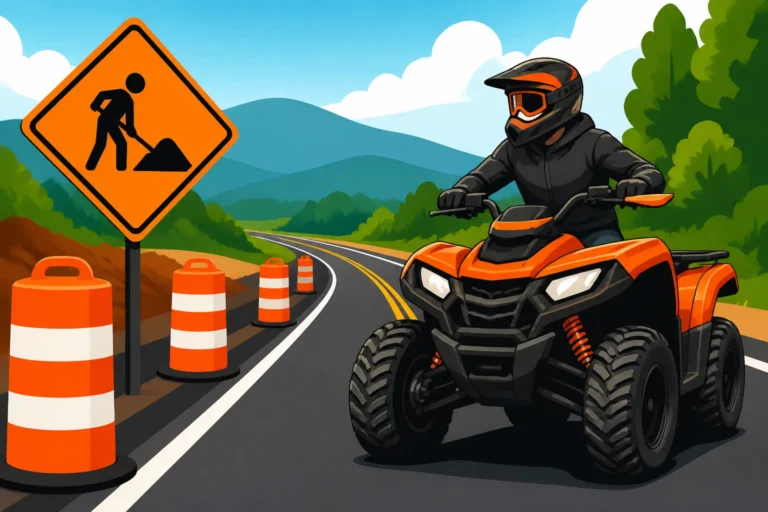
Let's get straight to the heart of the matter: generally speaking, Kentucky law does not permit ATVs or UTVs on public roads. This isn't just a suggestion; it's a fundamental part of the state's vehicle code. You might be staring out your window at a snow-covered country lane, thinking it feels more like a trail than a highway, but to the law, it's still a public road. A fresh snowfall, no matter how deep or beautiful, doesn't magically transform a paved or gravel road into an off-road playground.
Many riders, especially those new to Kentucky or coming from states with different regulations, often feel frustrated by this. It seems counter-intuitive when your ATV is perfectly capable of handling slick conditions, perhaps even better than your truck in some spots. But the rationale behind the law is rooted in safety, both for ATV riders and for other motorists. ATVs and UTVs simply aren't designed to meet the same safety standards as street-legal vehicles. They often lack proper lighting, turn signals, mirrors, and the stability for higher speeds and traffic.
This default prohibition applies equally to roads covered in ice, slush, or deep snow. The condition of the road surface doesn't alter its legal classification. So, if your primary intention is to just take a scenic ride through a snowy landscape on a public road, you're likely stepping outside the bounds of the law. You’ll find that [Why Kentucky Roads Are Closed by Default] provides a comprehensive look at the general restrictions. It’s crucial to understand this baseline before we explore the very specific, and often narrow, exceptions. Ignoring this fundamental rule can lead to significant penalties, even if you feel you're doing no harm.
The Snow Removal Exemption: When Your ATV Becomes a Winter Workhorse
Now, here's where your ATV or UTV can truly shine in the winter months and, more importantly, stay within the bounds of Kentucky law. The state does provide an exemption for the use of these machines on public roads specifically for snow removal. This is fantastic news for homeowners, farmers, and even small businesses who rely on their machines to clear driveways, private lanes, and sometimes, those little stretches of public road that lead to their property.
However, like most legal exemptions, it comes with conditions. This isn't a blanket pass to go joyriding on the state highway with a plow on the front. The law permits ATVs and UTVs to be operated on public roads "for the purpose of snow removal." This typically means you're actively engaged in plowing snow, pushing it off a surface, or otherwise directly facilitating access by clearing winter precipitation. It's about performing a necessary winter chore, not casual transit.
Think of it this way: if you’re using a snowplow attachment on your machine, or even a shovel on the back of your UTV, and you're actively moving snow from a public right-of-way that grants access to your home or farm, you're likely covered. This exemption is particularly helpful for those living on rural roads where municipal plowing might be slower to arrive or for those with long driveways that merge directly onto a public road. You’ll want to review [Snow Removal Under Kentucky Law] for the full details.
It's also important to consider your equipment when leveraging this exemption. Adding a plow to your ATV or UTV from a brand like SuperATV can make quick work of even heavy snowfalls, transforming your recreational machine into a highly effective utility vehicle. Just remember, while your machine might be perfectly equipped for the task, the legal permission is tied to the activity of snow removal itself, not just the fact that there's snow on the ground. You're out there to work, not to play.
Limited Exceptions for Road Use: Navigating Snowy Situations
Even beyond snow removal, Kentucky law carves out a few other narrow exceptions for ATV and UTV use on public roads. These rules don't change just because there's snow, but the conditions might make adhering to them—or even being spotted by law enforcement—a bit trickier. It's vital to remember that these are exceptions, and you must meet their precise requirements.
Crossing a Public Road
One of the most common exceptions is the ability to cross a public road. This is often necessary if your property is bisected by a road, or if you're moving from one section of private land to another. Kentucky law allows you to cross a two-lane public highway, street, or county road if you do so at approximately a ninety-degree angle to the road and only travel for a distance not exceeding 0.2 miles. That's a very short distance, folks – roughly the length of three football fields.
A snow-covered road doesn't change this rule. If you need to cross, you still must do it at a ninety-degree angle and within the 0.2-mile limit. The biggest challenge here can be visibility. Snow can reduce your ability to see oncoming traffic and their ability to see you. Plus, snowdrifts or icy patches might make maintaining that perfect ninety-degree angle tricky. Always prioritize safety, and if you can’t see clearly, or if the conditions make a safe crossing impossible, wait. For more on this, check out [Crossing a Two-Lane at Ninety Degrees in Kentucky] and [0.2 Mile and Not a Yard More].
Farm Use on Snowy Roads
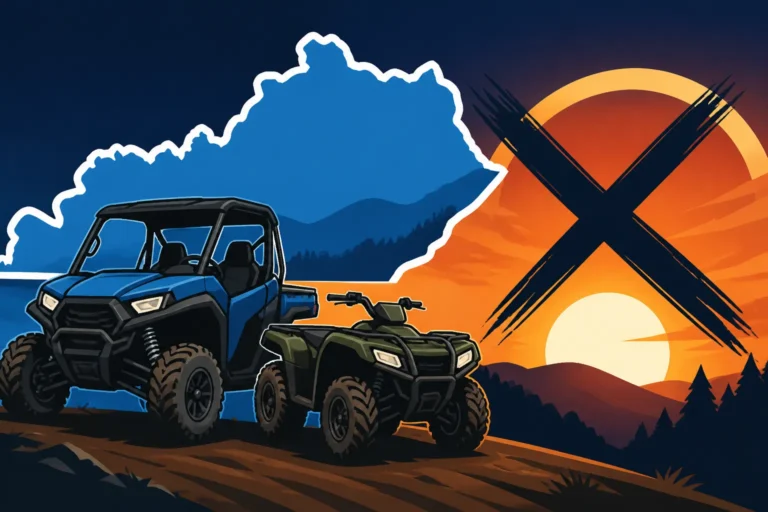
Another significant exception applies to machines used for farming operations. In Kentucky, an ATV or UTV can be operated on a public road for farm purposes between the hours of sunrise and sunset. This exemption explicitly states there is no mileage cap for farm use, which is a big deal for those working large properties or needing to move between fields that are separated by public roads.
If your ATV or UTV is essential for chores like feeding livestock, checking fences, or hauling supplies on your farm, and that work requires you to traverse a snow-covered public road, this exception applies. The key is "farm purposes." Running to the general store for milk is not a farm purpose; moving hay from one barn to another across a county road is. Snow doesn't negate this rule, but it definitely adds a layer of practical concern. [Why Kentucky's Farm Exception Has No Limit] delves deeper into what counts as farm use. Again, winter conditions demand extra vigilance; reduced visibility and slick surfaces mean you need to be even more cautious, especially when operating heavy equipment or trailers.
Special Purpose Vehicles (SPVs) in Opt-In Cities
Kentucky also has provisions for "Special Purpose Vehicles" (SPVs), which are essentially UTVs that have been modified and inspected to meet certain safety standards for limited street use. However, even if your UTV qualifies as an SPV, it can only be operated on public roads in cities or counties that have specifically "opted in" to allow them. Most ATVs won't ever meet the SPV criteria, but some UTVs might.
If you happen to live in an area that has opted in, and your UTV is properly registered and equipped as an SPV, then the rules for SPV operation would generally apply, even on a snow-covered road. This means you'd need the required lighting, mirrors, turn signals, and motorcycle-level insurance. But bear in mind, these opt-in areas are not widespread, and the vast majority of ATVs and UTVs are not SPVs. Don't assume your machine is street legal just because it's winter. For a full rundown, see [Are ATVs Street Legal in Kentucky?].
Beyond the Statute: Practicalities and Safety for Snowy Riding
While understanding the legal framework is crucial, the real world of riding an ATV or UTV in the snow presents its own set of challenges and considerations. Even when you're legally allowed to be on a snow-covered road for a specific purpose, safety should always be your top priority.
Visibility is Key
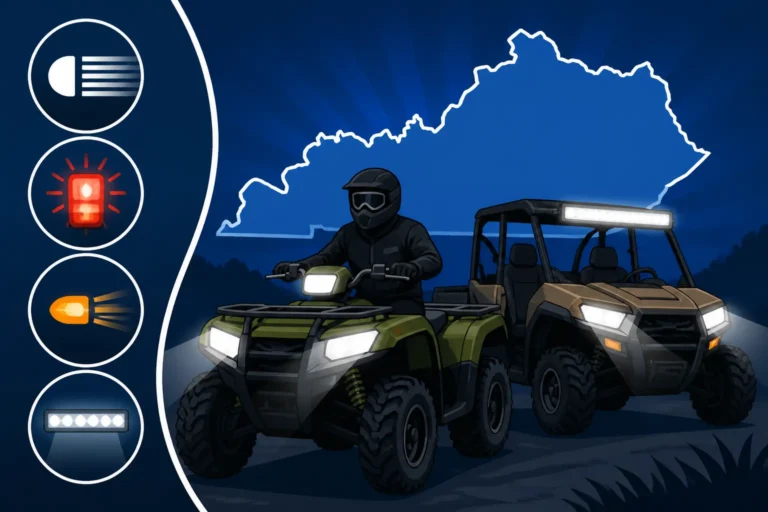
Snow, especially falling snow or snow being kicked up by your machine, severely reduces visibility for everyone. Not only might it be harder for you to see hazards like hidden potholes, ice patches, or other vehicles, but it's much harder for other drivers to see your ATV or UTV. Remember that [Daylight Only Under the Statute] often applies to many of these road-use exceptions. If you're out there clearing snow, especially on a public road, make yourself as visible as possible. Consider adding extra LED lights (SuperATV offers some great options for auxiliary lighting), a bright flag, and wearing highly visible clothing.
Traction and Control
Snow and ice are unpredictable. While ATVs and UTVs are designed for off-road traction, compact snow and black ice on a road surface behave very differently from dirt or mud. Your tires, even knobby ones, might struggle for grip. Consider tire chains or special winter tires if you regularly use your machine for snow removal. Even then, slow down, avoid sudden movements, and increase your braking distance significantly. A UTV with a four-wheel-drive system offers more control than a two-wheel-drive ATV in these conditions.
Dress for Success (and Survival)
Winter riding is no joke. The wind chill on an open ATV or UTV, combined with wet snow, can lead to hypothermia surprisingly quickly. Layer up with waterproof and insulated clothing. A good helmet is always essential, and in Kentucky, [Kentucky Helmet Rules for ATV Riders] are always a good idea on public thoroughfares, even when not explicitly required by law. Don't forget insulated gloves, waterproof boots, and goggles to protect your eyes from snow and wind.
Pre-Ride Checks Are More Important Than Ever
Before you head out into the cold, give your machine a thorough once-over. Check tire pressure, fluid levels (especially antifreeze), lights, and brakes. Make sure your winch is functional (if equipped), your plow attachment is secure, and you have enough fuel. The last thing you want is a breakdown in freezing temperatures, miles from help. These are all part of [Kentucky Rules for Riding in Winter].
Respect Private Property and the Law
Even if you're legally operating your machine for snow removal, that doesn't give you permission to stray onto private property. Stick to the task at hand and the designated public right-of-way. Remember, the general prohibition on ATVs and UTVs on roads still holds true for pleasure riding, even in the snow. If you're caught using your machine illegally, [Kentucky Fines for Illegal ATV Road Use] can be quite substantial. And for any young riders who might be tempted to join in the winter fun, always adhere to [Kentucky Rules for a Rider Under 16].
Summary of Road Use Conditions in Snow
Here's a quick reference table to help clarify when you might be able to use your ATV or UTV on a snow-covered public road in Kentucky:
| Purpose of Operation | Legal Status on Snow-Covered Public Roads | Key Considerations |
|---|---|---|
| Snow Removal | Generally Allowed | Must be actively clearing snow. Focus on your property/access. |
| Crossing a Road | Allowed (Limited) | 0.2-mile limit, 90-degree angle. High visibility needed. |
| Farm Work | Allowed (Limited) | Sunrise to sunset, direct farm purposes only. No mileage cap. |
| Recreational Riding | Generally Prohibited | Snow does not change the default ban on public roads. |
| SPV Use | Allowed (Very Limited) | Only in opt-in cities, with proper registration/equipment. |
| Emergency/Utility | Allowed (Specific) | Only for official emergency/utility work. |
Ultimately, while your ATV or UTV might be a beast in the snow, Kentucky law requires you to be smart and responsible. When in doubt, it’s always better to err on the side of caution and keep your off-road machine on private land or designated trail systems.
Disclaimer
This article is for general informational purposes only and does not constitute professional advice. Laws, prices and regulations vary by location and change over time. Consult a qualified professional for guidance on your specific situation.