Daylight Only Under the Statute
You just bought a new (or new-to-you) ATV or UTV, and you're itching to hit the trails or maybe just cross the road to a neighbor's field. But Kentucky's laws about riding these machines on public roads can feel like a tangled web of 'can-dos' and 'can't-dos,' especially when it comes to the time of day. It’s frustrating when you just want to understand the simple rules! This guide is here to untangle the specific statute that dictates 'Daylight Only' for most ATV and UTV road use in Kentucky, explaining what it means for you and your ride.
Understanding Kentucky's "Daylight Only" Rule
When it comes to operating an ATV or UTV on public roads in Kentucky, one of the most fundamental rules you’ll encounter is the "daylight only" restriction. This isn't just a suggestion; it's enshrined in state statute, meaning it's a hard and fast law you need to follow. Many riders, especially those new to the Kentucky off-road scene or those coming from states with different regulations, often find this particular rule quite confusing and, frankly, a bit limiting. After all, what exactly constitutes "daylight hours," and why is this rule so strictly enforced?
The Core Statutory Language
Kentucky's law is pretty clear on this: generally, ATVs and UTVs are prohibited from being operated on public roads and rights-of-way between "one-half (1/2) hour after sunset to one-half (1/2) hour before sunrise." This specific wording isn't unique to ATVs; it's a common way legal statutes define nighttime hours for various activities. For us off-road enthusiasts, it means your window for legal road access is firmly tied to the rising and setting of the sun. It's not about how bright your headlights are or how well you can see; it's about the clock and the sky. You can find more detailed information on specific lighting requirements that apply in some circumstances in [Kentucky Lighting Requirements for ATVs].
Imagine you're wrapping up a fantastic day of riding at a local park or a friend's farm. The sun is starting to dip below the horizon, painting the sky with brilliant colors. You've still got a mile or two of county road to traverse to get back to your trailer. Even if you feel perfectly safe, and even if your machine has decent lights, if you're venturing out onto that paved or gravel road after the "one-half hour after sunset" mark, you're technically in violation. This can be a real headache, forcing you to pack up earlier than you'd like or find alternative, private routes to avoid legal trouble.
What "Daylight Hours" Actually Mean
So, if the law says "one-half hour after sunset to one-half hour before sunrise" is off-limits, then "daylight hours" naturally encompass everything outside of that window. Essentially, you're good to go from 30 minutes before the sun comes up until 30 minutes after it goes down. This isn't tied to specific times on the clock, but rather the astronomical event itself. This means the exact window changes daily throughout the year. In the summer, you've got longer hours of legal road access, while in the winter, that window shrinks considerably.
It's a good practice to keep an eye on your local sunrise and sunset times, especially if your rides often brush up against those twilight zones. Many weather apps or even a quick search on your phone can give you precise times for your location. This isn't about guesswork; it's about adherence to a specific statutory definition. You don't want to rely on the general "it feels light enough" metric, as that's subjective and won't hold up if a law enforcement officer has a different interpretation. This strict definition is one of the reasons [Why Kentucky Requires Daylight Only] for most ATV/UTV road use.
Common Misconceptions About Night Riding
A big misconception among riders is that if their ATV or UTV is equipped with powerful aftermarket lights – maybe a light bar from SuperATV, for instance, or extra floodlights – they should be allowed to ride on public roads at night. While those lights are fantastic for trail riding in the dark or working on your property, they do not grant you special permission to operate on Kentucky public roads after daylight hours. The statute doesn't factor in your machine's illumination capabilities; it's solely about the time of day.
Another common thought is that if you're just quickly crossing a road, or riding down a quiet, unpaved county road, the rule won't apply. This simply isn't true. Any public road or right-of-way falls under this statute. A quick dash across a two-lane highway to get to the next section of trail, or a leisurely cruise down a rarely used gravel lane, are both subject to the "daylight only" rule. The law doesn't make exceptions for distance or traffic volume in this specific instance. This can be frustrating for riders in rural areas who just need to use a short stretch of road to connect trails or access their land.
Why This Rule Exists: Safety and Visibility
The "daylight only" rule isn't some arbitrary restriction designed to make your life harder. It's rooted firmly in safety, aiming to protect not just ATV and UTV riders, but also other motorists on Kentucky's roads. These machines, by their very nature, present unique challenges when mixed with traditional road traffic, especially when visibility is low.
The Dangers of Low Visibility
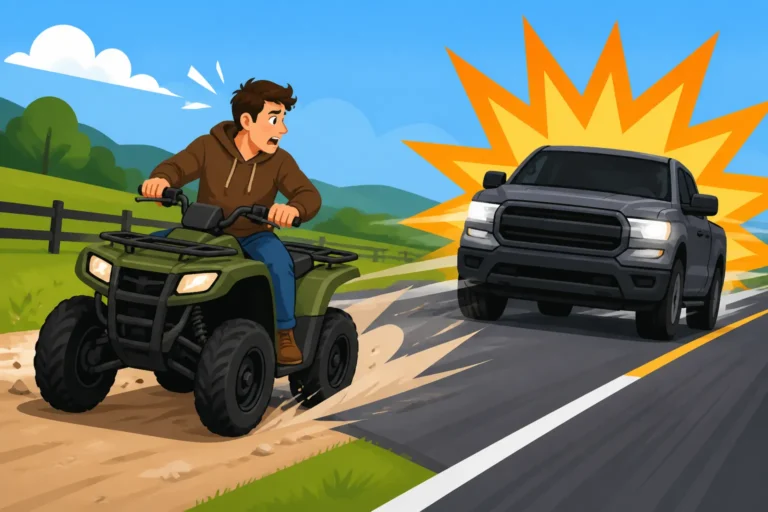
ATVs and UTVs are inherently different from cars or trucks. They're often smaller, less conspicuous, and don't always have the same extensive lighting systems as road-legal vehicles. Even with factory headlights and taillights, they can be harder to spot in the dark, particularly for drivers of larger vehicles who might not be expecting an ATV on the road. The lack of reflective surfaces or specific road-grade lighting can significantly reduce the distance at which an ATV can be seen, creating dangerous situations.
Think about it: A car driver rounding a bend at dusk might have their eyes adjusted to the fading light, but suddenly encountering a smaller, slower-moving ATV that blends into the background can lead to a split-second decision that goes wrong. This risk increases exponentially after dark. The statute is a proactive measure to minimize these kinds of encounters during the most dangerous hours for visibility.
ATV/UTV Design Limitations at Night
Most ATVs and UTVs are designed primarily for off-road use. While they come with headlights and taillights, these are often intended for navigating trails and illuminating obstacles directly in front of the rider, not for making the machine highly visible to oncoming traffic at highway speeds. They might not have turn signals, brake lights that are easily distinguishable, or side markers that are standard on street-legal vehicles. [Kentucky Rules for Riding After Dark] highlights these limitations in practice.
Furthermore, the seating position on an ATV (straddling) or the lower profile of a UTV can place the rider and machine at an inconvenient height for other drivers to spot, especially in vehicles like big trucks or SUVs. It's not just about seeing where you're going; it's about being seen by everyone else on the road. Without the comprehensive safety features and robust lighting systems found on street-legal motorcycles or cars, ATVs and UTVs simply aren't equipped for safe night-time road travel in most scenarios.
Protecting Both Riders and Other Motorists
Ultimately, the "daylight only" rule serves as a blanket protection. It reduces the likelihood of an ATV or UTV being involved in a collision with a road vehicle, which almost invariably would result in serious injury or worse for the ATV rider due to the lack of protective enclosure. It also protects other motorists from the unexpected hazard of an off-road vehicle operating in conditions for which it wasn't designed.
Consider a scenario where a rider on an ATV, even with a powerful SuperATV LED light bar, attempts to cross a busy road after sunset. While the rider might have excellent forward visibility, their machine's rear profile, side visibility, and overall conspicuousness to other drivers might be severely compromised. The law tries to eliminate this exposure, understanding that prevention is the best safety measure when dealing with such fundamental design differences between vehicle types.
Practical Implications for Riders
The "daylight only" rule has significant practical implications for anyone who owns or operates an ATV or UTV in Kentucky, influencing everything from how you plan your rides to how you utilize your machine for property management. Ignoring this rule can lead to fines and legal trouble, so understanding its impact on your riding habits is crucial.
Crossing Roads During the Day
One of the most common reasons ATV and UTV riders find themselves on a public road is to cross it. Whether you're connecting two sections of private land, getting from a trailhead to a gas station, or just moving between fields, Kentucky law does permit specific, limited road crossings for ATVs and UTVs. However, these crossings are still bound by the "daylight only" restriction. [Crossing a Two-Lane at Ninety Degrees in Kentucky] further details the practical approach to such maneuvers.
This means you can't, for example, wait until after dark to cross a state route to retrieve your machine from a friend's property, even if it's just a 100-foot dash. You must complete any permissible road crossings within the legal daylight hours. This demands careful planning, especially if you're out exploring trails and realize you need to cross a road to get back to your starting point. Always check the time as the sun begins to set. It's far better to cut a ride short or find a different route than to risk a citation for riding outside the permitted hours.
Farm Use Exemptions and Time of Day
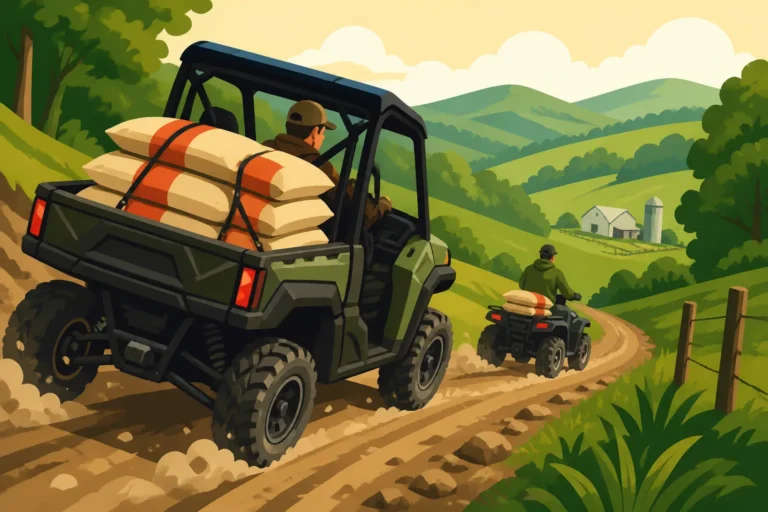
Kentucky law does provide some exemptions for ATVs and UTVs when used for agricultural purposes. Farmers often rely heavily on these machines for daily tasks, from checking fences to hauling feed. Under certain conditions, an ATV or UTV can be operated on a public road for farm-related activities. However, even these agricultural exemptions generally fall under the "daylight only" umbrella. [Why Kentucky's Farm Exception Has No Limit] explains the broad scope of farm use, but the time of day constraint often remains.
This means that while a farmer might be able to ride their UTV down a county road to a distant field without worrying about mileage limits, they still need to do so during daylight hours. Early morning chores before sunrise or late-night checks after sunset would typically require the machine to stay off public roads. This can be a frustration for farmers whose work often extends beyond conventional daylight hours, forcing them to find creative solutions like trailering their machines or using private paths when working in the dark.
Consequences of Violating the Rule
Operating an ATV or UTV on a public road in Kentucky outside of daylight hours is a violation of the law and can lead to penalties. If a law enforcement officer observes you riding during prohibited times, you could face a citation and a fine. These aren't just minor inconveniences; they can put a damper on your riding experience and your wallet. [Kentucky Fines for Illegal ATV Road Use] explains the financial impact of such violations.
Beyond the immediate legal consequences, there's the much greater risk of an accident. As discussed, the lack of visibility at night drastically increases the danger. A citation is one thing, but a serious collision is entirely another. It’s a harsh reality that violating this simple rule could have life-altering consequences, making adherence to the "daylight only" restriction not just a legal obligation, but a critical safety practice for every rider.
| Aspect | General ATV/UTV Road Use (Daylight Only) | Special Purpose Vehicle (SPV) Road Use (Night) |
|---|---|---|
| Operating Hours | One-half hour before sunrise to one-half hour after sunset | Any time, including night |
| Primary Use | Off-road, limited road crossing/farm use | Modified for limited on-road use |
| Required Equipment | Basic factory lights | Extensive road-legal lighting, signals, mirrors |
| Registration/Title | Title required | Title and SPV registration required |
| Driver's License | Not required for crossing (though recommended) | Required |
| Insurance | Not required for crossing | Required (motorcycle-level) |
| Inspection | Not required | Annual inspection required |
| Roads Permitted | Crossing, farm use (specific conditions) | Designated city/county roads (opt-in) |
Exceptions and Special Purpose Vehicles (SPVs)
While the general rule in Kentucky is "daylight only" for ATVs and UTVs on public roads, there are specific circumstances and vehicle classifications that allow for night-time operation. It's crucial to understand these distinctions, as they require significant modifications to your machine and adherence to a different set of regulations.
SPV Lighting Requirements for Road Use
Kentucky introduced legislation allowing for the designation of certain UTVs as "Special Purpose Vehicles" (SPVs), which, after meeting stringent requirements, can operate on public roads even at night in participating communities. This is where you start to see a significant difference from a standard off-road machine. To qualify as an SPV, a UTV must be equipped with a whole host of road-legal features, including turn signals, brake lights, dual mirrors, a horn, and an illuminated speedometer. [Kentucky Street Legal UTV Requirements] outlines these in detail.
For night-time operation, the lighting requirements for SPVs are essentially on par with those for motorcycles or other low-speed vehicles. This means not just one headlight, but typically two headlamps capable of illuminating the road ahead, two taillamps, and proper brake lights that are clearly visible to following traffic. This ensures the machine is as conspicuous as possible to other road users, significantly mitigating the visibility issues that lead to the "daylight only" rule for unmodified machines. If you're looking to upgrade your UTV with road-legal components for SPV conversion, companies like SuperATV offer many of the parts you'd need, from mirrors to signal kits, making the process a little less daunting.
Emergency and Utility Exceptions
There are also specific exceptions carved out for certain emergency and utility operations. For instance, authorized personnel operating ATVs or UTVs in the course of their duties, such as emergency responders or utility workers addressing an outage, may be permitted to operate these vehicles on public roads outside of daylight hours. These situations are typically critical and require the immediate deployment of resources, making the "daylight only" rule impractical.
These exemptions are not for the general public and are strictly limited to official capacities. They often involve vehicles that are clearly marked and operated by trained professionals. This ensures that while essential services can be performed, the general public isn't suddenly sharing the road at night with a proliferation of unmarked, unlit off-road vehicles. It’s a balance between public safety and essential service provision.
The Future of Night Riding Laws
The landscape of ATV and UTV laws is constantly evolving, with many local communities and states grappling with how to integrate these popular machines safely into public access. While the statewide "daylight only" rule remains in effect for most ATVs and UTVs, the existence of the SPV category demonstrates a legislative willingness to adapt. Some Kentucky cities and counties have already opted into the SPV program, allowing these specially equipped UTVs on their roads, which inherently includes night-time operation if the vehicle meets all requirements.
As rider advocacy groups continue to push for more access, and as technology advances with safer, more road-friendly designs, we might see further adjustments to these laws. However, any expansion of night riding privileges would undoubtedly come with equally stringent safety equipment mandates and perhaps even specific training requirements. For now, if you're not operating a fully compliant SPV in a jurisdiction that permits them, the best and safest policy is to stick to the "daylight only" rule when your ATV or UTV is on any public road in Kentucky.
Disclaimer
This article is for general informational purposes only and does not constitute professional advice. Laws, prices and regulations vary by location and change over time. Consult a qualified professional for guidance on your specific situation.