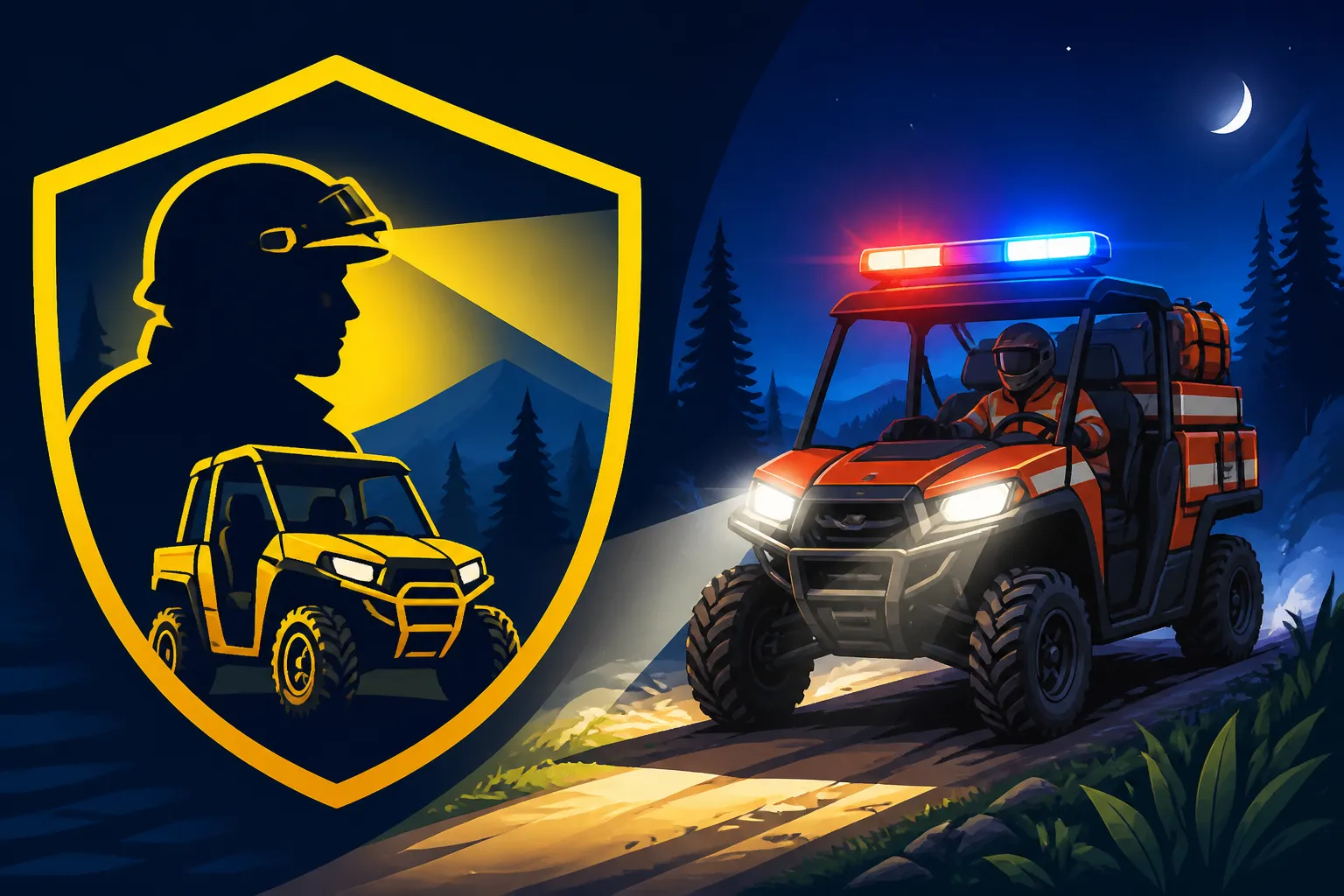
Why Emergency Crews Can Ride After Dark
It’s a sight that can make you scratch your head if you’re a regular ATV or UTV owner in Kentucky. You know the rules: riding your machine on public roads after dark is generally a big no-no. But then you see it—a fire truck leading an ATV with flashing lights down a county road at dusk, or a search and rescue team zipping through a holler in the dark on their side-by-sides. If you’ve ever wondered why emergency crews seem to operate under a different set of rules when it comes to riding ATVs and UTVs on Kentucky roads after nightfall, you're not alone. This guide will delve into the critical distinctions that allow these dedicated professionals to do their vital work when the sun goes down, while most of us are safely off the pavement.
The General Rule: Why Night Riding on Kentucky Roads is Usually a No-Go
For the vast majority of Kentuckians who own ATVs and UTVs, the rules about riding on public roads are quite clear, and often, quite restrictive. The state's general stance is designed to prioritize safety on shared roadways, and that means limiting exposure, especially during times of reduced visibility.
"Daylight Only" and the Statute's Intent
Kentucky law is pretty straightforward when it comes to recreational ATV use on public roads: it’s primarily a "daylight only" affair. This isn't just a suggestion; it's a statutory limitation that impacts every rider thinking about taking their machine from one private property to another via a short stretch of blacktop. The intent behind this rule is simple and critical: visibility. ATVs and UTVs, even those equipped with some lighting, are generally smaller, lower to the ground, and less conspicuous than full-sized vehicles. In the low light of dusk, dawn, or complete darkness, they can be incredibly difficult for motorists in cars and trucks to see, even with the best intentions. This drastically increases the risk of accidents.
Imagine trying to spot a smaller machine against the dark backdrop of a tree line or an unlit country road after sunset. It’s a challenge, even for alert drivers. The law aims to remove that inherent risk, protecting both the ATV rider and other road users. This is why you'll often hear about [Kentucky Rules for Riding After Dark] being so stringent.
The Frustration for Regular Riders
This "daylight only" restriction can be incredibly frustrating for regular riders who rely on their ATVs or UTVs for practical tasks. Maybe you live on a large farm, and a portion of the county road runs between two fields, or perhaps your hunting property requires a quick hop across a two-lane road. When daylight fades, those necessary trips become illegal. This often means having to load your machine onto a trailer for a distance you could cover in mere minutes, or simply postponing essential work until morning. It feels counterintuitive, especially if your machine is equipped with decent headlights and taillights. You might have even invested in aftermarket lighting from a company like SuperATV, thinking it would make you safer and more visible, only to find the law still says "no." The reality is, while improved lighting does enhance safety, the blanket rule is there to cover all machines, regardless of individual modifications.
Limited Exceptions for Non-Emergency Use
It’s important to remember that even during daylight hours, using an ATV on public roads in Kentucky is highly restricted. The default is that [Why Kentucky Roads Are Closed by Default] to these machines. There are very narrow exceptions that most riders quickly learn, such as the ability to cross a two-lane road at a ninety-degree angle to get from one private property to another, provided the road isn't a divided highway and the crossing is done safely. There's also a specific provision allowing travel for no more than 0.2 miles on a two-lane public highway. And, of course, there's the much-discussed farm exception, which allows farmers to operate their machines on public roads for agricultural purposes, with no specific mileage cap, provided it’s daylight. But even these exceptions are strictly for daylight hours. You can read more about it in articles like [Daylight Only Under the Statute]. The moment the sun dips below the horizon, or even significantly before, these allowances largely evaporate for private citizens.
Understanding the Emergency Exemption for ATVs in Kentucky
Now, let's turn our attention to the exceptions that make it possible for those emergency lights to flash after dark. It's not a free pass, but a critical allowance based on the nature of the work being performed and the public good it serves.
Who Qualifies as "Emergency Crews"
When we talk about "emergency crews" or "emergency services" in Kentucky, we’re referring to a very specific set of authorized personnel and organizations. This typically includes:
- Law Enforcement: Police, sheriff's deputies, and state troopers use ATVs for patrol in areas inaccessible by standard cruisers, for search and rescue operations, and for responding to incidents in rural or rugged terrain.
- Fire Departments: Volunteer and professional fire departments often utilize ATVs or UTVs, sometimes specially equipped with small tanks and pumps, to reach brush fires, assist in accident scenes off main roads, or access remote areas for rescue.
- Emergency Medical Services (EMS): Paramedics and EMTs on specialized UTVs can reach injured individuals in difficult-to-access locations, particularly in Kentucky's mountainous regions or vast outdoor recreational areas.
- Search and Rescue (SAR) Teams: These dedicated volunteers and professionals, often working in conjunction with law enforcement, depend heavily on ATVs and UTVs for locating lost hikers, hunters, or individuals in distress, especially when time is of the essence.
- Utility Workers: While not "emergency" in the same life-or-death sense, utility companies (electric, water, telecom) often have specific allowances for using specialized vehicles, including ATVs and UTVs, to restore critical services during outages, which often occur or extend into night hours, particularly after storms.
These aren't just folks who happen to have an ATV; they are trained, authorized personnel operating under the official directives of their respective agencies.
The Legal Basis for After-Dark Operation
The ability for emergency crews to operate ATVs and UTVs on public roads after dark in Kentucky isn't typically granted by a specific, dedicated "ATV emergency exemption" clause that explicitly says "emergency vehicles can drive ATVs at night." Instead, it generally falls under broader statutes and common law principles that provide exemptions for emergency vehicles and personnel when responding to or performing official duties.
Emergency vehicle statutes commonly grant certain privileges—like exceeding speed limits, disregarding traffic signals, and operating outside normal vehicle restrictions—when an emergency vehicle is responding to an emergency call. While ATVs aren't typically "emergency vehicles" in the same sense as an ambulance or fire truck, their operation by emergency personnel often falls under the umbrella of performing official duties, especially when responding to a genuine emergency or critical incident. The overriding principle is that the public safety mission takes precedence over standard vehicle regulations designed for routine traffic.
This means that while your personal side-by-side must adhere to the [Kentucky Rules for Riding a County Road] during daylight hours, a sheriff's deputy on a specialized ATV, responding to a call for a lost person, can operate under the protection of their official capacity, which includes after-dark operation. They aren't exempt from the laws of physics, of course, and still must operate with due regard for the safety of all persons, but their legal framework is different.
Essential Roles in Critical Situations
The necessity of ATVs and UTVs for emergency services, especially after dark, cannot be overstated in a state like Kentucky. Our rugged terrain, dense forests, and countless holler roads make many areas virtually inaccessible to traditional vehicles.
Consider a scenario in Eastern Kentucky: a hiker is reported missing in the Daniel Boone National Forest as dusk approaches. A search and rescue team, using UTVs equipped with high-intensity floodlights and thermal imaging, can quickly cover miles of narrow, unpaved trails and old logging roads that a pickup truck couldn't even dream of navigating. Their ability to operate after dark means they don't have to suspend operations and lose critical hours searching for someone who might be injured or exposed to the elements.
Another example: a powerful thunderstorm sweeps through rural Kentucky, knocking out power to hundreds of homes. Utility crews might use heavy-duty ATVs or UTVs, perhaps outfitted with winches or small cargo beds from a brand like SuperATV, to reach downed lines in muddy fields or remote easements. Their ability to work through the night is crucial for restoring electricity, sometimes to vulnerable populations dependent on medical equipment.
These machines bridge the gap between foot travel and larger, less maneuverable vehicles. They are agile, capable of traversing challenging landscapes, and when operated by trained professionals, they are indispensable tools for saving lives and restoring essential services under the cover of darkness.
Equipment and Training for After-Dark Emergency ATV Operations
It's not just about having a legal exemption; it's also about the specialized gear and rigorous training that goes into making after-dark ATV operations by emergency crews safe and effective. This isn't your weekend joyride; it's a professional deployment.
Enhanced Lighting and Safety Gear
The ATVs and UTVs used by emergency services are rarely stock machines. They are often heavily modified for their specific missions, and lighting is a huge part of that. While standard ATVs have basic headlights and taillights, emergency machines go far beyond.
- Auxiliary Lighting: Expect powerful LED light bars mounted on the front, sides, and sometimes the rear, capable of turning night into day. These lights are often from specialized off-road lighting manufacturers, designed for extreme durability and illumination.
- Emergency Strobes: Flashing red, blue, or amber lights (depending on the service) are universally present, making these machines highly visible even from a distance, alerting other potential road users or search team members to their presence.
- Reflective Markings: The vehicles themselves are usually emblazoned with highly reflective decals and striping, ensuring they catch and return light from any source, again enhancing visibility.
- Personal Protective Equipment (PPE): The riders themselves wear high-visibility gear, often reflective vests or jackets, and always [Kentucky Helmet Law for ATV Riders] compliance is paramount. Some teams might even use headlamps with wide flood patterns or night vision goggles in specific scenarios.
This level of illumination and visibility far surpasses the "one headlight and two taillights burning" required for a basic street-legal SPV in Kentucky, let alone a recreational ATV. The sheer amount of light these machines put out is a significant factor in their ability to operate safely in darkness.
Specialized Training for Night Operations
Emergency personnel don't just receive an ATV and point it into the dark. They undergo extensive, specialized training. This training covers:
- Night Vision and Depth Perception: Understanding how human vision changes in low light, and techniques for compensating for reduced depth perception.
- Terrain Reading: Learning to "read" the trail or terrain in limited light, identifying hazards like drop-offs, roots, rocks, and mud pits that are much harder to spot without daylight.
- Vehicle Dynamics: Mastering the handling characteristics of their specific ATV or UTV with added equipment, and how that changes in adverse conditions or at night.
- Navigation: Advanced GPS and mapping skills are crucial, often integrated with thermal imaging or other sensor data, allowing teams to navigate complex environments without visual cues.
- Team Communication: Effective communication protocols are vital when working in teams in challenging conditions, ensuring everyone knows the plan and potential hazards.
This isn't merely about getting a machine from Point A to Point B; it's about operating it effectively and safely under extreme pressure, often with lives at stake. Many of these skills are honed through specific courses that simulate real-world emergency scenarios, often incorporating products from companies like SuperATV that enhance vehicle capability.
Agency Policies and Protocols
Beyond state law and individual training, each emergency agency has its own set of internal policies and protocols governing the use of ATVs and UTVs, particularly for after-dark operations. These policies often dictate:
- When and Where Machines Can Be Used: Strict guidelines on what constitutes an "emergency" justifying ATV deployment and what types of terrain are permissible.
- Operational Speeds: Often lower speed limits are enforced for night operations, especially in unfamiliar terrain.
- Team Composition: Requirements for multiple operators, spotters, or specific roles within a team.
- Maintenance Schedules: More frequent and rigorous checks on lighting, tires, and safety systems for machines used in critical operations.
- Incident Reporting: Detailed documentation of every deployment, including any incidents or near-misses, to continuously improve safety.
These comprehensive frameworks ensure that while an exemption exists, it is exercised with the utmost responsibility and professionalism.
Distinguishing Emergency Use from Recreational Riding
It’s crucial to understand that the difference between an emergency crew riding an ATV after dark and a private citizen doing the same isn't a grey area; it's a fundamental legal and practical distinction.
The "Purpose" Test
The core differentiator lies in the purpose of the ride.
- Emergency Crews: Their use of ATVs and UTVs is for official, sanctioned duties related to public safety, emergency response, law enforcement, or critical infrastructure maintenance. It is not for personal transport, recreation, or convenience. The machine is a tool, deployed as part of a mission.
- Recreational Riders: For private citizens, riding an ATV on public roads, especially after dark, is generally considered recreational or for personal utility. The law is designed to separate these activities from the flow of standard vehicular traffic for safety reasons. Even if you're trying to haul firewood a short distance on a country road at dusk, your purpose doesn't fall under the emergency exemption.
This "purpose test" is why you might face [Kentucky Fines for Illegal ATV Road Use] if caught riding after dark, while an EMS team won't. They are performing a public service under specific legal protections, while you are engaging in an activity restricted by statute.
Avoiding Misconceptions
It’s easy to see an emergency UTV with a light bar from SuperATV and think, "My UTV has similar lights, why can't I ride?" But that's a dangerous misconception. The emergency exemption is not a loophole for private owners to justify after-dark road use. It is tightly controlled and applies only to authorized personnel in the course of their official duties. There is no individual "emergency" that would grant a private citizen the same privilege. If your personal situation requires after-dark travel across a short road segment, the legal and safe method is always to trailer your machine or find an alternative route.
Public Safety vs. Individual Convenience
Ultimately, the distinction boils down to a balance of public safety. The state makes a pragmatic decision that the benefit of allowing emergency services to use ATVs and UTVs 24/7—to save lives, protect property, and maintain essential services—outweighs the risks, given their specialized equipment, training, and operational protocols. For the general public, the risks associated with after-dark ATV use on roads for personal convenience or recreation are deemed too high, leading to the clear "daylight only" rule. It’s a trade-off that prioritizes collective well-being and ensures that those who truly need to be out there in the dark on these machines can do so effectively and, as safely as possible, within the bounds of the law.
Understanding this distinction isn't just about knowing the law; it's about appreciating the vital work emergency crews do and respecting the safety regulations that keep all Kentuckians safer on our roads.
| Feature | Regular ATV Rider (Non-Emergency) | Emergency Crew ATV Rider (Official Duty) |
|---|---|---|
| Purpose of Ride | Recreational, personal transport, farm work | Public safety, emergency response, law enforcement |
| After-Dark Road Use | Generally prohibited ("daylight only" rule applies) | Permitted under official duty/emergency statutes |
| Lighting Requirements | Standard headlights/taillights (for legal exceptions) | Enhanced auxiliary lights, emergency strobes |
| Required Training | No mandatory state ATV safety course for adults | Extensive specialized night operation training |
| Legal Basis | Restricted by specific ATV road use statutes | Covered by broader emergency vehicle exemptions |
| Liability / Accountability | Personal liability for violations | Agency protocols, professional accountability |
| Visibility Gear (Personal) | Recommended, but not always legally mandated | High-visibility, reflective PPE often required |
Disclaimer
This article is for general informational purposes only and does not constitute professional advice. Laws, prices and regulations vary by location and change over time. Consult a qualified professional for guidance on your specific situation.