The $25 Kentucky Inspection an SPV Must Pass
Navigating the specific requirements to make your beloved ATV or UTV street legal in Kentucky can feel like trying to solve a complicated puzzle, especially when you encounter phrases like "SPV inspection." Many riders get stuck wondering what an SPV even is, or what on earth they need to do to pass this mysterious inspection that's supposed to open up public roads. This guide is here to untangle that confusion, walking you through the ins and outs of the mandatory $25 Kentucky inspection your Special Purpose Vehicle (SPV) needs to pass, and what it truly means for your riding freedom in the Bluegrass State.
What Even Is an SPV in Kentucky?
Before we dive into the nitty-gritty of inspections and equipment, it's absolutely crucial to understand what Kentucky actually means when it talks about a "Special Purpose Vehicle" or SPV. This isn't just a fancy name for your everyday ATV or side-by-side; it's a specific legal classification that opens (and closes) certain doors regarding road use. For so many riders, the dream of taking their machine on short stretches of pavement is tantalizing, but the legal reality is far more nuanced than simply owning an off-road vehicle.
The Legal Definition Beyond the A-T-V
Kentucky law defines a Special Purpose Vehicle (SPV) as a motor vehicle that is not an ATV, UTV, or recreational off-highway vehicle (ROV) as those terms are typically understood, but which is manufactured and designed for off-highway use and for which the manufacturer has issued a certificate of origin for an SPV. Confused yet? You're not alone! Essentially, an SPV is a vehicle that looks like an ATV or UTV but has been manufactured with the specific intent of potentially being modified and registered for very limited road use. It's a subtle but critical distinction. It often boils down to what the manufacturer calls it and how it was originally certified. This legal framing is Kentucky's way of trying to bridge the gap between pure off-road machines and traditional road-legal vehicles, without fully endorsing a free-for-all on public roads. It's a specific box the state created to manage machines that aren't quite cars, aren't quite motorcycles, and aren't purely off-road.
Why the Distinction Matters for Road Use
The SPV designation is the only way Kentucky law provides for any sort of intentional public road use for these types of machines outside of very narrow exemptions like farm work or emergency services. Without being classified and registered as an SPV, your ATV or UTV is largely confined to private land, designated trail systems, or those tiny, almost blink-and-you'll-miss-them [Kentucky Rules for Crossing a Highway] crossings. The frustration of owning a powerful machine that can handle rough terrain, only to be strictly limited on pavement, is a common refrain among Kentucky riders. This distinction means that even if you've added all the bells and whistles to your UTV, if it doesn't meet the SPV criteria and pass the associated inspection, it won't be legally permitted on public roads for anything more than quick, statutory crossings. It truly determines your machine's legal footprint on Kentucky's vast network of roads, ensuring that the limited road access granted to these vehicles is met with a certain standard of safety and identification.
The Core Challenge: The $25 Kentucky Inspection
Alright, let's get down to brass tacks. You understand what an SPV is (or at least, what Kentucky says it is), and you're ready to take the plunge to make your machine as street-friendly as possible within the state's narrow confines. The biggest hurdle, and often the most nerve-wracking part for many riders, is the actual inspection. This isn't just a quick once-over; it's a specific check that carries a non-negotiable fee and a very defined list of requirements.
Understanding the Inspection's Purpose and Process
The $25 Kentucky inspection for an SPV isn't just about collecting a fee; it's a critical safety checkpoint designed to ensure that any machine venturing onto public roads, even for limited use, meets a baseline standard of equipment and functionality. The state wants to know that your machine can signal, stop, see, and be seen. For many, the first question is, "Where do I even go for this?" Typically, you'll start your journey at your local County Clerk's office. While the clerk handles the paperwork and collects the fee, the actual inspection itself is often performed by a certified inspector, which in many Kentucky counties means a Sheriff's Deputy or a Kentucky State Police officer. It's not usually a dedicated inspection station like you might find for car emissions. You'll need to schedule this, and sometimes they'll come to you, or you'll take your machine to a designated spot. Be prepared to bring your vehicle's Certificate of Origin or current title, along with proof of ownership. The inspector will go through a checklist, looking for very specific items, which we'll detail next. This process can sometimes feel like a bit of a bureaucratic dance, but it's a necessary step in the SPV journey.
What the Inspector is Really Looking For
This is where the rubber meets the road, quite literally. That $25 fee buys you the opportunity for an inspector to scrutinize your machine against a specific list of safety equipment. They're not just eyeballing it; they have a clear set of criteria they must check off. Think of it like this: if you're going to be on the same pavement as cars, even for a short distance, you need to have the basic tools to communicate your intentions and ensure visibility. Many riders turn to aftermarket suppliers like SuperATV to ensure their machines are up to snuff, acquiring everything from turn signal kits to DOT-approved tires.
Here's a detailed breakdown of what the inspector will be looking for:
- Headlights: You need at least one functioning headlight. It needs to be properly aimed and bright enough to illuminate the path ahead.
- Taillights: At least two taillights are required, visible from the rear, and working in conjunction with your headlights.
- Brake Lights: These are crucial for safety. They must illuminate when the brake is applied, clearly signaling to anyone behind you that you're slowing down.
- Turn Signals: Both front and rear turn signals are mandatory, clearly indicating your intention to turn left or right. These need to be visible from appropriate distances. This is often one of the first modifications riders make.
- Mirrors: You must have at least one rearview mirror, providing a clear view of the roadway to the rear. Many riders opt for dual mirrors for enhanced safety and visibility, and options from companies like SuperATV can make this an easy add-on.
- Horn: A working horn is essential for signaling warnings or attracting attention. It should be audible under normal operating conditions.
- Windshield: A windshield is often required, providing protection from debris and elements. It must be made of safety glass or a similar approved material.
- Seatbelts/Restraint Systems: If your machine has seats designed for multiple occupants (like most UTVs), then seatbelts or proper restraint systems are a must for all seating positions.
- Tires: Your tires must be in good condition, with sufficient tread depth (often specified as a minimum of [Two Thirty-Seconds of Tread in Kentucky]). They also need to be designed for on-road use, not just aggressive off-road lugs that could damage pavement.
- Illuminated Speedometer: You need a functioning speedometer that is illuminated for night visibility. This ensures you can monitor your speed and adhere to local limits.
- Roll Cage/Protective Structure: For UTVs, a factory-installed roll cage or other protective structure is typically a requirement, designed to protect occupants in the event of a rollover.
The inspector's job is to ensure that every single one of these items is present, properly installed, and fully functional. A failure on even one item means you won't pass, and you'll have to make the repair or addition and reschedule the inspection, potentially incurring another $25 fee or at least significant inconvenience. It's a rigorous process because, despite the limited use, you are operating on public roads, and safety is paramount.
| SPV Inspection Requirement | Why It's Needed | Common Challenges | Where to Find Components (Example) |
|---|---|---|---|
| Headlights (1+) | Visibility for rider and others | Aiming, brightness, proper wiring | Aftermarket LED kits |
| Taillights (2+) | Rear visibility, night riding | Wiring, proper placement | Integrated taillight bars |
| Brake Lights | Signaling deceleration | Sensor function, bulb replacement | OEM replacements |
| Turn Signals (F/R) | Indicating direction | Wiring complexity, visibility | SuperATV turn signal kits |
| Rearview Mirror (1+) | Rearward visibility for safety | Vibration, field of view, secure mounting | Clamp-on mirrors |
| Horn | Audible warning device | Functionality, loudness | Universal horn kits |
| Windshield | Rider protection from debris | Material quality, secure mounting, clarity | Polycarbonate windshields |
| Seatbelts/Restraints | Occupant safety in crash/rollover | Proper installation, condition of webbing | 4-point harness systems |
| Tires | Road grip and safety | Tread depth, proper rating, condition | DOT-approved ATV/UTV tires |
| Illuminated Speedometer | Monitoring speed, night visibility | Calibration, lighting, accuracy | Digital dash upgrades |
| Roll Cage | Occupant protection in rollover | Factory installed, no modifications to integrity | OEM roll cages (for UTVs) |
Beyond the Inspection: Other Hurdles to Street Legality
Passing the $25 Kentucky inspection is a huge step, and you should definitely feel a sense of accomplishment. However, it's not the final destination on your journey to limited street legality. There are still several administrative and legal hoops you need to jump through, each with its own set of requirements and costs. Overlooking any of these steps can quickly negate the hard work you put into passing that initial inspection.
Registration, Plates, and Annual Renewals
Once your SPV has passed its inspection, you'll take your passed inspection form (often signed by the Sheriff's Deputy or KSP officer) back to your County Clerk's office. This is where you'll formally register your machine as an SPV. This isn't a one-time thing; like other motor vehicles, your SPV will be issued a special license plate that you'll need to display, and this registration will require annual renewal. The fees for registration and renewal are separate from the initial $25 inspection fee. These costs can add up over time, and it's important to factor them into your overall budget if you plan on using your SPV on public roads. Failing to keep your registration current means your SPV is no longer legally permitted on the streets, even if it passed inspection last year. This ongoing commitment is part of what makes street legality a continuous responsibility for owners. You're essentially adopting the administrative burdens of a traditional vehicle, albeit for a machine with highly restricted road privileges.
Insurance, Driver's License, and Local Ordinances
Beyond the vehicle itself, Kentucky law has requirements for the operator and the specific locations of use. First and foremost, you'll need to secure specific insurance for your SPV. This isn't just basic liability; Kentucky often requires "motorcycle-level insurance for a Kentucky SPV," meaning the coverage and associated costs are generally higher than a standard off-road policy. This ensures that in the event of an accident on public roads, there's adequate financial protection. Next, to legally operate an SPV on any public road, you must possess a valid driver's license. No learner's permits, no exceptions; if you're behind the wheel on a Kentucky street, you need to be a licensed driver.
Perhaps the most frustrating and often overlooked hurdle is the local ordinance requirement. Kentucky law allows for SPV road use only if the specific city or county has "opted in" by passing its own local ordinance. This means that even if your machine is fully inspected, registered, plated, and insured, you cannot legally ride it on public roads in a county or city that hasn't specifically allowed it. [Why a Kentucky City Must Opt In] is a common source of confusion and disappointment for riders. It creates a patchwork of regulations across the state, where one county might welcome SPVs on certain roads, while an adjacent one strictly forbids them. Always, always check the local laws for your specific riding area before you even think about hitting the pavement. This isn't something the state inspection covers; it's a separate layer of local governance you must navigate.
The On-Going Commitment to Compliance
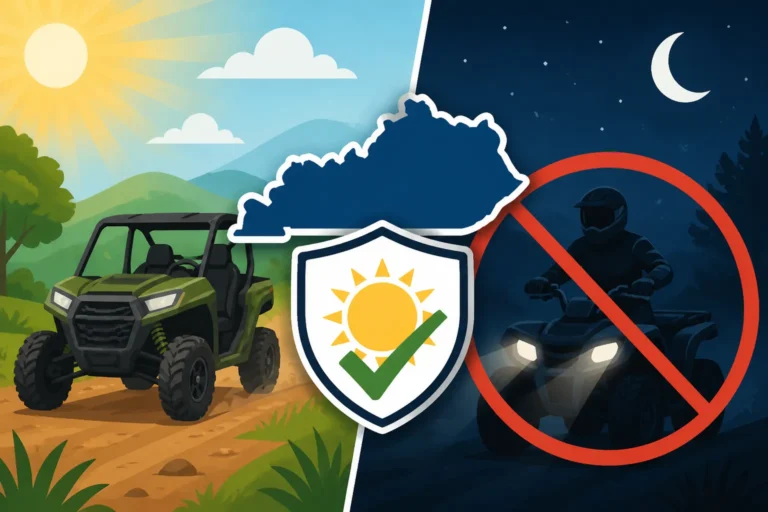
Achieving SPV status isn't a "set it and forget it" situation. The initial inspection sets the baseline, but maintaining compliance is an ongoing commitment. This means regularly checking all your required safety equipment. Are your turn signals still flashing brightly? Is your horn still honking? Is your speedometer still illuminated? Normal wear and tear, especially on a machine designed for off-road punishment, can quickly degrade these components. You'll need to perform routine maintenance or replace parts as they wear out. Companies like SuperATV offer a wide range of durable replacement parts and upgrades that can help ensure your SPV remains compliant over time, reducing the headache of repairs right before your annual renewal or an unexpected roadside check. Furthermore, remember the strict operational rules: SPVs are generally limited to specific types of roads (usually those posted 45 mph or less in opted-in areas), [Daylight Only Under the Statute], and are often restricted to short crossings or travel between trails. Riding outside these parameters, even with a perfectly legal SPV, can still result in fines or citations. It's a continuous responsibility to both maintain your vehicle's compliance and adhere to the operational limits.
Is the Kentucky SPV Path Right for You? Weighing the Pros and Cons
After understanding the detailed requirements for the $25 Kentucky inspection and all the subsequent steps, it's natural to pause and wonder if this path is genuinely worth the effort, time, and money. For some, the benefits might clearly outweigh the hurdles, while for others, the restrictions might make it feel like more trouble than it's worth. Let's break down the advantages and disadvantages to help you make an informed decision for your riding style and needs.
The Benefits of a Street-Legal SPV
For many riders, the primary draw of making their machine an SPV is the sheer convenience it offers. Imagine you're out riding trails, and a short stretch of county road separates two fantastic sections of a trail system, or perhaps your favorite gas station is just a quarter-mile down the road from your private property. With an SPV, these short jaunts become legally permissible. No more trailering your machine for a few hundred yards or risking a ticket for an illegal crossing. This convenience can significantly enhance your overall riding experience, opening up new ways to connect [Kentucky ATV Trails Near Harlan] or other trail systems that were previously inaccessible without a full trailer move. For some, it might even mean the ability to ride from their home or camp to a nearby trailhead, making a day trip much smoother. The limited road access, while frustratingly specific, does offer a practical solution for certain logistical challenges that off-road riders frequently encounter.
The Drawbacks and Frustrations
However, the benefits come with a significant list of drawbacks that can lead to real frustration. The initial cost of modifications to meet the inspection requirements can be substantial. Outfitting your machine with proper turn signals, mirrors, a horn, and an illuminated speedometer can easily run into several hundred dollars, on top of the $25 inspection fee. Then there are the ongoing costs: the annual registration fees, the higher insurance premiums (often akin to motorcycle insurance), and the constant maintenance to keep all that new equipment functional. The biggest headache for many is the "patchwork problem" of local laws. [Why a Kentucky City Must Opt In] means you have to be intimately familiar with every county and city ordinance along your intended route. What's legal in Harlan County might be strictly forbidden across the county line in another jurisdiction. This inconsistency can lead to confusion, accidental violations, and a constant need for vigilance, taking away some of the spontaneity of riding. Even with a fully legal SPV, your road use is still heavily restricted – no high-speed highways, often limited to roads under 45 mph, and generally [Daylight Only Under the Statute]. This isn't about enjoying a scenic drive; it's about highly constrained utility. Ultimately, while street legality opens some doors, it also requires a significant investment and a constant awareness of numerous regulations, making it a nuanced decision for any Kentucky rider.
Disclaimer
This article is for general informational purposes only and does not constitute professional advice. Laws, prices and regulations vary by location and change over time. Consult a qualified professional for guidance on your specific situation.