Why Kentucky Requires Daylight Only
It's a common scenario in Kentucky: you've spent a glorious day out on the trails, maybe at Black Mountain or somewhere closer to home, and as the sun begins to dip below the ridge, you find yourself needing to cross a short stretch of pavement to get back to camp or home. Suddenly, you're wondering, "Can I even do this legally after dark?" The answer, for most ATVs and UTVs on Kentucky roads, is a firm no, and it's a frustration many riders share. This guide aims to clear up the confusion, explain why Kentucky law limits ATV and UTV road use to daylight hours, and help you understand the rules to keep your rides legal and safe.
Navigating Kentucky's ATV and UTV Road Rules
Kentucky's approach to ATVs and UTVs on public roads can feel like a maze, especially for those who just want to enjoy their machines without running afoul of the law. The general rule is quite restrictive, born from a focus on public safety and the fundamental differences between these off-road machines and vehicles designed for highway travel. Understanding this baseline is crucial before delving into the "daylight only" mandate.
The Default: Roads Are for Registered Vehicles
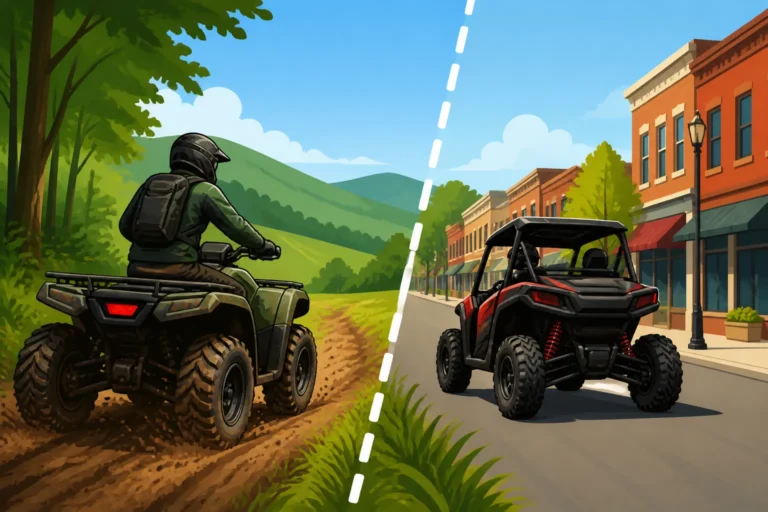
Let's start with the big picture: Kentucky's public roads are primarily built and maintained for vehicles that are designed, manufactured, and legally registered for on-highway use. Your standard ATV or UTV, right off the dealership floor, typically doesn't fit this description. They are engineered for rugged off-road terrain, not for mixing with cars, trucks, and tractor-trailers at highway speeds. This fundamental distinction is why the default stance of Kentucky law is to keep these machines off paved roads entirely.
Imagine a typical two-lane highway winding through rural Kentucky. Cars are zipping by, perhaps a logging truck is making its way to the mill, and suddenly, an ATV appears. The speed differences, the lack of traditional safety features like enclosed cabins and airbags, and the differing handling characteristics all contribute to a heightened risk profile. This isn't just about what your machine can do; it's about how it interacts with the entire ecosystem of road users. This is also why [Why Kentucky Does Not Register ATVs] is an important read, as the lack of traditional registration is a key part of this restriction.
Limited Exceptions for Standard ATVs/UTVs
While the default is "off-road stays off-road," Kentucky does acknowledge certain very limited circumstances where an ATV or UTV might briefly touch pavement. These aren't widespread permissions but rather very specific allowances designed to address practical needs, often in rural or agricultural settings. Think of these as narrow gateways, not wide-open doors.
One common allowance is the ability to cross a two-lane highway at a ninety-degree angle, provided it's done safely and quickly. This is often for farmers needing to get from one field to another across a low-traffic road. Another crucial exception applies to farm operations, where a machine might be used on a road directly connected to the farm for agricultural purposes. However, even these exceptions are tightly regulated and do not generally extend to recreational riding. It’s also important to differentiate these allowances from the rules governing street-legal Special Purpose Vehicles (SPVs), which have an entirely different set of requirements and permissions. You might be interested in [Kentucky Rules for Crossing a Highway] for more specifics on that particular maneuver.
The "Daylight Only" Mandate Explained
Now, let's get right to the heart of the matter: why are these limited allowances for standard ATVs and UTVs restricted to daylight hours? It boils down to a clear legislative intent to minimize risk, recognizing the inherent limitations of these machines when sharing space with traditional road traffic, especially when visibility is compromised.
What "Daylight Only" Truly Means
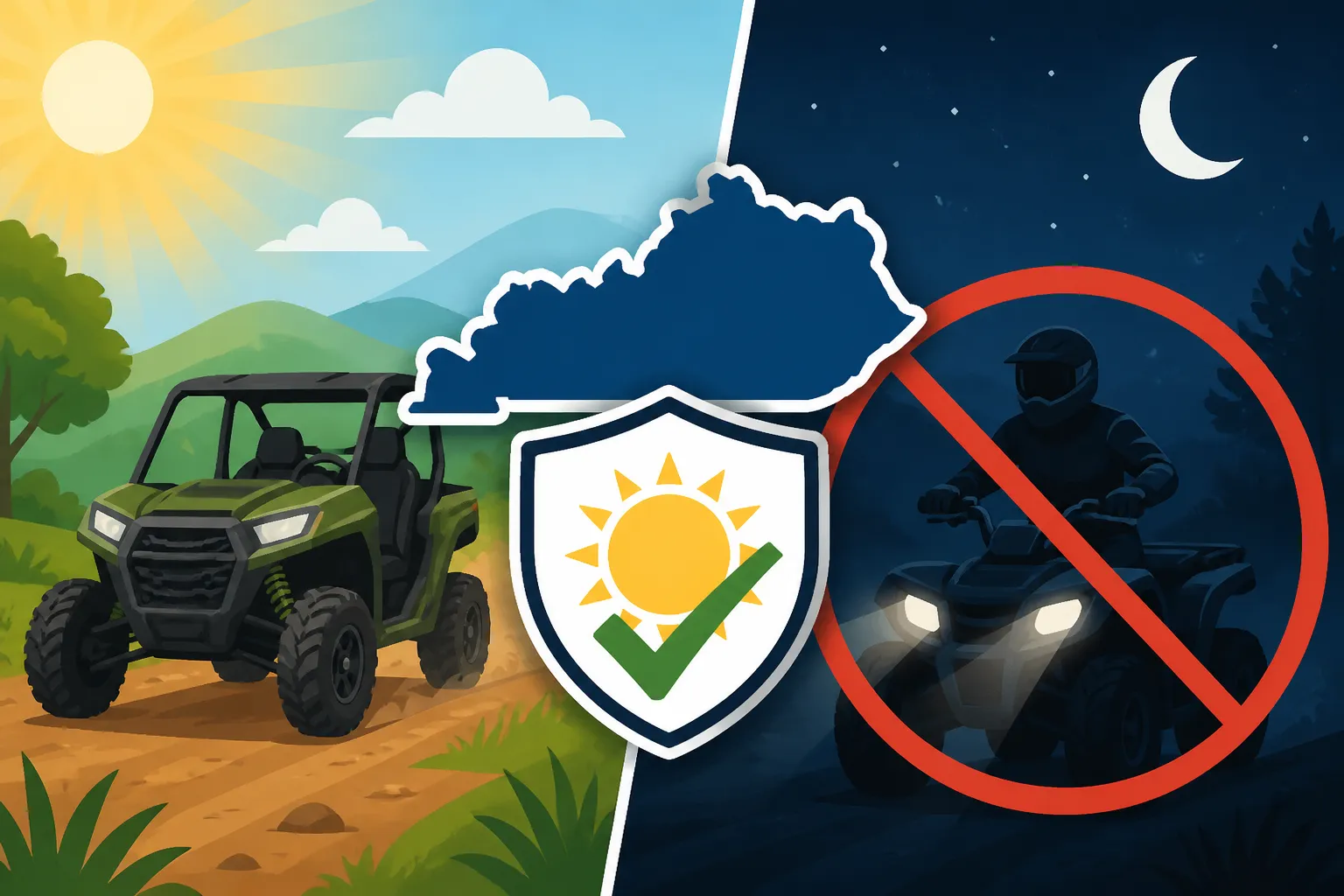
When Kentucky law states "daylight only," it's not a suggestion; it's a strict requirement. This means from thirty minutes before sunrise until thirty minutes after sunset. This isn't just about when you can see the road, but when other drivers can clearly see you. As anyone who's driven through the Kentucky hills can attest, twilight can descend quickly and unexpectedly, especially in wooded areas or deep hollers. What might seem like a quick trip in fading light can rapidly become a risky venture as ambient light disappears.
This rule applies to all the permitted uses for standard ATVs and UTVs on public roads, such as the aforementioned ninety-degree crossings or specific farm-related travel. It creates a bright line (pun intended) that removes ambiguity for law enforcement and drivers alike. There's no gray area for "just a little after dark" or "my headlights are really bright." If it's not during the defined daylight hours, a standard ATV or UTV should not be on a public road, period. Understanding [Kentucky Rules for Riding After Dark] is critical for any rider.
The Rationale Behind the Restriction
The primary rationale is safety, pure and simple. Off-road vehicles, by their very design, are not equipped for nighttime road travel in the same way a car or motorcycle is. While many ATVs and UTVs come with headlights and taillights, these are primarily designed for illuminating trails or making the machine visible to other riders in an off-road environment, not for meeting the stringent illumination standards required for on-highway use.
Consider the typical headlight output, beam pattern, and mounting height of an ATV or UTV. These often differ significantly from those of a street-legal vehicle. In the dark, a low-slung ATV might blend into the background, or its lights might not be positioned to effectively warn an approaching motorist of its presence or direction of travel. This is not to say that aftermarket lighting from companies like SuperATV isn't incredibly powerful and useful for trail riding—many riders install impressive light bars and pods for their off-road adventures. However, even the best aftermarket lights don't change the underlying legal designation of the machine or its compliance with highway lighting requirements, nor do they override the "daylight only" statute for standard ATVs on public roads. It's about statutory compliance, not just perceived visibility.
Safety at the Forefront: Why Night Riding is a No-Go
The state's strict "daylight only" rule isn't an arbitrary restriction; it's a foundational element of public safety policy. When you strip away the legal jargon, the core reason is that riding an ATV or UTV on a public road after dark poses significant and often unacceptable risks to both the rider and other motorists.
Visibility Challenges for Riders and Other Drivers
One of the most immediate concerns is visibility. For the rider, navigating unfamiliar or dimly lit public roads on an ATV or UTV at night is far more challenging than trail riding. Roads often have unexpected hazards like potholes, debris, or wildlife that are much harder to spot in the dark. Road signs and lane markings, which are designed to be reflective for cars, might not be as effectively illuminated by an ATV's headlights.
From the perspective of other drivers, an ATV or UTV at night can be incredibly difficult to see. They are smaller than cars, often have a narrower profile, and their lights might not be as bright or as widely spaced as those on a conventional vehicle. This can lead to situations where a driver might not realize an ATV is on the road until it's too late, especially if they're coming around a blind curve in a rural area. The human eye struggles with depth perception and peripheral vision in low light, making any unexpected element on the road a serious hazard. Even with reflective gear, the inherent differences in vehicle types create a dangerous mismatch.
Equipment Limitations of Stock ATVs/UTVs
Stock ATVs and UTVs are designed for off-road performance, not highway safety standards. This extends beyond just the headlights. Think about things like turn signals, brake lights, and mirrors. While many machines have basic versions of these, they often don't meet the specific size, brightness, or placement requirements mandated for street-legal vehicles. For instance, an ATV might have a single taillight, whereas a car has two, providing a much clearer indication of width and braking.
Furthermore, the overall stability and handling characteristics of an ATV or UTV are different on paved surfaces, especially at speed or when maneuvering to avoid an obstacle. Tires designed for mud and rocks don't always offer optimal grip on asphalt. Combine these factors with the reduced visibility of night, and you have a recipe for potential disaster. The law recognizes that these machines simply aren't equipped to safely operate in the dark on roads shared with higher-speed traffic, and as such, it mandates that such operation be confined to when the sun provides the best possible natural illumination. This is a key reason why [Kentucky Lighting Requirements for ATVs] are a separate discussion from street-legal SPVs.
Specific Scenarios and Permitted Road Use
While the "daylight only" rule is a broad blanket for standard ATVs and UTVs, it's important to differentiate this from the very specific, narrow exceptions where these machines can touch a public road, and also to understand how a purpose-built "Special Purpose Vehicle" (SPV) fits into the overall landscape.
Brief Crossings and Farm Operations
As mentioned earlier, Kentucky law does permit limited road use for certain specific purposes, but these are always tethered to the "daylight only" rule for standard ATVs and UTVs. The most common allowances are for crossing a two-lane public highway at a ninety-degree angle, primarily to get from one section of private property to another, and for agricultural use. For example, a farmer in Carlisle County might need to take their UTV down a short gravel road to reach an isolated pasture. As long as this is a direct route for a farm operation, within daylight hours, it's generally permissible.
These exceptions are not for joyriding. They are functional, limited, and come with implicit expectations of caution and common sense. If you're using your machine for [Hauling Feed Down a Holler Road] or other necessary farm tasks, the law makes a small space for you, but only when the sun is up. The intent is to avoid undue burden on agricultural workers, not to open up public roads for recreational ATV use.
The Special Case of Street-Legal SPVs (and why they're different)
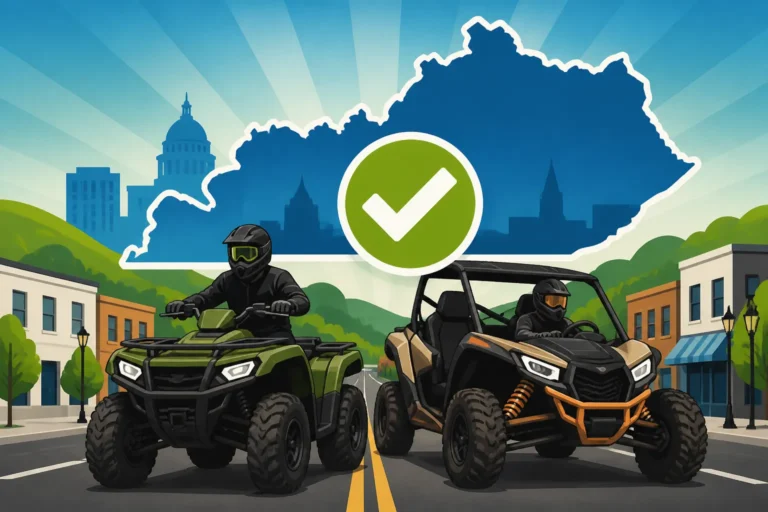
It's crucial to understand that the "daylight only" rule primarily applies to standard ATVs and UTVs that do not meet specific street-legal requirements. Kentucky does have provisions for "Special Purpose Vehicles" (SPVs), which are essentially UTVs that have been modified and inspected to meet a specific list of safety and equipment standards, allowing them to be registered and operated on certain public roads. These SPVs can typically be operated after dark because they are required to have:
| Feature | Standard ATV/UTV (Road Use) | Street-Legal SPV (Road Use) |
|---|---|---|
| Daylight Only Rule | Yes (Mandatory) | No (If all criteria met) |
| Turn Signals | Not typically required | Required |
| Dual Side Mirrors | Not typically required | Required |
| Illuminated Speedometer | Not typically required | Required |
| Windshield | Not typically required | Required |
| Horn | Basic, if any | Required |
| DOT-Approved Tires | Off-road specific | Required |
| Registration/License | No state registration | Yes, SPV specific registration |
| Inspection | Not required | Yes, official state inspection |
| Insurance | Not legally mandated for road use | Yes, motorcycle-level required |
As you can see, the requirements for an SPV are extensive and aim to bring the UTV much closer to the safety profile of a traditional automobile. Because an SPV has the necessary lighting, signals, and other safety equipment that meets state standards, it is generally not subject to the "daylight only" restriction that applies to standard ATVs and UTVs. This distinction is vital: if your machine doesn't qualify as an SPV and hasn't gone through the rigorous inspection and registration process, then the "daylight only" rule remains firmly in place for any public road use. For those considering making their UTV street legal, [Kentucky Street Legal UTV Requirements] would be an essential resource.
Consequences of Ignoring Kentucky's Nighttime Ban
Venturing onto Kentucky's public roads with a standard ATV or UTV after dark isn't just a minor infraction; it carries real legal consequences. Law enforcement takes these rules seriously because they are directly tied to preventing accidents and ensuring the safety of everyone on the road. It's not about being a killjoy; it's about protecting lives.
Fines, Citations, and Vehicle Impoundment
If you're caught operating a standard ATV or UTV on a public road in Kentucky outside of daylight hours, you can expect a citation. The specific fines can vary, but they are often substantial enough to make a dent in your wallet. Beyond the monetary penalty, you'll also have a violation on your record, which could have further implications depending on your driving history. This isn't just a slap on the wrist; it's a formal legal consequence.
In some cases, law enforcement might even have the authority to impound your machine. Imagine being several miles from home or camp, having your ATV loaded onto a tow truck, and then having to deal with impound fees on top of your fine. This isn't a rare occurrence, especially in areas where illegal road riding is a known issue, such as in some of the more remote parts of Eastern Kentucky. A deputy encountering you [Riding Home After a Kentucky Sunset] is likely to issue a ticket and potentially arrange for your machine to be picked up. It's an inconvenient and costly lesson that is easily avoided by simply adhering to the daylight rule.
The Broader Implications for Rider Safety
Beyond the legal and financial penalties, the most significant consequence of ignoring the "daylight only" rule is the increased risk to your own safety and the safety of others. As discussed, visibility is severely compromised after dark, making you much harder for other drivers to see and increasing your chances of an accident. If an accident were to occur, particularly with a larger vehicle, the rider of an ATV or UTV is almost always going to be at a severe disadvantage due to the lack of protection.
Furthermore, if you are involved in an accident while illegally operating your machine on a public road, any insurance coverage you might have for your ATV or UTV could be complicated or even nullified. Insurance policies often have clauses that exclude coverage for illegal activities. This means you could be personally liable for not only your own injuries and damages but also for any damages or injuries sustained by other parties involved. It's a risk that far outweighs any perceived convenience of riding a few extra minutes after sundown.
Disclaimer
This article is for general informational purposes only and does not constitute professional advice. Laws, prices and regulations vary by location and change over time. Consult a qualified professional for guidance on your specific situation.