Why a City Must Vote Before You Ride
It's incredibly frustrating when you just want to get your ATV or UTV from point A to point B, maybe cross a short stretch of pavement or take it down a local street, only to be met with confusion and the risk of a ticket. Kentucky's rules around off-road vehicles on public roads can feel like a tangled mess, but a big part of understanding them comes down to local control. This guide is here to clear up why your local city council or county fiscal court has such a powerful say in whether you can legally ride your machine on their streets.
Understanding Kentucky's Default Road Rules for ATVs and UTVs
When it comes to hitting the pavement on your ATV or UTV in Kentucky, the default answer from the state is generally a firm "no." This isn't just to be difficult; it stems from a fundamental difference in how these machines are designed and how traditional vehicles are regulated for road use. It's a common misconception that if a vehicle has headlights and a horn, it must be street-legal. With off-road machines, it's far more nuanced, and understanding this baseline is crucial before you even think about city ordinances.
The General Prohibition: Why Roads Are Closed by Default
Kentucky law, like that in many other states, views ATVs and UTVs primarily as off-road recreational vehicles or tools for specific work. They aren't built to the same safety standards as cars, trucks, or motorcycles that are designed for regular highway speeds and traffic conditions. Think about it: the suspension, tire pressure, braking systems, and even the seating positions are optimized for uneven terrain, not smooth asphalt with other vehicles traveling at speed. This design difference creates inherent safety concerns when these machines are introduced into public road traffic. Legislators, when drafting these laws, aimed to protect riders, passengers, and other motorists by keeping these vehicles off roads where they could pose a greater risk. It's not about prohibiting fun; it's about minimizing hazards. For the most part, [Kentucky Rules for ATVs on Public Roads] means staying off the pavement unless a specific exception applies.
Imagine you're driving your truck down a busy state highway, and suddenly, an ATV, designed for low-speed maneuvering over obstacles, attempts to merge. The speed differential, the lack of traditional turn signals, and the rider's exposure make it a precarious situation. The initial legislative intent was to avoid these kinds of scenarios, which is why roads are generally considered "closed by default" to these types of machines. This blanket prohibition aims to create a clear boundary for rider safety and public order, pushing the responsibility for opening up roads to local communities that can assess their unique traffic patterns and infrastructure.
The Limited Exceptions: What You Can Do (Without City Action)
While the general rule is restrictive, Kentucky law does carve out a few very specific, narrow exceptions where ATVs and UTVs can operate on public roads without needing a special city ordinance. These exceptions are typically tied to functional necessity rather than recreational use, and they come with strict limitations. It's important to remember these are state-level exceptions that apply across the board, regardless of local city votes.
One major exception is for agricultural purposes. Farmers can use their ATVs and UTVs on public roads for duties related to their farming operations. This isn't a free pass to joyride, but it allows for practical tasks like [Hauling Feed Down a Holler Road] or moving equipment between fields. Critically, [Why Kentucky's Farm Exception Has No Limit] means there's no mileage cap on these farm-related movements, but the machine must be actively engaged in farm work. Similarly, machines used for construction, road maintenance, or even [Snow Removal Under Kentucky Law] can utilize public roads when actively performing those duties. These are all situations where the machine is serving a specific, essential function that outweighs the general prohibition.
Another common exception involves brief, direct crossings. You might need to cross a paved road to get from one section of a trail to another, or from your private property to a field across the street. Kentucky law generally permits these quick maneuvers, but they are incredibly limited. For example, you can often cross a two-lane highway at a ninety-degree angle, but the distance is strictly capped at [0.2 Mile and Not a Yard More]. This isn't meant for cruising down the road; it's strictly for traversing it as quickly and directly as possible. You’ll also need to follow [Kentucky Rules for Riding After Dark] if your crossing occurs outside daylight hours, meaning proper lighting is non-negotiable. These exceptions are truly about necessity, not convenience, and straying outside their narrow definitions can quickly put you on the wrong side of the law.
The Role of Local Government: Why a City Must Opt In
Given Kentucky's default restrictions, the most significant avenue for expanding ATV and UTV use on public roads comes from local government action. This is where your city council, urban-county government, or fiscal court steps in. They hold the power to change the local landscape for off-road vehicle enthusiasts, but it's not a simple wave of a wand; it's a deliberate process that involves community input and careful consideration.
How State Law Empowers Localities
Kentucky state law, while establishing the general prohibition, also includes provisions that enable local municipalities to create their own ordinances to allow ATVs and UTVs on certain public roads. This isn't the state telling cities to do it, but rather giving them the legal framework if they choose to. It’s a recognition that different communities have different needs, traffic patterns, and economic considerations. For example, a small rural town with few alternative roads might find it beneficial to open up some streets to UTVs, especially if it boosts tourism or provides practical transportation for residents. Meanwhile, a bustling urban center might find such an idea completely impractical and unsafe. This local control means that [How a Kentucky City Opens Its Roads] involves a vote by elected officials who represent the specific community.
The process typically involves public hearings, where residents can voice their opinions, concerns, and support. City councils or fiscal courts will then deliberate on these inputs, considering factors like road safety, traffic volume, potential noise, and the overall impact on the community. They might look at successful models from other towns or consult with local law enforcement to determine the feasibility and specific requirements. It's a truly democratic process, reflecting the local community's desires and priorities regarding their public infrastructure. This also explains [Why a City Must Vote Before You Ride]—it's the only way to override the state's general prohibition on a local level for recreational or general transportation use.
The Specifics of an Opt-In Ordinance
When a city or county decides to opt-in and allow ATVs or UTVs on its public roads, they don't just throw open the gates. They establish a very specific set of rules and requirements that riders must adhere to. These ordinances are designed to mitigate the safety concerns associated with mixing off-road vehicles with regular traffic. If your town allows street-legal UTVs, for example, it's not going to be like riding your quad on a dirt trail.
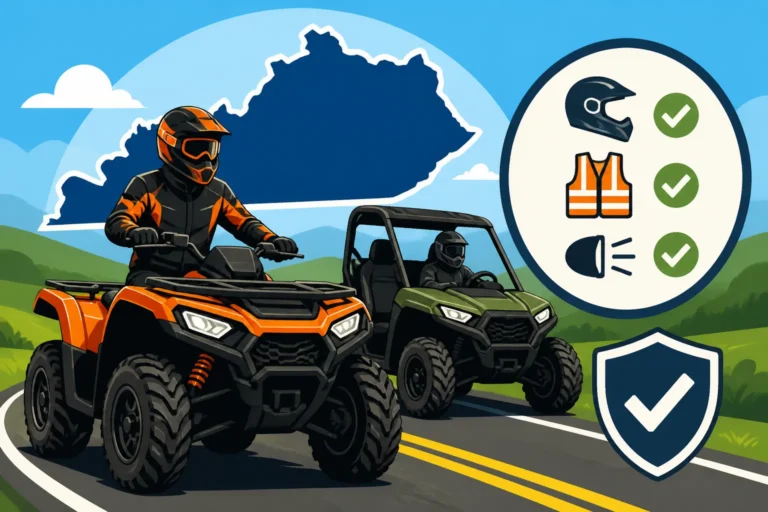
Typically, these ordinances will outline stringent equipment requirements. This means your machine will likely need working headlights, taillights, brake lights, and [Turn Signals and Dual Mirrors on a Kentucky SPV]. Many riders find that upgrading their machines with high-quality aftermarket parts from companies like SuperATV helps them meet these street-legal standards, ensuring they have the necessary visibility and signaling capability. Other requirements might include a horn, a windshield, and even specific tire tread depth. The idea is to make these machines as visible and controllable as possible on pavement. You might also need an illuminated speedometer as part of your [Kentucky SPV Equipment List].
Beyond equipment, cities will often designate which specific roads or sections of roads are open to ATVs/UTVs and what the permissible speed limits are. You might find that [Kentucky Cities That Cap SPV Roads at 45 mph] are common, and often, state highways or major thoroughfares remain off-limits. There will also be requirements for riders, such as needing a valid driver's license and [Motorcycle-Level Insurance for a Kentucky SPV]. Sometimes, a special local registration or permit might be required in addition to any state titling, like [The $10 Kentucky SPV Registration] that some areas require. These are all local decisions, which means what's allowed in one Kentucky town might be completely forbidden just a few miles down the road. It’s a good idea to always consult local ordinances, as they can differ significantly.
Navigating Local Ordinances and What Riders Need to Know
Once you understand that local governments hold the key to street-legal ATV and UTV riding in many areas of Kentucky, your next step is to figure out what that means for your riding plans. This isn't just about avoiding a ticket; it's about being a responsible rider and ensuring your safety and the safety of others on the road.
Researching Your Local Area: Before You Ride
The absolute most important piece of advice anyone can give you about riding your ATV or UTV on public roads in Kentucky is to do your homework. Never assume that because you saw someone else riding on a certain street, it's legal for you to do so. Laws change, and what's permitted in one county or city might be strictly prohibited in another. For instance, the rules for [Riding a Holler Road in Perry County] might be different than for a street in Louisville Metro.
Your first point of contact should be the city clerk's office or the county fiscal court clerk for the specific area where you intend to ride. Most municipalities have their ordinances published online, but a quick phone call or visit can clarify any ambiguities. Ask directly about ATV and UTV use on public roads, specific equipment requirements, designated routes, and any necessary local permits or registrations. You might find that some areas have adopted rules similar to what the state proposed in its [Kentucky's 2025 Special Purpose Vehicle Law] discussions, or they might have their own unique framework. Reputable aftermarket parts providers like SuperATV often have resources or customer service teams that can help navigate general equipment requirements, but they can’t interpret local laws for you. Always verify directly with the local authorities.
It’s also wise to check for any special conditions, such as time-of-day restrictions, speed limits, or rules regarding passengers. Some ordinances might prohibit minors from operating these vehicles on public roads even if an adult is present. By doing this research upfront, you avoid unnecessary fines and ensure you're riding respectfully within the community's established guidelines.
The Consequences of Riding Illegally
Ignoring local ordinances or the state's default rules can lead to a number of unpleasant consequences, ranging from minor inconveniences to significant legal and financial burdens. It's not just about a "slap on the wrist" for a recreational activity; road use involves specific regulations for a reason.
The most immediate consequence is typically a citation or ticket. [Kentucky Fines for Illegal ATV Road Use] can vary widely depending on the specific infraction and the jurisdiction, but they are rarely cheap. Beyond the fine, you might also face impoundment of your ATV or UTV, which means towing fees, storage fees, and the hassle of retrieving your machine. Imagine you're out riding on a scenic mountain road near [Black Mountain Off-Road Adventure Area in Kentucky], stray onto a paved section that's not permitted, and suddenly you're facing [Getting Ticketed at Black Mountain for an Untitled Quad] (if it also lacks a title) and an illegal road use citation. That's a quick way to turn a fun day into a very expensive headache.
More seriously, operating your ATV or UTV illegally on public roads could lead to points on your driver's license, increased insurance premiums, or even charges for reckless driving depending on the circumstances. If an accident occurs while you're riding illegally, your insurance company might deny coverage, leaving you personally liable for damages and injuries. This could lead to a lifetime of financial strain. The inherent safety risks are also paramount. These machines, even with modifications, are generally less stable and visible than cars on paved roads, especially at higher speeds or in heavy traffic. Riding where it's not permitted significantly increases your chance of an accident, endangering yourself, your passengers, and others on the road. It's simply not worth the risk.
| Aspect | Default Kentucky State Law (No Local Ordinance) | With an Opt-In Local Ordinance (City/County Vote) |
|---|---|---|
| Road Access | Generally prohibited, limited exceptions (farm, utility, 0.2-mile crossing). | Permitted on designated roads/streets within the jurisdiction. |
| Equipment | Not specified for road use (as generally not allowed). | Specific requirements: headlights, taillights, brake lights, turn signals, mirrors, horn, sometimes windshield/wipers. |
| Speed Limits | Not applicable (as generally not allowed). | Set by local ordinance, often capped (e.g., 25 mph, 35 mph, [45 mph]). |
| Driver's License | Not applicable for off-road use; required for crossing if licensed driver. | Generally required. |
| Insurance | Not mandated by state for off-road use; often required for street legality. | Often required, typically [Motorcycle-Level Insurance for a Kentucky SPV]. |
| Registration/Permit | State title required if bought after July 2010; no road registration. | Local registration/permit may be required in addition to state title. |
| Primary Intent | Off-road recreation, agricultural/utility work. | General transportation, recreation on designated routes. |
| Enforcement | State and local law enforcement. | State and local law enforcement, based on local ordinance specifics. |
In summary, riding your ATV or UTV on Kentucky's public roads is not a simple matter. The state maintains a strict default prohibition, only allowing for very narrow, functional exceptions. For any broader recreational or general transportation use, it falls squarely to your local city or county government to "opt in" by passing specific ordinances. These local laws will then dictate exactly where, when, and under what conditions you can ride, including detailed equipment requirements and rider obligations. Always check with your local authorities before you hit the pavement, ensuring you're compliant and safe.
Disclaimer
This article is for general informational purposes only and does not constitute professional advice. Laws, prices and regulations vary by location and change over time. Consult a qualified professional for guidance on your specific situation.