The $25 Kentucky Inspection
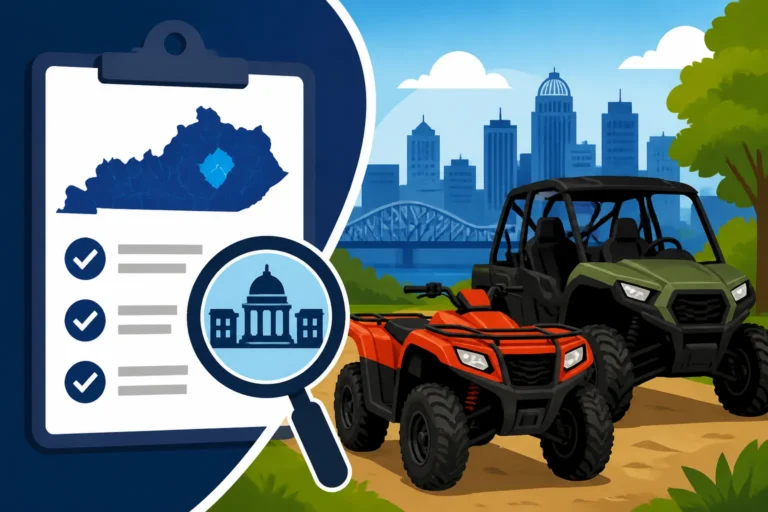
It's incredibly frustrating when you just want to legally take your ATV or UTV on a public road in Kentucky, only to find out there's a whole checklist of rules and an inspection standing between you and the pavement. This guide is here to demystify that process, breaking down what the Kentucky inspection for street-legal machines entails, why it's necessary, and how you can prepare your off-road warrior to pass with flying colors.
Understanding Kentucky's Path to Street Legality
For years, the idea of legally riding an ATV or UTV on a Kentucky public road felt like a pipe dream for most enthusiasts. The law was clear: off-road machines were for off-road use, period. However, as side-by-sides grew in popularity and people needed practical ways to get from one section of their property to another, or even to a nearby trailhead, the clamor for some form of street legality grew louder. While full-blown, open-road privileges are still generally restricted, Kentucky has carved out specific pathways for certain machines to gain limited access, and a crucial part of that is the mandatory inspection.
Why the Inspection Exists
The core reason behind Kentucky's special purpose vehicle (SPV) inspection is public safety. When an ATV or UTV, designed primarily for rough terrain and lower speeds, ventures onto a road alongside cars, trucks, and motorcycles, it needs to meet a minimum standard of roadworthiness. Think about it: a standard ATV might not have turn signals, a horn, or even proper headlights and taillights for visibility on asphalt, let alone seatbelts or a robust roll cage. The inspection is the state's way of ensuring that these machines have been adequately modified and are equipped with the necessary safety features to interact, however briefly, with regular street traffic without posing undue risk to the rider or others. It’s not just a bureaucratic hurdle; it's a safety gate.
It’s easy to feel like these rules are just more hoops to jump through, especially if you’re only planning to cross a road for a few hundred feet to get to another trail. But from the state's perspective, even a short jaunt on a public road involves mixing with different types of vehicles and drivers, many of whom aren't expecting an ATV or UTV. The inspection helps standardize the safety profile of these machines, bringing them closer to what other road users expect in terms of signaling, braking, and visibility. It’s about creating a baseline of predictability on shared roadways.
Machines That Need the Inspection
Not every ATV or UTV in Kentucky needs this specialized inspection. This process is specifically for those machines that owners wish to classify as "Special Purpose Vehicles" (SPVs) to gain limited street-legal status under state law. This often involves machines that meet specific criteria outlined in Kentucky's statutes for SPVs, which typically include side-by-sides (UTVs) but can sometimes encompass larger, more robust ATVs if they can be suitably equipped. [Kentucky's 2025 Special Purpose Vehicle Law] laid out some of the groundwork for how these machines could be treated differently.
Consider your typical four-wheeler used solely for trail riding at Black Mountain or for farm work – it doesn't need this inspection unless you intend to use it on public roads beyond specific, narrow exceptions like crossing a road or using it for agriculture. The inspection is an elective step, taken only by those who actively pursue the SPV designation. If you're riding exclusively on private land or within designated off-road parks, this particular inspection usually isn't relevant to you. However, if you dream of taking your UTV to town for gas or crossing state routes to connect trails, then preparing for this inspection becomes a critical part of your plan.
Decoding the Inspection Checklist
Getting your machine ready for its street-legal inspection in Kentucky means more than just a quick once-over. You'll need to transform your off-road beast into something that can safely share the road, even if only for limited stretches. This typically involves equipping it with specific components that are standard on street vehicles but often missing or different on ATVs and UTVs. It’s a thorough check, designed to ensure your machine meets a comprehensive set of safety and visibility standards. Missing even one small item can mean a failed inspection and a trip back to the shop, so attention to detail is paramount.
Essential Lighting Requirements
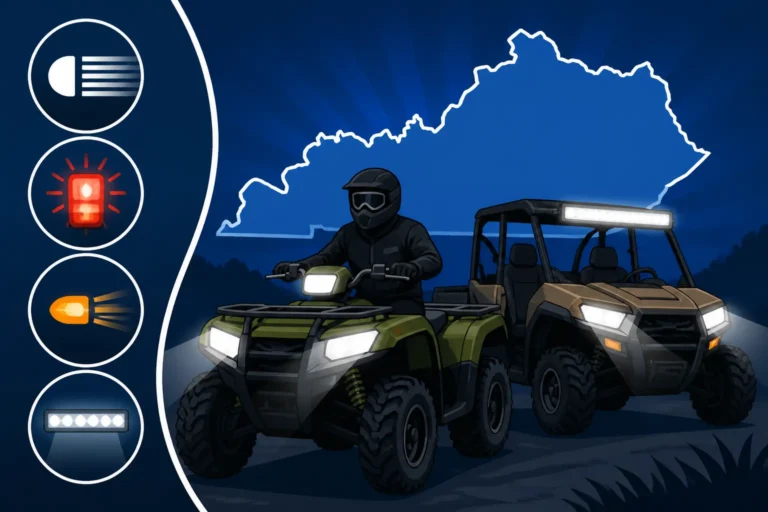
When your machine is on a public road, visibility is key, especially during daylight hours or in adverse weather. The Kentucky inspection will scrutinize your lighting system rigorously. You'll need at least one, but usually two, working headlights that emit a white light and are properly aimed. These aren't just for seeing the trail ahead; they're for being seen by oncoming traffic. Just as crucial are your taillights, which must display a red light to the rear. These need to be visible from a distance, signaling your presence to vehicles behind you. [One Headlight and Two Taillights in Kentucky] elaborates on the specific requirements.
Beyond basic head and taillights, your machine will need brake lights that illuminate when you apply the brakes, clearly signaling to following vehicles that you're slowing down. Turn signals, both front and rear, are also mandatory. These need to be amber in color and clearly visible, allowing you to indicate your intentions to other drivers. Many off-road machines don't come stock with turn signals, so this is often an aftermarket addition. Companies like SuperATV offer kits that include DOT-compliant turn signal setups, making it easier to meet these specific requirements. Reflectors are also a common requirement, usually red to the rear and amber to the side, further enhancing your machine's visibility, especially at dawn, dusk, or night.
Safety Equipment Beyond Lights
Lighting is critical, but the inspection goes much further to cover other essential safety equipment. A functional horn is non-negotiable; it's your primary auditory warning device on the road. Imagine coming around a blind curve on a county road and needing to alert an approaching vehicle – a good horn is invaluable. Your machine will also need rearview mirrors, typically two, allowing you to see traffic approaching from behind. These aren't just for convenience; they're a vital safety tool for changing lanes or making turns. Again, many off-road machines need aftermarket solutions for proper, road-legal mirrors, and providers like SuperATV can be a good resource for finding durable options that meet state specifications.
Another crucial safety feature is the requirement for a roll cage and seat belts. This is particularly relevant for UTVs, which are designed with a cabin-like structure. The inspection will ensure that your machine has a factory-installed or properly engineered roll-over protection structure (ROPS) and that all occupant seating positions are equipped with functional seat belts. For ATVs, the rules are different as they are designed to be straddled and ridden, not driven with a seatbelt. [Roll Cage and Seat Belt Rules for an SPV] outlines more about these requirements. Furthermore, a windshield is often required, providing protection from debris for the driver and passengers, along with a working speedometer that is illuminated for night visibility.
Tires, Tread, and Roadworthiness
The tires on your ATV or UTV are designed for off-road traction, but when you take them onto pavement, they face different demands. The Kentucky inspection will check the condition of your tires, ensuring they are in good repair with no excessive wear, cuts, or bulges. More specifically, they will measure the tread depth. There's a minimum tread depth requirement – often specified as two thirty-seconds of an inch – to ensure adequate grip and prevent hydroplaning on wet surfaces. [Two Thirty-Seconds of Tread in Kentucky] explains this particular detail. Worn-out tires not only compromise safety but can also be a clear reason for failing the inspection.
Beyond the tires themselves, the overall mechanical condition of your machine contributes to its roadworthiness. The brakes must be fully functional on all wheels, providing safe stopping power. Steering components need to be tight and free of excessive play. The suspension should be in good order, allowing for stable handling on varied road surfaces. The exhaust system will be checked to ensure it’s not excessively loud and that it's properly secured. Essentially, the inspector is looking for any mechanical issues that could compromise the safety of the vehicle when it's operating on a public road. It's a holistic assessment of your machine's readiness for limited street use.
Where and How the Inspection Happens
Navigating the logistics of the Kentucky inspection for your street-legal machine can feel a bit like a scavenger hunt if you don't know where to start. It's not a process handled by just any garage or mechanic. The state designates specific entities and individuals to perform these crucial checks, ensuring consistency and adherence to the legal requirements. Understanding where to go and what the actual process involves can save you a lot of time, frustration, and potentially multiple trips.
Finding an Authorized Inspector
In Kentucky, the inspection for an SPV isn't conducted by the county clerk's office, though that's where you'll eventually go to get your plate and registration. Instead, it's typically handled by a state-certified safety inspection mechanic. These mechanics are specially authorized by the Kentucky State Police or a similar state agency to perform these specific inspections. They have received training on the requirements for SPVs and possess the knowledge and tools to thoroughly check all the mandatory safety features. You might find these authorized inspectors at larger dealerships that sell ATVs and UTVs, or at independent repair shops that have gone through the necessary certification process.
Finding one in your area usually involves contacting your local county clerk's office, as they often have a list of certified inspectors, or checking the Kentucky Transportation Cabinet's website for an updated directory. Don't just pull up to any mechanic; make sure they are explicitly authorized for SPV inspections. It's not uncommon for folks in rural areas of Kentucky, like those around Hazard or Pikeville, to have to drive a bit further to find a certified inspector, as these specialized services aren't on every street corner. A quick phone call ahead of time can confirm their authorization and save you a wasted trip.
The Inspection Process Step-by-Step
Once you've located an authorized inspector and scheduled an appointment, the actual inspection process is fairly straightforward, assuming your machine is properly equipped. When you arrive, the inspector will likely want to see your machine's title or proof of ownership. They'll also collect the state-mandated inspection fee, which is a fixed charge for their service. The $25 Kentucky Inspection is the statutory fee you'll encounter for this service. Then, they will go through a detailed checklist, systematically examining each required component we've discussed.
This involves testing all your lights – headlights, taillights, brake lights, and turn signals – to ensure they function correctly and are properly aimed. They'll check your horn, mirrors, windshield wipers (if applicable), and ensure your speedometer is working and illuminated. Your tires will be scrutinized for condition and tread depth. They'll verify the presence and functionality of your roll cage and seat belts. During the inspection, they might even briefly test the brakes and steering for basic functionality. If everything meets the standards, the inspector will issue you a signed "Safety Inspection Certificate" or similar document. This certificate is your golden ticket; it proves your machine is ready for the road and is what you'll take to the county clerk to complete the registration process. If you fail, the inspector will typically provide a list of deficiencies, and you'll need to make the necessary repairs or additions before returning for a re-inspection.
Common Pitfalls and How to Avoid Them
Even with the best intentions, it's easy to overlook a small detail that can derail your street-legal inspection. Many riders in Kentucky, eager to get their machines on the road, learn these lessons the hard way, often resulting in a failed inspection and the need for a second visit. Understanding these common pitfalls ahead of time can help you prepare more effectively and ensure a smoother process, saving you both time and money.
Overlooked Equipment Details
One of the most frequent reasons for a failed inspection is missing a seemingly minor piece of equipment. For example, many off-road machines come with a single rearview mirror, or none at all. However, Kentucky law often requires dual rearview mirrors for SPVs operating on public roads. It's a small detail, but a critical one that can be easily overlooked. Similarly, turn signals might be installed but not wired correctly, or perhaps the brake lights don't activate promptly when the pedal is pressed. Sometimes, a horn is present but not loud enough to meet requirements, or it simply stops working due to a loose connection.
Another common oversight relates to the tires. While your knobby off-road tires might be perfect for climbing a ridge in Harlan County, they still need to meet the minimum tread depth requirement and be free of damage. A small chunk missing from a tire can be enough to fail you. Even the illumination of your speedometer is an important detail. If your gauge cluster isn't lit, or the speedometer isn't functioning, that's a red flag. Before your inspection, go through a checklist specifically tailored to Kentucky's SPV requirements, perhaps even having a friend double-check everything with you. Consider investing in high-quality, DOT-compliant accessories from reputable manufacturers like SuperATV to ensure they meet the necessary standards.
Documentation for the Inspection
While the bulk of the inspection focuses on your machine's physical attributes, don't underestimate the importance of having your paperwork in order. The inspector will need to verify ownership of the machine before proceeding. This means you'll need to present the original title for your ATV or UTV. If you've just purchased the machine, you might have a properly [A Signed-Over Title for a Kentucky Purchase] or a bill of sale that serves as proof of ownership if the title is still being processed or if it came from a non-titling state. Make sure all names, VINs, and dates are correct and legible. [Proving Kentucky ATV Ownership] is vital.
Additionally, the vehicle identification number (VIN) on your paperwork must match the VIN physically stamped on your machine's frame. This is a non-negotiable step in verifying the machine's identity and preventing fraud. Inspectors are meticulous about checking this. If there's any discrepancy, or if the VIN on the machine is unreadable or appears tampered with, you'll likely be denied the inspection certificate until the issue is resolved. Having all your documents neatly organized and readily accessible will make the process smoother for both you and the inspector.
Beyond the Initial Inspection
Passing the initial Kentucky inspection for your street-legal machine is a significant accomplishment, but it's not a one-and-done deal. Just like any other registered vehicle, your SPV will require ongoing attention to maintain its legal status on Kentucky's roads. Understanding these subsequent requirements and responsibilities is crucial for staying compliant and avoiding penalties down the line. It's about more than just the initial check; it's about a commitment to continuous roadworthiness.
Annual Renewal and Re-inspections
Once your machine passes its initial inspection and you receive your SPV plate and registration from the county clerk, you're good to go for that year. However, this status isn't permanent. Kentucky typically requires an annual renewal of your SPV registration, and with that often comes the need for subsequent inspections. While not always a full, comprehensive re-inspection, some form of verification of continued roadworthiness is usually part of the renewal process. [Renewing a Kentucky SPV Plate Every Year] outlines the cyclical nature of this requirement. The intent is to ensure that your machine hasn't fallen into disrepair or had its safety features removed since its last certification.
It’s important to budget for this ongoing process, both in terms of time and cost. The statutory inspection fee will likely be a recurring expense, along with your annual registration fees. Treat your SPV like any other vehicle that requires regular maintenance and occasional checks. If you let your registration lapse, or if your machine is found on a public road without proper renewal, you could face fines. Staying on top of your annual obligations ensures that your privilege to operate your SPV on limited public roads remains intact.
Maintaining Street-Legal Compliance
Passing the inspection is one thing; maintaining that compliance throughout the year is another. It's not enough to simply have the right equipment; it must remain functional and in good condition. For instance, if your turn signals stop working, or a headlight burns out, you are no longer compliant with the law and could be cited if caught on a public road. Regular pre-ride checks, similar to what you might do before hitting the trails at Leatherwood Off-Road Park, are a good habit to adopt for your SPV.
This includes checking all lights, ensuring your horn works, verifying that your mirrors are secure and intact, and inspecting your tires for proper inflation and wear. Keep an eye on your seat belts for fraying or damage, and ensure your windshield is clear and free of major cracks. If you add or modify anything on your machine, always consider how it might impact your street-legal status. For example, lifting your UTV too high could potentially affect headlight aim or stability, which could become an issue in a subsequent inspection or if stopped by law enforcement. Think of your SPV as a hybrid vehicle that demands the best of both worlds: rugged trail capability and consistent road safety.
Here’s a quick overview of typical SPV equipment requirements:
| Component | Requirement | Example Aftermarket Solution |
|---|---|---|
| Headlights | Minimum one (typically two), white light, properly aimed | LED light bar (DOT-compliant) |
| Taillights/Brake Lights | Red light to rear, illuminates on braking | Integrated LED taillights |
| Turn Signals | Front & rear, amber, clearly visible | SuperATV turn signal kits |
| Horn | Audible at a specified distance | Electric horn |
| Rearview Mirrors | Typically two, clearly visible from driver's seat | SuperATV side mirrors |
| Windshield | Clear, non-shattered, provides protection | Polycarbonate windshield |
| Speedometer | Functional and illuminated | Digital or analog speedometer |
| Roll Cage / ROPS | Factory-installed or engineered, intact | OEM or certified aftermarket |
| Seat Belts | Functional for all occupants | 3-point harnesses |
| Tires | Good condition, minimum tread depth (e.g., 2/32") | DOT-approved off-road tires |
| Exhaust | Not excessively loud, properly secured | OEM or aftermarket muffler |
| Reflectors | Red to rear, amber to side | Stick-on or bolt-on |
Disclaimer
This article is for general informational purposes only and does not constitute professional advice. Laws, prices and regulations vary by location and change over time. Consult a qualified professional for guidance on your specific situation.