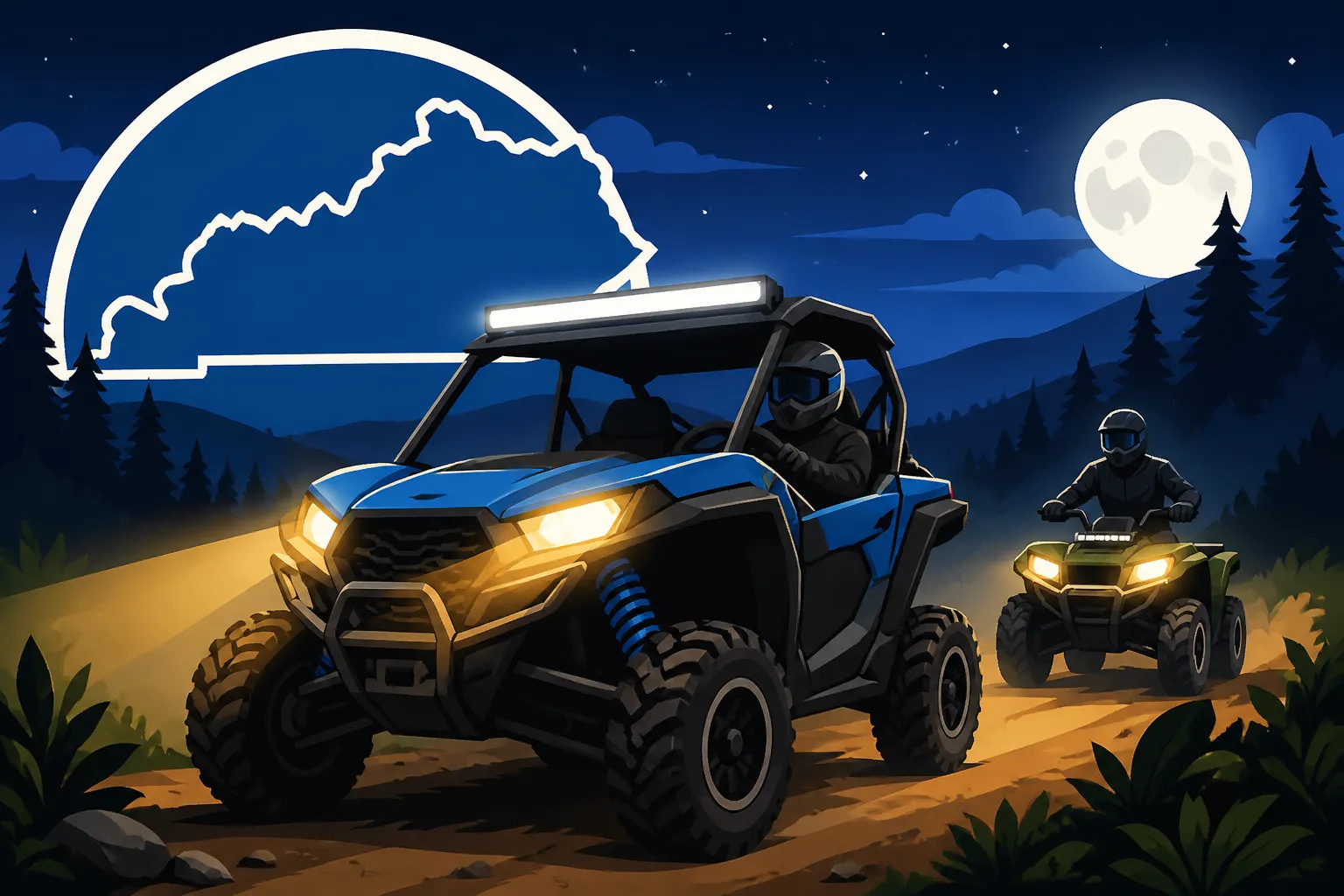
Kentucky Rules for Night Riding on a Trail
The allure of night riding on an ATV or UTV in Kentucky is undeniable. The trails take on a completely different character under the stars – cooler air, different wildlife sounds, and a sense of solitude you just don't get during the day. But for many riders, the burning question is whether it's even allowed, and if so, what hoops you have to jump through to do it safely and legally. This guide aims to clear up the confusion, providing a comprehensive look at Kentucky's rules and best practices for enjoying the trails after dark, so you can extend your adventures long past sunset with confidence.
Understanding Kentucky's Stance on Night Riding
One of the first things many ATV and UTV enthusiasts wonder about is whether Kentucky has a blanket law forbidding or permitting night riding on trails. It's not as simple as a yes or no, unfortunately, and this can be a real headache for those just trying to enjoy their machines. The reality is that the regulations are often far more nuanced and depend heavily on where you're actually riding.
The Lack of a Statewide Blanket Rule
Unlike some states that might have a clear, overarching statute addressing off-road vehicle use after dark across all types of land, Kentucky's approach is more decentralized, particularly concerning private land and dedicated trail parks. This means you won't typically find a single, definitive piece of legislation from the Kentucky Transportation Cabinet that declares all trail riding after sunset either legal or illegal statewide. This lack of explicit statewide guidance for trails often leaves it up to the specific property owner or trail system operator to set their own policies. It’s a common frustration for riders looking for consistency across different riding spots, leading to a patchwork of rules rather than a unified approach.
Therefore, when you're planning a night ride, relying on what you heard about a different trail system or another state could land you in hot water. Always assume that specific local rules apply, and do your homework for each individual location. What's perfectly fine at one park might be strictly prohibited just an hour down the road. This is precisely why [Why Kentucky Has No Statewide Trail Sticker] is a thing – the state government isn't managing all these diverse riding areas with one set of regulations.
How Park and Private Land Rules Take Precedence
Given the absence of a broad statewide mandate for off-road trails, the rules for night riding typically fall under the jurisdiction of whoever owns or manages the land. For commercial trail parks and designated riding areas, this means their posted rules and permit conditions are king. These parks have often invested significantly in their infrastructure and have their own safety protocols, which can include specific hours of operation that dictate whether night riding is permitted. They might have designated "night ride" events, or they might simply have closing hours that preclude riding after dark.
Similarly, if you're riding on private property, the landowner's permission and specific conditions are paramount. You absolutely must have explicit permission to ride on private land, and that permission should ideally include the understanding that you intend to ride after dark. Riding without permission, especially at night, could lead to charges of trespassing, which no one wants. [Kentucky Rules for Riding Private Land] emphasizes this, and it becomes even more critical when visibility is low. Always get permission beforehand, and always respect the landowner's wishes regarding hours of operation.
Daylight Only Under the Statute
It's crucial to distinguish between riding on designated off-road trails and riding on public roads or highways. While there might not be a sweeping state law prohibiting night riding on private trails, Kentucky law is very clear about the use of ATVs and UTVs on public roads. Generally, these machines are not permitted on public roads, and if they are allowed for specific, limited purposes (like agricultural use or crossing a road at a 90-degree angle), those activities are often restricted to daylight hours.
The state statute specifically addresses vehicle operation on highways and typically dictates "Daylight Only Under the Statute" for off-highway vehicles in situations where they might briefly interact with public roadways. This distinction is vital for your safety and legal compliance. You might be gearing up for a night ride on a sanctioned trail, but that doesn't grant you permission to ride your ATV down a county road to get there after dark. Always trailer your machine to the trailhead if you plan to ride at night, avoiding any public road use that could lead to a citation. [Kentucky Rules for Riding After Dark] will likely delve more into the public road restrictions.
Essential Gear for Safe and Legal Night Riding
When the sun dips below the horizon, the challenges of trail riding multiply. Reduced visibility isn't just an inconvenience; it's a significant safety hazard. That's why having the right equipment, especially lighting, isn't just a recommendation—it's often a requirement and always a smart move. Without adequate illumination, you're not only putting yourself at risk but also anyone else on the trail.
Lighting Up the Darkness: Headlights and Taillights
The most fundamental requirement for any vehicle operating in low-light conditions, whether on a road or a trail, is proper lighting. For ATVs and UTVs, this means functional headlights and taillights. Most modern machines come equipped with these as standard, but it's vital to ensure they are in good working order before any night ride. Headlights are your eyes, illuminating the trail ahead, helping you spot obstacles, turns, and changes in terrain. Taillights are equally important, making you visible to any riders behind you, preventing rear-end collisions, especially in dusty conditions or on tricky climbs.
Make sure your headlights are properly aimed to cast light far enough down the trail without blinding oncoming riders (if applicable on multi-directional trails). A common issue riders face is having stock lights that are simply not bright enough for serious night riding. While they might meet a bare minimum, upgrading to brighter LED headlights can dramatically improve your visibility and riding experience. Consider products from companies like SuperATV, which offer a range of aftermarket lighting solutions designed to withstand the rigors of off-road use and provide superior illumination. [Kentucky Lighting Requirements for ATVs] typically outlines the bare minimum, but for actual safety and enjoyment on trails, you'll often want more.
Beyond the Basics: Auxiliary Lighting
While stock headlights and taillights are a starting point, experienced night riders often invest in auxiliary lighting. This can include light bars, floodlights, or spot secondary lights mounted on the front, sides, or even the rear of the machine. The benefit of auxiliary lighting is that it allows you to customize your light pattern and intensity to suit the specific trails you're riding. A wide floodlight mounted on the roof of a UTV can illuminate a broad area, helping you see obstacles off to the sides, while a powerful spot beam can punch through the darkness to show you what's far down a straightaway.
When adding auxiliary lighting, remember to consider your machine's electrical system capacity. You don't want to overload it and risk draining your battery or blowing fuses mid-ride. It's also wise to choose durable, waterproof lights built for off-road abuse. Again, manufacturers like SuperATV specialize in these kinds of robust aftermarket accessories. These additions aren't just for showing off; they can genuinely enhance your ability to navigate challenging terrain safely after dark, transforming a white-knuckle ride into a manageable, enjoyable experience.
Visibility for Riders and Machines
Beyond your machine's lights, your personal visibility, and that of your entire setup, also matters. Riders should wear reflective gear, especially if there's any chance of being off the machine on the trail (e.g., stopping for a break, fixing a mechanical issue). Reflective strips on helmets, jackets, or vests can make a huge difference in how easily you're spotted by other riders. For your machine, consider adding reflective tape to key areas, particularly the rear and sides, especially if you have a larger UTV with a bed or cargo area that might obscure taillights from certain angles.
If you're towing a trailer for extra gear or recovery, that trailer absolutely needs its own functional taillights, brake lights, and reflective markers. Imagine trying to see an unlit trailer hitching a ride in the pitch black of a Kentucky holler—it's a recipe for disaster. Visibility isn't just about seeing; it's about being seen. This holistic approach to lighting and reflectivity ensures maximum safety for both you and those you share the trail with.
Navigating the Night: Safety Best Practices
Night riding offers an unparalleled experience, but it also demands a heightened sense of awareness and meticulous preparation. The same trail you've ridden countless times in daylight can feel entirely different when shrouded in darkness. Ignoring these differences can lead to dangerous situations, making thoughtful planning and careful execution absolutely critical.
Pre-Ride Checks and Route Planning
Before you even think about hitting the trail after dark, a thorough pre-ride inspection of your machine is non-negotiable. Check all your lights – headlights, taillights, brake lights, and any auxiliary lighting – to ensure they are fully functional. Verify tire pressure, fuel levels, and the condition of your brakes. Carry extra batteries for any handheld lights or GPS devices. It’s also wise to bring a small toolkit for minor repairs, a first-aid kit, and enough water and snacks.
Route planning is equally important. Stick to trails you are intimately familiar with during daylight hours. Night is not the time to explore new, uncharted territory. Even on a known trail, subtle changes like a fallen branch or a washed-out section can be almost impossible to spot until it's too late. Share your planned route and expected return time with someone who isn't riding with you. Consider carrying a GPS device or a reliable trail map, even if you think you know the way like the back of your hand. [Kentucky Trail Maps Worth Carrying] will be invaluable here, especially ones that are clear even under a dim headlamp.
Group Riding and Communication
Riding in a group is always a good idea, but it becomes even more vital when riding at night. There's safety in numbers; if one machine breaks down or a rider gets injured, immediate assistance is at hand. Establish clear communication methods before you set out. This could be two-way radios, helmet communicators, or even simple hand signals (though these are harder to see at night). Agree on a minimum and maximum distance between machines to avoid getting separated or riding too close and kicking up excessive dust.
When riding in a group, maintain staggered formation to improve visibility and allow for better reaction time. If you stop, make sure everyone in the group knows. If anyone falls behind, the lead rider should stop and wait. Night riding can be disorienting, and losing track of your group in the dark can quickly turn a fun outing into a stressful situation. Clear communication also extends to signaling turns or obstacles. A quick flash of auxiliary lights or a pre-arranged honk can alert riders behind you to upcoming hazards, allowing everyone to react safely.
Adapting to Reduced Visibility
The biggest challenge of night riding is, without a doubt, reduced visibility. Your depth perception is compromised, and shadows can play tricks on your eyes, making small dips look like huge holes and vice-versa. Slow down significantly. What might be a comfortable speed during the day will likely be too fast at night. Give yourself more time to react to obstacles and navigate turns. Avoid pushing your limits or attempting technical maneuvers that you might easily handle in daylight.
Watch out for wildlife, as many animals are more active at night and can dart across trails unexpectedly. Look for glowing eyes in your headlights. The dust kicked up by other riders can be exacerbated at night, creating a blinding cloud if you're too close. Adjust your following distance accordingly. Pay close attention to the sound of your engine and the feel of your machine; these senses become more important when your sight is diminished. Riding through areas where [Gravel Washed Onto a Mountain Road] or [Fog in a Kentucky Holler at Dawn] can quickly turn treacherous in the dark, so always be prepared to adapt your speed and technique.
Where Night Riding is Permitted in Kentucky
Just because you're geared up and ready for a night adventure doesn't mean every trail in Kentucky is open to you after sunset. It's crucial to know where you can actually ride legally when the stars come out. Kentucky's diverse landscape offers various riding opportunities, but each comes with its own set of rules regarding nighttime access.
Specific Trail Parks and Their Policies
Many of Kentucky's popular off-road parks have clear policies regarding night riding, and these can vary significantly from one park to another. Some parks might explicitly allow night riding during their operating hours, which could extend well past sunset, or even offer special "night ride" events. Others might have strict closing times that prohibit anyone from being on the trails after dark. It is absolutely essential to check with the specific park you plan to visit before you load up your machine.
For example, a park like [Black Mountain Off-Road Adventure Area in Kentucky] might have different hours or specific permits for night use compared to [Leatherwood Off-Road Park in Kentucky] or [Rush Off-Road in Eastern Kentucky]. Often, these parks will post their rules clearly on their websites, at the entrance gate, or as part of their permit agreement. Don't rely on old information or hearsay; always call ahead or check the most current information available from the park management. Showing up at the gate ready for a night ride only to find out it's prohibited is a frustrating way to end your evening before it even begins.
Riding on Private Property After Dark
If you own private land, or if you have explicit, written permission from a landowner, riding after dark on that property is generally permissible. However, even on private land, you still bear the responsibility for safety and minimizing disturbance. This means ensuring your machine has adequate lighting and that you are operating it responsibly. Be mindful of noise, especially if there are neighbors nearby. Sound carries further at night, and what might be acceptable during the day could be a nuisance after hours.
As mentioned earlier, getting clear permission is key. Just because you have permission to ride during the day doesn't automatically mean that extends to night riding. It’s always best to have a frank conversation with the landowner about your intentions. If you're buying property specifically for riding, consider how your future night rides might impact local ordinances or neighbor relations. This proactive approach helps maintain positive community relationships and ensures your recreational activities don't inadvertently create problems for yourself or others. [Kentucky Trespass Rules for Riders] become a real concern if you haven't secured permission.
The Importance of Checking Local Regulations
Beyond park rules and private landowner permission, it's always a good idea to be aware of any hyper-local ordinances or regulations that might impact night riding. While a statewide rule might not exist for trails, some counties or specific localities might have their own noise ordinances or other restrictions that could apply to off-road vehicles, even on private land, especially after certain hours. These are less common for dedicated off-road parks, which often operate under specific permits that account for noise, but they are certainly worth considering if you're riding in more residential or mixed-use areas.
Even within designated riding areas, there might be specific zones or trails that are closed after dark for safety, environmental, or wildlife preservation reasons. Always check any posted signage and respect all closures. Some parks may even have specific routes designated for night riding due to terrain difficulty or proximity to sensitive areas. A quick look at a board with [Today's Rules in Kentucky] at a park gate can save you a lot of grief. Being a responsible rider means staying informed and adhering to all applicable rules, ensuring the trails remain open and enjoyable for everyone, day and night.
| Aspect | Daylight Riding | Night Riding |
|---|---|---|
| Visibility | Excellent, natural light | Reduced, dependent on machine & auxiliary lighting |
| Speed | Typically higher, confident | Slower, cautious, reduced reaction time |
| Obstacle Detection | Easy to spot, good depth perception | Challenging, shadows distort perception, delayed spotting |
| Wildlife | Less active, easier to see | More active, harder to spot, reflective eyes |
| Navigation | Clear landmarks, easy trail following | Challenging, reliance on GPS/familiarity, disorientation |
| Communication | Visual signals, shouting | Radios, helmet systems, pre-arranged signals |
| Safety Gear | Standard helmet, gloves, boots | Standard gear + reflective elements, powerful lights |
| Trail Conditions | Obvious mud, water, washed-out areas | Hidden hazards, difficult to gauge depth |
| Permit/Access | Standard park permits, landowner permission | Specific night permits, explicit landowner permission |
| Atmosphere | Busy, social, clear views | Solitary, quiet, unique sensory experience |
Disclaimer
This article is for general informational purposes only and does not constitute professional advice. Laws, prices and regulations vary by location and change over time. Consult a qualified professional for guidance on your specific situation.