Kentucky Helmet Exemption for Logging
It's tough to keep up with all the specific rules and regulations when you're just trying to get work done, especially when it comes to riding your ATV or UTV in Kentucky. Many folks assume a blanket helmet law applies everywhere, but there are nuances, particularly for those of us in the logging industry. This guide will walk you through Kentucky's specific helmet exemption for logging operations, helping you understand when and where it applies so you can stay compliant and safe on the job.
Understanding Kentucky's General ATV Helmet Laws
When you're out enjoying the trails or simply riding around, it often feels like you need a law degree to understand what you can and can't do with your ATV or UTV. One of the most common questions, and a real point of confusion, revolves around helmet use. Most of the time, the law is pretty clear: if you're under 16 years old, you absolutely must wear a helmet when operating an ATV in Kentucky, no matter where you're riding. This isn't just a suggestion; it's a hard rule meant to protect our youngest riders, and for good reason. Accidents happen, and a helmet can be the difference between a minor bump and a life-altering injury. You can find more detail on this in [Kentucky Helmet Rules for Riders Under 16].
The Standard for Riders Under Sixteen
For anyone under the age of sixteen, the law is unambiguous. If you're on an ATV, your head needs to be protected by an approved helmet. This applies whether you're tearing up a trail at Black Mountain Off-Road Adventure Area, riding on private land with permission, or just cruising down a farm path. Parents, this responsibility falls squarely on your shoulders. It's about setting a good example and ensuring their safety. Imagine the gut-wrenching feeling if a preventable injury occurred because a helmet was forgotten. The state takes this seriously, and so should we. There's also the question of age-appropriate machines; Kentucky law, like many states, points to the manufacturer's age label as a guideline for suitability, which often ties into these safety considerations.
Helmet Requirements on Public Roads and Specific Parks
While Kentucky generally doesn't require helmets for adult ATV riders on private property, the rules shift dramatically when you venture onto public roads, even for a short crossing, or into designated public riding areas like Turkey Bay OHV Area. If you're riding a street-legal Side-by-Side (which is a whole other can of worms to navigate with Kentucky's unique laws, see [Street Legal ATVs in Kentucky: The Short Answer]), or if you find yourself crossing a public highway, then helmet requirements can kick in for all riders, regardless of age. Similarly, many organized trail parks have their own rules that often mandate helmet use for all riders, as part of their liability and safety protocols. So, even if the state law has an exemption, always check park-specific rules before you load up and head out.
The Specifics of the Kentucky Logging Exemption
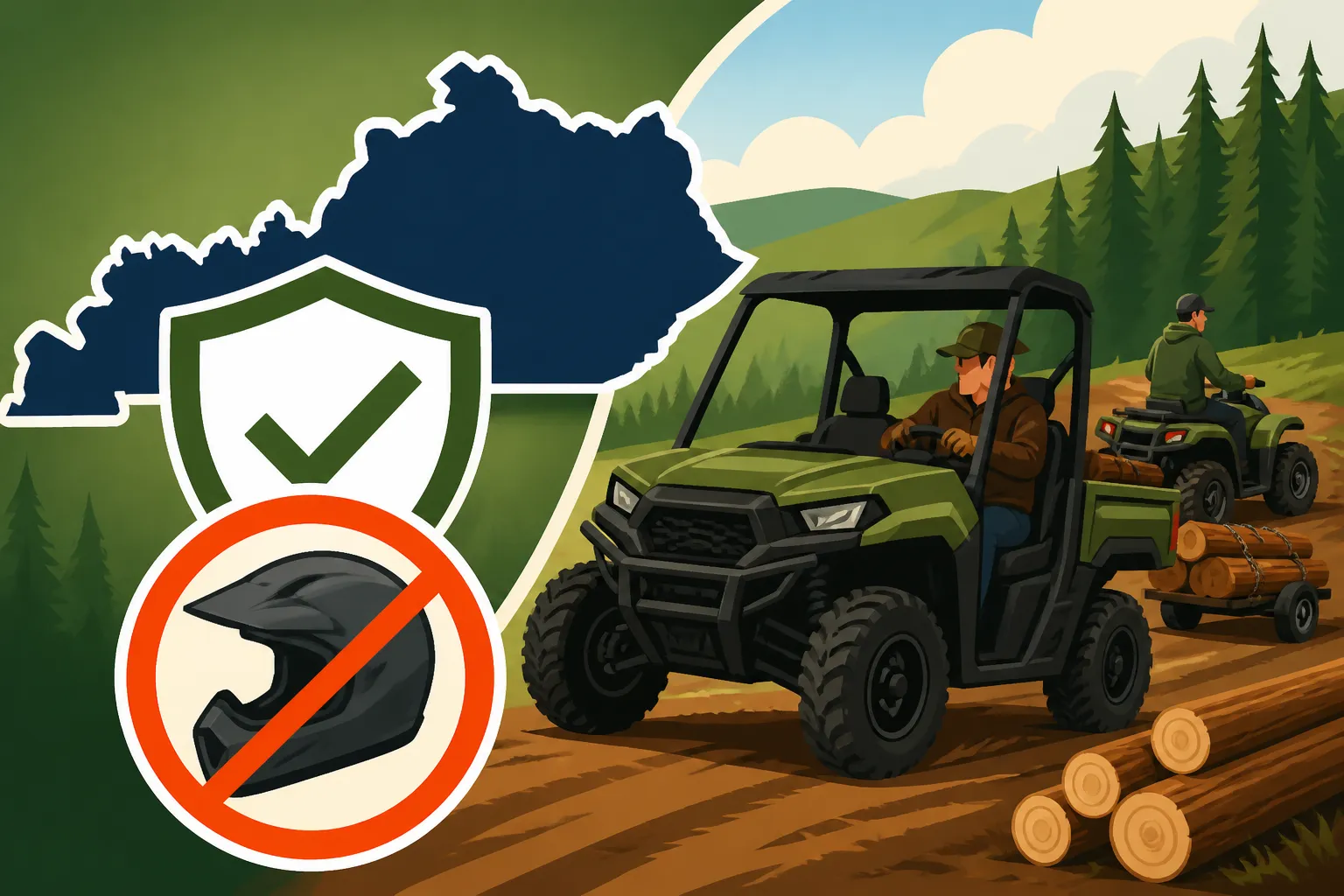
Now, let's talk about the specific exception that often raises eyebrows and clears up some major headaches for folks working in the timber industry. Kentucky law carves out a very particular niche for ATV and UTV operators who are actively engaged in logging operations. This isn't a loophole to ride around without a helmet just because you have a chainsaw in the back; it's a recognition that these machines are often critical tools for work, and the environment of a logging site presents unique challenges that sometimes make traditional helmet use impractical or even less safe in certain circumstances. This exemption is outlined in the statute to allow for the efficient and practical conduct of essential work.
Actively Engaged in Logging Operations
The key phrase here is "actively engaged in logging operations." This isn't about riding your ATV to go deer hunting in a wooded area, nor is it about taking a leisurely ride through the forest. This exemption applies strictly when you are performing tasks directly related to the cutting, processing, and transportation of timber. This could mean felling trees, skidding logs, clearing brush, marking timber, or transporting equipment and personnel within the logging site itself. For example, if you're using your UTV, perhaps equipped with a SuperATV winch system, to pull felled trees to a landing, you'd be considered actively engaged. However, if you've finished for the day and are just riding your ATV home on a public road from the logging site, that exemption no longer applies. It's about the activity, not just the location. Think about it: are you actually doing logging work, or are you just in a place where logging could happen? That distinction is crucial.
Why the Exemption Exists
You might wonder why such an exemption exists in the first place. It often comes down to practicality and the specific hazards of the job. In some logging scenarios, wearing a helmet can restrict vision, especially peripheral vision, which is vital when navigating falling trees, heavy machinery, and uneven terrain. The constant need to look up, around, and behind you can be impeded by a bulky helmet. Furthermore, the physical exertion involved in logging can lead to overheating, and a helmet can exacerbate this, potentially leading to heat-related illness. This isn't to say helmets aren't important; rather, it acknowledges that in specific, controlled work environments like a logging site, the risks and benefits are weighed differently. The goal is always safety, but the means to achieve that safety can vary based on the specific job.
Who Qualifies for This Exemption and Who Doesn't
This logging exemption, like its counterparts for farm work and mining, is not a free pass for everyone. It's narrowly defined to ensure it serves its intended purpose: facilitating necessary work. Understanding who this exemption is designed for, and just as importantly, who it isn't for, is critical to avoid fines or, worse, serious injury. The law isn't there to confuse you; it's there to draw clear lines around specific scenarios.
Logging Industry Professionals and Their Employees
The exemption primarily applies to individuals who are legitimately part of the logging industry. This includes professional loggers, their employees, and potentially independent contractors hired specifically for logging operations. If you're a logger working for a timber company, or you run your own logging business, and you're using an ATV or UTV as a tool on a job site, then this exemption is likely for you. For instance, if you're a foreman overseeing a cutting crew and you're using your side-by-side to transport tools and scout timber, you'd fall under this. The expectation is that you are trained, experienced, and aware of the other safety protocols relevant to a logging environment. This isn't an invitation for hobbyists or casual riders to bypass helmet laws simply because they're in a wooded area.
| Scenario | Helmet Required? (Generally) | Logging Exemption Applies? | Notes |
|---|---|---|---|
| Rider under 16 | Yes | No | Age is a primary factor; minors must always wear a helmet on ATVs. |
| Adult riding recreationally on private land | No | No | General rule for adults on private land, but not for logging exemption. |
| Adult riding on a designated public trail | Check park rules | No | Trail parks often have their own mandatory helmet rules for all riders. |
| Adult crossing a public road | Yes (often) | No | Public road crossings usually trigger helmet requirements, regardless of other work. |
| Adult actively felling trees on a logging site | No | Yes | Direct engagement in timber felling. |
| Adult transporting logging equipment within a timber stand | No | Yes | Moving tools or supplies from one part of the logging site to another. |
| Adult scouting timber for future operations | No | Yes | Preparing for active logging, identifying trees to be cut. |
| Adult riding from logging site to town for lunch | Yes | No | No longer "actively engaged" in logging if on public roads/not working. |
Differentiating From Farm and Mining Exemptions
It's helpful to remember that Kentucky has similar exemptions for farm work and mining operations. Each of these is distinct and has its own specific criteria. The [Kentucky Helmet Exemption for Farm Work] allows farmers to operate ATVs on their land without a helmet when engaged in bona fide agricultural activities. Likewise, [Kentucky Helmet Exemption for Mining] covers individuals working on mine sites. While the spirit of these exemptions is similar – recognizing ATVs as work vehicles – the letter of the law applies to very different industries and work environments. You can't claim a logging exemption if you're baling hay, just as you can't claim a farming exemption if you're felling timber. Each situation needs to stand on its own merits under the specific statutory language.
Practical Considerations and Staying Safe
Even with a valid helmet exemption for logging operations, safety should always be your top priority. Laws provide a baseline, but common sense and good judgment are what truly keep us out of harm's way. The logging environment is inherently dangerous, and taking every precaution, regardless of legal requirements, is just smart practice.
Assessing Your Specific Situation on the Job
Before you even think about forgoing a helmet on a logging site, take a good, hard look at your specific task and the conditions around you. Are you on a steep slope? Is the ground wet and slippery? Are there other heavy machines operating nearby? Is falling debris a significant risk? While the exemption might apply, wearing a helmet could still be the safest choice. Many loggers still choose to wear helmets for tasks that involve chainsaw operation, where falling branches or kickback could cause head injury. It's about risk assessment. A product like a SuperATV full windshield might protect you from some debris, but it won't replace head protection in a direct impact. Always err on the side of caution.
The Importance of Other Safety Gear
A helmet is just one piece of the safety puzzle. In logging, there's a whole array of personal protective equipment (PPE) that is far more critical than just headwear. Think about steel-toed boots to protect against falling logs, chaps or pants with chainsaw protection to prevent severe leg injuries, eye and ear protection from debris and noise, and gloves to maintain grip and prevent splinters. These are non-negotiables in a logging environment. Relying solely on a helmet exemption without using other appropriate PPE is a dangerous oversight. Make sure your ATV or UTV is also equipped for the job, with things like proper lighting for low-light conditions on a logging road, or a sturdy roll-over protection system (ROPS) if you're on a side-by-side.
When to Just Wear the Helmet Anyway
Even if you meet all the criteria for the logging exemption, there will be times when wearing a helmet is simply the smarter, safer choice. If you're new to a particular logging site, or if conditions are unusually challenging (like after heavy rain when visibility and traction are poor), don't hesitate to put that helmet on. It's better to be safe than sorry. Remember, the law provides an exemption, not a prohibition. You are always permitted to wear a helmet, and often, it's the best decision for your personal safety, especially when you consider the varied terrain and unpredictable nature of working in the woods. Getting to your truck at the end of the day, safe and sound, is always the priority.
Disclaimer
This article is for general informational purposes only and does not constitute professional advice. Laws, prices and regulations vary by location and change over time. Consult a qualified professional for guidance on your specific situation.