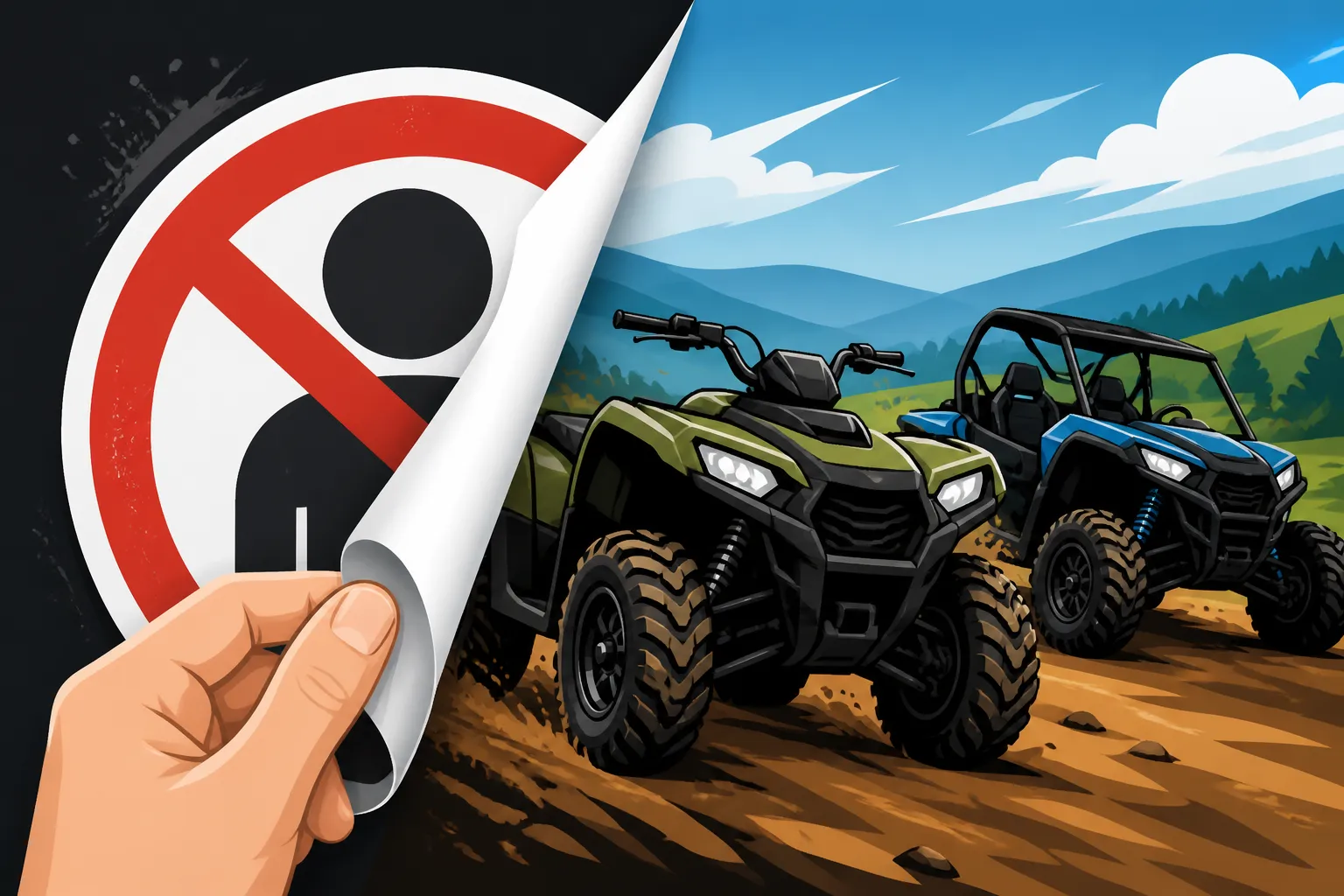
Peeling Off an Age Warning Label
It’s a scenario many Kentucky parents face: you’ve got a bright-eyed, enthusiastic young rider who just can’t wait to hit the trails, but their machine has that glaring age warning label suggesting they’re not quite old enough. The temptation to simply peel it off, to make the machine "fit" their ambition, can be incredibly strong. This guide is here to walk you through why that simple act carries significant risks and legal implications in Kentucky, and to offer safer, legal paths forward for your budding off-road enthusiast.
The Temptation Behind Peeling Off That Label
Let's be honest, those age warning labels can feel like a buzzkill, especially when you see your child handling an ATV with skill and confidence that seems to defy the sticker's recommendation. Many of us have been there, wrestling with the urge to just make the "problem" disappear with a quick peel. But beneath that label lies a layer of legal and safety considerations that are crucial to understand.
Why Riders Consider It
The desire to remove an age warning label often stems from a few understandable places. For one, parents naturally want their children to experience the joy and freedom of riding, and sometimes a child's perceived skill level seems to outpace the manufacturer's age recommendation. You might have a kid who's physically strong, incredibly coordinated, and has already mastered smaller machines. It feels counterintuitive to hold them back when they seem perfectly capable. Another common reason is a misunderstanding of Kentucky's specific ATV laws. Many assume the age label is just a suggestion, or that it only applies to new sales, not how they use a machine they already own. Some might also feel a sense of frustration with what they perceive as overly cautious guidelines, especially if they grew up riding at a young age without incident. They see the label as a barrier, not a critical safety warning or legal requirement.
The Manufacturer's Label as Kentucky's Age Rule
Here’s where it gets really important for us Kentucky riders: those manufacturer's age labels aren't just suggestions from a corporation; they've been specifically incorporated into Kentucky law. Our state's statutes explicitly refer to the manufacturer's age recommendations found on the machine. This means that if the label states "for riders 16 and older," then a rider under 16 operating that machine is, by definition, in violation of the law. It’s not about an arbitrary number set by the state; it's about acknowledging the extensive safety testing and engineering that went into determining a machine's appropriate user age. The intent behind these labels is rooted in safety, considering factors like machine weight, engine size, speed capabilities, and handling characteristics. A machine designed for an adult body type and strength simply isn't safe for a child, regardless of how skilled they might appear. You can find more specific details on this in [The Manufacturer's Age Label in Kentucky Law]. The law leans on these labels because they provide a standardized, visible, and easily understood guideline, removing ambiguity about who should be operating which machine.
Understanding the Legal Ramifications in Kentucky
When you peel off that age warning label, you're not just removing a sticker; you're effectively removing a critical piece of information that Kentucky law relies upon for safety and enforcement. This seemingly small act can open up a Pandora's box of legal and financial troubles.
What Happens If You Remove the Label
In Kentucky, removing a manufacturer's age warning label from an ATV or UTV that is then operated by an underage rider can lead to direct legal consequences. The law isn't just about the presence of the label, but what the label represents in terms of the manufacturer's safety recommendations. If a law enforcement officer encounters a minor operating a machine clearly beyond their manufacturer-recommended age, and that label is missing, it raises immediate red flags. They might issue citations, which can come with fines. Beyond that, the act of intentionally removing a safety warning could be viewed as a more serious offense, potentially impacting your standing as a responsible machine owner. Furthermore, if a minor is involved in an incident while operating a machine for which they are not age-appropriate, and the label has been removed, it can make a strong case for parental negligence. This isn't just a slap on the wrist; it can escalate into significant legal battles. It’s worth looking at [What a Parent Risks Letting a 6-Year-Old Ride] to understand the gravity of these situations. The simple act of peeling off the label doesn't magically change the legal age requirement for that particular machine; it merely removes the most obvious indicator of that requirement.
Consequences in an Accident Scenario
This is arguably the most critical aspect to consider. If a minor operating an ATV with a removed age label is involved in an accident, the ramifications can be devastating. First, your insurance policy might become null and void. Most insurance companies have clauses that require you to comply with all relevant laws and manufacturer guidelines. Intentionally circumventing these, especially by removing a safety label, could be seen as a breach of contract, leaving you personally responsible for all damages, medical bills, and legal fees.
Second, the liability in civil cases can be astronomical. If your child is injured, or worse, if they injure someone else or damage property, you could be sued for negligence. The opposing legal team would likely argue that you knowingly allowed an underage rider to operate an inappropriate machine and even removed a critical safety warning. This could lead to massive financial judgments against you, potentially putting your home, savings, and future at risk. The state's view on modified safety features or intentionally ignored warnings is severe because these regulations are in place to prevent serious injury or fatality. Removing that label essentially declares that you, as the machine's owner and the minor's guardian, are taking full and total responsibility for any and all outcomes, irrespective of established safety protocols.
Safer and Legal Alternatives for Young Riders
As parents and guardians, our primary goal is to ensure the safety of our children while also fostering their passions. Thankfully, there are many ways to introduce young riders to the world of ATVs and UTVs without bending or breaking Kentucky's age laws.
Proper Supervision and Training
Instead of modifying the machine, focus on enhancing the rider's skills and safety. Consistent, hands-on training is paramount. Enroll your child in an ATV safety course, many of which are offered locally or online. These courses teach critical riding techniques, hazard awareness, and responsible operation that go far beyond what a warning label can convey. Start with smaller, less powerful machines in controlled environments, gradually increasing complexity as their skills develop. Always ensure proper personal protective equipment (PPE) is worn, including a helmet, goggles, gloves, long pants, and over-the-ankle boots. Direct, constant supervision is key, especially for younger riders. You, as the experienced rider, can be right there with them, guiding their every move, teaching them how to handle different terrains, and instilling good judgment. Remember, [Kentucky Rules for Riders Under 16] require supervision, and for good reason. Investing in their training is investing in their future safety, making them better riders regardless of the machine's size. For more on this, check out [Teaching a Young Rider in Kentucky].
Choosing Age-Appropriate Machines
The best way to address the age label dilemma is to ensure your child is riding a machine that is age-appropriate from the start. Manufacturers produce a wide range of youth-model ATVs and UTVs specifically designed for smaller bodies, lighter weights, and lower skill levels. These machines have smaller engines, reduced top speeds, and safety features like throttle limiters. When shopping for a youth machine, consider the child's height, weight, and strength, not just their age. A machine that fits them properly allows for better control, easier braking, and a more comfortable, safer ride.
For those with age-appropriate machines, there are also numerous accessories that can enhance safety and performance without violating age laws. Companies like SuperATV offer a vast selection of aftermarket parts, including protective skid plates, tougher bumpers, winches, and lighting kits. While these accessories don't change the age rating of a machine, they can improve its durability and visibility, adding an extra layer of protection once your child is on the correct-sized vehicle. Always prioritize safety gear and protective enhancements over attempting to bypass age guidelines. This ensures compliance with [Kentucky Rules for a Rider Under 16] while giving your child the best possible experience.
Embracing Designated Riding Areas
Kentucky is fortunate to have incredible off-road parks that provide controlled, supervised environments perfect for riders of all ages, including beginners. These parks often have specific rules regarding age-appropriate machines and supervision, ensuring a safe experience for everyone. Places like [Black Mountain Off-Road Adventure Area in Kentucky] offer vast trail systems where you can teach your child to ride responsibly. They have designated areas or trails suitable for different skill levels, allowing your child to gain experience in a safer setting away from public roads or unsupervised private land. Many parks also enforce strict helmet rules and have staff present who can assist if needed. Familiarize yourself with the park's specific regulations regarding [Kentucky Trail Rules for Riders Under 16] and the overall [Kentucky Minimum Age to Ride a Trail] for their particular grounds. Riding in these managed environments not only provides a fun outing but also reinforces good riding habits and respect for rules and safety, which is a lesson that will serve them well throughout their riding life.
Dispelling Common Misconceptions and Finding Clarity
The topic of ATV age restrictions and warning labels is often shrouded in misunderstanding. Many riders hear anecdotes or assume general rules apply everywhere, leading to confusion and sometimes risky decisions. Let's clear up some common misconceptions and point you toward reliable sources for accurate information.
Why the Law Focuses on the Label
It might seem arbitrary that Kentucky law places so much emphasis on a sticker, but there's a very practical reason behind it. The manufacturer's age label serves as a universal, easily identifiable, and objective standard. Without it, determining a machine's appropriate user age would become a subjective matter, open to endless debate and inconsistency. Law enforcement officers, parents, and even insurance companies need a clear guideline. Manufacturers invest significant resources into testing and designing their machines, including assessing factors like stability, handling, speed, and safety features in relation to rider size, weight, and cognitive development. The age label is the culmination of that research, a direct safety recommendation from the people who built the machine. By referencing this label, Kentucky law leverages expert knowledge to protect its citizens. This is precisely [Why the Statute Points at the Label] – it's a pragmatic approach to a complex safety issue, ensuring that everyone has a clear benchmark.
Getting Official Information
When in doubt, always go to the source. Relying on hearsay or unofficial advice can lead you astray. For the most precise and current information regarding ATV and UTV laws in Kentucky, including those pertaining to age restrictions and safety labels, you should consult the Kentucky Revised Statutes (KRS). These documents are the official body of law for the Commonwealth. While the [The Kentucky Transportation Cabinet and ATVs] primarily deals with titling and registration, they can often direct you to the specific statutes governing ATV operation. Your local county clerk's office, while primarily handling vehicle titles, can also sometimes offer guidance or point you to relevant resources, especially concerning ownership and proper documentation. Additionally, the Kentucky Department of Fish and Wildlife Resources or state parks that manage ATV trails often publish their specific rules and regulations, which must comply with state law. Always check with the relevant government body for any questions regarding legal requirements, especially when it concerns the safety of minors. While information from fellow riders is helpful, it’s no substitute for official legal guidance.
| Action | Potential Legal Consequence (Kentucky) | Safety Implications | Financial Risk (Kentucky) |
|---|---|---|---|
| Peeling Off Age Label | Citation, fines for violations; potential charges for negligence or endangering a minor. | Misuse of machine, increased accident risk due to rider-machine mismatch; loss of manufacturer warnings. | Voided insurance, personal liability for damages/injuries, significant legal fees and settlements. |
| Riding Age-Appropriate Machine | Legal and compliant with state statutes and manufacturer guidelines. | Safer riding experience, proper control and handling for rider's size and skill level. | Standard insurance coverage, reduced risk of costly accidents and legal action. |
| Proper Supervision/Training | Encouraged by law; demonstrates responsible guardianship. | Skill development, accident prevention, instills good judgment and trail etiquette. | Reduced risk, potentially lower insurance premiums, less chance of liability. |
Disclaimer
This article is for general informational purposes only and does not constitute professional advice. Laws, prices and regulations vary by location and change over time. Consult a qualified professional for guidance on your specific situation.