Kentucky Street Legal UTV Requirements
Oh, the dream of cruising your UTV right from your driveway to the local store or hopping on a county road to connect to a new trail system! It sounds amazing, doesn't it? But then reality hits, and the tangled mess of Kentucky's laws on street legal UTVs starts to feel like navigating a rock garden blindfolded. It's incredibly frustrating when you just want a clear answer on what it takes to get your side-by-side on the pavement legally. This guide is here to untangle that knot, walking you through the actual requirements for making your UTV street legal in the Bluegrass State.
The Reality of Street Legal UTVs in Kentucky: It's Not as Simple as You Think
Let's get one thing straight from the start: Kentucky's default position on ATVs and UTVs on public roads is a big, resounding "no." It's disheartening, I know, especially when you see other states with more open policies. You might think, "My UTV is big, stable, and has lights—it's practically a small car!" But the law doesn't see it that way automatically. This isn't about what feels reasonable; it's about specific statutes that can be incredibly confusing if you don't know where to look.
The Core State Law: "Closed by Default"
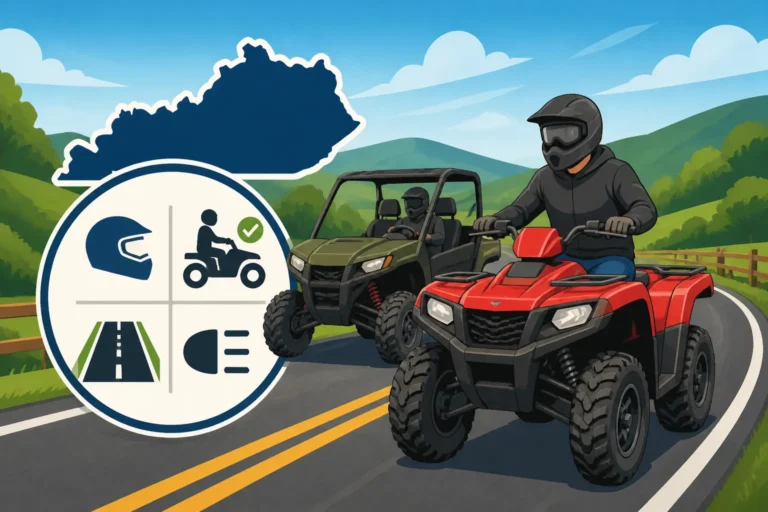
Kentucky operates under a "closed by default" rule for off-highway vehicles on public roads. What does that mean? It means unless a specific law or local ordinance expressly permits it, your UTV is not allowed on state highways, county roads, or city streets. This can be a huge bummer for riders who want to connect trails or simply get from one place to another without trailering their machine. Imagine living just a mile from a fantastic trail system, but that mile is a county road. Without meeting specific criteria, that short distance is an impassable legal barrier. We've all been there, staring down a stretch of pavement knowing our machine is parked uselessly on the other side. This is why understanding the nuances is so critical. There are very limited exceptions, such as the strict [Kentucky Rules for ATVs on Public Roads] that allow for a quick crossing of a two-lane road at a ninety-degree angle, but these are far from general street use.
The Special Purpose Vehicle (SPV) Exception
Thankfully, there is a pathway for UTVs to achieve some level of street legality in Kentucky: the Special Purpose Vehicle (SPV) classification. This isn't a blanket permission slip, but rather a specific designation your UTV can earn by meeting a comprehensive set of equipment, inspection, and registration requirements. Think of it less like registering a car and more like converting a highly specialized piece of equipment for limited road use. It's a structured approach designed to ensure these vehicles meet certain safety standards before mixing with regular traffic. Without going through the SPV process, your UTV remains largely confined to private land or designated off-road parks. This is the main focus of Kentucky Street Legal UTV Requirements and what we'll delve into in more detail.
Why the Distinction Matters for UTV Owners
For many UTV owners, their machines feel inherently more capable on a road than a typical ATV. With side-by-side seating, a steering wheel, and often a more substantial footprint, a UTV can certainly feel like it belongs on the pavement more than a quad with a straddle seat. However, in Kentucky, simply having these features isn't enough. The legal distinction matters because failing to meet the SPV criteria means your UTV is still considered an off-highway vehicle, subject to all the "closed by default" restrictions. This means you could face fines, impoundment, or other penalties for riding illegally on public roads. It's a common misconception that because your UTV looks capable, it automatically is legal. Always remember, the law prioritizes specific classifications and equipment over perceived capability.
Meeting Kentucky's Special Purpose Vehicle (SPV) Equipment Standards
So, you're ready to make your UTV an SPV? Great! This is where the rubber meets the road—literally. Kentucky has a precise checklist of equipment your UTV must possess, and it's not something you can just wave away. These aren't suggestions; they are mandatory requirements designed to bring your off-road machine up to a standard that allows it to interact, albeit cautiously, with regular traffic. Many riders find themselves needing to add quite a bit of aftermarket gear to their machines to meet these standards.
Required Safety and Operational Gear
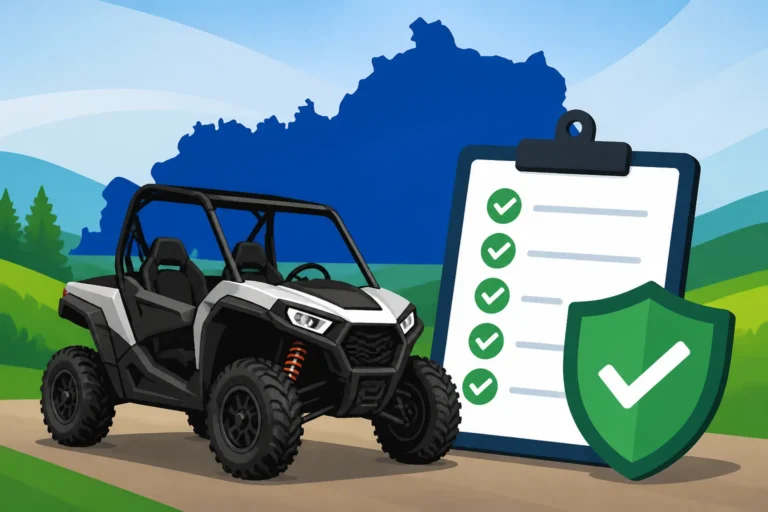
To qualify as a Special Purpose Vehicle, your UTV needs to be outfitted with a very specific set of safety and operational equipment. It's more than just slapping on a couple of headlights. We're talking about a comprehensive suite of features that you'd typically find on a street-legal vehicle. This includes, but isn't limited to:
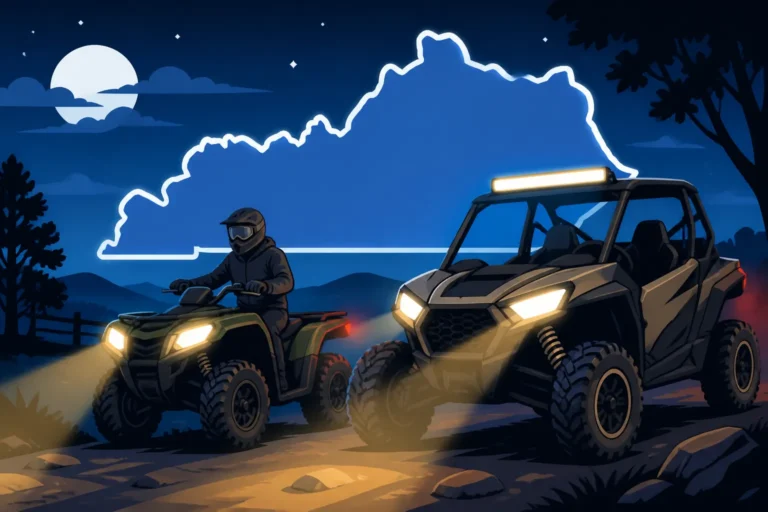
- Headlights: You'll need at least one, but most UTVs come with two. They must meet standard automotive lighting requirements.
- Taillights and Brake Lights: Two red taillights and two red brake lights are mandatory, ensuring visibility from the rear.
- Turn Signals: Both front and rear turn signals are essential for indicating your intentions on the road. This often requires an aftermarket kit. Companies like SuperATV offer robust turn signal kits designed specifically for various UTV models, which can be a huge help in meeting this requirement without a headache.
- Dual Mirrors: You need at least two rearview mirrors, one on each side, allowing you to see traffic behind you.
- Illuminated Speedometer: This is crucial for maintaining legal speed limits. If your UTV has a digital display, it must be illuminated and functional.
- Horn: A working horn is necessary for signaling other drivers or pedestrians.
- Windshield: Your UTV must have a windshield made of safety glass or a similar shatter-resistant material.
- Seatbelts: Factory-installed or equivalent seatbelts must be present and functional for all seating positions.
- Roll Cage/Occupant Protection System: Your UTV's original roll cage or occupant protection system must be intact and meet manufacturer specifications.
- Tires: The tires must have at least 2/32 inch of tread depth and be in good condition.
Making sure your machine is ready for inspection can take some work. Many riders turn to aftermarket suppliers for these components. For example, SuperATV offers a wide range of UTV accessories, including DOT-approved windshields and mirrors, which can be critical for passing the SPV inspection. You can find more detail on this checklist in [Kentucky SPV Equipment List], and for lighting specifics, [One Headlight and Two Taillights in Kentucky] and [Turn Signals and Dual Mirrors on a Kentucky SPV] are also good resources.
Inspection and Registration Process
Once your UTV is properly equipped, the next hurdle is the inspection and registration process. It's not a simple walk-in-and-register deal.
- Inspection: Your UTV must be inspected by a certified mechanic or a law enforcement officer who is authorized to verify that all the required SPV equipment is present and functioning correctly. This is a critical step, as they'll be looking for everything on that detailed list. Expect them to be thorough. It's often helpful to call ahead to your local County Clerk's office to find out who conducts these inspections in your area. This inspection typically comes with a fee, which helps cover the cost of the professional's time and expertise. [The $25 Kentucky Inspection] details this part of the process.
- Registration at the County Clerk's Office: After a successful inspection, you'll take the signed inspection form, along with your proof of ownership (like a title or bill of sale), and proof of insurance, to your local County Clerk's office. This is where you'll formally apply for the SPV registration and pay the associated fees. The clerk will process your paperwork, and if everything is in order, your UTV will be issued a special SPV license plate. The initial registration fee is usually quite modest, as outlined in [The $10 Kentucky SPV Registration].
Ongoing Requirements and Maintenance
Getting your SPV plate isn't a one-and-done situation. There are ongoing responsibilities you need to be aware of:
- Annual Renewal: Your SPV registration is not permanent. You will need to renew it annually, typically around the same time you'd renew a car's registration. This ensures that the state continues to track these vehicles on its roads. For more information, check out [Renewing a Kentucky SPV Plate Every Year].
- Maintaining Equipment: It's not enough to have the equipment for the initial inspection; you must maintain it in good working order whenever you operate your SPV on public roads. If your turn signals stop working, or a headlight goes out, you're technically no longer compliant and could be cited. Regularly inspect your UTV's lights, horn, mirrors, and tires to ensure they meet the standards.
Understanding Local Control: Where Can You Actually Ride?
This is perhaps the biggest and most frustrating caveat for UTV owners in Kentucky. Even if your UTV successfully passes inspection and receives an SPV plate, you cannot just hop on any road in the state. Kentucky's approach is highly decentralized, meaning local jurisdictions—cities and counties—have the ultimate say.
The Crucial "Opt-In" System
Kentucky law dictates that cities and counties must opt-in to allow SPVs on their roads. This means that while the state provides the framework for SPV classification, the decision to permit their use on specific local roads rests entirely with the local governing bodies. This can be incredibly confusing and inconsistent. You might be perfectly legal to ride your SPV in one county, only to cross into the next county and suddenly be in violation of the law. It's a patchwork quilt of regulations, and it puts the onus on you, the rider, to know the local rules wherever you plan to ride. Imagine planning a trip that crosses county lines, only to realize halfway through that one stretch of road is strictly off-limits! For a list of areas that have opted in, you can look at resources like [Kentucky Cities That Allow UTVs on Streets].
Navigating City and County Ordinances
Before you ever take your SPV onto a public road, you absolutely must check the specific ordinances of the city or county you plan to ride in. These local laws can vary widely. Some might allow SPVs on nearly all roads within their jurisdiction, while others might designate only certain roads, prohibit them on state highways passing through their town, or impose additional restrictions.
For example, many local ordinances will cap the speed limit for SPVs, often at 45 mph or even lower, regardless of the posted speed limit for cars. This is an important detail, as exceeding that limit could lead to a citation. Some cities might also restrict SPVs from operating during certain hours or on specific high-traffic routes. It's always best to call the local city hall or county clerk's office, or check their official websites, to get the most accurate and up-to-date information. Understanding [Why a Kentucky City Must Opt In] is key here, as it explains the reasoning behind this local control. For instance, if you're ever in Louisville, you'd need to consult specific documents like [Reading Louisville Metro's Ordinance].
Exemptions and Limitations (Farm Use, Crossing Roads)
It's also important not to confuse the SPV designation with other limited exemptions for UTV use on roads. These exemptions are not the same as having a street-legal SPV:
- Farm Use: Kentucky law provides a specific exemption for UTVs used for agricultural purposes. If your UTV is primarily used for farming activities, you might be able to operate it on public roads for short distances to get from one part of your farm to another, or to access fields. However, this exemption is strictly for farm-related tasks and doesn't grant general street legality. There's usually no mileage cap on farm use, but the purpose must be genuine agricultural work. For more on this, consult [Kentucky's Farm Exception With No Mileage Cap].
- Crossing Roads: As mentioned earlier, there's a very narrow rule allowing ATVs and UTVs (even non-SPV machines) to cross a paved road at a ninety-degree angle to get from one private property to another, or to access a trail. This crossing must be done safely, quickly, and only on a two-lane road where the speed limit is 55 mph or less. It's a quick dash across, not a ride along the road. This is covered in [Kentucky Rules for Crossing a Highway].
These exemptions are very limited and should not be relied upon for general road use. An SPV designation is the only way to achieve consistent, albeit locally restricted, street legality.
Driver Requirements and Insurance for Street Legal UTVs
Even with a perfectly equipped and registered SPV, you, the operator, also need to meet certain requirements. Just like operating any other motor vehicle on public roads, there are rules about who can drive and what kind of protection you need. This isn't just about your machine; it's about you as a responsible operator.
Driver's License and Age Considerations
This is a straightforward but often overlooked point: if you're operating an SPV on a public road in Kentucky, you absolutely need a valid driver's license. Your standard driver's license (Class D or higher) is generally sufficient; there isn't a special "SPV license" to obtain. This means that if you're under the age for a driver's license, or if your license is suspended, you cannot legally operate an SPV on any road. This ensures that anyone behind the wheel of an SPV has demonstrated a basic level of driving competence and knowledge of traffic laws. You can find more specific guidance on this in [A License for Kentucky Highway Operation].
Regarding passengers, especially minors, Kentucky law is clear: any passenger on an SPV on a public road must meet the same age and safety requirements as if they were riding in a conventional vehicle, or sometimes even stricter ones depending on local ordinances. While the SPV designation opens up road access, it doesn't waive the core safety rules, especially for younger riders.
Mandatory Insurance Coverage
Just like any other vehicle operating on Kentucky's public roads, your SPV must be insured. The specific type of insurance required for an SPV is typically "motorcycle-level" coverage. This means you'll need at least the state's minimum liability coverage, which helps cover damages or injuries you might cause to others if you're at fault in an accident. Without proof of valid insurance, your SPV registration can be denied or revoked, and you could face significant fines if caught driving without it. It's crucial to discuss this with your insurance provider to ensure you have the correct coverage. They'll need to know you're titling and registering your UTV as an SPV for road use. For specific insurance details, refer to [Motorcycle-Level Insurance for a Kentucky SPV].
Helmet Use for SPV Operators and Passengers
Kentucky's helmet laws can sometimes feel a bit complex, especially when you factor in different vehicle types and age groups. For SPV operators and passengers, the helmet rules generally align with those for motorcycles, particularly if the SPV is being operated on roads that are shared with higher-speed traffic or in areas where local ordinances are stringent.
While the state has some exemptions for helmet use on private land or for specific activities like farming or logging, these generally do not apply when your SPV is on a public road. Riders under the age of 16 are almost universally required to wear a helmet when operating or riding as a passenger on an ATV or UTV, regardless of where they are riding, including on an SPV on public roads. Some local "opt-in" ordinances for SPVs might even mandate helmet use for all operators and passengers, regardless of age, when on their city or county streets. Always check the specific local rules, but as a general best practice for safety and legal compliance, wearing a helmet is highly recommended whenever you're on public pavement with your SPV. Details on helmet laws for specific age groups on public property can be found in [Kentucky Helmet Rules on Public Property at 16].
| Feature | Standard UTV (Off-Road) | SPV (Street Legal) | Farm Use Exemption |
|---|---|---|---|
| Road Access | Private land, designated trails only | Permitted on opted-in local roads | Short distances for farm-related tasks |
| Equipment | Manufacturer's standard | DOT-approved headlights, taillights, brake lights, turn signals, dual mirrors, horn, windshield, illuminated speedometer, seatbelts, roll cage, good tires | Manufacturer's standard (with basic lights for visibility) |
| Registration | Not required (title only) | Required annually at County Clerk | Not required (title only) |
| Inspection | Not required | Required for initial registration | Not required |
| Driver's License | Not required (age limits apply off-road) | Required (valid Class D or higher) | Not required (age limits apply off-road) |
| Insurance | Recommended (liability, comprehensive) | Mandatory (motorcycle-level liability) | Recommended |
| Helmet | Recommended, mandatory under 16 | Recommended, mandatory under 16 (often all riders by local ordinance) | Recommended, mandatory under 16 |
| Local "Opt-In" | N/A | Absolutely required by local government | N/A (local road use must be farm-related) |
| Mileage Limit | N/A | Up to local speed caps (e.g., 45 mph) | Generally none for farm work, but purpose-specific |
Disclaimer
This article is for general informational purposes only and does not constitute professional advice. Laws, prices and regulations vary by location and change over time. Consult a qualified professional for guidance on your specific situation.