A Tennessee Rider Buying a Kentucky Permit
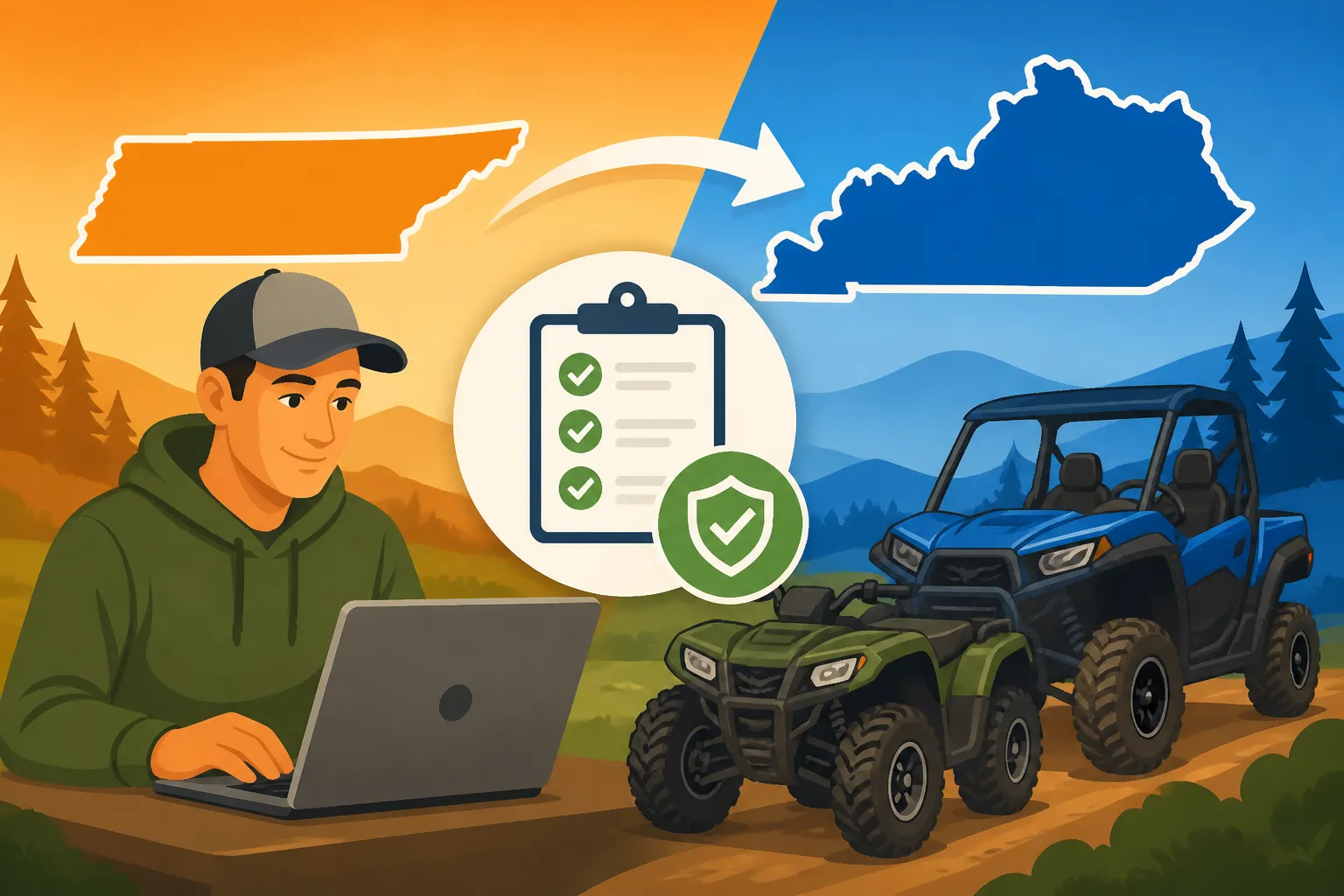
A Tennessee rider can bring a machine into Kentucky, but a home-state registration or permit does not automatically cover every Kentucky trail. The important step is identifying who manages your destination and what that operator’s permit covers. Here’s how to choose the right pass, avoid paying for the wrong one, and check the details before loading up.
First, match the permit to where you plan to ride
Kentucky does not issue one statewide trail sticker that grants access to every off-road riding area. Permits are generally tied to a specific park, forest or trail system, and each operator sets its own requirements. A permit for one destination should not be treated as valid at another.
That matters for Tennessee riders because a state-issued document and a riding-area permit serve different purposes. Registration or other paperwork from Tennessee may help establish that your machine is yours or is properly recognized at home. It does not necessarily pay for access to a Kentucky trail system. For the distinction, see Does Kentucky Honor Out-of-State Registration? and Why Kentucky Has No Statewide Trail Sticker.
Before you buy, answer three questions:
- Where will you ride? Name the exact park, forest or trail system, not just the nearest town.
- Who manages it? A private park, federal recreation area and other trail operator may have separate passes.
- What does the pass cover? Check whether it applies to your machine, each rider, passengers, camping or only trail access.
For example, a permit for Black Mountain does not automatically cover Turkey Bay, and a pass for an authorized route in a national forest is not a general Kentucky riding permit. Even if two riding areas are close together, treat them as separate destinations unless their official rules clearly say otherwise.
| What you have or want | What it may cover | What to verify |
|---|---|---|
| Tennessee registration or other home-state paperwork | Requirements that apply to your machine or home state | Whether the Kentucky destination requires a separate access permit |
| A park permit | Access to the specific park under its conditions | Which machines, riders, dates and activities it covers |
| A national forest OHV pass | Use of designated routes or areas covered by that pass | The applicable forest, route, vehicle rules and current pass conditions |
| A campground reservation | Your approved campsite or camping unit | Whether trail access is included or must be paid for separately |
| A permit from another Kentucky riding area | Usually only the destination named by that operator | Whether the second operator explicitly accepts it |
The practical rule is simple: buy for the destination, not for the state line. A pass you already hold may still be useful, but do not assume it travels with you to another riding area. Why One Park’s Permit Does Not Travel explains why operators’ permits are not interchangeable, while Why Kentucky Cannot Reciprocate Anything covers the limits of assuming one system will recognize another.
How a Tennessee rider should buy the right pass
Start with the official information for your planned riding area. Use the operator’s current permit instructions rather than relying on an old trip report, a third-party listing or a social media post. Permit names, sales channels, coverage and operating procedures can change.
Before purchasing, confirm these details:
- Permit unit: Is the charge for each machine, each rider, a group, a day or another unit?
- Passenger coverage: Does a passenger need a separate permit, or is access included with the machine or driver?
- Eligible machines: Are ATVs and UTVs both accepted, and are there restrictions on size, width or equipment?
- Validity: Does the permit apply to a specific date, a defined period or repeated visits?
- Purchase location: Can you buy it online, at an office or gate, or only through a specified channel?
- Required information: Will you need the machine’s details, proof of purchase or identification?
- Other costs: Are camping, parking or special activities handled separately?
- Operating conditions: Are there closures, seasonal restrictions, check-in steps or route limits?
Do not treat a permit description such as annual, daily or family as self-explanatory. Find out what it actually covers. A family option might have limits on the number of machines or riders; a day permit might not include camping; and a permit purchased for one machine might not transfer if you arrive with a different one. Those details can decide whether a pass is a good fit for your trip.
The permit process also varies by operator. For Black Mountain, check the current instructions before planning to purchase online; Black Mountain Permits Must Be Bought in Person addresses that park’s purchase process. At Leatherwood, the listed permit approach is per person, so confirm who in your group needs a pass through Paying Per Person Rather Than Per Machine. For Turkey Bay, use How the Turkey Bay OHV Permit Works to check the area-specific process and then confirm current conditions before leaving Tennessee.
If your route includes a national forest, do not confuse its OHV pass with a private park permit. The Buying and Using the Daniel Boone Forest OHV Pass information is relevant only when your plan includes eligible routes or areas covered by that pass. Check the forest’s current route and vehicle rules as well; holding a pass is not permission to ride wherever you find a trail.
A useful habit is to save the confirmation or receipt on your phone and keep a copy available offline. If the operator provides a physical permit, display or carry it exactly as instructed. A purchase confirmation may help you retrieve a permit, but do not assume it replaces a required sticker, tag or gate check.
What a Kentucky permit does not replace
A trail permit is permission to use a particular riding area under that operator’s rules. It does not automatically satisfy every other requirement that may apply to your trip.
For instance, a permit is not a general substitute for machine documents, insurance, safety equipment, age rules or landowner permission. It also does not make a closed route open. Check the riding area’s rules for the machine you are bringing, the riders in your group and the activity you plan to do. The requirements can differ for ATVs and side-by-sides, and a place that allows one type of vehicle may have different conditions for another.
Nor should a park permit be confused with permission to ride a public road. Road use is governed separately from trail access, and an off-road permit does not make a machine street legal. If you expect to ride any road segment, check the rules for that specific road and vehicle rather than relying on a park pass.
For visiting riders, the broader rules are covered in Kentucky Rules for a Visiting Rider. For the basic question of whether your destination requires a permit at all, see Do You Need a Permit for Kentucky Trails?. These distinctions are especially useful if you are combining a park visit with forest riding, camping or travel between trailheads.
Keep the paperwork and access rules separate in your planning:
- Machine paperwork concerns ownership or other documentation tied to the ATV or UTV.
- Trail permits concern access to a particular riding area.
- Campground arrangements concern your overnight stay and may not include riding access.
- Road-use rules determine whether, where and how a machine may be operated on public roads.
- Operator rules cover matters such as check-in, route limits, closures and required equipment.
If an operator’s website is unclear, contact the park or managing office before purchase. Ask a direct question: “I’m coming from Tennessee with this type of machine; what permit do I need, and what does it cover?” Include whether you are bringing a passenger, whether you plan to camp and whether you will visit more than one riding area. That gives the operator enough context to distinguish a machine permit from a rider or camping fee.
A pre-trip checklist for Tennessee visitors
Permit problems are often avoidable. Most come from buying for the wrong place, misunderstanding who must have a pass or arriving when the sales office or trail system is unavailable. A short check before departure can prevent a wasted trip.
- Choose the exact destination. Identify the riding area and its managing organization. Do not search only for “Kentucky ATV permit,” because Kentucky has no single trail pass for all locations.
- Check current operating status. Look for closures, weather-related notices, seasonal limits and gate or office arrangements.
- Confirm the permit unit. Determine whether the pass applies per machine, per person, per day or under another arrangement.
- Count your group correctly. Ask whether passengers, children or additional riders need their own permit.
- Confirm machine eligibility. Check that your ATV or UTV meets the area’s vehicle rules, including any size or equipment limits.
- Use the official purchase channel. Verify whether the pass is available online, at the gate or through another approved method.
- Ask about camping and parking separately. Do not assume a trail permit includes a campsite or that a campsite includes trail access.
- Save proof of purchase and instructions. Keep the receipt accessible and follow directions for displaying or presenting the permit.
- Check again before you leave. A closure or change in operating arrangements can affect the trip even after you have bought a pass.
If you intend to visit multiple areas, make a separate entry in your plan for each one. Record the managing organization, permit name, purchase method and any rider or machine conditions. This is more reliable than carrying a single pass and hoping it will be accepted everywhere.
The central takeaway is that being from Tennessee does not, by itself, determine which Kentucky trail pass you need. Your destination does. Confirm the operator’s current rules, buy the pass that matches that specific area, and treat any home-state registration or another park’s permit as separate paperwork unless the destination expressly says otherwise.
Disclaimer
This article is for general informational purposes only and does not constitute professional advice. Laws, prices and regulations vary by location and change over time. Consult a qualified professional for guidance on your specific situation.