Black Mountain’s Thirty-One Day Permits
A 31-day permit can make sense if you’re spending more than a weekend at Black Mountain Off-Road Adventure Area, but the name alone doesn’t answer the practical questions: when the permit starts, what it covers, or whether it works anywhere else. Here’s how to check those details before you travel, avoid buying the wrong authorization, and plan for changes at the park.
What Black Mountain’s 31-day permit is for
The 31-day permit is a park-specific option for riders who need access to Black Mountain for longer than a short visit but do not need a longer-term permit. It is not a Kentucky-wide ATV or UTV permit. It does not automatically grant access to other parks, trails, public land, or roads.
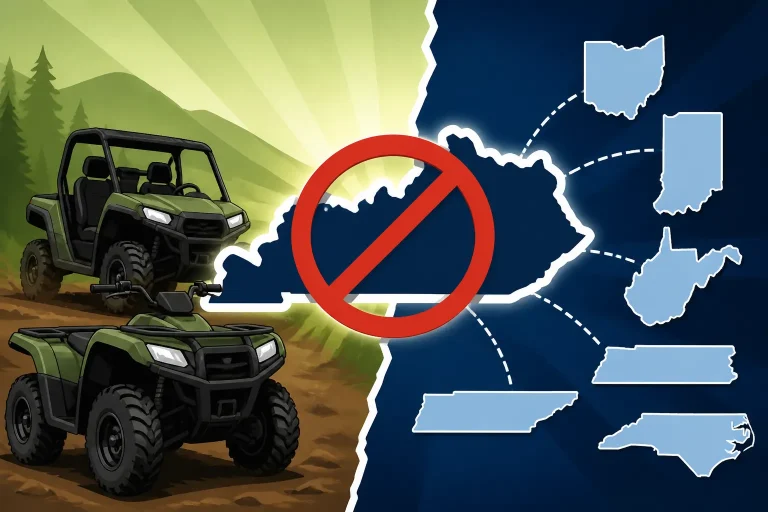
That distinction matters because Kentucky does not have one statewide trail permit that works across every riding area. Access rules and permits are set by the land manager or park. Black Mountain’s authorization applies to Black Mountain under the conditions the park sets. For a broader explanation of that difference, see Why a Kentucky Park Permit Is Not a State Permit.
The permit’s stated length tells you the general period it is intended to cover. It does not, by itself, tell you exactly how the park counts that period. For example, confirm whether the clock starts on the purchase date, the first riding day, or another date, and whether the expiration is tied to a calendar date or a specific time. Do not assume that a permit bought before a trip will remain unused until you arrive.
Before you buy, also confirm what the permit is issued to. Parks may distinguish between the machine, the rider, or the group, and a longer-duration option may have different conditions from a day permit or annual permit. Ask whether each ATV or UTV needs its own authorization, whether passengers need anything separate, and whether a permit can be transferred to a different machine. The safest approach is to have the office confirm the details for your exact setup.
A 31-day option may be useful for:
- A longer vacation with several riding days spread across the trip
- A return visit within the permit’s valid period
- A rider staying near the trail system for several weeks
- A group that wants to avoid handling a new permit transaction for each visit, if the park confirms that the permit fits the group’s situation
It may not be the right choice if you are only riding briefly, if your dates are uncertain, or if you expect to use multiple parks. Compare the 31-day option with the park’s other current permit choices before deciding. Black Mountain Permit Cost explains the cost question, while Where to Buy a Black Mountain Permit covers the purchase channel. Because fees and permit rules can change, check Black Mountain’s current information rather than relying on an old post, saved screenshot, or a friend’s recollection.
The permit is also separate from other trip requirements. It does not substitute for a machine title, insurance where required, a rental agreement, landowner permission, or compliance with trail rules. Nor does buying a permit guarantee every trail will be open on the day you arrive. The park’s posted rules and closure notices still control where you can ride.
Confirm the details before setting out
A small amount of checking before the trip can prevent a frustrating stop at the gate or office. The key questions are not just “How much is it?” and “Can I buy it?” You also need to know when it is valid, who or what it covers, how it must be displayed, and what happens if your plans change.
Use this checklist when you contact the park or review its current permit information:
- Confirm that the 31-day option is currently available. Permit categories and procedures can change. Check the current park instructions before relying on details you saw in an older guide.
- Ask how the validity period is counted. Confirm the start date, the expiration date, and whether unused days can be carried forward if you arrive later than planned.
- Check what receives the permit. Ask whether it is tied to a specific machine, a rider, or another arrangement, and whether the park requires a separate permit for each machine.
- Ask about passengers and additional riders. Do not assume that a permit issued for a machine also covers every person riding in it. Confirm whether passenger permissions or separate park requirements apply.
- Find out how you can purchase it. The park’s purchase process may involve an in-person transaction. If you are counting on buying it online, at a trailhead, or through a third party, verify that option first.
- Ask how the credential must be carried or displayed. Follow the park’s instructions exactly. A receipt, confirmation email, sticker, tag, or other credential may not be interchangeable.
- Check the rules for changes, refunds, or lost credentials. Travel plans can shift, and a physical permit can be damaged or misplaced. Know what to do before you need help.
- Confirm access conditions for your machine. Check current machine restrictions, trail rules, and any limits that could affect a wider UTV, a youth machine, or a rented vehicle.
If current park information says permits must be bought in person, plan around that rather than assuming you can complete the purchase on the way to a trail. Black Mountain Permits Must Be Bought in Person addresses that practical issue. Call ahead to confirm where the transaction takes place, what hours the office or gate operates, and what documents or information to bring. These details matter especially if you expect to arrive outside normal office hours.
Bring the information the park asks for, but avoid treating a receipt as the permit unless the park says it is. Keep the payment record and permit credential together, and take a photo of any paperwork for your own records. A photo may help you remember details or explain what you purchased, but it is not automatically a substitute for a credential the park requires you to carry or display.
For organizing trip paperwork, a waterproof document sleeve can keep a receipt, emergency contact details, and a printed confirmation dry in a gear bag. Amazon is one place people look for that kind of basic organizer, but use it for paperwork only; do not cover, alter, or substitute for the actual permit display instructions. If the park requires a permit to be attached to a machine, follow its directions rather than improvising with a sleeve or adhesive.
A reliable call can be more useful than a long chain of assumptions. If you are bringing multiple machines, explain how many and what types. If you are renting, say so and ask whether the rental operator handles the permit or whether you do. If you are traveling with a passenger, ask whether the passenger has a separate requirement. Write down the answer, when you called, and any instructions that affect your arrival.
How to decide whether 31 days fits your trip
The best permit is the one that matches your actual schedule and the park’s terms, not simply the one with the longest stated duration. Start by listing the days you expect to ride at Black Mountain, then consider how certain those dates are.
A short trip with one or two riding days may not justify a longer-duration permit. A stay that includes multiple visits over several weeks might make the 31-day option worth comparing with other choices. But the length alone does not guarantee it is better value: you need to know the current fee, whether the permit applies to your machine or rider, and whether all your planned dates fall within its valid period. For current cost details, check Black Mountain Permit Cost and confirm directly with the park.
| Your situation | What to check | Why it matters |
|---|---|---|
| One short visit | Compare the short-visit option with the 31-day option | A longer period may not be useful if you ride only once |
| Several visits within a few weeks | Confirm how the 31 days are counted | The purchase date and first-use date may not be treated the same way |
| A trip with uncertain dates | Ask whether the permit can be delayed, changed, or refunded | A permit may begin before your actual riding dates |
| More than one ATV or UTV | Ask whether each machine needs a separate permit | Do not assume one purchase covers a group’s machines |
| A rented machine | Confirm whether the rental includes park access | Rental charges and park authorization can be separate |
| A trip to multiple trail areas | Identify each land manager’s permit requirements | Black Mountain’s permit should not be assumed to transfer |
| Arrival outside normal office hours | Confirm purchase and check-in arrangements | You may need to arrive when staff are available |
Be especially careful with travel plans that cross the permit’s expiration date. If your first ride is near the end of the stated period, or you have several riding days separated by a long break, ask the park whether every intended day is covered. A quick confirmation is better than arriving with a permit that does not cover the date you planned to ride.
Also think about what happens if weather or a closure interrupts the trip. A 31-day period does not necessarily pause when trails close, and a park may have specific policies for refunds or extensions. Never assume that a rainout adds time to a permit. Check the policy before you buy if your trip depends on riding every scheduled day.
If you are traveling with a group, have one person coordinate the questions but make sure the answers cover everyone’s machines. A family may have a mix of youth ATVs and adult machines, while a group of friends may rent some vehicles and bring others. Those differences can affect what each person needs to show at check-in. Keep a simple list of each machine, rider, and permit status so a missed authorization does not delay the whole group.
For a multi-park trip, compare every stop separately. A permit issued for Black Mountain should not be treated as a pass for another park simply because both are in Kentucky or are used by ATV and UTV riders. Some parks sell their own access permits, while public-land riding areas may have different pass systems. The article Carrying Four Permits for Four Parks is a useful reminder that one trip can involve several independent authorizations.
Purchase, check-in, and keeping proof
If Black Mountain’s current instructions require an in-person purchase, build that stop into your itinerary. Do not plan a tight arrival that leaves no time to find the office, ask a question, or correct a paperwork problem. If you are arriving with a trailer, consider where you can park safely while handling check-in. Confirm whether the permit can be purchased at the location you expect to use and whether the location is open when you arrive.
Before handing over information or payment, make sure you understand what you are buying. Confirm the start and end dates, the machine or person associated with the permit, and the display or carrying instructions. If anything on the credential looks wrong, ask staff to correct it before you leave. That is simpler than trying to sort out a mismatch at a trail entrance.
Keep the permit and the purchase record separate enough that losing one does not mean losing every record of the transaction. A phone photo can be a useful backup, but it should not replace the original credential when the park requires the original. Store the physical item where it will not be crushed, soaked, or rubbed off by riding gear. If it must be mounted on the machine, check it before each ride and after washing or transport.
A small waterproof pouch or a resealable bag can protect supporting paperwork from rain and mud. If you are assembling a basic trip kit, Amazon is one possible source for a document pouch, but choose something that keeps the papers readable and does not interfere with any required permit display. Keep essential documents accessible without placing them where they can catch on controls or distract the rider.
At check-in, be ready to show the credential the way park staff request. Do not assume that a confirmation email or a picture of a permit will satisfy an inspection. If a permit is lost, damaged, or becomes unreadable, contact the park as soon as possible and ask what procedure applies. Replacement rules can differ, so do not rely on an informal workaround.
Take a moment to review the park’s rules before riding, even if you have visited before. Check trail designations, machine restrictions, speed and conduct rules, and any required safety equipment. A permit grants access under the park’s conditions; it does not make every trail suitable for every machine or rider. A large side-by-side may be excluded from a narrow route, and a trail that was open on a prior trip may be closed now.
Save current contact details and directions before you leave home. Cellular coverage can be unreliable in riding areas, so do not depend on being able to search for an office number or a map once you are on the trail. Amazon sells portable battery packs and related travel gear, but a charged phone and an offline copy of important information matter more than buying equipment. Download or save the park’s current directions and emergency instructions where you can access them without a signal.
Why the permit does not travel with you
A common mistake is to treat a park permit as if it were a state registration sticker or a general off-road license. It is not. The authority to ride at Black Mountain comes from the park’s rules and permission for that property. Another park may have a different owner, manager, permit process, or access policy.
This is why a visitor from another state should not assume that their home-state registration, trail sticker, or riding club membership replaces Black Mountain’s requirements. Likewise, a Black Mountain permit should not be assumed to satisfy another riding area’s rules. Reciprocity exists only when the relevant land managers or programs explicitly recognize one another’s credentials. For Kentucky, there is no general statewide trail permit that automatically makes park permits interchangeable.
When your trip includes other riding areas, make a separate checklist for each one:
- Identify who manages the land.
- Confirm which machine types are allowed.
- Check whether a permit, pass, reservation, or check-in is required.
- Verify how and where to buy it.
- Confirm operating hours, closures, and current trail conditions.
- Keep each park’s credential and receipt identifiable.
This is particularly important when combining a private or locally managed park with public land. The access pass for one place may be issued through a different system from the permit for another. Do not infer that a pass is valid across locations because the same riding group uses both. Kentucky Trail Permits Explained gives a broader overview of why permit requirements vary, and Kentucky Trail Closures to Check First can help you build closures into your planning.
A permit also does not override general laws or machine requirements. The park may allow riding on its trails, but that does not make a machine street legal or authorize riding on nearby public roads. If your route involves public-road crossings or riding outside the park, check the rules that apply to that specific location. Keep the park permit, title documents, insurance information, and any road-use authorization distinct in your mind; they solve different problems.
If you are unsure whether a particular trail or connector is part of Black Mountain, ask the park before riding it. A route visible on a phone map is not necessarily an authorized trail. Likewise, a path that appears to connect two riding areas may cross land with separate permission requirements. Stay on marked, open routes and follow posted signs.
A practical pre-trip checklist
Use this final checklist a few days before departure and again before loading:
- Confirm the 31-day permit is available and check its current terms.
- Verify how the period starts and when it ends.
- Ask whether the permit is tied to a machine, a rider, or another category.
- Confirm requirements for passengers, rental machines, and additional vehicles.
- Check where and when the permit can be purchased.
- Ask how the credential must be carried or displayed.
- Review the park’s lost, damaged, refund, or change procedures.
- Check current trail conditions, closures, and machine restrictions.
- Make a separate permit plan for every other park or riding area on the itinerary.
- Save directions, contact information, and emergency details for offline use.
- Keep the permit and supporting paperwork protected, but accessible.
The central point is simple: Black Mountain’s 31-day permit is a park-specific access option, not a statewide pass. It can suit a longer stay or repeated visits if the validity period and conditions match your plans. Confirm the current purchase process and exact terms with the park before you travel, and treat every other trail system on your itinerary as a separate permit question.
Disclaimer
This article is for general informational purposes only and does not constitute professional advice. Laws, prices and regulations vary by location and change over time. Consult a qualified professional for guidance on your specific situation.