Filming on a Kentucky Trail
Filming on a Kentucky trail can mean anything from recording a family ride to producing paid content for a client. The key question is who manages the land and whether the shoot is commercial. Here’s how to sort out permission, riding requirements, and practical filming plans before you load the machines.
First, find out who controls the trail
A trail’s location does not tell you who sets its filming rules. Public land, a private park, leased property, and a trail system managed by a local organization can all have different requirements. A riding permit is not automatically permission to film, and permission to film does not necessarily cover commercial activity.
Start by identifying the land manager or operator for the exact area you plan to use. Ask the office or operator directly whether your proposed recording needs approval. Describe what you intend to do, rather than asking only whether “filming” is allowed. A phone recording of a personal ride may be treated differently from a planned production with a crew, hired talent, sponsor, or client.
For Daniel Boone National Forest, riding requirements and filming authorization are separate questions. The USDA Forest Service says an official off-highway vehicle recreation pass sticker or rider wristband must be displayed or worn on specific public lands such as the forest. The Forest Service also says a Special Use Permit or authorization is required for commercial use on federal public lands. Check both before heading out; the riding pass alone does not answer whether a commercial shoot is authorized. For more on riding requirements there, see Kentucky Rules for Riding a National Forest and Buying and Using the Daniel Boone Forest OHV Pass.
For state park land, the Kentucky Department of Parks says commercial activities or commercial filming require prior written consent and submission of a commercial application or permit. Ask the department how it classifies your project and what approval applies to the site you want to use. Don’t rely on a park employee’s casual verbal okay as a substitute for the written consent required for commercial activity.
On private land, the owner or the party controlling access is the right place to start. A trail may cross property used or leased by another organization, so confirm that the person granting access actually has authority over the filming location. If you are uncertain about access or boundaries, postpone the shoot until you have a clear answer. See Kentucky Rules for Riding Private Property for the separate question of permission to ride.
Personal recording and commercial filming are not the same question
Commercial filming is the clearest case: the rules in the provided official information require authorization for commercial use on the relevant state or federal lands. If you are recording for a business, making a sponsored video, producing footage for a client, or organizing a shoot to earn income, describe those details when you contact the land manager.
For personal, noncommercial recording, the available rules do not establish a universal permit requirement for every Kentucky trail. That is not the same as a guarantee that recording is allowed without conditions. A park or property operator may have site rules, access conditions, or restrictions that apply to cameras, tripods, drones, crews, or stopping on the trail. Ask before filming if your setup goes beyond a camera carried by a rider, or if you plan to stage scenes, repeat passes, or bring people who are not there to ride.
When contacting an operator, give a useful, specific description:
- The name of the trail system and the area or access point you plan to use.
- Whether the video is personal, sponsored, client work, or another commercial project.
- How many people and machines will be involved.
- Whether anyone will stop, stand, or set equipment beside the trail.
- Whether you plan to use a drone, lighting, a tripod, or other production equipment.
- Whether you want to film other visitors, staff, signs, facilities, or private property.
This makes it easier for the manager to tell you what approval is needed and whether the proposed setup fits the site. If the answer is unclear, ask for written confirmation and keep it with your trip information.
Get the right permission before planning the shoot
Once you know who manages the land, request permission early enough to adjust your plan. A permit or authorization may be tied to a particular location, date, activity, or production setup. Do not assume an approval for one trail or one type of filming covers another.
A practical sequence is:
- Identify the land manager. Check the trail operator’s official information or contact the organization that controls access.
- Explain the project honestly. Say whether the video is personal or commercial and describe any sponsorship, client, crew, or organized activity.
- Ask what approval applies. Confirm whether written consent, an application, a special-use authorization, or another permit is needed.
- Confirm the boundaries of the approval. Ask which locations, activities, equipment, and people it covers.
- Check separate riding requirements. Confirm trail access, passes, machine rules, and any current closures.
- Keep the decision available. Save the written authorization or the operator’s response so the group can refer to it on site.
For an organized shoot involving multiple riders, a group, or a planned event, also ask whether the activity falls under the site’s rules for organized rides. Kentucky Rules for an Organized Ride can help you think through that separate issue. A race or timed event may involve additional requirements, so don’t treat an ordinary riding pass as approval for an event; see Kentucky Permits for a Race.
Do not assume that calling something “social media” makes it noncommercial. The purpose and arrangement matter, and the land manager is the right party to classify a project on its land. Likewise, a paid guide or rental arrangement does not automatically authorize your own production activity. Ask both the trail operator and any relevant business what their permissions cover. Kentucky Rules for a Commercial Guide may be useful if a guide is part of the plan.
| Filming situation | What to confirm before riding |
|---|---|
| Personal recording during an ordinary ride | Whether the land manager allows the recording and any equipment or stopping involved |
| Sponsored or client video | Whether the activity is commercial and what written authorization is required |
| Crew, staged scenes, or repeated passes | Whether the setup needs advance approval and where filming may take place |
| Filming on Daniel Boone National Forest land | Separate riding-pass requirements from commercial-use authorization |
| Filming on Kentucky state park land | Prior written consent and the applicable commercial application or permit |
| Filming on private or leased land | Permission from the party with authority over the land and trail access |
A useful rule of thumb: get permission for the activity, not just for the camera. A camera carried while riding and a production that blocks a trail, stages traffic, or brings a crew can create very different demands on a site. Even when a manager does not require a formal permit for your plan, clear confirmation can prevent a misunderstanding at the gate.
Plan for trail rules, riders, and equipment
Permission to film does not replace the rules for operating the machine. Before the shoot, make sure every rider understands the trail’s access conditions and the relevant safety requirements. In Kentucky, off-road ATVs are titled rather than generally registered for off-road use, according to the Kentucky Transportation Cabinet. For specific public lands such as Daniel Boone National Forest, the USDA Forest Service says riders must display or wear the required OHV recreation pass sticker or wristband. These are different requirements from commercial filming authorization.
Protective equipment matters on camera and off. According to the Legislative Research Commission, individuals aged 16 or older operating an ATV on public property are generally required to wear approved protective headgear, subject to specific exceptions such as farming, mining, or logging. Don’t build a shot around a rider removing required gear or riding in a way that conflicts with site rules. For more on age-related riding requirements, see Kentucky Rules for Riders Under 16.
Check machine and trail requirements as well. The Legislative Research Commission says an OHV must be equipped with a spark arrestor on Kentucky public off-highway vehicle trail systems. Confirm each machine is properly equipped before the group leaves, rather than discovering a problem at the trail entrance. If your plan involves leaving marked routes or stopping for a shot in an unapproved area, check the site’s rules first; Kentucky Rules for Riding Off the Trail covers that separate concern.
Keep camera work from becoming a trail hazard
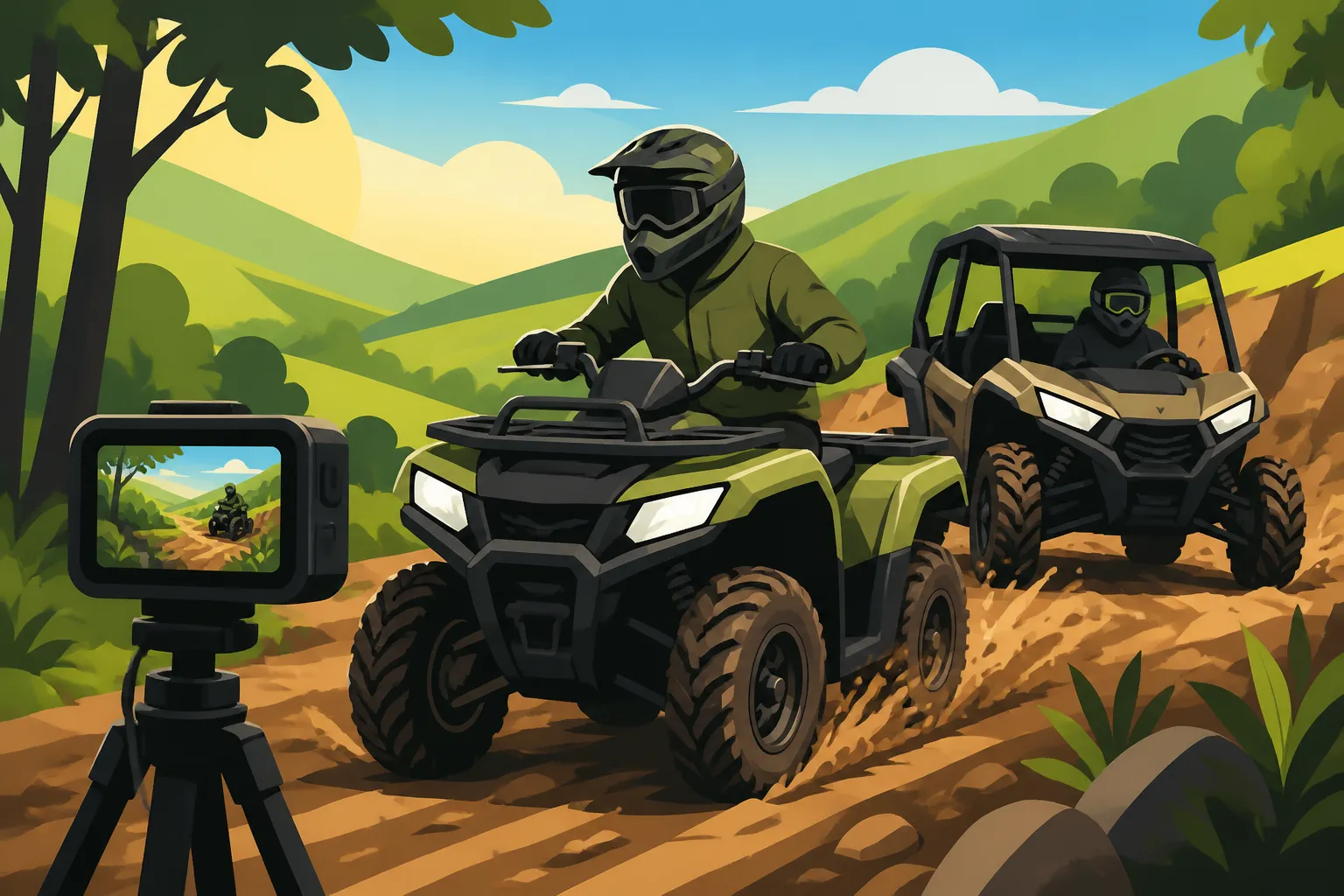
A filming plan should leave riders able to see and respond to trail conditions. Avoid placing a person, tripod, or loose equipment where another rider could encounter it unexpectedly. Do not assume a narrow bench, blind turn, or trail junction is a safe place to stage a shot. If a setup requires riders to stop, turn around, or repeat a section, get the land manager’s approval and choose a location where the activity will not create a conflict with normal trail use.
Useful practices include:
- Have one person coordinate the filming plan and communicate with the group.
- Agree on where the group will stop before starting the ride.
- Keep equipment secured when machines are moving.
- Use a spotter when a camera operator or another person is near an active riding route.
- Leave room for other trail users and do not block access.
- Stop filming if conditions become unsafe, the route is congested, or the land manager asks you to move.
These are practical precautions, not a replacement for the site’s own requirements. A park may restrict where people can stand, whether equipment can be set up, or how a group can use the trail. Follow the operator’s instructions even if a shot would be easier from a different location.
For an equipment check, prioritize secure mounting and visibility over getting elaborate footage. A loose mount can distract a rider or fall onto the trail. If you are shopping for a mount through Amazon, check that it is made for the device and machine you plan to use, and test its fit off the trail before relying on it. Keep any camera setup from obstructing controls, the rider’s view, or required safety equipment.
Keep other people and property in mind
A trail video can capture other visitors, workers, signs, buildings, and land outside the riding route. Ask the land manager whether there are restrictions on filming those areas or people. If someone does not want to be included, a practical approach is to stop recording or frame the shot so they are not identifiable. Avoid presenting a private property boundary, closed route, or restricted facility as an invitation to enter.
If the shoot includes a group, tell participants what the recording is for and how it may be used. This is especially important when the footage is for a business, sponsor, or public campaign rather than a personal keepsake. Get any permissions or releases your project needs before filming; trail access approval does not necessarily settle those separate questions.
Use a pre-ride filming checklist
A short checklist helps separate the questions that often get blended together: Can the group ride there? Can it film there? Can the video be used commercially? Has the equipment been secured? Resolve each question before the machines are unloaded.
Before leaving, confirm:
- Land control: You know which organization, agency, or owner manages the filming area.
- Filming approval: The manager has confirmed what is allowed for your specific project, especially if it is commercial.
- Riding access: Each rider meets the trail’s access and pass requirements.
- Machine readiness: Required equipment is in place, including a spark arrestor for public OHV trail systems, as the Legislative Research Commission states.
- Rider safety: The group understands applicable headgear and age rules. The Legislative Research Commission sets the public-property headgear requirement and the restrictions on young ATV riders.
- Equipment placement: Camera operators and gear will not block the trail or interfere with riders.
- Other users: The plan accounts for visitors, staff, and people who do not want to appear in footage.
- Backup plan: The group knows what to do if the trail is closed, the setup is not permitted, or conditions make filming unsafe.
If the land manager says the proposed activity is not allowed, do not try to work around the restriction by calling the project personal or moving a short distance down the trail. Ask whether there is another location, a different type of setup, or a future date that would be acceptable. Keep any replacement plan within the same permission process.
Finally, check for current closures and site notices close to the ride. Approval to film does not guarantee that a particular trail will be open or suitable on the day you arrive. Kentucky Trail Closures to Check First is a useful companion when planning a trip. On site, follow posted instructions and any direction from staff; a signed-off plan is only useful if it matches the conditions and rules in effect at the location.
Sources
- Legislative Research Commission — Kentucky Revised Statutes § 189.281 (checked November 2, 2026)
Disclaimer
This article is for general informational purposes only and does not constitute professional advice. Laws, prices and regulations vary by location and change over time. Consult a qualified professional for guidance on your specific situation.