Kentucky Rules for Riding Off the Trail
Riding a few yards beyond a marked route can seem harmless, especially when a trail is muddy or blocked. In Kentucky, though, permission to ride in an area does not automatically mean you can leave its designated routes. The rules depend on who manages the land, what your permit allows, and whether you have permission to be there at all.
What counts as riding off the trail
“Off the trail” can mean more than cutting through the woods. It may include riding around a closed gate, taking a shortcut between marked routes, crossing an unmarked field, or leaving a designated route to avoid mud. A road or clearing that looks drivable is not necessarily an authorized ATV or UTV route.
The key question is not simply whether the machine can travel there. It is whether the land manager or owner allows motorized riding on that particular route or area. A trail permit, vehicle title, or out-of-state registration does not give you general access to land.
Kentucky does not have one statewide trail permit that authorizes riding anywhere in the state. Parks and public-land managers set their own access rules, and private landowners control access to their property. A permit for one riding area generally does not authorize riding off trail—or riding at another park. See Why One Park’s Permit Does Not Travel and Kentucky Trail Permits Explained.
| Where you are riding | What to do before leaving a marked route |
|---|---|
| A private or commercial trail park | Follow the park’s marked routes, closures, and permit conditions. Ask staff if a route is unclear. |
| National forest or other public land | Use the current route map and follow the land manager’s motorized-use rules. Do not treat an unmarked track as an open ATV trail. |
| Land Between the Lakes | Check the area’s current riding rules and designated routes; a permit does not mean unrestricted access. |
| Private property | Get permission from the owner or the person authorized to grant access, and stay within the agreed area. |
| Leased coal or other industrial land | Confirm who controls riding access and which roads or trails are authorized. A lease or visible track does not establish permission. |
Some situations are easy to misread. A wide bench road may look like a trail but could be a work route, a closed route, or a road where riding is not allowed. An old path may not appear on the current map. A trail used by someone else is not proof that the public can use it.
For a practical overview of the issue, see Kentucky Rules for Riding Off the Trail. For specific land types, Kentucky Rules for Riding a National Forest, Kentucky Rules for Riding Land Between the Lakes, and Kentucky Rules for Riding a Leased Coal Property cover the different access questions that can arise.
Why the land manager’s rules matter
Kentucky riding areas can include private property, public land, and land operated under leases or other agreements. Each can have different routes, permits, closures, and restrictions. The same machine may be allowed on one marked trail and prohibited on the ground just beyond it.
On private property, permission needs to come from someone with authority to grant it. A friend’s invitation may be enough if that friend owns the land or has permission to authorize your ride. It may not be enough if the property is leased, jointly controlled, or subject to a separate access agreement. For more on this distinction, see Kentucky Landowner Permission Requirements and Riding Private Ground in Kentucky.
Public land is not automatically open to off-trail riding either. Land managers can designate specific routes and close other areas to motorized vehicles. A route that appears on an old map, a phone app, or a rider’s social media post may no longer be open—or may never have been an authorized ATV route. Check the current map or posted notices for the area you plan to ride.
Park rules can be stricter than a broad understanding of state law. A permit may authorize access to a trail system but require riders to remain on marked routes. The park can also close a trail temporarily because of weather, maintenance, safety, or land-management needs. If a route is closed, going around the sign or barrier does not make the ride acceptable.
Do not assume an out-of-state permit changes these rules. A permit or registration from another state may help meet a particular requirement, but it does not override the landowner’s conditions or a park’s route restrictions. Before a trip, check both the permit requirements and where riding is allowed. Does Kentucky Honor Out-of-State Registration? explains why registration and riding access are separate questions.
What to do when a route is blocked or unclear
A blocked route is a common reason riders leave marked trails. Mud, a fallen tree, a damaged bridge, or a closed gate can make it tempting to detour through brush or around a barrier. That detour may take you onto land or a route where riding is not allowed.
Use this process instead:
- Stop before the obstacle. Do not ride around a closure sign, gate, or barricade. A short detour can still count as leaving the authorized route.
- Check the current map and notices. Look for an approved alternate route or an explanation of the closure. A map from a previous visit may not reflect current conditions.
- Ask the park office, land manager, or property contact. If the route is unclear, get an answer from someone who can authorize access. Do not rely only on another rider’s assumption.
- Turn back if there is no approved option. A delayed ride is better than risking a citation, removal from the property, or damage to the machine or land.
- Report a hazard through the proper channel. If you find a downed tree, washout, or damaged sign, tell the responsible office or operator rather than creating a new route around it.
A closed route is not the same as a route that is merely difficult. If the trail is muddy or rutted but remains open, stay on the established track and ride within your ability. Avoiding a muddy section by making a parallel path can widen the disturbed area, damage vegetation, and create a route that later riders may mistake for an authorized trail.
If you are uncertain whether a route is open, Kentucky Trail Closures to Check First offers a useful starting point. For land where access depends on private authorization, confirm the terms directly; the general guidance in Kentucky Rules for Riding Private Property can help clarify what permission should cover.
Risks of riding outside authorized routes
The consequences depend on the land and the circumstances, so there is no single penalty that applies to every off-trail situation. A rider might be told to return to the route, removed from a park, or lose access under the operator’s permit rules. Unauthorized riding can also lead to a citation or other legal and financial consequences, particularly if it involves trespass, property damage, or ignoring a closure.
There are practical risks too. Off-route ground may hide steep drop-offs, soft shoulders, drainage channels, wires, unstable slopes, or obstacles that are not visible from the trail. A route that looks like a short cut can leave a rider stuck far from help or put a machine in a place where recovery is difficult.
Environmental damage is another reason trail systems limit off-route riding. A few riders crossing the same slope can create ruts, carry sediment into streams, damage vegetation, and turn a small disturbance into a wider unauthorized track. On steep or wet ground, tire damage can be especially hard to repair.
Before unloading, make sure you have the right access for the right area:
- Confirm the riding area is open and that your machine is permitted.
- Check the current map for designated routes and temporary closures.
- Read the permit conditions, including any limits on route use.
- Ask who has authority to grant access if the land is private or leased.
- Plan an approved route back if weather or an obstacle changes your plan.
- Do not assume a visible trail, another rider’s tracks, or a phone map means the route is legal.
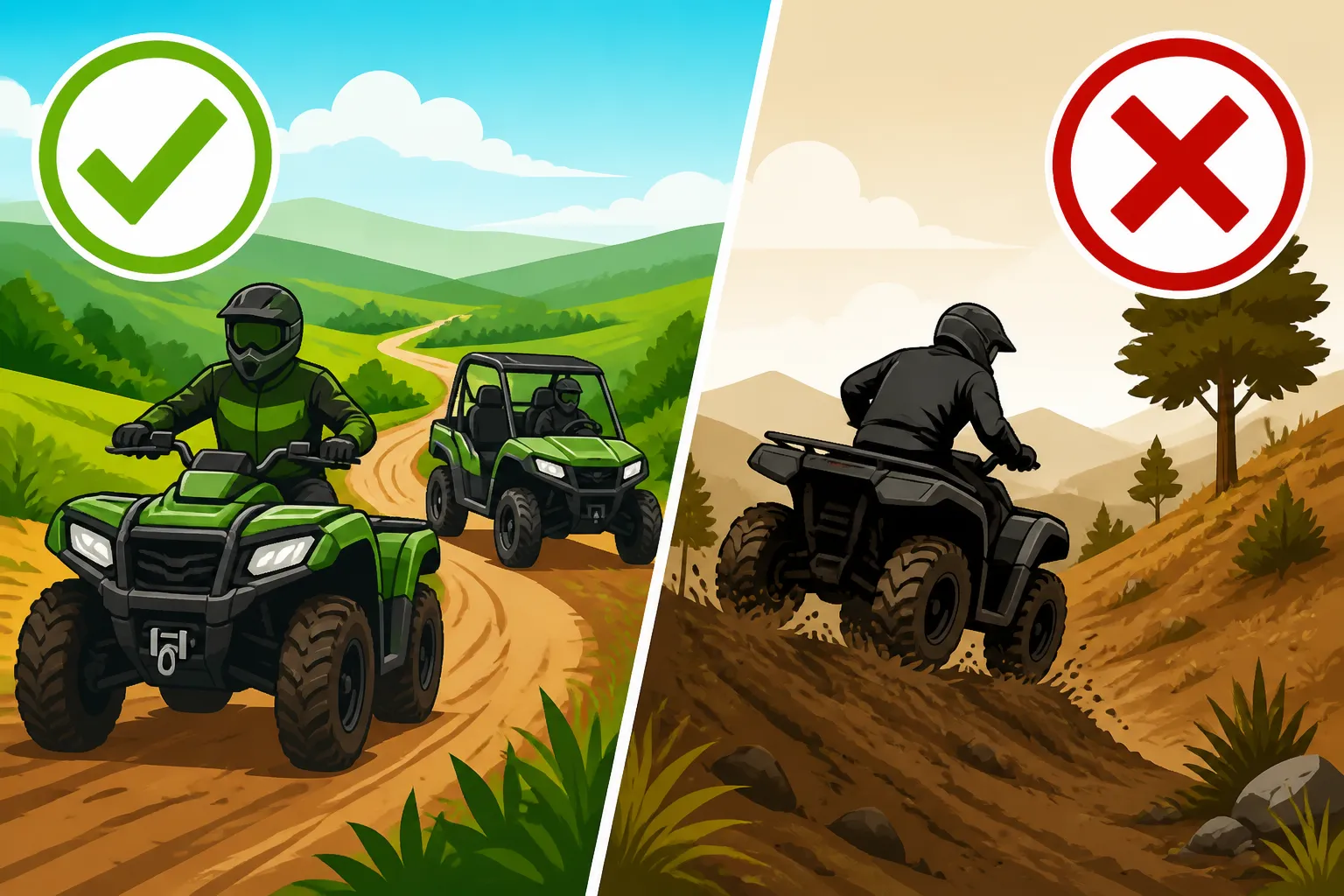
The safest rule is straightforward: stay on the route the land manager or owner has authorized. If a trail ends, closes, or becomes unclear, stop and verify rather than choosing your own way through.
Disclaimer
This article is for general informational purposes only and does not constitute professional advice. Laws, prices and regulations vary by location and change over time. Consult a qualified professional for guidance on your specific situation.