Night Riding at a Kentucky Trail Park
A trail that is open during the day may not be open after dark, and a park permit does not necessarily grant permission to ride at night. Before loading your ATV or UTV, confirm the park’s hours, trail closures, lighting rules and permit conditions. A little checking helps you avoid arriving after the gate closes or setting out on a trail that is not approved for night use.
Start With the Park’s Rules, Not the Clock
Night riding is not a single statewide permission that applies at every Kentucky trail park. Access depends on the particular property and its current rules. A park may close at dusk, allow riding during selected after-dark hours, or permit night riding only for certain events or areas. Conditions may also change with weather, maintenance, staffing or special activities.
Check the park’s own current notices before you travel. Look for operating hours, after-hours access instructions, designated night trails, noise limits, equipment requirements and any restrictions on where riders may go. If the information online is unclear or old, call the park or operator. Ask specifically whether night riding is allowed on the date you plan to visit, rather than relying on a general statement that the park is open.
This distinction matters because a riding permit and permission to ride after dark are not always the same thing. A permit may cover entry or trail use under the park’s conditions, while hours and allowed activities are set separately. A pass from one trail system also does not automatically apply at another. For more on how permits differ, see Kentucky Trail Permits Explained and Why a Kentucky Park Permit Is Not a State Permit.
| What to confirm | Why it matters |
|---|---|
| Night-riding hours | A park may have an early closing time or a defined window for after-dark use. |
| Which trails are open | Night riding may be limited to specific routes or areas. |
| Permit coverage | Check whether your permit covers the visit and whether there are additional conditions for night use. |
| Gate and check-in procedures | Staff, gates and check-in locations may operate differently after dark. |
| Trail closures | A trail that is normally open may be closed because of weather, maintenance or an event. |
| Lighting and machine rules | Parks may set equipment standards beyond the general rules for the property. |
| Camping and parking arrangements | Confirm where you may leave a trailer or vehicle if your riding time extends into the evening. |
Do not assume that a park’s daytime schedule answers the question. Check the date-specific information as close to departure as practical, especially if you are traveling a long distance. Wet weather can change trail access, and a scheduled event or maintenance job can affect which routes are available. Kentucky Trail Seasons and Closures and Kentucky Trail Conditions Before You Ride can help you prepare, but the park’s latest instructions should guide your decision.
Also separate off-road park rules from rules for public roads. A park’s permission to ride a trail after dark does not authorize riding on a road to reach another trail, campsite or parking area. Public-road operation has its own restrictions, and the rules for a road crossing are not the same as an after-dark trail policy. If your route might leave the park’s designated riding area, check Kentucky Rules for Riding After Dark and confirm the route with the land manager.
Get a Clear Answer About Access and Permits
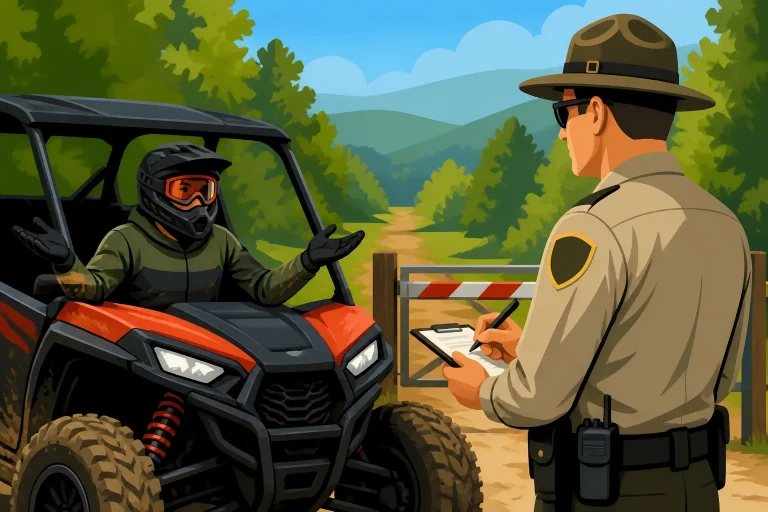
Before you unload, make sure you understand what the park has authorized. A quick call is often more useful than trying to interpret an unclear post or an old visitor comment. Ask a direct question: “Is night riding allowed on these trails on this date, and what permit or check-in process applies?” Then clarify the details that could change your plan.
Questions to ask the operator
- What time must riders stop, and when does the gate or office close?
- Are all open trails available after dark, or only designated routes?
- Is there a separate event, night-use or permit requirement?
- Do passengers need their own permit, or does the permit cover the machine, rider or group?
- Are there restrictions on headlights, auxiliary lights, sound or machine type?
- Are there particular trails that should be avoided at night?
- What should riders do if a machine breaks down or someone needs help after the office closes?
- Where may you park a truck and trailer if the ride ends after normal office hours?
Take note of the answer and follow any posted signs once you arrive. If a worker or gate notice gives a more specific instruction than a general website page, treat the current on-site direction as important. A trail closure is not optional just because the route was open on a prior visit.
Permits can have different terms across parks, and visitors should not assume that a pass from another area is recognized. Kentucky does not have one statewide trail sticker that grants access everywhere. The park or land manager determines its own access process, and a permit for one location may not cover another. Why Kentucky Has No Statewide Trail Sticker explains why there is no single pass to rely on for every trail system.
For planning around specific locations, use park information rather than assuming that the same night-riding policy applies across Kentucky. Black Mountain, Leatherwood, Rush, Turkey Bay and other riding areas have their own operating arrangements. Check the relevant park’s current hours and rules through Kentucky Parks That Allow Night Riding, then verify directly with the operator before you haul your machine.
If the park cannot confirm night access, treat that as a reason to postpone the night ride or switch to daytime hours. A permit in hand does not resolve uncertainty about a closed gate, a restricted trail or an activity the operator does not allow. Getting a clear answer before departure is easier than trying to negotiate access after arrival.
Prepare Your Machine and Group for Darkness
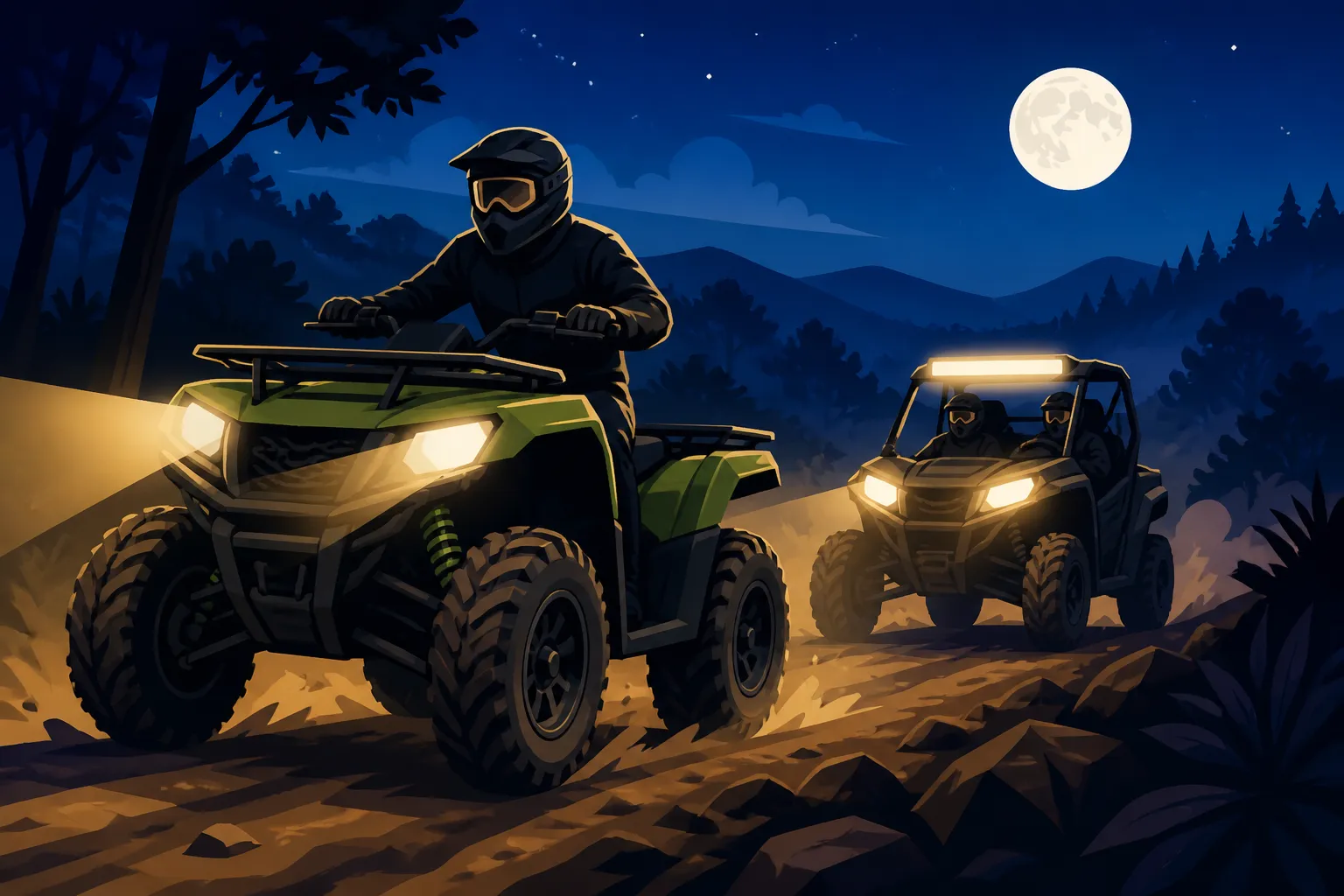
When night riding is allowed, visibility and group planning become more important. A headlight that seems adequate on a familiar road may not show the surface clearly on a rough trail. Shadows can hide holes, loose rock, branches, ruts and changes in grade. Dust, fog and wet conditions can further reduce what the rider can see.
Start with the machine’s regular lighting system. Check that the headlight and rear lights work, that lenses are clean and that the lights stay secure when the machine vibrates. If the park permits auxiliary lighting, make sure any added lamp is mounted firmly and aimed so it illuminates the trail without shining into other riders’ eyes. Do not assume that a brighter setup is automatically safer: excessive glare can make it harder for the rider ahead, oncoming riders or a spotter to see.
If you are comparing replacement lights or mounts on Amazon, confirm compatibility with your machine and check how the equipment is installed, protected from water and secured against vibration. Follow the park’s rules and the manufacturer’s instructions; an accessory that fits physically may still be unsuitable for your machine or the park’s requirements.
Before leaving the staging area:
- Check the headlight, rear lights and any approved auxiliary lights.
- Clean the lenses and test the controls.
- Make sure the machine has enough fuel for the planned route, with a reserve for an unexpected delay.
- Carry a charged phone or other communication device, while recognizing that coverage may be unreliable.
- Bring basic repair and first-aid supplies appropriate to the ride.
- Tell someone in your group the route and a planned return time.
- Confirm that every rider knows where to meet if the group becomes separated.
Set a pace that lets you stop within the distance you can see. Keep enough space between machines to avoid riding through another person’s dust or being blinded by their lights. On a narrow trail, slow down before bends, crests and blind spots. If another rider approaches, reduce speed and use the park’s recommended passing or yielding practice.
Avoid splitting the group in a way that leaves a rider alone in an unfamiliar area. Agree on a regrouping point before you start, and stop in a safe place if the group loses contact. A rear rider can help confirm that everyone is accounted for, but do not assume that a single person can handle every breakdown or emergency. If someone needs help, follow the park’s emergency instructions and use the contact information provided by the operator.
The trail surface deserves special attention after rain. Mud, standing water and washouts can be difficult to judge at night, and a route you know from daylight may feel different in low visibility. Check closures and conditions before the ride rather than trying to assess a questionable trail after dark. If visibility becomes poor or the trail is more difficult than expected, turn around or stop in a safe place. Continuing simply because the group planned a full loop is not worth the risk.
Ride Within the Park’s Limits and Have a Plan to Finish
A good night ride starts with a conservative route. Choose trails that fit the least experienced rider and the machine with the least capability in your group. If the park identifies particular routes for after-dark use, stay on them. Do not take a shortcut across closed ground or follow an unmarked track because it appears to reconnect with the trail.
Pay attention to posted signs and gate notices throughout the ride. A trail can have a different status from the wider park, and a closure may be in place even when nearby routes remain open. Do not move a barrier or ride around one. If signs are missing or unclear, stop and ask the operator rather than guessing.
A useful plan includes a firm turnaround time, not just a target return time. Give yourself enough margin to reach the staging area before the park’s closing requirements. If the machine has a problem, if conditions deteriorate or if a rider becomes tired, shorten the route. Fatigue can build quickly when riders are concentrating on uneven ground and reduced visibility.
Keep noise and speed under control, especially near campsites, residences or shared-use areas. Follow any park-specific requirements for exhaust, sound and respectful conduct. If the operator limits night riding to an event or a defined area, treat those boundaries as part of the permission you have been given.
Before leaving, make sure you know what to do if the ride runs late. A staffed office may close, a gate may be locked on a schedule, and help may not be immediately available. Ask the park how to report an emergency or breakdown and whether after-hours contact is available. Do not count on a phone signal, a passing rider or a nearby business to solve the problem.
Night riding can be enjoyable when it is permitted and well planned, but it requires more than switching on the headlights. Verify current access, understand permit limits, use only approved routes, and be ready to end the ride early if conditions change. For additional planning help, see Kentucky Trail Closures to Check First and Calling a Kentucky Park Before You Load.
Disclaimer
This article is for general informational purposes only and does not constitute professional advice. Laws, prices and regulations vary by location and change over time. Consult a qualified professional for guidance on your specific situation.