Kentucky Minimum Age to Ride a Trail
Kentucky does not have one age number that automatically makes every child eligible to ride every ATV trail. The machine’s age label, supervision rules, and the trail operator’s own policies all matter. Check those three things before you load up, so a child is not turned away—or placed on a machine that is too large to control.
How Kentucky’s age rules work
A child’s age alone does not answer whether they may ride. The machine matters too. Kentucky rules require riders to follow the manufacturer’s age recommendation for the ATV or UTV they operate. A label aimed at an older rider is a warning to take seriously, not a suggestion to ignore because a child is tall or has ridden before.
That can make the practical minimum age different from one machine to another. Manufacturers commonly assign age recommendations based on the vehicle’s size and intended use. A small youth ATV may have a different recommendation from a full-size quad, and a side-by-side’s seating arrangement does not automatically make it appropriate for a young child to operate.
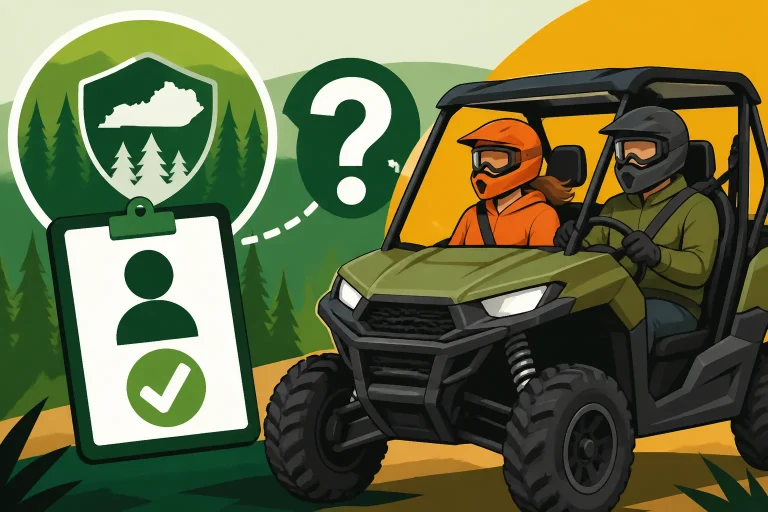
Kentucky also has supervision requirements for young riders. A child who is permitted to ride under the rules still needs the required adult supervision. Do not assume that an adult being somewhere on the property is enough: check what “direct supervision” means for the situation and keep the supervising adult close enough to respond. More detail is available in Kentucky Parental Supervision Rules Explained and What Direct Parental Supervision Actually Means on a Trail.
A useful way to think about eligibility is as a series of checks, not a single birthday:
- Check the vehicle’s age label. Confirm the recommendation for the exact make and model, not just a similar machine.
- Check the rider’s ability. A child must be able to reach and use the controls, steer, brake, and understand instructions.
- Meet supervision requirements. Identify the adult responsible for the rider and stay within the required level of supervision.
- Check the riding location’s rules. A park, forest, trail system, rental operator, or event can set requirements that are stricter than the general state rules.
- Confirm the permit and safety requirements. An eligible rider may still need the correct trail permit, helmet, or other required gear.
A manufacturer label is especially important when a machine is shared within a family. A child may be capable of riding a smaller ATV but still be too young for an adult-sized machine. Removing, covering, or ignoring the label does not make the machine suitable. For help interpreting the label, see Reading a Manufacturer’s Age Label. The broader rules for children are covered in Kentucky Rules for Riders Under 16.
There is no reason to treat the age recommendation as a target to reach as quickly as possible. A child can meet an age threshold and still lack the judgment, strength, or coordination needed for a particular machine or trail. Hills, loose gravel, mud, ruts, and narrow trail edges add demands that a flat practice area does not.
Trail rules can be stricter than state rules
Kentucky’s general requirements are only part of the decision. A trail operator may impose its own minimum age, require a parent or guardian to be present, restrict which machines children may use, or set rules for passengers. Those policies can vary by location and by activity. A child allowed to ride on private ground may not meet a park’s requirements, and a rider allowed on one trail system may not qualify at another.
Before traveling, check the operator’s current rules for the specific activity. Look for separate requirements for:
- Operating an ATV or UTV
- Riding as a passenger
- Being on the property as a child or spectator
- Wearing a helmet and other protective gear
- Adult supervision and who may serve as the supervising adult
- Machine size, engine type, or seat configuration
- Permits, waivers, and rental eligibility
Do not rely only on a general webpage or a rule remembered from a previous visit. Trail policies can change, and a park may have different terms for a guided ride, a rental, or a privately owned machine. If the age policy is unclear, contact the operator before you make the drive. Ask about the child’s age, the exact machine, and whether the child will operate or ride as a passenger.
A trail permit does not necessarily settle the age question. A permit gives access under the operator’s terms; it is not a substitute for meeting age, supervision, or safety rules. Check whether the permit is required for each rider, each machine, or both, and whether a child needs a separate permit. The relationship between access permits and riding eligibility is explained in Do You Need a Permit for Kentucky Trails?.
A park’s rules may also be stricter for rentals. Rental companies can set age limits for drivers and passengers, require an adult to sign documents, or limit children to particular machines. A child who can ride a family-owned youth ATV may not qualify to operate a rented side-by-side. If you are booking a rental or tour, confirm the operator’s age policy directly rather than assuming state rules control the booking.
Passenger age is a separate question
A child who is too young to operate a particular machine is not automatically allowed to ride as a passenger. The vehicle must be designed for passengers, the child must be able to sit securely and use the available handholds or restraints, and the trail operator must allow child passengers. Never carry a passenger on a single-rider ATV.
Side-by-sides have seats and restraints, but those features do not remove the need to check age and fit. A child should be able to sit back in the seat and use the restraint as intended. If the restraint cannot fit properly, or the child cannot remain seated through bumps and turns, the seat is not a safe place for that rider. Follow both the vehicle manufacturer’s instructions and the trail operator’s passenger policy.
When calling an operator, describe the machine accurately. “A four-wheeler” or “a UTV” may not provide enough information. Give the make and model if available, the child’s age, and whether the child will drive or ride as a passenger. That makes it easier to get a clear answer before arrival.
How to decide if a child is ready
Meeting a legal or park age requirement does not guarantee that a child is ready for a trail. A responsible decision considers the rider, the machine, the route, and the conditions on the day of the ride.
Start with fit and control. The child should be able to sit in a stable position, reach the controls without stretching, operate the brakes, and steer while maintaining control. If the rider cannot comfortably reach the controls, the machine is too large even if the age label or a trail policy appears to permit it.
Next, consider the route. A wide, easy trail in dry conditions is not the same as a steep, rocky climb or a muddy track with deep ruts. A new rider should begin on manageable terrain, with enough space to practice stopping and turning. Keep the ride short enough that fatigue does not become a safety problem. Children may become tired, cold, overheated, or distracted before adults do.
Before riding, give clear instructions about:
- Staying behind the lead adult and not passing without permission
- Stopping when asked and keeping enough space from the machine ahead
- Slowing down before turns, hills, and loose or uneven ground
- Never riding beyond the marked trail
- What to do if separated from the group or if the machine stops
An adult’s job is not simply to lead the group. The supervising adult should be able to see the child, assess the route ahead, and stop the ride when conditions or the child’s control become unsafe. Riding far ahead or letting a child follow an unrelated group can defeat the purpose of supervision.
Protective gear also matters. Check the trail operator’s requirements and use a properly fitted helmet and suitable clothing and footwear. A child’s helmet should fit securely; a loose adult helmet is not an adequate substitute. Eye protection can help with dust and debris, and gloves and sturdy footwear help protect hands and feet. For the applicable rules, see Kentucky Trail Rules for Riders Under 16.
A simple pre-ride check can prevent avoidable problems:
| Check | What to confirm |
|---|---|
| Age label | The child meets the manufacturer’s recommendation for the exact machine |
| Supervision | The responsible adult meets the required supervision standard |
| Operator policy | The trail allows the child to operate or ride as a passenger |
| Machine fit | The rider can sit securely and use the controls or restraints |
| Gear | Required helmet and protective equipment fit properly |
| Access | The right permit, waiver, and other entry requirements are handled |
| Conditions | The route and weather suit the child’s experience and ability |
If any answer is uncertain, pause and confirm it before riding. A quick call to a trail operator or a check of the machine’s manual is easier than arriving at a gate with an ineligible rider or discovering that the ATV is unsuitable once the group is on the trail.
A practical checklist before you go
Use this sequence when planning a ride with a child:
- Identify the exact machine. Find its age recommendation and passenger instructions in the owner’s manual or on the manufacturer’s label.
- Decide whether the child will drive or ride. These are different activities with different fit and safety considerations.
- Check Kentucky requirements. Review the rules that apply to the child’s age and the machine. The overview at Kentucky Minimum Age to Ride an ATV can help frame the question.
- Check the specific trail operator. Confirm age, supervision, passenger, permit, and equipment policies for that location.
- Assess the child’s control and experience. Do not use age alone as proof of readiness.
- Choose an appropriate route and conditions. Start with terrain that matches the rider’s ability and avoid extending the ride when fatigue sets in.
- Bring the required documents and gear. Verify permit and waiver expectations with the operator before leaving.
The safest answer is often specific: a particular child, on a particular machine, at a particular trail, under a particular operator’s rules. Avoid relying on a broad claim that a child is “old enough for an ATV.” Check the age recommendation, supervision requirement, and trail policy together. If those do not all line up, choose a different machine or activity.
Disclaimer
This article is for general informational purposes only and does not constitute professional advice. Laws, prices and regulations vary by location and change over time. Consult a qualified professional for guidance on your specific situation.