Kentucky Rules for an Electric Machine on Trails
Electric ATVs and UTVs can be quiet, easy to operate and tempting to take straight to a trail. But in Kentucky, electric power alone does not determine where a machine may ride or whether it needs a permit. The key questions are whether the trail operator accepts that machine, what the route allows and which site-specific rules apply.
Kentucky has no single electric-vehicle trail permit
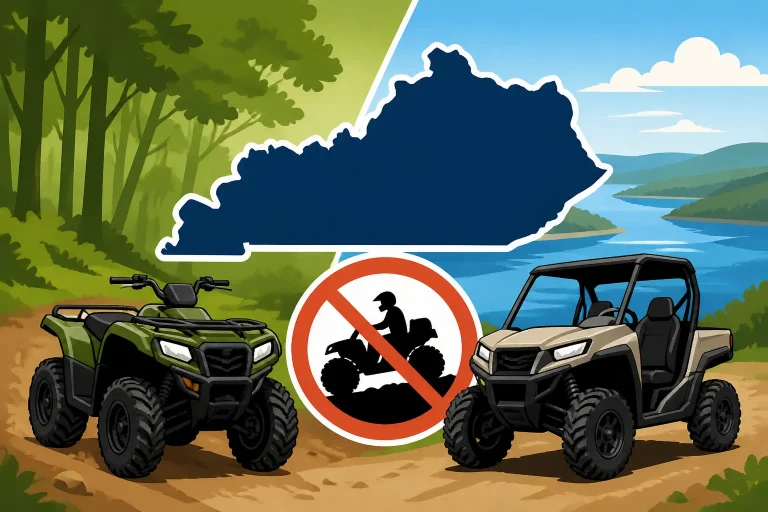
There is no one statewide trail sticker that automatically authorizes an electric ATV or UTV to ride anywhere in Kentucky. Trail access and permit requirements depend on the place you plan to ride. A permit for one park or riding area does not necessarily work at another, and getting a permit does not override restrictions on vehicle type, width, weight or trail access.
That distinction matters because an electric machine may differ from a typical gas-powered ATV in ways that affect access. It may be heavier because of its battery, wider than the trail’s limit, or categorized differently by an operator. A site may also have rules written around motorcycles, ATVs, UTVs or off-highway vehicles without specifically addressing electric models.
Start by identifying the exact riding area and asking its operator whether your machine is allowed. Confirm the answer for the machine’s specific make, model and configuration—not just “an electric ATV” in general. If your vehicle is a side-by-side, provide its width, seating capacity and weight when asked. Those details can matter more than the power source.
For an overview of how site permits work, see Kentucky Trail Permits Explained. It is also useful to understand Why Kentucky Has No Statewide Trail Sticker and Why a Kentucky Park Permit Is Not a State Permit. The practical takeaway is simple: verify access and fees separately for every riding area on your itinerary.
| Question | Why it matters for an electric machine |
|---|---|
| Does the site allow electric ATVs or UTVs? | Some operators may limit vehicle types or have rules that do not clearly address electric models. |
| Does the machine meet size and weight limits? | Battery packs can add weight, and UTVs may be too wide for certain trails. |
| Is a permit required? | Permit systems vary by park, forest or other riding area. |
| Does the permit cover the rider, vehicle or both? | A pass may be tied to a person, machine or specific use. |
| Are there route, season or closure restrictions? | A permitted machine still has to stay on routes open to it. |
| Is charging available, and may you charge there? | Range planning is your responsibility unless the operator confirms facilities and permission. |
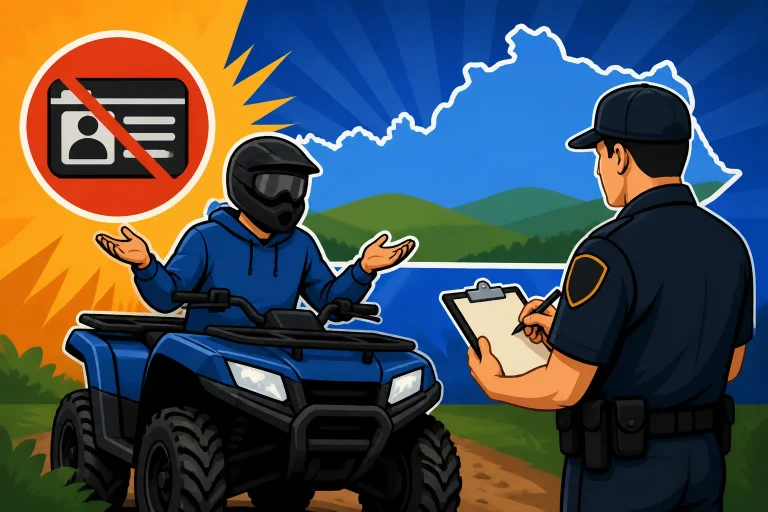
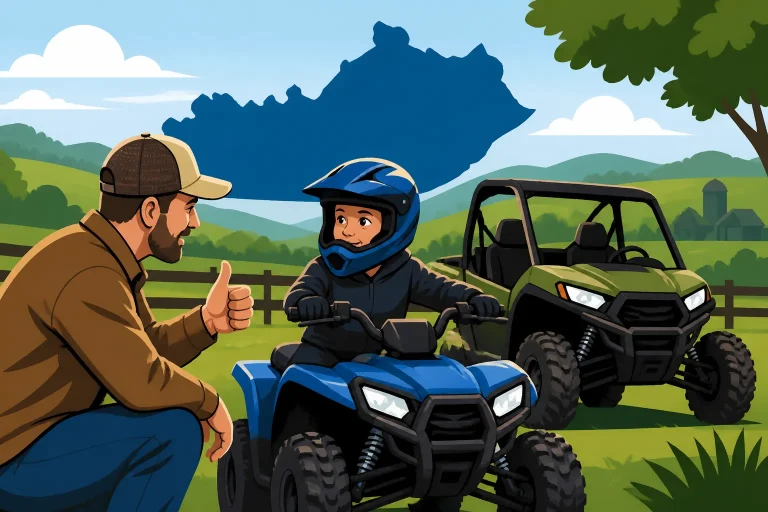
An electric machine is not exempt from trail rules because it has no gasoline engine. Age limits, helmet requirements, supervision rules, passenger restrictions and designated-route rules may still apply. Nor does being quiet grant permission to ride outside an approved area. Ask the operator how its rules apply to electric models, and keep the response or relevant posted rules available when you arrive.
Check the rules for the particular place you plan to ride
Kentucky riding areas are not all managed the same way. Some are operated by a park or private organization; others are on public land with their own access and vehicle rules. A statement that a machine is “allowed in Kentucky” is not enough to establish that it can ride a particular trail.
Private and operated trail areas
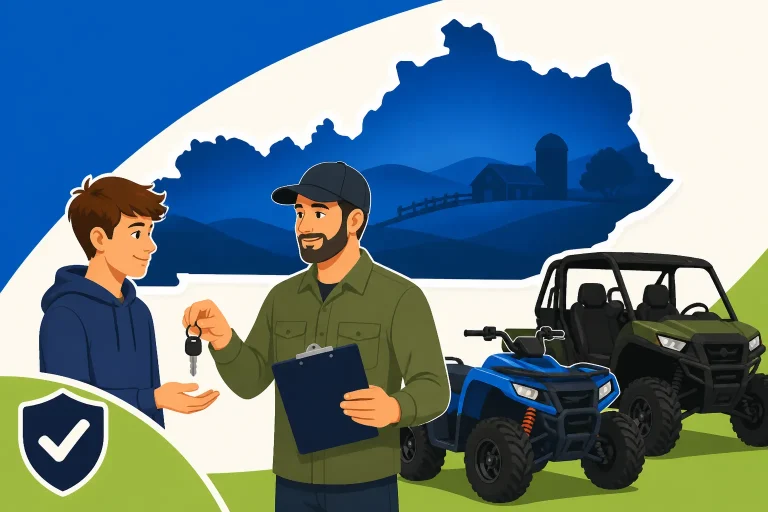
At a managed trail park, contact the operator before traveling. Ask whether electric machines are accepted on the trails you intend to use, whether the answer differs for ATVs and UTVs, and whether there are equipment or operating restrictions. Confirm how the permit is issued and whether it covers each rider, each machine or both.
If you are riding with a passenger, check whether that person needs a separate permit. Do not assume a machine permit covers everyone aboard. Similarly, do not assume that a rental company’s permission or a park pass settles every question about age, helmets or passenger eligibility.
Get specific answers to questions such as:
- Is this make and model permitted, including its battery-powered drivetrain?
- Are there limits on weight, width, speed or seating capacity?
- Are all trails open to this vehicle, or only designated routes?
- Do I need a permit for the machine, the rider or both?
- Are there rules for charging, battery transport or storing the machine?
- Can the machine be used during wet conditions or seasonal closures?
- Is written approval available if the posted rules do not mention electric vehicles?
When the operator cannot answer clearly, do not treat silence as approval. Ask for a manager or the person responsible for trail access. If a rule is ambiguous, get clarification before paying a permit fee or hauling the machine to the trailhead.
National forests and other public riding areas
Public land can have rules that differ from those at a privately operated park. On national forest land, for example, riding may be limited to designated roads and trails, and applicable vehicle or route requirements still matter. A machine’s electric motor does not make an otherwise restricted route open to it. Check the current information for the specific area and consult Kentucky Rules for Riding a National Forest before planning a trip.
Land Between the Lakes also has its own access information and riding-area rules. If you are considering Turkey Bay, check the current instructions for that area rather than assuming a permit or permission from another Kentucky trail park will apply. Kentucky Rules on Land Between the Lakes can help frame what to verify.
For any public riding area, confirm the boundaries of the legal riding zone, the approved routes and any closures. A route visible on a map or open to hikers is not automatically open to motorized vehicles. Check Kentucky Trail Closures to Check close to your trip, since conditions and closures can change.
Trail permission is separate from road use
Trail access does not make an electric ATV or UTV street legal. A machine that is accepted on a trail may still be prohibited from ordinary public roads, except where a specific law or authorized crossing applies. Conversely, road-related equipment or paperwork does not automatically authorize trail use.
Electric power does not change that distinction. If your plan involves riding from a home, campground or lodging to a trailhead on a public road, check the rules for that road separately. The rules discussed in Kentucky Rules for an Electric Machine on a Road address a different question from access to off-road trails.
Permits, reciprocity and what to confirm before you go
Trail permits are generally specific to the riding area that issues them. A permit from one operator should not be treated as a statewide credential or as permission to ride at a different park. The same caution applies to an out-of-state registration or permit: it may help identify or document a vehicle, but it does not automatically satisfy a Kentucky park’s access requirements.
This is the core of the reciprocity issue. A trail operator decides which vehicles and permits it accepts on its property or system. A permit from another state, another park or a public-land program does not necessarily transfer. For the broader issue, see Why Kentucky Cannot Reciprocate Anything and Does Kentucky Honor Out-of-State Registration?. Those questions should not be confused with whether a particular site accepts your electric machine.
Before setting out, use this sequence:
- Name the exact riding location. “Kentucky trails” is too broad. Identify the park, forest, riding area and, if relevant, the trail system within it.
- Describe the vehicle accurately. Give the manufacturer and model, whether it is an ATV or UTV, its width and weight if known, and the fact that it is electric.
- Ask about vehicle acceptance. Get confirmation that the site allows that type of electric machine and ask whether different rules apply to specific routes.
- Confirm permits and riders. Ask what permit is required, who must have one, where it can be obtained and whether a passenger needs a separate permit.
- Check operating restrictions. Verify age, helmet, passenger, speed, sound, seasonal and route rules. Do not assume a quieter vehicle is exempt from them.
- Plan charging and range. Ask whether charging is available and permitted. If not, plan a ride that stays within the machine’s practical range, allowing for hills, mud, temperature and load.
- Recheck before departure. Look for updates on closures, weather conditions and operating hours. Save the operator’s contact information and any written clarification.
Permits can be priced or structured in different ways, so check the issuing operator for current requirements and charges. Ask whether the fee is for a person, machine, day or another period. If you plan to visit more than one riding area, confirm each one independently instead of assuming the first permit covers the rest.
Battery and range planning are part of trail access
Even when the machine is permitted, its usable range may be shorter on demanding terrain than on a flat test route. Steep climbs, soft ground, heavy mud, cold conditions, passengers and cargo can all increase energy use. A loop that appears manageable on a map may leave little reserve for a detour or a slower return.
Plan conservatively. Use the machine’s real-world range on comparable terrain rather than relying only on a manufacturer’s ideal estimate. Identify a turnaround point that leaves enough battery for the return journey, and do not count on finding an outlet at a trailhead or campground unless the operator confirms it. Ask before plugging in anywhere; access to a site does not necessarily include permission to charge.
Battery condition and transport also deserve attention. Follow the manufacturer’s instructions for charging, storage and handling, and avoid bringing a damaged battery onto a trip. If you transport spare batteries or equipment, secure it properly and check any applicable operator rules. Do not leave charging equipment unattended in a location where it could create a hazard or obstruct other visitors.
If the rules do not mention electric machines
A rule that lists “ATV,” “UTV” or “OHV” may or may not clearly settle how the operator treats an electric model. Do not assume that electric drive puts the vehicle outside the rule, and do not assume that a general vehicle category automatically includes every configuration. Ask the operator how it defines eligible machines.
Provide facts rather than arguing from labels. A compact electric ATV and a heavy, wide electric UTV may present different access concerns. The operator may base its decision on dimensions, weight, speed, tires, seating or trail conditions rather than engine type. Ask which characteristic controls the decision and whether the approval applies to the full trail system or only certain routes.
If access is denied or limited, respect that decision. Do not ride first and try to resolve the question at a gate, and do not use a quieter motor as a reason to leave marked routes. A quieter machine may reduce engine noise, but it does not eliminate risks to other trail users, wildlife or the ground surface.
A practical pre-ride checklist
Before loading an electric ATV or UTV, make sure you can answer these questions:
- Have I confirmed that this specific machine is allowed at the exact riding area?
- Do I know which routes are open to it?
- Have I checked current permits and whether they apply per rider, machine or both?
- Have I checked rules for passengers, helmets, minimum ages and supervision?
- Do I know the trail’s width, weight or other vehicle limits?
- Have I checked closures and conditions close to departure?
- Is my planned route comfortably within the machine’s usable range?
- Do I know where I can charge, and have I confirmed that charging is permitted?
- Have I separated trail permission from any question about traveling on public roads?
Keep permit confirmations, receipts and relevant operator instructions accessible during the trip. That does not replace following posted rules, but it can help you resolve a misunderstanding quickly. If the operator updates its instructions or closes a route, follow the current direction rather than relying on an older screenshot or a permit from another place.
The safest assumption is that an electric ATV or UTV must meet the same site-specific access requirements as other off-highway machines unless the operator says otherwise. Battery power may affect noise, range and charging needs, but it does not create a statewide trail permit or a right to ride on a route that is closed to the vehicle.
Disclaimer
This article is for general informational purposes only and does not constitute professional advice. Laws, prices and regulations vary by location and change over time. Consult a qualified professional for guidance on your specific situation.