A Citation at a Kentucky Trail Gate
A citation at a Kentucky trail gate can be confusing: the paper may come from a park operator, law enforcement, or another authority, and the next steps depend on who issued it. Start by identifying the notice, the alleged violation, and any response deadline. Then preserve your records and check the rules for that specific riding area before deciding how to respond.
First identify what you were given
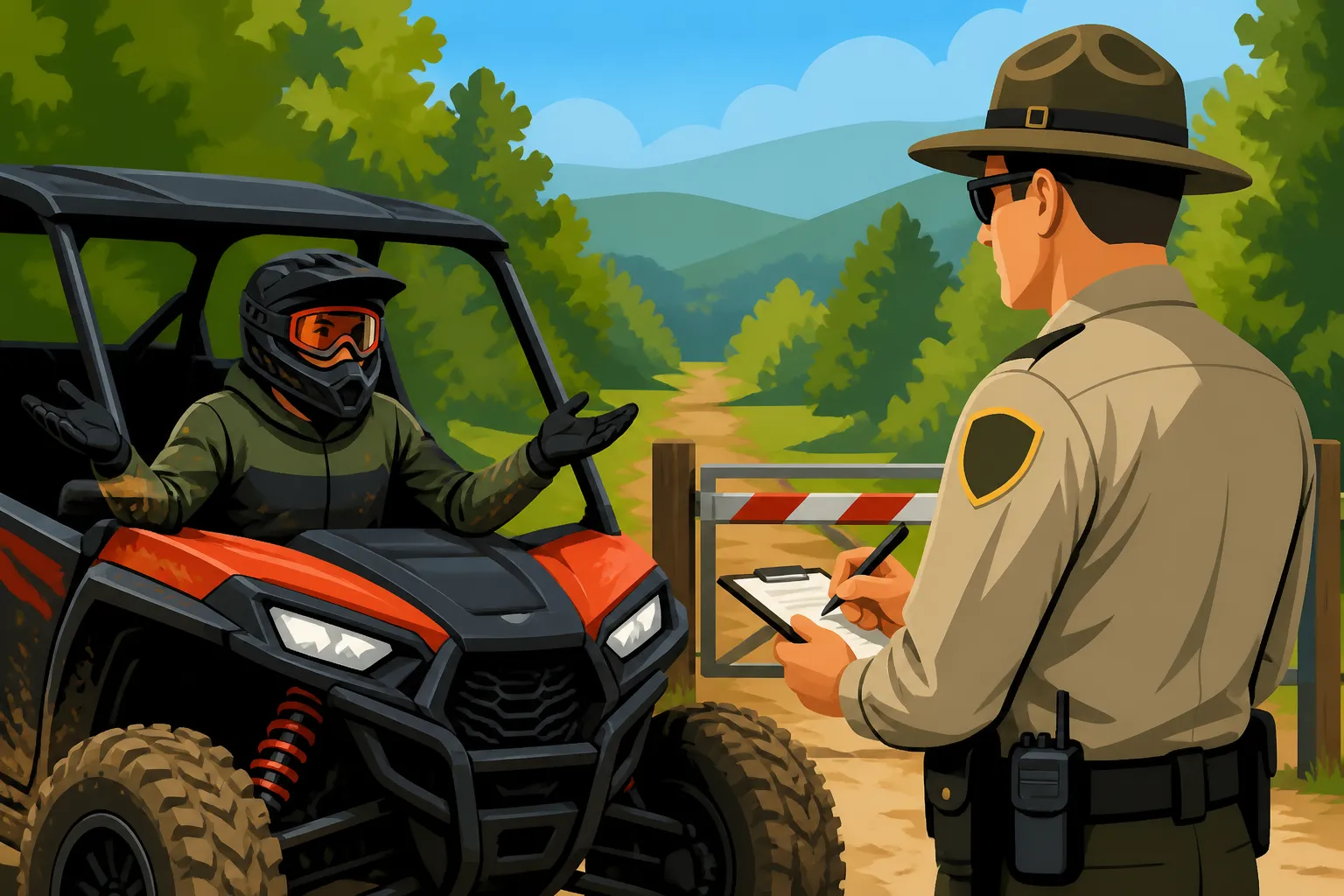
A gate encounter does not always end in a citation. You might be denied entry, warned, asked to correct a problem, or handed a formal notice. The first step is to read the document carefully and work out which of those situations applies.
Check the issuing organization and the name of the person who gave you the notice. A park employee’s warning or incident report is not necessarily the same thing as a citation issued by a law-enforcement officer or another authorized official. The document should help clarify whether you are being asked to pay a charge, appear or respond through a court or agency, or simply follow a park instruction.
Look for these details:
- The alleged conduct, such as riding without a required permit or entering a closed area
- The date, time, and location
- The name or identifier of the issuing organization
- Any case, citation, or incident number
- A payment, response, or appearance deadline
- Instructions for contacting the issuing office or contesting the notice
If something is missing or hard to understand, ask the issuer how to obtain a complete copy and which office handles questions. Do not assume that a gate employee can explain court procedure, or that an informal explanation changes what the document says.
| What happened | What to do first |
|---|---|
| You were turned away without paperwork | Ask which rule or entry condition you need to meet before returning |
| You received a warning or park incident report | Keep it, note what you were told, and check whether the park requires follow-up |
| You received a formal citation | Identify the issuing authority, read every instruction, and calendar any deadline |
| You are unsure whether the paper is a citation | Contact the office named on it and ask what action, if any, is required |
A trail permit is not a single statewide credential that automatically covers every riding area. Requirements can differ between privately operated parks, public recreation areas, and national forest routes. A pass or permit accepted at one location may not be valid at another. Review Kentucky Trail Permits Explained and Why Kentucky Has No Statewide Trail Sticker before treating a permit from another place as a defense.
The place where you were stopped matters, too. Rules posted at a gate may be specific to that property, while a citation may refer to a broader legal requirement. The notice should identify the alleged violation well enough for you to understand what conduct is in question. If it does not, ask the issuer for clarification rather than guessing.
What to do during the gate encounter
Keep the interaction calm and practical. Stop where directed, follow reasonable safety instructions, and avoid trying to ride away while an employee or officer is speaking with you. Leaving can create a new safety problem and may make the situation harder to resolve.
Ask, politely, what rule the official believes was violated and whether you are receiving a warning, a park notice, or a formal citation. You can ask for the person’s name or agency and for a copy of any paperwork. If you disagree, do not turn the roadside discussion into an argument. A brief, respectful question is more useful than trying to litigate the issue at the gate.
Before leaving, make sure you understand:
- Whether you are being allowed to continue riding or must leave the property.
- Whether the machine, rider, or group has been told to correct a condition.
- Whether you have received a written notice and what action it requires.
- Which office can explain the notice or provide a copy.
- Whether there is a deadline to respond, pay, or appear.
Do not sign a statement you do not understand. If you are asked to sign something, ask what the signature confirms and whether you can receive a copy. A signature may acknowledge receipt, confirm information, or serve another purpose; do not assume what it means without reading the document.
If you believe the official has the facts wrong, calmly state the specific point you dispute. For example, you can explain that you have a permit or that you were following a marked route. Avoid making broad claims such as “I have a permit for Kentucky” unless you can show that the permit applies to that exact location and activity. Save the detailed explanation for the proper response process.
Do not hand over original documents unless the official has a clear reason and you understand what is being requested. Keep your own copy of any permit, registration, rental paperwork, or other relevant record. If a document is retained, ask how to get a receipt or replacement copy.
If the gate is closed or staff direct you not to ride, do not continue past the barrier or look for another way onto the trail. A citation may be one concern, but ignoring a closure or instruction can add risk and potentially create another violation. Check Kentucky Trail Closures to Check First and A Gate Board With Today’s Rules in Kentucky for ways to verify conditions and posted requirements before setting out.
How to respond after you leave
Treat the written notice as the controlling starting point. Read it from beginning to end, including any information on the back or attached pages. If it gives a response deadline or an appearance date, record it immediately and follow the instructions for that specific notice. Do not rely on a general online explanation, a friend’s past experience, or what someone at the gate said verbally if the written directions say something different.
If the notice names a court, agency, or park office, contact that office using the details on the document or an independently verified official channel. Ask what the notice requires, how to obtain records, and how to submit a response. Keep a note of the date, the person you spoke with, and any directions you received. A phone call can clarify logistics, but do not treat it as a substitute for submitting required paperwork or appearing when instructed.
Paying a citation may resolve a matter, but the effect of payment depends on the type of notice and the applicable process. Before paying, find out whether payment is treated as an admission, whether it closes the matter, and whether other consequences may follow. If you intend to contest it, do not miss a deadline while trying to negotiate informally. For a formal citation with meaningful consequences, consider getting advice from a qualified attorney familiar with the relevant process.
Build a file while details are fresh. Keep:
- The original notice and clear copies of every page
- The permit, receipt, or confirmation you believe applies
- Photos of signs, barriers, trail markers, or the location, if safely and lawfully taken
- Rental or group-booking documents, if relevant
- Names and contact details for witnesses
- A short written account of what happened, including the route and sequence of events
Do not edit photos or discard records that could help explain the event. If you use a phone image of a permit or receipt, keep the original file and any confirmation message. A photo can help establish what you had with you, but it may not replace a required physical permit or document. Check the park’s actual rules rather than assuming a screenshot is accepted.
Match your evidence to the allegation. If the notice concerns a missing permit, identify the permit’s issuing organization, dates of validity, and the riding area it covers. If it concerns a closed trail, preserve any notice or map that shows the route and closure information you saw. If the issue is riding outside a marked route, write down where you entered and how the route was marked. See Kentucky Fines for No Trail Permit, Kentucky Fines for Riding a Closed Trail, and Kentucky Rules for Riding Off the Trail for related issues.
If the notice seems to describe the wrong person, machine, date, or location, point out the exact discrepancy when you contact the listed office or submit a response. Provide supporting records if requested, but retain copies. Do not assume that an error automatically cancels the notice; ask the issuing authority how to raise it through the proper process.
How to reduce the chance of another citation
Before loading the machine, check the riding area’s current access rules, permit requirements, hours, closures, and route restrictions. Confirm that the information applies to the exact park or trail system you plan to use. A permit purchased for one location is not necessarily accepted elsewhere, and a trail shown on an old map may be closed or restricted.
Use the park’s current official notices and contact channels when possible. Social media posts, old trip reports, and advice from another rider may be useful clues, but they can be outdated or refer to a different trail segment. Checking a Kentucky Trail Notice First and Calling a Kentucky Park Before You Load can help you verify details before the trip.
At the gate, read posted signs instead of relying only on what you remember from a previous visit. Pay attention to day-specific closures, permit instructions, passenger or machine conditions, and directions about where riding is allowed. If you cannot tell whether your permit covers a machine, passenger, or route, ask before entering. A few minutes spent clarifying the rule is easier than sorting out a notice afterward.
Carry the documents the park requires in the form it accepts. Keep your permit accessible, and save proof of purchase or reservation separately in case you need to show it. If you are riding a rental machine, ask the rental provider which permits are included and whether each rider or passenger needs a separate credential. Do not assume the rental company’s paperwork satisfies every park requirement.
Make sure everyone in your group understands the route and the posted restrictions. Group leaders can share the rules before the ride, but each rider should know where the group is allowed to go and what to do if it becomes separated. A rider who follows another machine onto a closed or unmarked route may still face questions about their own conduct.
If the rules are unclear, choose the conservative option: pause, ask the park staff, or do not enter that section. Keep a record of the answer if it affects your plans. If you receive a citation despite taking reasonable steps to comply, use the notice’s official process and present clear, relevant evidence. The goal is not to win an argument at the gate; it is to understand the allegation and respond through the right channel.
Disclaimer
This article is for general informational purposes only and does not constitute professional advice. Laws, prices and regulations vary by location and change over time. Consult a qualified professional for guidance on your specific situation.