Kentucky Rules for Riding a County Road
It’s a common sight in many rural areas across Kentucky: an ATV or UTV rolling down a county road, maybe heading to a fishing spot, a friend’s house, or simply out for a ride. But the truth is, the rules for using these machines on public roads in the Bluegrass State are far more complex and restrictive than many riders realize. This guide will cut through the confusion and lay out exactly what Kentucky law says about riding your ATV or UTV on a county road, helping you avoid unexpected fines and stay safe.
Understanding Kentucky's Default Rule for ATVs on County Roads
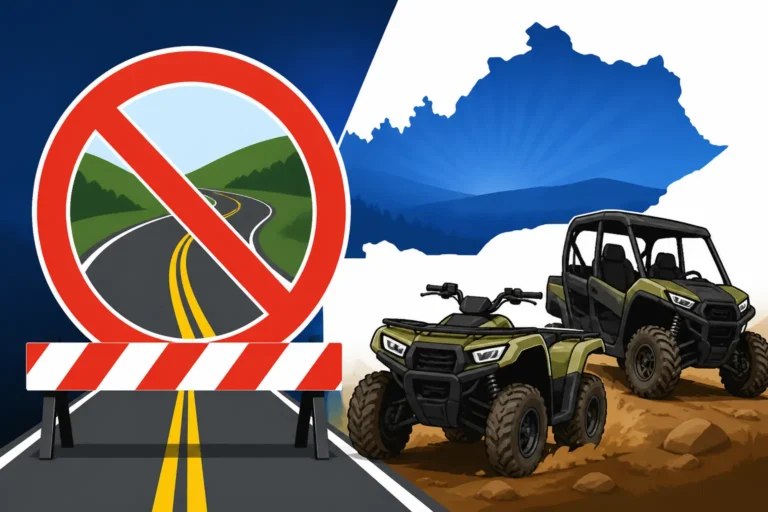
Let’s be honest: when you’re out in the beautiful Kentucky countryside, a quiet county road can look mighty inviting, especially if it’s the quickest way between your home and a favorite trail system, or just around the bend to a neighbor’s property. However, it's crucial to understand Kentucky's fundamental stance on ATVs and UTVs on public roadways. Unlike street-legal vehicles, these machines are generally not permitted on most public roads, and that includes county roads, by default.
The "Closed by Default" Principle
Kentucky law operates on a "closed by default" principle when it comes to off-highway vehicles (OHVs) like ATVs and traditional UTVs. This means that if the law doesn't explicitly state you can ride your ATV on a specific type of road, then you cannot. It's a source of real frustration for many riders who just want to get from Point A to Point B without having to trailer their machine for short distances. You might see other people doing it, but that doesn't make it legal or safe. This principle is designed to keep the roads safe for conventional traffic and to protect riders who are on machines not designed for pavement. Imagine trying to stop a fully loaded side-by-side that's not meant for high-speed braking, suddenly encountering a car around a blind curve on a narrow county road. The risks are substantial.
Limited Exceptions to the General Rule
While the general rule is "no ATVs on county roads," Kentucky law does carve out a few very specific exceptions. These aren't blanket permissions, but rather narrow allowances for particular situations. You'll typically find exceptions for agricultural use, utility or emergency work, certain types of construction or maintenance, and for crossing roads. More recently, some counties have also adopted ordinances allowing "Special Purpose Vehicles" (SPVs), which are typically UTVs that meet stringent equipment and registration requirements, to operate on designated roads. Each of these exceptions comes with its own set of rules and limitations, and misunderstanding them can quickly lead to a citation for [Kentucky Fines for Illegal ATV Road Use]. It's not enough to just guess; you truly need to know the specifics to stay on the right side of the law.
Navigating the Farm Exception on Kentucky County Roads
If you live in a rural area of Kentucky, the farm exception is probably one of the most talked-about and utilized allowances for ATVs and UTVs on county roads. It’s a vital provision for our agricultural communities, recognizing that these machines are often indispensable tools for daily farming operations. However, this exception is often misunderstood, leading to confusion and sometimes, legal trouble for riders who aren't genuinely using their machine for farming purposes.
What Qualifies as "Farm Use"
So, what exactly counts as "farm use" in the eyes of Kentucky law? It's not just about owning a piece of land; it's about the machine's direct involvement in agricultural activities. This includes tasks such as:
- Hauling feed, tools, or supplies to different parts of your farm or to a neighboring field.
- Inspecting crops, fences, or livestock pastures.
- Performing repairs or maintenance on farm equipment or structures.
- Moving livestock.
- Accessing timber or logging areas that are part of the farm operation.
The key here is that the ATV or UTV must be primarily used for bona fide agricultural purposes. Cruising down the road to visit a friend, even if they're also a farmer, typically won't qualify, nor will riding for recreational purposes. For example, if you're using your UTV to [Hauling Feed Down a Holler Road] to your cattle in the back forty, that's squarely within the farm use exception. But if you decide to take a scenic ride on that same road just for fun, you're likely breaking the law. Some riders enhance their farm machines with robust accessories, and companies like SuperATV offer heavy-duty cargo beds, hitches, and winches that can make an ATV or UTV even more functional and safe for these demanding tasks on county roads.
The "No Mileage Cap" Advantage
One of the most significant aspects of the farm exception, and where it differs dramatically from the general road crossing rule, is that it has no specified mileage cap. While the crossing rule (which we'll cover next) is limited to a mere 0.2 miles, the farm use exception allows for greater distances, as long as the use is genuinely agricultural. This is a huge relief for farmers who might need to travel several miles along a county road to reach a detached parcel of land or to access a specific field. [Why a Farm Run Has No Mileage Ceiling] validates the practical needs of Kentucky's farming community.
However, "no mileage cap" doesn't mean "no rules." Even under the farm exception, you are still typically required to operate your ATV or UTV in a safe manner, which often means riding during daylight hours when visibility is best. You should also consider making your machine as visible as possible with flags, reflective tape, or even an amber flashing light, especially on busier county roads.
Practical Considerations for Farm Riders
Beyond the legal definitions, there are practical considerations for using your ATV or UTV for farm work on county roads. Safety should always be your top priority.
- Visibility: Farm machines aren't always equipped with the same lighting and signaling as cars. Be extra vigilant for other vehicles, especially around blind curves or hillcrests. Consider adding brighter lights or reflective materials.
- Tire Type: The knobby tires ideal for field work aren't always best for pavement, affecting handling and braking. Drive cautiously and adjust your speed accordingly.
- Driver's License: While the farm exception doesn't explicitly require a driver's license for operation on private property, if you're on a public road, even under an exception, a valid driver's license is generally expected.
- Road Conditions: Gravel county roads can be unpredictable. Maintain a safe speed and be aware of loose gravel, potholes, and other hazards.
Remember, the farm exception is there to support agricultural operations, not to provide a loophole for general recreation. Respecting the spirit and letter of the law helps ensure this vital exception remains available for those who truly need it.
Crossing Kentucky County Roads: The 0.2-Mile Rule
Beyond the farm exception, there's another specific allowance for ATVs and UTVs on Kentucky roads: the 0.2-mile crossing rule. This provision is designed for situations where a brief stretch of public road is unavoidable to connect two pieces of private property, or to access a trail system. However, this rule is often misunderstood and abused, leading to frequent citations. It's not a green light for joyrides; it's a very narrow allowance with strict conditions.
The Strict 0.2-Mile Limit
Let's be absolutely clear: this rule allows you to operate your ATV or UTV on a county road for a maximum distance of 0.2 miles. That's approximately 1,056 feet, or just over two football fields. It's incredibly short! Many riders overestimate this distance, thinking they have a bit more leeway than they actually do. [Kentucky's 0.2-Mile Crossing Rule] is one of the most crucial elements to understand. If your intended route on the county road exceeds that tiny fraction of a mile, you are immediately in violation of the law. You can't string together multiple 0.2-mile segments; it's a single, direct crossing. Think of it as a quick hop, not a short cruise.
Crossing at Ninety Degrees
Another critical component of the 0.2-mile rule is the manner in which you must cross the road. The law typically requires that you cross at approximately a ninety-degree angle to the roadway. This isn't just arbitrary; it's a safety measure. Crossing directly reduces the time your machine is on the road and minimizes the risk of a collision with oncoming traffic. It prevents you from riding along the road or weaving with traffic. You're meant to go straight across, as quickly and safely as possible, minimizing your exposure. If you find yourself driving down the road, even for a very short distance, rather than making a perpendicular crossing, you're likely violating this rule.
Daylight Only and Other Restrictions
The 0.2-mile crossing rule also comes with other important restrictions:
- Daylight Only: You are only permitted to make these crossings during daylight hours. [Daylight Only Under the Statute] is non-negotiable. Trying to sneak across a county road in the dark, even with your headlights on, is illegal and incredibly dangerous. Visibility is key, both for you and for other drivers.
- Driver's License: While not explicitly stated for every scenario, general rules for operating a motor vehicle on a public road mean you should have a valid driver's license. Don't assume you can make a quick dash across without one.
- Safety: Always exercise extreme caution when making any road crossing. Stop, look both ways multiple times, and yield to all vehicular traffic. Your ATV or UTV is much smaller and harder to see than a car, and you have far less protection in a collision.
This 0.2-mile rule is a privilege, not a right. Using it improperly jeopardizes its existence and, more importantly, your safety and the safety of others.
Special Purpose Vehicles (SPVs) and County Roads in Kentucky
For those with UTVs, there's a more recent and potentially broader option for legal road use in Kentucky: the Special Purpose Vehicle (SPV) designation. This isn't for traditional ATVs, but rather for UTVs that meet specific criteria, essentially bringing them up to a standard that allows for more extensive, though still limited, operation on public roads. However, this isn't a statewide blanket rule; it requires local county or city government action.
What Makes a Machine an SPV
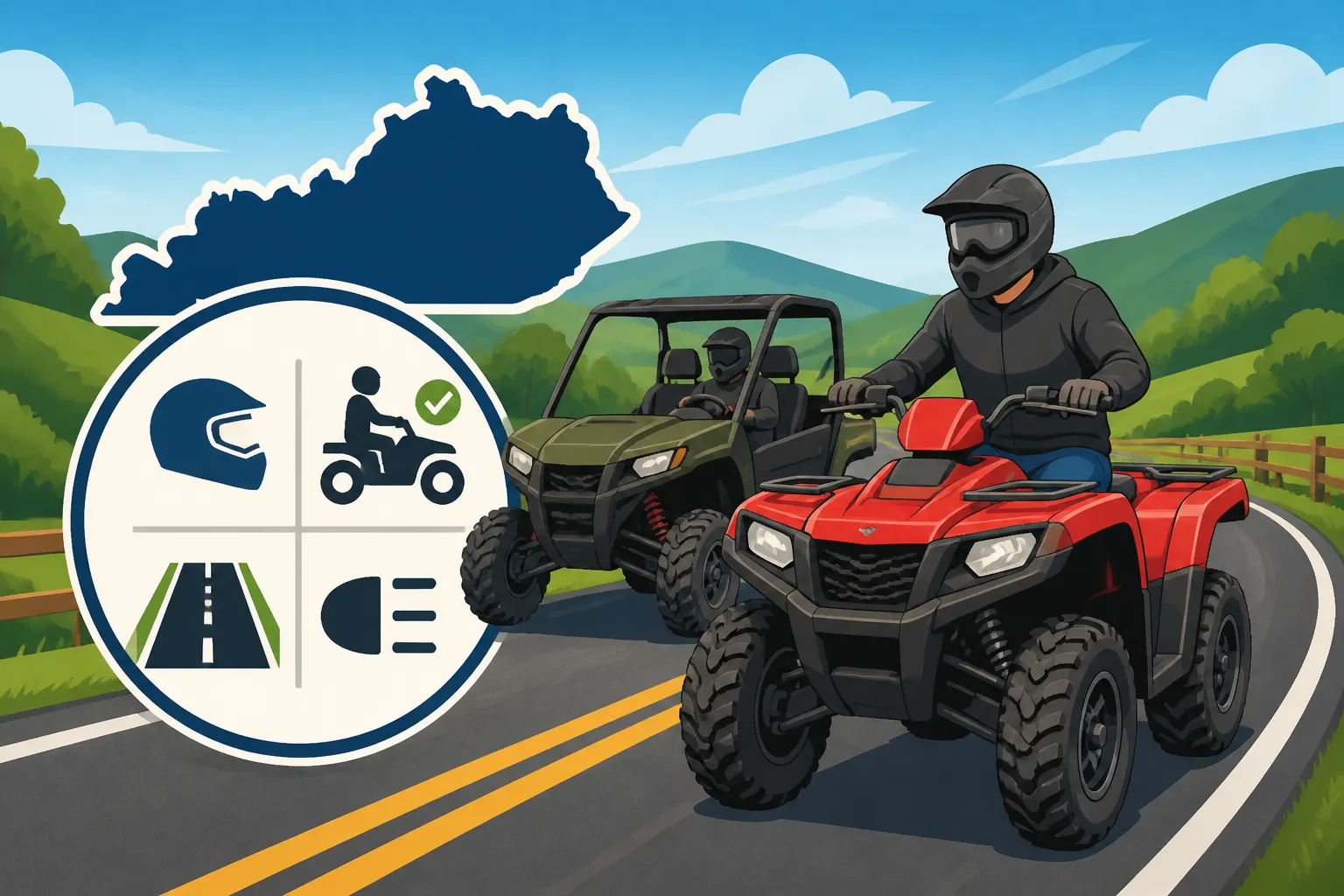
To be designated as an SPV in Kentucky, a UTV must undergo an inspection and meet a rigorous list of equipment requirements. This isn't just a quick check; it involves ensuring your machine has all the safety features typically found on a car or motorcycle. The list includes:
- Headlights (at least one)
- Taillights and brake lights
- Turn signals (front and rear)
- Horn
- Dual mirrors (one on each side)
- Windshield
- Seatbelts for all designated seating positions
- An illuminated speedometer
- Tires with a minimum of 2/32 inch tread depth
- A roll cage or similar occupant protection system
You'll need to pass an inspection, which comes with a fee, to verify compliance. [The $25 Kentucky Inspection] is a critical step in the process. After passing, you can then register your UTV with the county clerk, paying a registration fee. Many UTV owners turn to aftermarket solutions to meet these requirements, and companies like SuperATV offer a wide range of compliant accessories, from street-legal turn signal kits and DOT-approved windshields to mirrors and horns, making the conversion process much smoother.
The Local Opt-In Requirement
Here’s the biggest hurdle for SPV use on county roads: it's not automatic. A specific Kentucky city or county must vote to allow SPVs on its public roads. [Why a Kentucky City Must Opt In] is the key. If your county hasn't passed an ordinance to permit SPVs, then your street-legal UTV is still largely restricted to the same rules as a regular ATV (farm use, 0.2-mile crossing). This "local option" approach means that you might be able to ride your SPV on county roads in one part of the state, but not in an adjacent county that hasn't opted in. Before you even consider investing in the equipment, inspection, and registration for an SPV, you absolutely must check with your local county clerk's office or city hall to see if such an ordinance is in effect for the roads you intend to ride.
Operating an SPV on County Roads
If your UTV is properly equipped, inspected, registered as an SPV, and you're in a county that has opted in, you gain significantly more freedom to use county roads. However, there are still rules:
- Driver's License: You will need a valid driver's license to operate an SPV on public roads. [A License for Kentucky Highway Operation] is essential.
- Insurance: Kentucky law requires motorcycle-level liability insurance for SPVs operating on public roads. [Motorcycle-Level Insurance for a Kentucky SPV] is a must-have for peace of mind and legal compliance.
- Speed Limits: Even in an opt-in county, SPVs typically have speed restrictions. For example, they might be limited to roads with a speed limit of 45 mph or less, or they might be capped at a maximum speed of 35 mph, even if the road's limit is higher. Always observe posted speed limits and any specific SPV restrictions.
- Road Types: While county roads are often open, interstates, parkways, and other high-speed state routes are almost universally off-limits to SPVs.
Navigating the SPV rules requires diligence, but for many UTV owners, it provides a legitimate pathway to greater use of Kentucky's vast network of county roads.
To help clarify the differences between these various scenarios, here's a quick comparison:
| Feature | General ATV/UTV (No Exception) | Farm Use (ATV/UTV) | 0.2-Mile Crossing (ATV/UTV) | Special Purpose Vehicle (UTV only) |
|---|---|---|---|---|
| Allowed on County Roads? | No | Yes (for farm operations) | Yes (for specific crossing) | Yes (if county opts in) |
| Mileage Limit | N/A | No cap | Strictly 0.2 miles (approx. 1056 ft) | Usually up to 20-35 mph roads (check local ordinance) |
| Purpose | N/A | Agricultural operations only | Connecting private land/trails | General transportation/recreation |
| Time of Day | N/A | Generally daylight recommended | Daylight only | Day or night (with proper lighting) |
| Driver's License | N/A | Generally recommended | Generally required | Required |
| Equipment Requirements | Basic (factory) | Basic (factory) | Basic (factory) | Extensive (lights, signals, mirrors, etc. for [Kentucky SPV Equipment List]) |
| Inspection/Registration | No | No | No | Yes (inspection + registration) |
| Local Opt-In Needed? | No | No | No | Yes ([Why a Kentucky City Must Opt In]) |
| Insurance Required? | No | No | No | Yes ([Motorcycle-Level Insurance for a Kentucky SPV]) |
Understanding these distinctions is paramount. While it might seem like a lot to take in, knowing the nuances of Kentucky Rules for Riding a County Road will ensure you can enjoy your machine safely and legally for years to come.
Disclaimer
This article is for general informational purposes only and does not constitute professional advice. Laws, prices and regulations vary by location and change over time. Consult a qualified professional for guidance on your specific situation.