Kentucky Rules for Crossing a Highway
There's nothing quite like the feeling of heading out on your ATV or UTV, ready to hit the trails or get some work done on the farm. But let's be honest, Kentucky's landscape isn't always one continuous stretch of dirt and gravel. Sooner or later, you're going to encounter a paved road – maybe even a state highway – that stands between you and your destination. It's a common frustration, and one that often leaves riders scratching their heads: "Can I just cross this road? What are the rules? Do I need a full street-legal setup just for a quick hop?" This guide is all about untangling those tricky questions and making sure you understand exactly what Kentucky law says about riding your machine across a highway.
The Reality of Kentucky Roads and Your ATV/UTV
First things first, let's address the elephant in the room: Kentucky, like many states, doesn't generally permit ATVs or UTVs to operate on public roads and highways. This isn't just some arbitrary rule; it stems from safety concerns, as these machines are designed for off-road use and often lack the safety features, signaling, and insurance requirements of street-legal vehicles. It's a point of contention for many riders who just want to get from one section of their property to another, or connect to a trail system that requires a brief pavement jaunt.
The default position under Kentucky law is quite clear: if it's a public road, your off-road machine isn't supposed to be on it. This means you can't just cruise down the shoulder or use a highway as a shortcut for miles on end. The law is designed to keep these powerful, sometimes less visible machines, off routes shared with cars and trucks traveling at higher speeds. It's a frustrating reality when you know your destination is just across the asphalt, but it's crucial to understand this baseline before diving into the exceptions. Think of it this way: the pavement is off-limits unless the law specifically makes an allowance. This is why you won't see [Why Kentucky Has No Decal to Display] on your ATV; it's not registered for road use in the traditional sense.
Understanding Kentucky's "0.2-Mile Crossing Rule"
Now, for the primary exception that most riders grapple with: the "0.2-mile crossing rule." Kentucky law does make a narrow allowance for ATVs and UTVs to cross public roadways, including highways, but it comes with very strict limitations. This rule is designed for those moments when a road simply cuts through your path, preventing you from reaching an adjacent piece of private land or another section of a trail system. It's not a license to ride down the road, even for a short distance; it's purely for transit across it.
The "0.2 miles" part is absolutely critical. To put it into perspective, 0.2 miles is about 1,056 feet, or roughly the length of three and a half football fields. That's not a lot of distance! The intent here is for the absolute shortest, most direct route across the pavement. If your destination on the other side is further down the road, you're technically not permitted to use this rule to cover that extra distance. It's about bridging a gap, not creating a short highway commute. Many riders find themselves wondering, [How Far 0.2 Mile Really Gets You] when they're staring down a rural highway. This rule is often confused with allowing a short ride along the road, but that's not what the statute permits. It's strictly about the crossing.
How to Measure 0.2 Miles Accurately
Measuring this distance accurately can be a real headache, especially in the heat of the moment. It's not like you're carrying a tape measure. My best advice for riders is to err on the side of caution. If you're unsure if your intended path fits within that 0.2-mile limit, it's probably best to find an alternative. You could use a GPS app on your phone to measure the distance beforehand if you're planning a route. Another practical tip is to look for clear landmarks. For instance, if you're crossing from one field to another, make sure the point where you enter the highway and the point where you exit are within that very short span. Going even a few feet over that limit can turn a legal crossing into an illegal road operation, potentially leading to a ticket. This is where [Two-Tenths and Then You Are Off] becomes your mantra – get on, get across, get off, immediately.
The Critical "Ninety-Degree" Crossing Requirement
Beyond the strict distance, Kentucky law adds another crucial stipulation: the crossing must be made at a "ninety-degree angle" to the highway. This isn't just about geometry; it's about safety. Imagine trying to merge onto a busy highway at a shallow angle on an ATV – it's incredibly dangerous due to limited acceleration, visibility, and the inherent instability of an off-road machine in traffic. The ninety-degree rule minimizes the time you spend exposed to oncoming traffic in a parallel direction.
This means you can't ride diagonally across a highway or ride along the shoulder to find a better crossing point. You must approach the highway, come to a complete stop, look both ways, and then proceed directly across, perpendicular to the flow of traffic. It's a quick, direct movement designed to get you off the pavement as swiftly and safely as possible. Think of it like crossing a railroad track – straight across, no lingering. This is explicitly covered in statutes related to [Crossing a Two-Lane at Ninety Degrees in Kentucky].
Practicalities of a Perpendicular Crossing
Executing a ninety-degree crossing requires careful planning and awareness. Before you even approach the pavement, scout your entry and exit points. Are there clear lines of sight? Is the shoulder wide enough to stage your crossing safely? Is the terrain on the other side immediately suitable for off-road riding, or will you have to travel a short distance along the shoulder? Remember, that "short distance" along the shoulder is usually not allowed under this rule. The rule assumes an immediate and direct transition from off-road, across the pavement, to off-road again. If you have to ride down a ditch or travel along the road to find a suitable exit, you're likely violating the spirit and letter of the law. Always be prepared to stop and wait for a completely clear window in traffic, no matter how long it takes.
When Farm Work Changes Everything: Kentucky's Agricultural Exemption
While the 0.2-mile rule is very restrictive, there's a much broader exception for ATVs and UTVs engaged in legitimate agricultural activities. This is where the law acknowledges the practical realities of farming in Kentucky, where land parcels might be separated by public roads. If your ATV or UTV is being used for farm work, you generally have more leeway to operate it on public roads.
The key here is "bona fide agricultural purposes." This means you're actively using the machine for farming, ranching, or other related agricultural activities. Think [Hauling Feed Down a Holler Road], moving equipment between fields, checking livestock, or tending to crops. It's not a free pass to joyride on public roads; the operation must be directly related to the farm. One of the biggest differences with this exemption is that [Why Kentucky's Farm Exception Has No Limit] on mileage. You can potentially travel further than 0.2 miles if it's truly for farm work.
Defining "Farm Use" in the Eyes of the Law
So, what exactly counts as "farm use"? While the specifics can sometimes feel a little gray around the edges, generally it means using the ATV/UTV for tasks directly related to the operation of a farm. This could include hauling supplies, inspecting fences, moving animals, or accessing different sections of a farm property. It typically does not include riding to town for groceries, visiting a friend, or driving to a hunting spot if that spot isn't part of your working farm.
It's crucial to understand that even with the farm exemption, you're still expected to operate the machine safely and responsibly. While the mileage limit might be lifted, common sense and safety still apply. You should also ensure your machine meets basic safety standards, such as having working headlights and taillights, especially if you're operating it around dusk or dawn. While you might not need a special permit, being able to clearly articulate that your use is genuinely agricultural can save you a lot of trouble if you encounter law enforcement.
| Feature / Rule | 0.2-Mile Crossing Rule | Farm Exemption |
|---|---|---|
| Purpose | Connecting adjacent lands/trails; direct passage | Bona fide agricultural operations |
| Distance Limit | Strictly 0.2 miles (approx. 1,056 feet) maximum | No specific mileage cap for legitimate farm work |
| Crossing Angle | Must be at a 90-degree angle | Not explicitly stated for general road use, but safe practice dictates perpendicular crossing when applicable |
| Operational Direction | Strictly across the road, not along | Can operate along roads if necessary for farm purposes |
| Time of Day | Generally assumed to be daylight hours for safety, though not explicitly forbidden after dark if lights are adequate. Daylight Only Under the Statute is generally good practice. | Can operate after dark if necessary for farm work, provided proper lighting is used. |
| Required Equipment | Basic lighting (head/taillights) highly recommended | Headlights, taillights, reflectors, safety flags (if applicable) |
| Driver's License Needed? | Generally, yes, if operating on a public road, even briefly. | Generally, yes, if operating on a public road, even for farm work. |
| Insurance | Not specifically mandated for the crossing itself, but always wise. | Not specifically mandated, but highly recommended. |
Essential Gear and Rider Rules for Brief Road Use
Even for those brief, legally permitted moments when your ATV or UTV touches pavement, you need to be smart about safety and visibility. Just because the law allows a crossing doesn't mean it's without risk. Think about what a driver in a car can see and expect. Your off-road machine is smaller, often darker, and doesn't blend into traffic like a car.
Visibility is Key
For any road use, even a quick crossing, visibility should be your absolute top priority. This means ensuring your machine has at least [One Headlight and Two Taillights in Kentucky] that are fully functional and clearly visible. Aftermarket lighting kits, like those from SuperATV, can significantly improve your machine's presence on the road, making it easier for other drivers to spot you. Brightly colored clothing, a safety flag, and even reflective tape on your machine can also help. Remember, you might be able to see an approaching car, but can the driver see you, especially if the sun is low or the weather is less than ideal?
Beyond lighting, consider adding a wide-angle rear-view mirror if your UTV doesn't have one, or even a helmet-mounted mirror for ATV riders. These can be lifesavers when checking for traffic before and during a crossing.
Rider Preparedness and Licensing
While Kentucky doesn't require a specific ATV license, if you're operating any motor vehicle on a public road, including making a short, legal crossing, you generally need a valid driver's license. There's often confusion about this, but the law typically defines "operating a motor vehicle" broadly enough to encompass these brief interactions with public roadways. Don't assume that because it's an ATV, the rules are different for a quick road hop. If you're wondering, [Do You Need a Driver's License to Cross Pavement?], the answer is almost certainly yes.
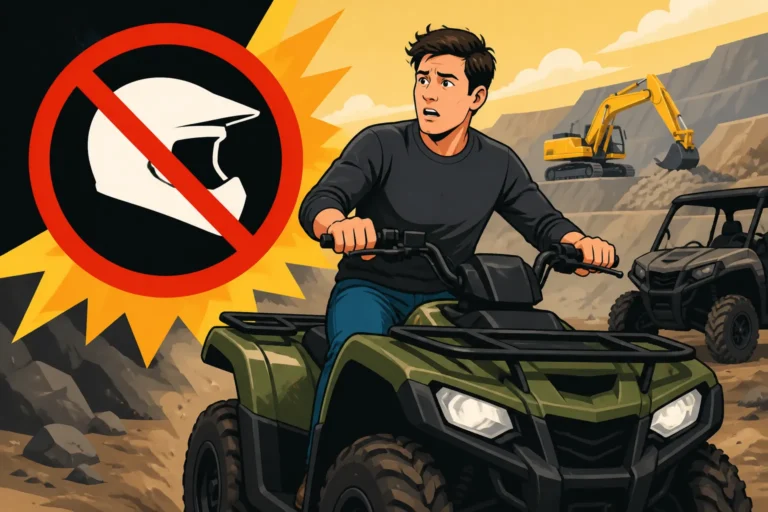
Additionally, while Kentucky doesn't have a universal helmet law for adult ATV riders on private land, if you're crossing a highway, particularly one with a speed limit of 55 mph or higher, wearing a helmet is just good sense. For riders under 16, Kentucky's [Kentucky Helmet Law for ATV Riders] mandates helmet use at all times on public property and often extends to situations where public access is implied, such as road crossings. Don't give an officer a reason to ticket you for something preventable.
The Steep Price of Getting it Wrong: Penalties and Enforcement
Ignoring Kentucky's road rules for ATVs and UTVs can lead to significant consequences. Law enforcement officers, particularly in areas with high ATV traffic or known issues with illegal road use, are often vigilant. A quick, unauthorized jaunt down a state highway can land you in a lot of trouble, far more than just a stern warning.
Fines and Citations
The most immediate consequence is a traffic citation. [Kentucky Fines for Illegal ATV Road Use] can vary, but they are often substantial. You could be cited for operating an unregistered vehicle on a public road, reckless endangerment, or other traffic violations. These fines can quickly add up, turning a simple misunderstanding into a costly lesson. Beyond the financial hit, a citation can also mean a mark on your driving record, depending on how the offense is categorized. This is why understanding [Kentucky Rules for ATVs on Public Roads] is so vital.
Machine Impoundment
In some cases, especially for repeat offenders or particularly egregious violations, law enforcement has the authority to impound your ATV or UTV. Imagine your machine being towed away, leaving you stranded, and facing not only fines but also impoundment fees, storage costs, and the hassle of retrieving your vehicle. This can be a major headache and expense that far outweighs the convenience of an illegal road shortcut. I've heard too many stories of riders who thought they could get away with it, only to find themselves paying dearly.
Safety Risks and Legal Liability
Beyond the legal penalties, the biggest risk is to your safety and the safety of others. Operating an ATV or UTV on a highway, even briefly, is inherently dangerous. These machines are not designed for the speeds, hard surfaces, or traffic dynamics of public roads. An accident could result in serious injury or even death. Furthermore, if you're involved in an accident while illegally operating your machine on a public road, you could face significant legal liability, including lawsuits for damages or injuries to others. Your personal insurance might not cover you if you were breaking the law, leaving you on the hook for potentially massive costs. It's a stark reminder that [Why Kentucky Roads Are Closed by Default] for ATVs is a safety measure, not just a bureaucratic hurdle.
Disclaimer
This article is for general informational purposes only and does not constitute professional advice. Laws, prices and regulations vary by location and change over time. Consult a qualified professional for guidance on your specific situation.