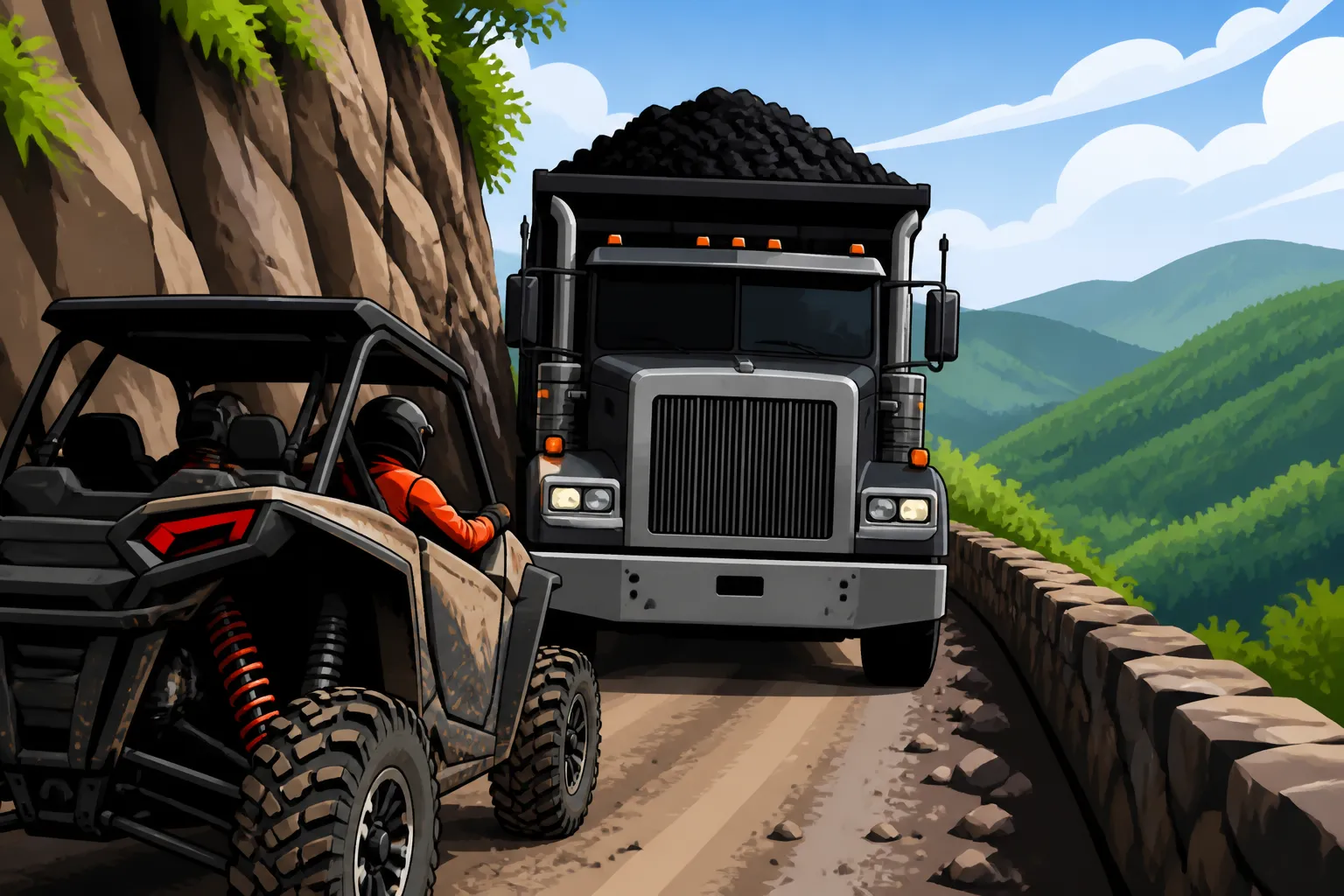
Meeting a Coal Truck on a Narrow Road
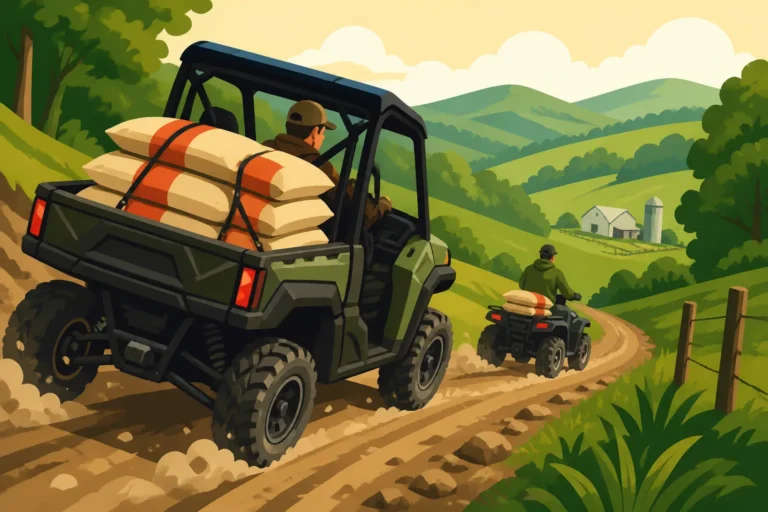
Picture this: you're enjoying a beautiful day on your side-by-side, maybe cruising down a quiet holler road or just trying to get from one section of your property to another, and suddenly, around a blind curve, a massive coal truck appears, taking up most of the narrow lane. That heart-stopping moment is a real fear for many riders in Kentucky, highlighting the absolute necessity of understanding when, where, and how you can legally operate your ATV or UTV on public roads. This guide will walk you through Kentucky's often-confusing laws regarding off-road vehicles on pavement, helping you stay safe and out of trouble.
Kentucky's Default Stance: Why ATVs and UTVs Are Generally Off-Limits on Public Roads
It’s a tough pill to swallow for many enthusiasts, but the fundamental truth in Kentucky is that most ATVs and UTVs are not designed or permitted for regular street use. Unlike traditional motor vehicles, these machines are built for off-pavement adventure, farm work, or trail riding, and the law reflects that distinction. Trying to treat your quad like a car on a state highway can lead to hefty fines, an impounded machine, and even serious accidents. The rules are designed to protect both the rider and other motorists who aren't expecting an off-road vehicle in traffic.
The "No Registration" Reality for ATVs
One of the biggest indicators of Kentucky's stance on ATVs on public roads is the fact that the state simply doesn't register them. Think about it: every car, truck, and motorcycle on the road has a license plate and a registration, proving it's street-legal and ready for public thoroughfares. ATVs, by their very nature and design, bypass this system. This lack of registration means your standard ATV, regardless of how well-equipped you think it is, lacks the fundamental legal standing to be considered a road-going vehicle. It's a crucial piece of the puzzle to understand why they're largely excluded from public pavement. [Why Kentucky Does Not Register ATVs]
UTVs and the Special Purpose Vehicle (SPV) Exception
While ATVs are almost universally barred, UTVs (Utility Task Vehicles), often called side-by-sides, have a slightly different path in Kentucky, thanks to the Special Purpose Vehicle (SPV) designation. This is where things get a bit more nuanced. An SPV isn't just any UTV; it's a UTV that has been specifically modified and inspected to meet certain safety standards, making it eligible for limited road use in participating Kentucky cities and counties. Without this designation, and without a local ordinance allowing it, your UTV is in the same boat as an ATV when it comes to public roads. It's not a free pass to ride anywhere, but it does open up possibilities where none existed before for ATVs. [Kentucky Street Legal UTV Requirements]
Navigating the Nuances of Limited Road Use and Crossings
Even with the general prohibition, Kentucky law does acknowledge a few very specific, limited scenarios where an ATV or UTV might briefly touch public pavement. These aren't invitations to cruise down Main Street but rather narrow exceptions designed for practical purposes like accessing property or conducting farm work. Understanding the exact parameters of these exceptions is vital, because stepping even one foot outside them can land you in hot water.
The Strict 0.2-Mile Crossing Rule
Perhaps the most commonly misunderstood exception is Kentucky's 0.2-mile crossing rule. This rule is incredibly narrow and often misinterpreted as a blanket permission for short trips. In reality, it allows an ATV or UTV to cross a two-lane public road or highway at a ninety-degree angle, or to travel along it for no more than 0.2 miles, only to get from one field or parcel of property to another. It's not for a quick run to the store or connecting two trail systems. It's purely for traversing a small segment of road that separates parts of your land. Crucially, this must be done during daylight hours, and the vehicle must have at least one headlight and two taillights illuminated. Trying to stretch this rule beyond its clear intent is a recipe for a citation. [0.2 Mile and Not a Yard More]
Kentucky's Farm Exception With No Mileage Cap
For those using their ATVs or UTVs for agricultural purposes, there's another important exception. Kentucky law generally permits ATVs and UTVs to be operated on public roads for farming operations. This is a critical distinction from recreational use. The key here is that the machine must be directly involved in a farm operation, such as hauling feed, checking fences, or moving equipment between fields. Unlike the 0.2-mile rule, this exception doesn't have a mileage cap, recognizing that farms often span significant distances. However, riders must still exercise extreme caution, especially on narrow, winding roads where large farm equipment and, yes, coal trucks might also be present. Proper lighting and a clear purpose are essential. [Why Kentucky's Farm Exception Has No Limit]
Construction, Logging, and Emergency Use
Beyond farming, Kentucky law also carves out specific exemptions for ATVs and UTVs used in certain types of work or emergency situations. This includes operations related to construction, road maintenance, snow removal, mining, logging, and emergency services. In these scenarios, the machine's use on public roads is directly tied to the specific job being performed. For instance, a side-by-side used by a utility crew to access power lines during an outage, or a quad employed for snow removal on a county road, would generally fall under these exemptions. These are not open invitations for casual riding but are strictly for professional or essential tasks where the ATV or UTV is the most practical tool for the job.
Understanding the Kentucky Special Purpose Vehicle (SPV) Law for UTVs
For UTV owners hoping for more regular road access, Kentucky’s Special Purpose Vehicle (SPV) law is the pathway, but it comes with a significant number of requirements and local limitations. It's not as simple as slapping a license plate on your side-by-side; it's a rigorous process that demands specific modifications, inspections, and local government approval. This designation transforms a UTV into something akin to a motorcycle in the eyes of the law, allowing for limited street use where explicitly permitted. [Kentucky's 2025 Special Purpose Vehicle Law]
The SPV Inspection and Equipment Checklist
To qualify as an SPV, your UTV must undergo a thorough inspection and meet a comprehensive list of equipment requirements. This isn't just about adding turn signals; it's about making your off-road machine as visible and controllable as possible for pavement conditions. You're looking at things like proper headlights and taillights, brake lights, turn signals, dual mirrors, a horn, a windshield, and even specific tire tread depth. Many riders turn to aftermarket suppliers like SuperATV for these types of upgrades, ensuring their machines meet all the necessary specifications for an inspection. The state wants to be sure that if you're going to be sharing the road with cars and trucks, your UTV can be seen, heard, and stopped effectively. [Kentucky SPV Equipment List]
The Cost and Renewal of an SPV Designation
Getting your UTV titled and registered as an SPV isn't a one-time, free process. There are fees involved for the initial inspection, the title, and then an annual registration renewal. These costs add up, making the SPV route a considered investment. Beyond the initial cash outlay for equipment and the first year's fees, you'll need to remember that annual renewal to keep your SPV status active. It's a commitment to staying legal, and overlooking these administrative steps can negate all the effort you put into the modifications and inspection. Always check with your local county clerk's office for the most current figures and procedures. [Kentucky SPV Registration Cost]
The "Opt-In" Challenge: Not All Cities or Counties Allow SPVs
Here's the biggest hurdle for many SPV owners: just because your UTV qualifies as an SPV doesn't mean you can ride it on every public road. Kentucky's SPV law operates on an "opt-in" basis for local governments. This means that individual cities and counties must pass their own ordinances specifically allowing SPVs on their roads, and they can even set additional restrictions, such as speed limits or specific road closures. So, while you might be street-legal in one county, crossing into the next could suddenly put you in violation if that county hasn't opted in or has different rules. It’s crucial to know the local ordinances wherever you plan to ride your SPV. [Kentucky Cities That Allow UTVs on Streets]
Safety and Practical Considerations on Kentucky Roads
Even when you're legally permitted to ride your ATV or UTV on a public road in Kentucky, whether it's a brief crossing, a farm errand, or an SPV cruising through an "opt-in" city, safety should always be your absolute top priority. These machines handle very differently on pavement than they do on dirt, and the environment of a public road presents unique challenges.
Encountering Large Vehicles: The Coal Truck Scenario
Let's circle back to that heart-stopping moment: meeting a coal truck on a narrow road. This isn't just a hypothetical; it's a very real danger in many parts of Kentucky's coal country. These trucks are massive, often wide, and have significant blind spots. On narrow, winding roads, they can easily take up an entire lane, leaving little to no room for an ATV or UTV. If you find yourself in this situation, immediate defensive driving is critical:
- Slow Down and Pull Over: As soon as you see or hear a large truck approaching, reduce your speed dramatically. If possible and safe, pull your machine as far to the right shoulder as you can, or even off the road entirely if there's a safe spot.
- Increase Visibility: If you're riding with your headlights on (which you should be, even during the day), flash them to make sure the truck driver sees you. Consider adding extra lighting or reflective elements to your machine, possibly from a brand like SuperATV, to enhance your presence on the road.
- Be Predictable: Avoid sudden movements. Maintain a steady course and allow the truck ample room to pass.
- Anticipate: On familiar roads, anticipate blind curves or narrow sections where you might encounter large vehicles. Ride defensively and be prepared to react.
- Don't Challenge: Never try to "beat" a large truck or squeeze by in a dangerous situation. Their size and momentum make them unforgiving. [Meeting a Coal Truck on a Narrow Road]
Visibility, Headlights, and Reflective Gear
Visibility is paramount for any vehicle on public roads, and especially for ATVs and UTVs, which are often smaller and harder to spot than cars. Even if the law only requires one headlight and two taillights for a brief crossing, it's wise to go above and beyond. Consider upgrading your lighting, adding reflective tape to your machine and helmet, and always wearing bright, high-contrast clothing. If you're out near dawn or dusk, or in inclement weather, visibility becomes even more critical. Making yourself as conspicuous as possible reduces the chances of a motorist not seeing you until it's too late. [One Headlight and Two Taillights Burning]
Helmet Use and Rider Age Restrictions on Roads
Kentucky's helmet laws for ATVs and UTVs are primarily tied to rider age, even on public roads where limited use is permitted. Generally, riders under the age of 16 are required to wear a helmet when operating an ATV or UTV, regardless of where they are riding, including those brief moments on a public road. While adult riders might not always be legally mandated to wear a helmet in every situation, it is always the safest choice when operating any off-road vehicle, especially when interacting with public roads and other traffic. The consequences of a head injury far outweigh any discomfort from wearing a helmet. [Kentucky Helmet Rules for Riders Under 16]
Understanding Local Enforcement and Fines
Finally, remember that local law enforcement officers are the ones patrolling these roads, and they are well-versed in Kentucky's ATV and UTV laws. Ignorance of the law is never a valid defense. If you're caught operating your machine illegally on a public road, you could face fines, penalties, and even have your ATV or UTV impounded. These consequences can be costly and deeply inconvenient. Always check with your local county clerk's office or the Kentucky Transportation Cabinet for the most up-to-date information on rules and regulations in your area. It's far better to be informed and compliant than to risk a run-in with the law. [Kentucky Fines for Illegal ATV Road Use]
Disclaimer
This article is for general informational purposes only and does not constitute professional advice. Laws, prices and regulations vary by location and change over time. Consult a qualified professional for guidance on your specific situation.