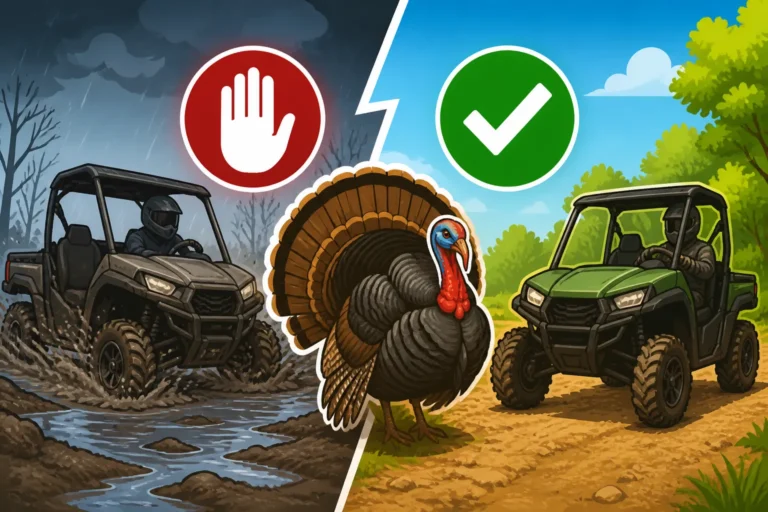
Kentucky Riding After Heavy Rain
Heavy rain can turn a Kentucky trail ride from a fun day out into a muddy recovery job, especially on steep mountain roads, narrow benches, and creek crossings. The hard part is knowing whether the ground is merely wet or too saturated to ride responsibly. This guide explains how to assess conditions, avoid common hazards, and make a safer call before you unload.
Why heavy rain changes Kentucky trail conditions
Saturated ground is more than ordinary mud
A trail can look rideable from the parking area and still be fragile farther along. After prolonged or intense rain, water fills the spaces in the soil, softening the surface and reducing the grip your tires need. A machine may spin in place, push soil off the trail, or cut deep ruts that remain after the surface dries.
Kentucky’s terrain makes the change especially noticeable. On a mountain slope, runoff gathers speed as it travels downhill. On a coal-country bench road, water may collect in a low spot or cross the route from the hillside above. In flatter or low-lying areas, the concern may be standing water and concealed soft ground rather than a steep descent.
The distinction between a damp trail and a saturated one matters. A little surface moisture may make the ride dusty no longer, but saturated soil can deform under a machine’s weight. If you see water flowing across the trail, deepening tire grooves, or soft edges breaking away, continuing can damage the route and increase the chance that your machine becomes stuck.
Rain can create hazards beyond slippery tires
Wet ground affects traction, but rain also changes what is around and above the trail. Small streams can rise quickly, and a familiar creek crossing may be deeper or faster than it was on your last visit. A low-water crossing can conceal loose rocks, holes, or debris washed downstream. Never assume a crossing is safe just because it was passable earlier in the week.
Runoff can also bring gravel, branches, and loose soil onto a route. On narrow mountain roads, a thin layer of wet clay over rock can be more slippery than it appears. A shaded section may stay slick after open ground has begun to dry, while fog or low cloud can reduce visibility on a ridge or in a holler.
There can be a second wave of problems after the rain ends. Water draining from a hillside may keep flowing across a trail, and exposed soil can remain unstable after puddles disappear. For a broader picture of changing local conditions, review [Kentucky Riding in Coal Country Weather] and check the land manager’s latest notices rather than judging the route from the forecast alone.
How to decide whether to ride
Check the park or trail manager before loading
Start with the people responsible for the riding area. A park may close some routes, restrict certain machine types, delay opening, or shut the entire property when the ground is too wet. Conditions can vary across a large trail system, so a general forecast for Harlan, Stanton, or western Kentucky may not tell you what the trail surface is doing at your destination.
For areas managed by a park operator, check its official notices and contact information. For public-land riding, look for updates from the responsible agency and follow posted gates or closures. At places such as Black Mountain Off-Road Adventure Area, Leatherwood Off-Road Park, and Turkey Bay OHV Area, use the current instructions from the operator or land manager; do not treat an old social post or a friend’s report from another section as permission to ride.
A quick call can save a long drive with a trailer. That is particularly useful when you are heading to Turkey Bay, where saturated ground can affect whether riding is allowed. See [Why Turkey Bay Closes on Saturated Ground] and [Calling Before You Haul to Turkey Bay] for related planning considerations. If the answer is unclear, ask whether the specific area you intend to ride is open and whether there are restrictions on routes or machines.
Use maps as a planning aid, not a substitute for closure notices
A current trail map helps you understand the route layout, identify access points, and plan a turnaround before you get deep into the system. A GPS app such as onX Offroad can be useful for reviewing your route in advance and keeping track of where you are. Download or save the information you need before heading into a dead zone, since cell service can be limited in Kentucky hollers and mountain terrain.
However, a mapped route does not prove that the trail is open or in good condition. Digital maps may not reflect a newly posted closure, a washout, or a temporary change made by the land manager. Treat gates, signs, and official updates as controlling. If a notice says a route is closed, do not follow a digital line around the barrier or assume that a nearby alternate route is permitted.
Use more than one source when conditions are uncertain. Compare the park’s own update with the map, then call if the information conflicts or seems stale. The guide to [Kentucky Trail Conditions Before You Ride] covers the kind of checks worth making before a trip, while [Kentucky Trail Maps Worth Carrying] can help you think through offline navigation. A map supports good judgment; it cannot tell you whether a muddy slope is safe to descend today.
| What you observe | What it may mean | Sensible response |
|---|---|---|
| Water flowing across the route | Active runoff or a changing crossing | Stop and assess from a safe place; turn back if depth, speed, or footing is uncertain |
| Deep, fresh ruts | Soil is soft enough to deform under tires | Avoid riding through or widening them; follow posted guidance |
| A closed gate or notice | The route is not open for riding | Do not bypass it or ride around the closure |
| A thin wet layer over rock or clay | Reduced traction, especially on slopes | Slow down, increase spacing, and avoid steep sections if control is uncertain |
| Standing water with no clear bottom | Hidden holes, rocks, or soft ground | Do not enter unless the route is confirmed safe and open |
| Dry-looking ground with water still draining from slopes | Conditions may remain unstable | Check with the manager and reassess rather than relying on surface appearance |
Riding responsibly when trails are open
Protect the trail instead of trying to power through
If a route is open, ride with the idea that the ground may still be more delicate than usual. Use smooth throttle and gradual braking. Sudden acceleration can dig the tires in, while sharp turns can widen the trail and scrape away the outer edge. On a climb, avoid spinning the tires; if you lose traction, stop in a safe spot and consider turning around rather than repeatedly attempting the same line.
Ruts are a common sign that riders have tried to force their way through wet ground. Riding directly through a soft rut can deepen it and make the route harder for the next person. But moving onto the shoulder to avoid it can be worse: the edge may be unstable, and widening the track damages vegetation and creates a new path. If the route is deteriorating, the best choice may be to turn around and report the problem to the appropriate manager.
Keep enough space between machines to avoid crowding a slippery section. Dust may be reduced after rain, but the spray from tires can hide rocks or water from the rider behind you. On narrow benches, wait for a clear place to pass and do not stop where someone above or below cannot see you. These habits are especially important on steep or exposed routes; [Kentucky Trail Etiquette on Narrow Benches] offers related guidance for sharing tight trail corridors.
Treat steep slopes and creek crossings as separate decisions
A route that is manageable on dry ground may become a poor choice after heavy rain. Wet clay, leaf litter, and slick rock can make both climbing and descending unpredictable. Before entering a slope, consider whether there is room to stop, turn around, or safely recover if the machine slides. If the answer is no, do not commit simply because another rider has gone ahead.
Descending deserves particular caution. A machine can gain momentum on a slick slope even when the rider is applying the brakes. Keep movements controlled and avoid sudden steering inputs. If you cannot maintain a predictable line, stop only where it is safe to do so and reassess. Never let pressure from a group or a schedule push you into a section you would otherwise avoid.
Creek crossings need their own assessment. Do not ride into moving water when you cannot judge its depth, current, bottom, and exit. Rain upstream can raise a crossing even if the weather at your location has cleared. If the route crosses water that looks faster or higher than expected, turn around and ask the park or land manager about an alternate route. An uncertain crossing is not a good place to test a machine’s capability.
Plan around closures and changing weather
Build a flexible itinerary before leaving home
A good wet-weather plan includes a main destination, a way to confirm conditions, and an alternative if the trails are closed. That alternative might be postponing the trip, choosing a different activity, or staying nearby until the manager confirms that riding is allowed. It should not mean unloading at an unapproved access point or searching for an unofficial way around a closure.
If you are traveling to eastern Kentucky, leave room in the schedule for road and trail conditions to change. A trip involving Black Mountain, Leatherwood, or another mountain riding area can involve winding access roads and limited cell coverage, so make calls and download maps before leaving reliable service. When you use onX Offroad or another mapping tool, save the area ahead of time and check that your planned route matches current access information.
The same planning applies to western Kentucky and Turkey Bay. Local rain may differ from conditions elsewhere, and saturated ground can persist after a storm has passed. Use the park’s own updates and contact information to confirm the situation close to departure. [Kentucky Trails Closed After Rain] and [Where to Ride When a Kentucky Park Closes Wet] are useful related topics when you are figuring out what to do after a closure.
Know when turning around is the right outcome
Turning around can feel disappointing when everyone has already packed, driven, and unloaded. It is also sometimes the clearest sign that a rider is taking care of the trail and the group. A closed route, unsafe water crossing, or surface that is breaking apart is not a challenge to overcome; it is information to act on.
Agree on a group rule before the ride: anyone can call for a stop or retreat when conditions feel unsafe. This helps newer riders speak up without worrying that they are spoiling the day. It also prevents a group from splitting across a hazard, with some riders attempting a crossing while others wait in an exposed or unstable spot.
If you turn back, use the same caution on the return route. Rain may continue, water may rise, and a low area that was passable earlier can change. Let someone know your revised plan if you are traveling separately, and contact the operator or agency if you encounter a new hazard or a sign that is missing or unclear. Do not remove barriers or make a temporary bypass; report the issue and leave the route as you found it.
Prepare your machine and group for wet conditions
Pack for delays and recovery without treating recovery as a plan
Wet weather can stretch a short outing into a longer day. Carry the basics your group needs to handle a delay: water, weather-appropriate layers, a charged phone, a first-aid kit, and a way to navigate when service is unavailable. Bring only recovery equipment you know how to use, and do not attach a strap to an unsuitable point or attempt a recovery that could pull a machine toward a drop, creek, or unstable slope.
Before the trip, inspect tires, brakes, steering, and lights. Mud can obscure damage and make a machine harder to control, so check it again during a safe break. If a machine is becoming difficult to steer or brake, do not keep riding just to complete the planned loop. A mechanical problem on a narrow or steep trail can create a hazard for everyone in the group.
Establish a simple communication plan. Decide who leads, who follows, where the group will regroup, and what everyone should do if someone stops or gets separated. In areas with patchy reception, do not assume you can call for help from every point on the route. Use the map and terrain to plan conservatively, and avoid a route that leaves the group without a safe way to retreat.
Finish by checking conditions before your next ride
After a muddy ride, clean and inspect the machine before the next outing. Mud can hide loose fasteners, damage, or debris around moving parts. Follow the manufacturer’s maintenance instructions rather than using a pressure washer carelessly around seals, bearings, electrical components, or other sensitive areas. A quick rinse is not a substitute for checking the machine.
Make a note of where conditions were poor and what changed during the ride. If a creek crossing rose, a trail edge slumped, or a route became deeply rutted, report it to the operator or land manager with a clear location. A useful report describes what you saw without encouraging others to visit a closed or hazardous section.
Finally, remember that the best decision can change from one ride to the next. A route that was dry last month, or even open earlier in the day, may not be safe after a fresh storm. Check the notices again, confirm access, and be willing to adjust your plans. That small pause before unloading can protect your machine, your riding partners, and the trail itself.
Disclaimer
This article is for general informational purposes only and does not constitute professional advice. Laws, prices and regulations vary by location and change over time. Consult a qualified professional for guidance on your specific situation.