Riding the Thunder Zipline Between Trail Days
A mountain ride can leave your hands sore, your machine muddy, and your group ready for a day off the trails. Around Evarts and Harlan, a zipline can add a very different kind of adventure between ATV days. This guide explains how to fit the Thunder Zipline into a Black Mountain trip, what to plan, and what to confirm before you go.
How the Thunder Zipline Fits Into a Black Mountain Trip
A different kind of day in the same mountain country
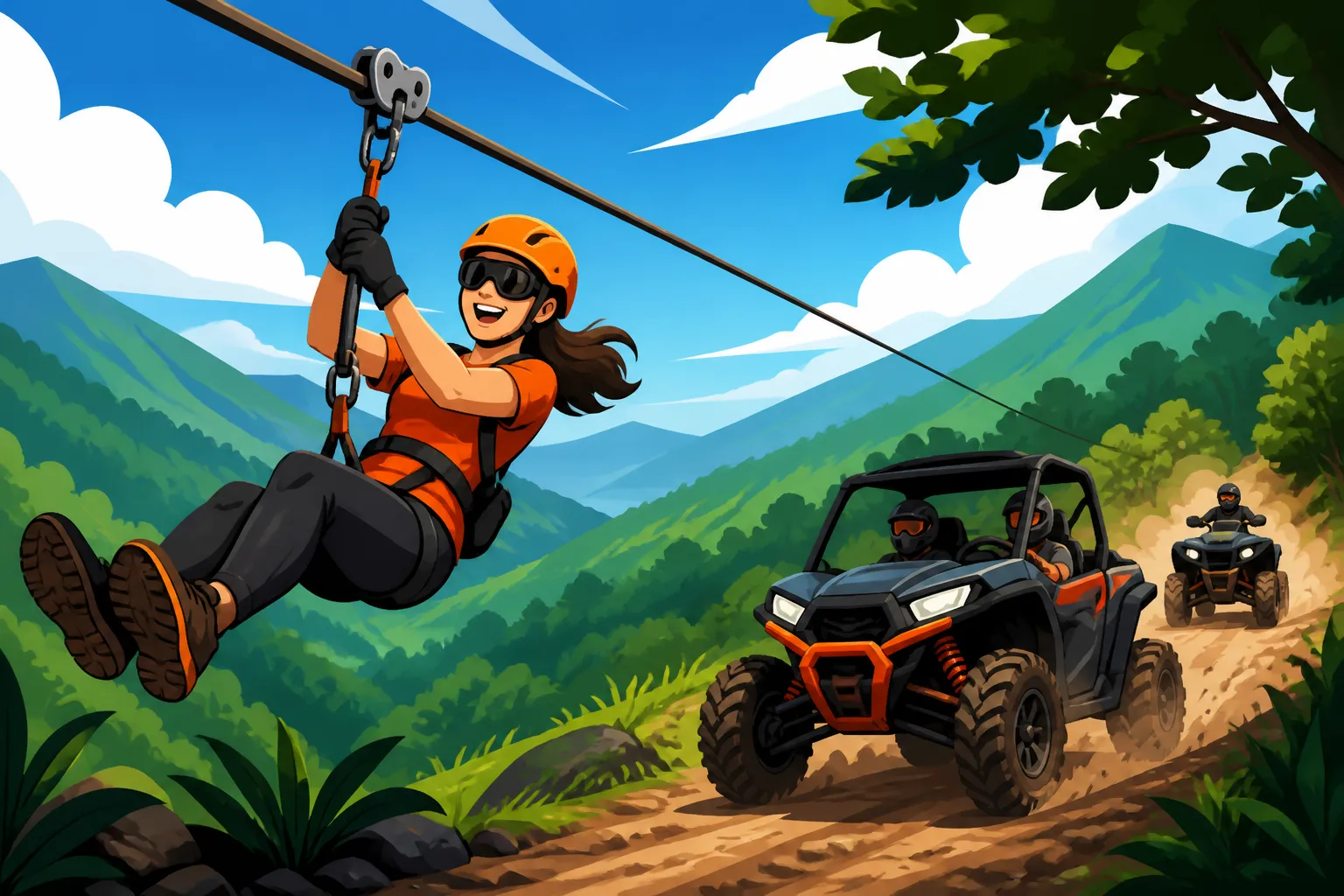
The Thunder Zipline is an attraction associated with Black Mountain Off-Road Adventure Area near Evarts. It offers a change of pace from riding: instead of choosing a route, managing a machine, and watching the trail surface, you get a view of the mountain from above. For a group taking several days to explore the area, that difference can be welcome. A rest day does not have to mean sitting around the campground, especially when some riders want an activity that does not involve another long stretch in a seat.
It helps to think of the zipline as a separate activity, not as part of an ATV route. Riding trails and taking a zipline tour involve different check-in arrangements, safety instructions, equipment, and schedules. Do not assume that a trail permit includes a zipline experience, or that a zipline reservation gives you permission to ride. Check the current arrangements with the operator before building your day around both.
If you are still deciding whether Black Mountain is the right base for your trip, start with [Black Mountain Off-Road Adventure Area in Kentucky]. For a closer look at the riding area itself, [7,000 Kentucky Acres at Black Mountain] offers useful context for understanding the scale of the mountain setting.
Why a break between riding days can make sense
A day away from the machine can be practical, not just a treat. A group may arrive after a long tow, spend a full day learning unfamiliar trails, and realize that another hard ride immediately afterward could be tiring. A zipline outing gives everyone a different activity while leaving time for meals, equipment checks, and a slower morning or evening.
It can also help when the group has mixed interests. One person may be eager to ride every open trail, while another is more interested in scenery and a less physically demanding day. Agreeing on a zipline day ahead of time can keep the trip from turning into a last-minute negotiation at the trailhead. Riders who want to continue exploring can plan their next ride for another day, while the rest of the group enjoys the aerial experience.
A rest day is not automatically a low-effort day, though. Travel to the attraction, check-in, waiting, and following the operator’s safety directions all take time. If anyone in your party is uncomfortable with heights, unsure about the activity, or concerned about physical requirements, discuss that before booking rather than making the decision at the counter.
Planning the Zipline Around Your Ride Schedule
Choose your riding days and activity day before you travel
Start by deciding how many days you want to ride and how much recovery time your group needs. A simple plan might put a lighter ride on arrival day, a longer ride on the next day, and the zipline on a non-riding day. Another group may prefer to ride first, take a break, and finish with a shorter ride before heading home. There is no single best sequence; the right one depends on travel distance, experience, weather, and how demanding your planned routes are.
Black Mountain’s trail system and nearby facilities can shape that schedule. If you are comparing where to begin, read [Starting From the Evarts or Putney Trailhead] and check how your chosen starting point fits your lodging, trailer parking, and daily plans. For a broader overview of the area and its management, [How the Harlan County Recreation Authority Runs Black Mountain] can help put the recreation setting in context.
Before committing to a particular day, verify the zipline’s operating schedule and reservation process directly with the operator. Availability can vary, and a day that looks open on your trip calendar may not match the activity’s schedule. Confirm where to check in, how early to arrive, what the booking covers, and what happens if weather affects the outing. Treat those as separate questions from trail access and trail conditions.
Leave enough room for delays and recovery
Avoid planning a demanding ride immediately before a tightly scheduled zipline check-in. A muddy trail, a slow group, a mechanical issue, or a wrong turn can make a ride run longer than expected. Even when everything goes smoothly, you may need time to return to camp, clean up, eat, and get to the activity location. A roomy schedule is less stressful than trying to squeeze two major activities into one day.
The same applies after the zipline. Do not assume you will be ready to jump straight into an evening ride or a long drive. Some people feel energized; others may want a meal and downtime. If the group is towing machines or traveling with children, build in time for changing clothes, gathering gear, and keeping everyone together.
Use a planning tool such as onX Offroad to organize your riding routes and identify where your riding day begins and ends. It can help you keep the ATV portion of the trip distinct from the zipline outing, especially when you are coordinating multiple riders or meeting at a trailhead. Download the information you expect to need before heading into areas where cell service may be unreliable, and confirm access details with the park rather than treating a map as proof that a route is open.
| Trip element | What to decide in advance | Why it matters |
|---|---|---|
| Riding days | How long you plan to ride and which trailhead you will use | A route or return time can change with conditions and group pace |
| Zipline outing | Booking, check-in location, and operator requirements | The zipline is a separate activity with its own arrangements |
| Rest time | Meals, cleanup, and downtime before or after activities | Prevents an overpacked schedule from becoming frustrating |
| Weather backup | An alternate plan if conditions change | Mountain weather can affect both riding and outdoor activities |
| Travel logistics | Lodging, trailer parking, and transportation between stops | Keeps the group from losing time to avoidable coordination |
What to Check Before You Go
Confirm requirements with the zipline operator
Ask the operator what participants need to know before arriving. Requirements may cover age, height, weight, clothing, footwear, health considerations, or supervision for younger guests. Do not rely on assumptions based on another zipline you have visited; operators can have different procedures. If someone in your group has a concern about mobility, balance, a medical condition, or fear of heights, ask privately and early so they can make an informed decision.
Also confirm the practical details: where to park, how check-in works, whether reservations are needed, what personal items are allowed, and how weather-related changes are handled. The goal is not to overcomplicate a fun outing. It is to avoid discovering at arrival that someone is wearing unsuitable shoes, lacks enough time, or has misunderstood what the activity involves.
Keep the zipline’s instructions separate from ATV safety planning. A helmet used for riding is not automatically the right equipment for another activity, and the operator’s directions take priority for its experience. Pack with both activities in mind, but do not assume one set of gear covers everything.
Check trail and weather conditions separately
Conditions that affect riding may not be the same factors that affect the zipline, so check each activity independently. Before riding, review [Kentucky Trail Conditions Before You Ride] and [Kentucky Trail Closures to Check]. Recent rain can make mountain roads and trail surfaces harder to manage, while closures can change where you are allowed to travel. A route visible on a map is not necessarily a route that is open or appropriate for your machine.
For route planning, onX Offroad can be useful for reviewing your intended ride and keeping track of where your group expects to travel. Use it as a planning aid, not as a substitute for posted notices, operator directions, or local access rules. Save the information you need before the ride, and make sure at least one other person in the group understands the plan in case riders become separated.
A forecast can also affect the zipline outing. Ask the operator how it communicates changes and whether you should call before leaving your lodging. Build a backup plan that does not depend on the weather cooperating. That could mean a shorter ride on another day, time in town, or simply keeping the schedule flexible rather than treating a reservation and a trail plan as fixed no matter what.
Making the Day Work for Your Group
Keep the group coordinated without rushing
For a group that rides together, name one person to handle the zipline reservation and another to keep the riding plan organized. Share the meeting location, departure time, and the plan for anyone who does not want to take part. This is especially helpful when people are staying at different campsites or cabins, or when some are hauling machines while others arrive in separate vehicles.
If you are staying near the riding area, [Camping Near Kentucky ATV Trails] can help you think through how a campground fits into the overall trip. Ask about check-in arrangements, trailer space, and how far you will need to travel between camp, riding access, and the zipline meeting point. The closer your plans are to one another, the easier it is to leave slack in the day instead of spending it on repeated drives.
Keep your riding group’s habits in mind, too. Some riders are comfortable with long days and changing plans; others prefer a clear schedule and a conservative route. Talk through the plan before the trip, including when the group will stop riding, where everyone will meet, and what to do if someone is delayed. For shared-trail reminders, [Kentucky Trail Etiquette on Narrow Benches] is a useful companion read.
Think of the zipline as part of the trip, not a race against the clock
The best version of a between-trail-days outing is one that gives everyone room to enjoy it. Do not make the zipline a reward that riders have to earn by pushing through one more difficult loop, and do not schedule it so tightly that every delay becomes an argument. If the group wants a full riding day and a zipline outing, consider whether splitting those activities across separate days would make the trip more enjoyable.
For a multi-day stay, [Riding Black Mountain for a Weekend] can help you think about pacing the riding portion of your visit. Leave some flexibility for a shorter route, an early finish, or a day when conditions are not what you expected. The mountain experience is not measured by how many hours you spend on a machine. A scenic ride, a relaxed meal, and a zipline outing can make a memorable trip without cramming every available activity into the same afternoon.
Before departure, confirm the activity details, review trail access and conditions, and make sure the entire group understands the schedule. With those pieces settled, the Thunder Zipline can be a refreshing way to experience the Black Mountain area from a different perspective between riding days.
Disclaimer
This article is for general informational purposes only and does not constitute professional advice. Laws, prices and regulations vary by location and change over time. Consult a qualified professional for guidance on your specific situation.