Riding With Children at a Kentucky Park
Taking children to an ATV or UTV park in Kentucky can be a memorable family day, but it also raises practical questions: Is the machine suitable, is the trail too difficult, and what should you do if a child gets tired or nervous? This guide helps you plan a safer, more manageable ride and choose an approach that fits your family.
Start With the Child, the Machine, and the Rules
Match the ride to the child’s experience
A child who is excited about riding may still find a long, noisy, bumpy trail overwhelming. Think about more than age: consider whether your child can follow directions, wear a helmet comfortably, stay seated, and speak up when they feel uneasy. A first outing should leave room for breaks and a change of plan—not depend on everyone completing a full loop.
Before you load the trailer, be clear about each child’s role. A child might ride as a passenger in a properly equipped UTV, operate an age-appropriate youth machine where permitted, or stay off the machine while adults ride in turns. These are different activities with different risks and rules. Don’t assume that a child who is allowed to ride as a passenger is also allowed to operate a machine.
Kentucky requirements and individual park policies can both affect whether a child may ride and under what conditions. Read Kentucky Rules for Riders Under 16 and [Kentucky Trail Rules for Riders Under 16] before making plans, then check the specific park’s posted rules. If a machine has a manufacturer age label, take that seriously and learn how it applies under The Manufacturer’s Age Label in Kentucky Law. Never remove or ignore a warning label just to make a machine seem suitable.
Choose a machine that fits the passenger
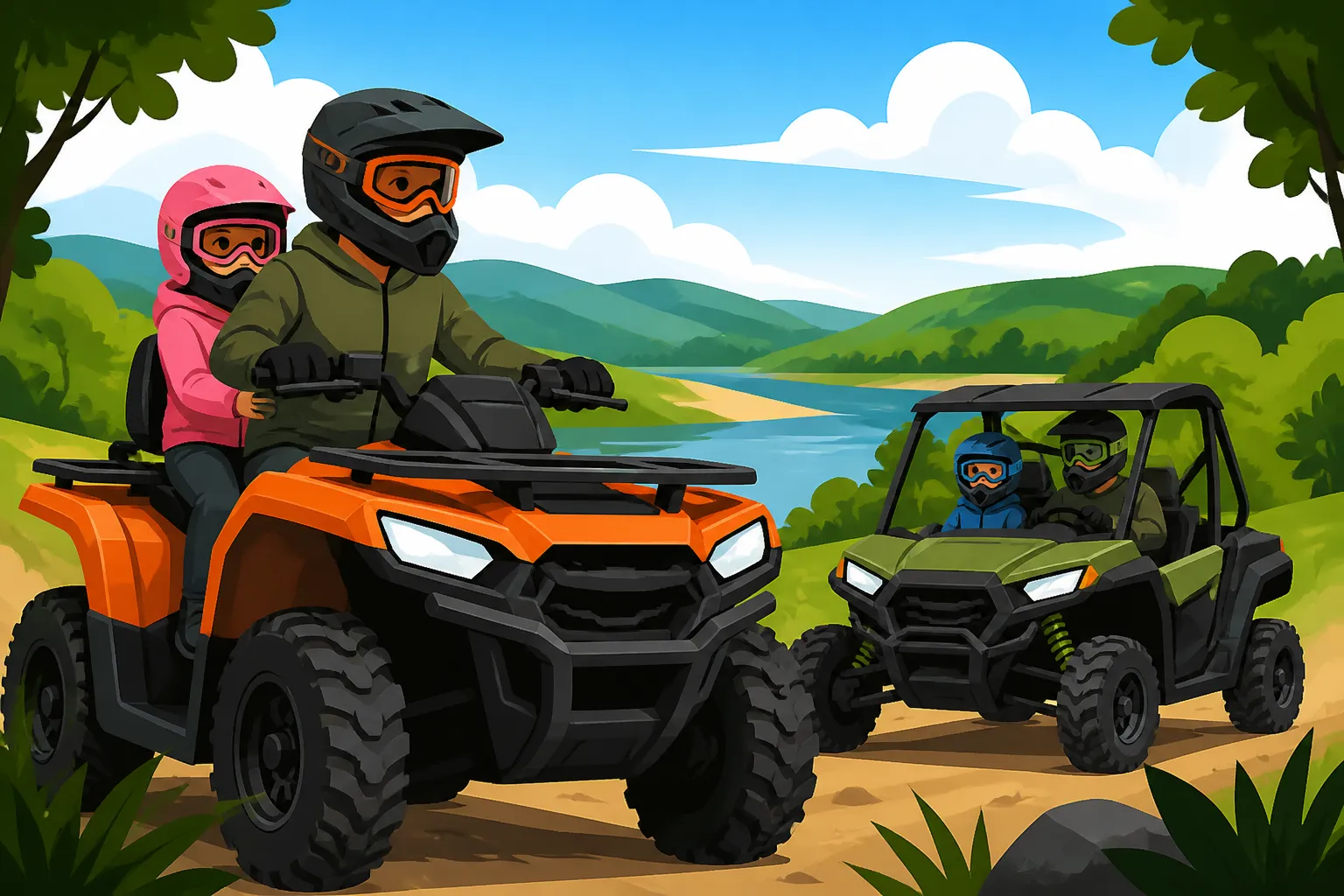
For a child riding in a UTV, check that the machine is designed to carry passengers and that the child can sit securely in the intended seat. A shoulder belt that fits properly, a suitable seat, a protective helmet, and a way for the child to hold on all matter. Don’t let a child ride in a cargo bed, on an adult’s lap, or in a seat that isn’t intended for a passenger.
Fit matters. A belt that crosses a child’s neck or slides off a shoulder may not restrain them as intended. Before leaving home, have the child sit in the seat with riding gear on. Check that their feet and hands are positioned comfortably, the belt is snug, and they understand not to unbuckle while the machine is moving. If the fit is poor, change the plan rather than improvising a fix on the trail.
For a youth ATV, follow the manufacturer’s age and size guidance, and confirm that the child can reach and operate the controls without stretching or losing control. An adult machine is not a sensible substitute simply because the child is tall or eager. For families comparing equipment or planning a rented outing, Kentucky Rental Age and License Rules can help identify questions to ask the rental operator.
Set expectations before arriving at the park
Children often picture the ride as a smooth trip to an overlook. In reality, an off-road route may include engine noise, dust, ruts, slopes, mud, creek crossings, waiting, and sudden changes in pace. Explain what the day may feel like in plain terms. Tell your child that stopping is allowed and that speaking up is the right choice if they feel scared, cold, hot, or uncomfortable.
Agree on a few simple rules in advance: stay buckled or seated as directed, keep hands and feet inside the machine, don’t reach toward the wheels, and wait for an adult’s instruction before getting on or off. If riding separate machines, decide how the group will communicate and where everyone will stop if they get separated. A short conversation at home is often easier than trying to explain everything beside a loud trailhead.
Pick a Kentucky Riding Area That Suits Your Family
Compare the setting, not just the trail miles
A park with many miles of trail is not automatically the best choice for a family with a new or anxious young rider. Think about the whole outing: access to restrooms, places to take a quiet break, the distance from your lodging or campground, the type of terrain, and whether your group can return to the staging area without committing to a long ride. Read Kentucky Trails Good for Kids and Kentucky Trail Difficulty Ratings as starting points, then confirm details with the park.
Kentucky riding areas offer different experiences. Black Mountain near Evarts is known for mountain terrain, while Turkey Bay OHV Area in western Kentucky offers a different setting within Land Between the Lakes. Leatherwood in the eastern part of the state and Rush Off-Road near Ashland are other options families may compare. These names are not a promise that a particular route will suit a child; trail conditions, machine type, riding experience, and the park’s rules all affect what makes sense.
Choose a conservative first route. A short loop close to the staging area gives you a chance to see how the child handles the noise, motion, and pace. If everyone is comfortable, you can decide whether to continue. If the child is uneasy, you have an easier way to return without turning the day into a struggle.
Check conditions and park policies before you haul
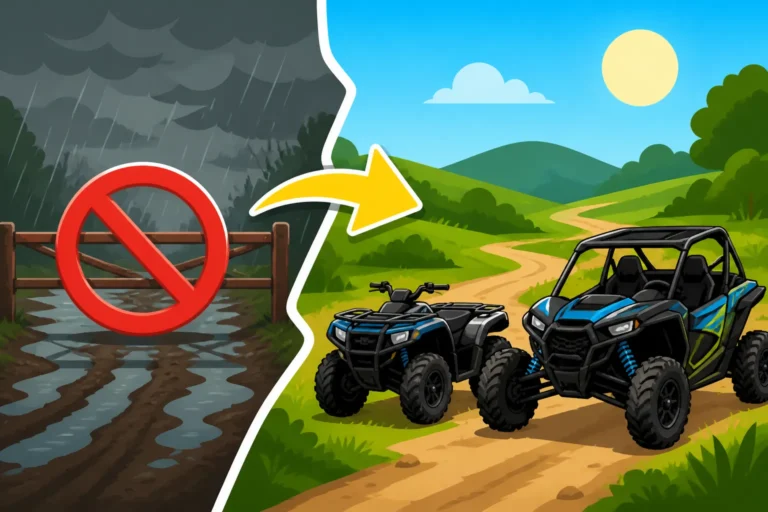
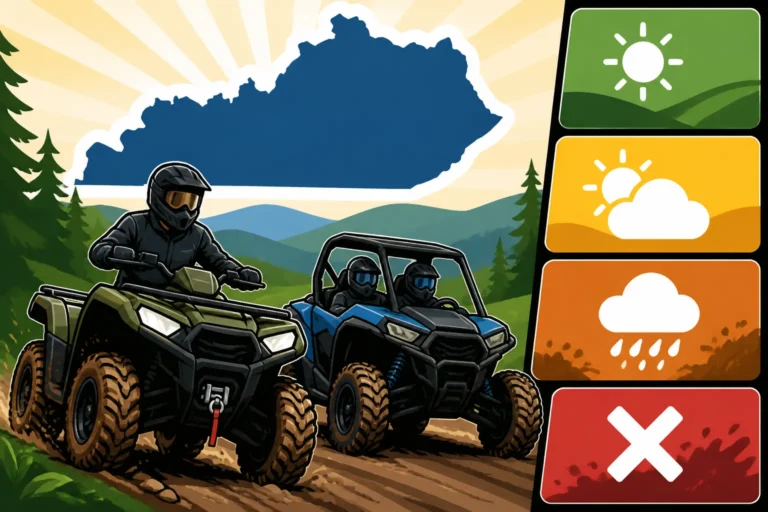
A route that seems manageable on a map may feel very different after heavy rain, when mud and ruts can make riding slower and more demanding. Dry conditions may bring dust and reduced visibility. Check Kentucky Trail Conditions Before You Ride and contact the park for current access information, closures, permitted vehicle types, and family-related rules.
Ask specific questions instead of relying on a general description such as “easy trails.” For example: Are there short routes near the staging area? Are children allowed as passengers in the type of machine you plan to bring? Are there route restrictions for youth machines? What should you know about trail width, steep sections, or changing conditions? Parks may set rules that are more restrictive than what a family expects, so verify them before leaving home.
Tools such as onX Offroad can help you review mapped routes and understand the general layout before the trip. Use a map as a planning aid, not as a guarantee that every route is open, easy, or appropriate for a young rider. Confirm details with the park, carry a backup plan, and turn around if the trail or the child’s comfort level doesn’t match what you expected.
| Planning question | What to check | Why it matters with children |
|---|---|---|
| Is the child allowed to ride in this role? | Kentucky rules, manufacturer guidance, and park policy | Passenger and operator rules may differ |
| Does the machine fit the rider? | Seat, belt, helmet, controls, and passenger capacity | Poor fit can make a ride less secure and more stressful |
| Is the route manageable? | Difficulty, distance, elevation, surface, and return options | A short, familiar route is easier to adjust |
| Are conditions suitable? | Rain, mud, dust, closures, and visibility | Conditions can make an easy route more demanding |
| Can the family take breaks? | Staging areas, facilities, and nearby lodging or camping | Breaks help children stay comfortable and engaged |
Make Safety and Comfort Part of the Ride
Use protective gear and do a calm pre-ride check
Choose a helmet that fits the child properly and is appropriate for the activity. A helmet that shifts, pinches, or blocks vision can make a child distracted before the ride even starts. Goggles help protect eyes from dust and debris, while sturdy clothing, gloves, and closed-toe footwear add comfort and protection. Check the park’s requirements as well as the relevant guidance in Helmet Rules for Kentucky Riders.
Before starting, inspect the machine together. Check tires, brakes, lights, belts, and any other equipment relevant to your vehicle. Confirm that the child’s helmet and protective gear are secure. Make sure everyone knows how to communicate over engine noise—using a simple hand signal, for example—and how the group will stop safely if someone needs a break.
A child passenger should be seated and restrained before the machine moves, and should remain that way until the adult has stopped in a safe place. Don’t let children climb on or off while the machine is moving or parked on uneven ground where it could shift. Keep them away from hot components, wheels, and moving parts when the group is stopped.
Pace the day around children’s limits
Plan fewer miles than you think the group can manage. Children may tire from concentration, vibration, heat, cold, or the sensory load of a busy trail, even if they haven’t been walking. Stop before discomfort turns into distress. Offer water, a snack, a bathroom break, or a quiet moment away from the machines.
Watch for signs that a child needs a change of plan: becoming unusually quiet, gripping tightly, repeatedly asking when the ride will end, complaining of pain, or seeming unable to follow instructions. Don’t treat these as reasons to push harder. Pull over safely, check in, and decide whether to continue, shorten the route, or head back. A child who feels heard is more likely to trust you and enjoy future rides.
Have a clear turnaround point. If your chosen route becomes rougher, steeper, or busier than expected, return rather than trying to prove you can finish it. An early return is not a failed trip. It’s good judgment—and it leaves the family with a better chance of wanting to ride again.
Prepare for the moments that don’t go to plan
Before riding, agree on what happens if the group gets separated or a machine has a problem. Keep children with a responsible adult and identify a simple meeting point, such as the staging area, if plans change. Bring water, basic first-aid supplies, charged phones, and any medication your family may need. Cell reception can be unreliable in some wooded or mountainous areas, so don’t make a phone signal your only safety plan.
If you use onX Offroad to review routes, make sure an adult knows how to read the map and has considered what to do if the route is blocked or conditions change. The person navigating should not be distracted by a screen while operating a machine. Stop in a safe place to check directions, and follow posted signs and park instructions over assumptions based on a map.
Families staying overnight may also want to review Camping at a Kentucky Trail Park. A nearby campsite can make breaks and early returns easier than a long drive after a tiring day. Confirm campsite access, vehicle rules, and what facilities are available before you build your itinerary around them.
Build a Family Plan That Can Change
Make the first outing intentionally modest
For a first trip with children, keep the schedule light. Arrive with enough time to check in, get gear fitted, review park rules, and take a short ride without rushing. Avoid planning a full day of riding immediately after a long drive or pairing a demanding trail outing with a packed evening schedule. Kids—and adults—are more likely to enjoy the ride when nobody feels pressured to make the most of every minute.
You might start with one short route, return to the staging area, and ask the child how they’re feeling before deciding what comes next. If they are happy and alert, another ride may make sense. If they’re done, let the day end on a positive note. A photo, a snack, or time at camp can make a short ride feel like a complete adventure.
With siblings, avoid assuming they will have the same comfort level. One child may love the noise and movement while another prefers a short ride or a break with an adult. Make room for different choices instead of making the more hesitant child feel responsible for slowing everyone down.
Keep an adult focused on the children
The adult operating the machine needs to concentrate on riding. Don’t expect that person to simultaneously settle a nervous passenger, monitor a second child on another machine, read a map, and manage group decisions. When possible, have another responsible adult help with children, gear, check-ins, and decisions about breaks. If you’re riding solo with a child, keep the route especially simple and avoid adding responsibilities that take your attention off the trail.
Before setting out, identify who is responsible for each child and who makes the call to stop. Agree that any adult can ask for a break without debate. That makes it easier to respond calmly if a child becomes uncomfortable, a route is busier than expected, or weather changes.
A good family ride is not measured by distance. It’s measured by whether the children felt secure, the adults stayed attentive, and everyone had enough flexibility to adapt. Start small, follow the rules, and choose a route that gives your family room to turn back. That approach can make a Kentucky park outing enjoyable without asking a child—or the adult responsible for them—to take on more than they’re ready for.
Disclaimer
This article is for general informational purposes only and does not constitute professional advice. Laws, prices and regulations vary by location and change over time. Consult a qualified professional for guidance on your specific situation.