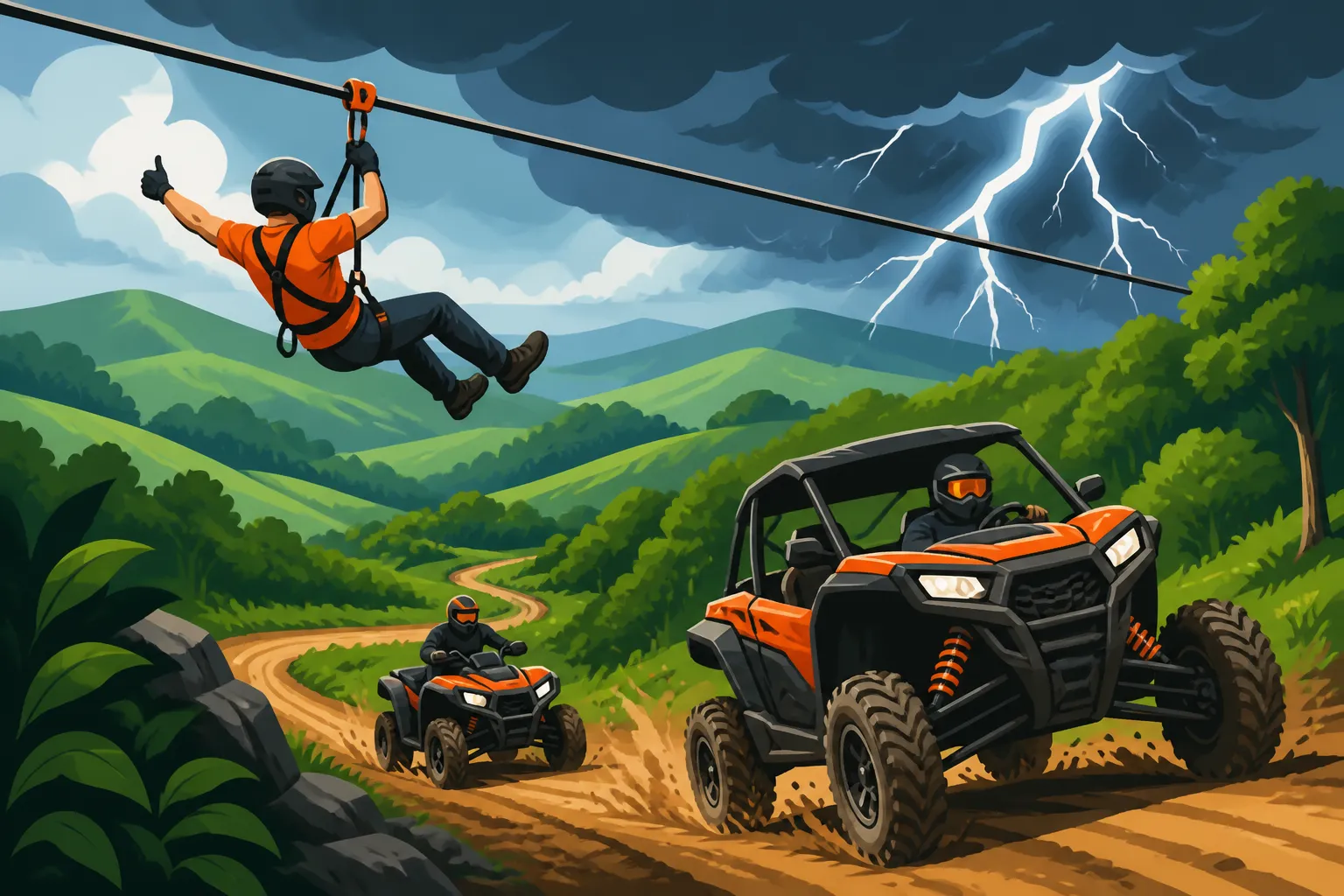
Thunder Zipline Above the Trails
A day at Black Mountain can involve more than riding: visitors may also want to experience the Thunder Zipline, but fitting both into one trip takes a little planning. Trail access, check-in arrangements, weather, and the order of activities can affect the day. This guide explains how to think through a combined ATV or UTV and zipline visit without assuming the activities share a schedule or access point.
What the Thunder Zipline Adds to a Black Mountain Visit
A different way to experience the mountain
Black Mountain Off-Road Adventure Area is known for its off-road riding, while the Thunder Zipline offers a very different perspective on the landscape. Pairing the two can give a group a welcome change of pace: one activity involves choosing routes and managing a machine over varied terrain; the other is a guided aerial experience. For people traveling to the Harlan County area, that variety may make a trip feel more balanced than spending every available hour on trails.
The activities are not interchangeable, though, and it is better to plan them as separate experiences. A zipline reservation may have its own check-in time, rules, and operating conditions. ATV or UTV riding may require separate trail access arrangements, permits, and preparation. Even if both are part of the same broader destination, do not assume that one booking includes the other or that you can move directly from one activity to the next without travel or check-in time.
If you are researching the riding side of the visit, start with [Black Mountain Off-Road Adventure Area in Kentucky]. For a closer look at combining the two experiences, see [Riding the Thunder Zipline Between Trail Days]. Those topics can help you frame the trip, but confirm practical details with the relevant operator or destination before you leave home.
Who might enjoy combining riding and a zipline
A mixed itinerary can suit a group with different energy levels or interests. One person may be eager to spend most of the day exploring trails, while another may prefer an organized attraction with a guide and a defined start time. A zipline outing can also give riders a break from the noise, vibration, and physical concentration of a long ride. For a family or group, that variety can make it easier to plan a day everyone looks forward to.
It can also work well for visitors who want a non-riding activity between trail days. After a day spent navigating mountain routes, a zipline can provide a change in scenery and pace without requiring another full day on a machine. But consider the people in your group honestly: a timed reservation can feel stressful if riders are tired, running late, or still a long way from the check-in location.
Before building the day around the zipline, check that every participant is comfortable with the activity and meets the operator’s current requirements. Do not assume that a child’s ability to ride as a passenger means they can participate in a zipline experience, or vice versa. Age, size, health, and supervision rules may differ between activities, so ask the operator about its policies directly.
Plan the Zipline and Riding Details Separately
Confirm access, reservations, and operating arrangements
The first useful step is to verify whether the Thunder Zipline is available on the dates you are considering and how its check-in works. Ask where participants need to arrive, how early they should be there, what happens if weather changes, and whether reservations are required. These details can change the shape of your day more than the distance between two points on a map.
Also ask whether the zipline experience is connected operationally to the off-road area or managed through a separate process. The key is not to guess based on the attractions being associated with Black Mountain. A trail permit should not be treated as a zipline reservation, and a zipline booking should not be assumed to cover trail access. If your group plans both, confirm the requirements for each activity before traveling.
For the riding portion, review [Kentucky Trail Permits Explained] and check what the specific riding area requires. Park access, trail permissions, and any separate attraction arrangements are distinct pieces of trip planning. Keep confirmations, directions, and contact details together so you are not searching through messages while trying to meet a check-in time.
Build in realistic travel and transition time
A schedule that looks easy at home can become tight once you add loading, unloading, parking, changing clothes, safety briefings, and the time it takes to move between locations. Give yourself a generous buffer rather than planning to finish a ride just before a zipline check-in. A group may need more time than expected to return a machine, gather personal items, or help a new rider feel settled.
The order of activities matters. If you schedule the zipline first, check whether you will have enough time afterward for the kind of ride you want. If you ride first, consider whether fatigue, mud, or a delayed return could make a fixed appointment harder to meet. Neither order is automatically best; it depends on the booking, the group, the route plan, and the conditions that day.
A practical rule is to avoid planning a long, ambitious ride immediately before a time-sensitive activity. Choose a conservative riding plan, set a clear turnaround time, and make sure everyone knows who is watching the clock. A route app such as onX Offroad can help riders review trail information and orient themselves, but map planning cannot guarantee how long a ride will take in changing terrain or conditions.
| Planning question | Why it matters | What to confirm |
|---|---|---|
| Where is zipline check-in? | The check-in point may not be where you park or stage your machine. | Address, directions, and arrival instructions |
| Is the experience reservation-based? | A timed booking can limit how much flexibility you have. | Availability, arrival window, and late-arrival policy |
| What does trail access require? | Riding and zipline arrangements may be separate. | Permit, riding access, and any park-specific rules |
| How much time should you allow? | Transitions often take longer than expected. | Briefing, ride duration, parking, and travel time |
| What happens in poor weather? | Weather can affect outdoor activities differently. | Closure notices, rescheduling, and cancellation terms |
Prepare for the Riding Part of the Trip
Choose a sensible starting point and route
Black Mountain visitors may approach the riding area through different access points, including the Evarts or Putney trailheads. Your starting point can affect where you stage, how you organize your group, and how much time you need to return to a meeting or check-in. Review [Starting From the Evarts or Putney Trailhead] before choosing a plan, and verify the appropriate location for your specific trip rather than navigating by a general destination name alone.
Be realistic about the group’s riding ability. A route that feels manageable to an experienced rider may be tiring or intimidating for someone who is new to mountain trails, riding a different machine, or traveling with children. Think about skill, machine capability, fuel, daylight, and the experience of the least confident rider. If your zipline appointment is later in the day, a shorter route with a clear return plan is often a better fit than trying to cover as much ground as possible.
Use a map to understand the area, but do not treat a digital route as permission to ride anywhere. Stay on routes that are open and permitted, follow posted instructions, and respect gates or closures. onX Offroad can be useful for checking route information and keeping a group oriented, especially when riders have different levels of familiarity with the area. Download or prepare the information you need before entering places where cell service may be unreliable.
Check trail notices and changing conditions
Mountain conditions can change quickly. Rain may make some terrain more difficult, while fog, heat, or a late start can change how comfortable and safe a planned ride feels. Check [Kentucky Trail Conditions Before You Ride] and [Kentucky Trail Closures to Check] as part of your preparation. A route that appeared suitable when you planned the trip may not be the right choice if conditions have changed.
At the trailhead, pay attention to current notices and instructions. If the ground is saturated, a route is closed, or staff direct riders to change plans, follow that guidance instead of trying to work around it. Conditions can vary across a large riding area, so a report from one part of the park may not describe every route. Keep a backup plan that does not depend on one particular trail being open.
Tell your group what the plan is before setting off: the intended route, the turnaround time, and where you will regroup if riders become separated. If you are traveling with a mixed-experience group, agree that anyone can ask to turn back without being pressured to continue. This is especially important when a timed attraction is part of the day, since the temptation to rush can make a poor trail decision feel like a scheduling solution.
Get Ready for the Zipline and Mountain Weather
Dress for both activities, not just one
A riding outfit may not be the most comfortable choice for a zipline, and clothing that works well for an attraction may not be suitable for a muddy trail. Think through the full day before packing. Wear secure footwear appropriate for the operator’s requirements, bring layers for changing temperatures, and have a way to keep clean or dry clothes separate from riding gear. Ask the zipline operator what clothing and footwear are permitted rather than relying on assumptions.
If you expect to ride before your zipline booking, plan for dust, mud, and sweat. A spare shirt, socks, and a small towel can make the transition more pleasant. Keep essentials in a bag that is easy to reach without unpacking your trailer or rummaging through a vehicle. If the operator has restrictions on loose items, phones, cameras, or accessories, follow them; do not assume that gear allowed on the trail will be permitted during the zipline experience.
Riding equipment and zipline equipment serve different purposes. Use required helmets and other safety gear for the riding portion, and follow the zipline operator’s instructions for its equipment and safety checks. Do not substitute your own gear or skip a briefing because you have experience with another outdoor activity. Each activity has its own hazards and procedures.
Leave room for weather changes
Weather can affect both parts of a combined visit, but not necessarily in the same way. Rain may make riding conditions more demanding, while wind, lightning, or other conditions may lead an attraction operator to adjust or suspend zipline operations. Ask how the operator communicates weather-related changes and keep a working phone available, while recognizing that service may be limited in some mountain areas.
Bring water and plan breaks, especially during warm weather or a physically demanding ride. If the day is hot, consider whether a long ride followed by a scheduled activity will leave your group uncomfortable or exhausted. In cooler or wet conditions, spare layers can help during the transition from riding to waiting or check-in. The best packing list is the one that accounts for the forecast and the activities your group has actually booked.
Do not press ahead just because you have traveled a long way. If weather worsens, follow current closure instructions and the zipline operator’s direction. A delayed or changed itinerary is frustrating, especially when lodging and travel are involved, but trying to force an outdoor activity into unsafe conditions is not a good trade. Build flexibility into the plan before departure so a change does not leave the group scrambling.
Put Together a Practical Combined Itinerary
Choose an order that suits your group
One option is to schedule the zipline first and ride afterward. This can work if the attraction has an early booking and your group wants a relaxed start before heading to the trails. The drawback is that a late-running activity, weather delay, or lengthy transition may reduce the riding time available. Check the trail area’s access arrangements and plan a route that fits the remaining daylight.
Another option is to ride first and book the zipline later. This may suit riders who want to begin early, but it calls for a conservative route plan and a firm turnaround time. Avoid setting a goal that only works if every part of the ride goes perfectly. If your group has a long drive, inexperienced riders, or several machines to manage, the transition may require more time than expected.
A third approach is to split the activities across separate days. That can be the least stressful choice for visitors who want a substantial ride, a fixed zipline booking, or time to enjoy the area without watching the clock. If your trip includes several trail days, [Kentucky Trail Parks With Cabins] or [Where to Camp Near Black Mountain] may be useful planning topics, depending on your preferences and the options available for your dates.
Keep the group, gear, and transport organized
Before leaving, agree on who is responsible for each part of the plan. One person can keep the zipline confirmation and check-in directions, another can manage trail maps and notices, and someone can track fuel, water, and the group’s return time. Shared responsibility helps avoid the familiar problem where everyone assumes someone else checked the details.
If you are trailering, consider where the trailer will be parked and whether you will need to move it between activities. Check [Parking a Trailer at a Kentucky Trailhead] before relying on a particular staging area. Carrying unnecessary gear from the trailer to a separate activity can eat into your buffer, so decide what needs to travel with you and what can remain secured.
For a group, use a simple check-in routine. Count participants before leaving the staging area, confirm that each rider understands the route and meeting point, and do another head count before moving to the next activity. Keep the day flexible enough to respond if someone gets tired, a machine needs attention, or a scheduled experience changes. A little coordination at the start can prevent a stressful scramble later.
A combined ATV or UTV ride and zipline visit can be a memorable way to experience the Black Mountain area, provided each activity gets its own preparation and time. Confirm access and operating details, choose a route that fits the group, and resist the urge to make the schedule so tight that one delay unsettles the entire day. For the riding portion, stay alert to posted rules and current conditions; for the zipline, follow the operator’s instructions and booking information.
Disclaimer
This article is for general informational purposes only and does not constitute professional advice. Laws, prices and regulations vary by location and change over time. Consult a qualified professional for guidance on your specific situation.