Copperheads on a Warm Rock
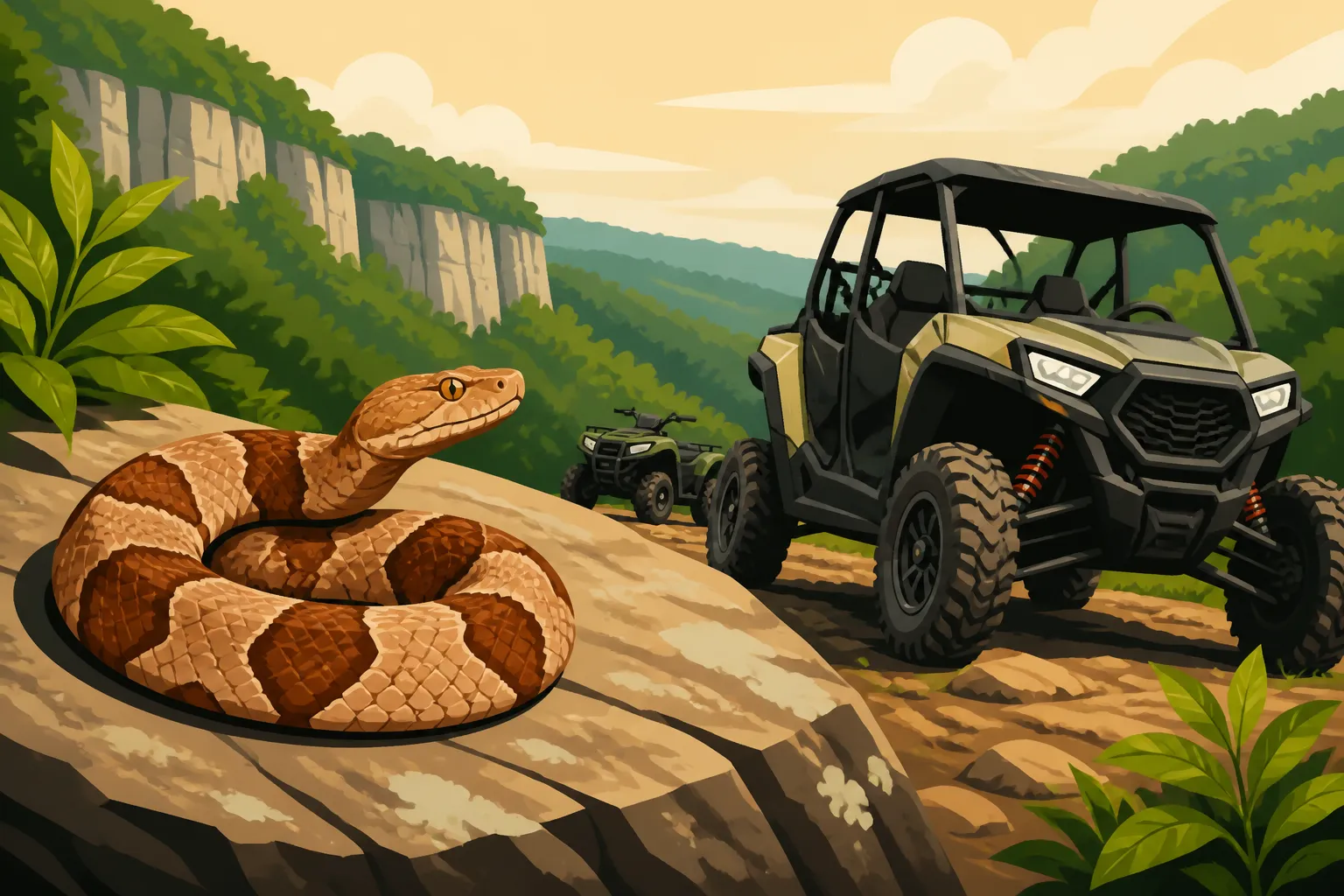
A copperhead stretched across a sun-warmed rock can be almost impossible to spot until you are close, especially when you are focused on a trail or helping someone with a stalled ATV. This guide explains where Kentucky riders may encounter copperheads, how to avoid surprising one, and what to do if someone is bitten—without turning a trail ride into a wildlife hunt.
Why copperheads can be hard to see on Kentucky rides
Warm rocks, leaf litter, and trail edges
Copperheads are venomous snakes found in Kentucky. Their patterned coloring can blend into dry leaves, rocky ground, and other natural cover. That camouflage is one reason a rider or passenger may overlook a snake while walking around a machine, checking a tire, or stepping off the trail to take a break.
A sun-warmed rock or exposed patch of ground can attract a snake seeking warmth, particularly when the surrounding area is cooler or shaded. But copperheads are not found only on rocks. Leaf litter, brush, downed limbs, and the edges of wooded trails can also make it difficult to notice one. A rider scanning the path ahead from a seated position may not see what is tucked beside the trail or under a low branch.
The practical takeaway is not to assume every rock or trail edge is dangerous. It is to avoid placing hands and feet where you cannot see clearly. Before sitting on a rock, reaching into leaves, or stepping over a log, take a moment to look closely. If you cannot see the far side of an obstacle, walk around it when possible rather than reaching blindly across or underneath.
When the risk is more likely to come up
Warm-weather rides often involve more time outdoors, more stops, and more walking around machines. Riders may pull over to consult a map, wait for a group, fix a loose strap, or let children stretch their legs. Those ordinary moments can put someone near the ground-level cover where a snake might be resting. For broader seasonal planning, see Kentucky Riding in Summer and Ticks on a Kentucky Summer Trail.
Copperheads generally do not need to be chased or handled to become a hazard. A person can surprise one by stepping close, trying to move it, or reaching into its hiding place. If you see a snake, give it room and leave it alone. Do not try to identify it from close range or move it with a stick, shovel, or tool. A quick photo from a safe distance is optional; getting closer for a better picture is not worth the risk.
Riders can also encounter snakes outside the hottest part of summer. In cooler weather, a sunny patch may be especially appealing to a snake. That does not mean every warm autumn ride is likely to involve one, but it is a good reason to keep the same careful habits throughout the riding season. Riding After the First Frost in the Mountains offers additional context for changing trail conditions later in the year.
Simple habits that help prevent a close encounter
Look before you step, sit, or reach
The most useful prevention habit is also the least complicated: pause and look before putting a hand or foot somewhere you cannot see. This matters when you are stepping off a machine, walking around a parked ATV, picking up dropped gear, or checking under a seat or rack. Use a flashlight if visibility is poor, but do not put your hand into a dark space just because the light does not reveal anything at first glance.
Wear sturdy footwear when walking around the trail. Long pants and boots can provide a layer of protection, though they do not make anyone immune to a bite. Avoid sandals when you expect to walk through brush or leaf litter. Keep children close during stops and remind them not to touch snakes, even if the animal appears still or injured.
Before choosing a place to sit, check the surface and the area around it. Avoid stepping over a log without looking on the other side, and do not put your hands beneath rocks or piles of wood. If you need to retrieve equipment from brush, take your time and use a visible path rather than pushing through dense cover.
Make stops and trail plans less stressful
A little preparation reduces the number of rushed decisions people make when they are tired, hot, or trying to keep up with a group. Pick open, visible places for breaks when possible. Keep bags and clothing off the ground if the area is brushy, and shake out gear that has been left outdoors before putting it on. These steps do not guarantee that you will never encounter a snake, but they make it easier to notice your surroundings.
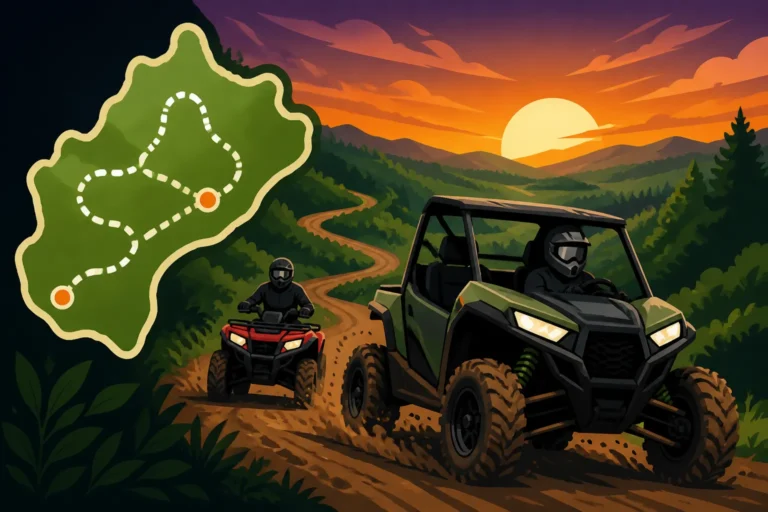
Before heading out, check the park or trail operator’s current information and plan how your group would reach help if someone were injured. In parts of eastern Kentucky, steep terrain and limited cell service can make it harder to call or explain exactly where you are. Carry a map you can use offline and make sure at least one person knows how to describe your location. Tools such as onX Offroad can help riders review routes and save map information for offline use, but do not assume a digital map means you will have a working signal or that emergency responders can see your location automatically.
If you ride with a group, agree on a simple stop-and-wait plan. A person who sees a snake should alert others without crowding around it. The group can give the animal space, move away calmly, and regroup somewhere clear. Trail awareness also includes watching where other riders are stopping and walking; Kentucky Trail Etiquette on Narrow Benches covers safe, considerate behavior on tight routes.
What to do if you see a copperhead
Give it space and let it move away
If a snake is on or beside the trail, slow down and keep your distance. Do not try to drive over it, nudge it with a tire, or force it off the path. If it is safe, wait for it to move away. If the trail is narrow or the snake remains in the way, turn around or choose another route rather than approaching it.
Warn others in your group in a calm, clear way. Keep children and pets away, and do not gather close to take photos. Snakes can react defensively when they feel threatened, and a crowd can leave the animal with fewer ways to move away. Giving it space is safer for both people and wildlife.
If the encounter happens at a park, follow the site’s instructions for reporting wildlife concerns. Do not assume that a snake is harmless because it is small, still, or difficult to identify. If you are not certain what you saw, treat it as a snake that should be left alone rather than trying to inspect it.
If someone is bitten
Treat a suspected copperhead bite as an emergency. Move away from the snake without trying to capture or kill it, and call 911. Tell the dispatcher that a snakebite is suspected and provide your location as clearly as possible. If you are in a riding area, share the trail name, nearby junction, gate, landmark, or other information that can help responders find the group.
Keep the bitten person as calm and still as you can while help is on the way. Remove rings, watches, or other tight items near the bite before swelling makes them difficult to remove. Do not cut the bite, try to suck out venom, apply ice, or use a tourniquet. Do not delay seeking medical care to identify or photograph the snake. A picture taken from a safe distance may be useful, but it is not worth approaching the animal or slowing down the emergency response.
| Do | Avoid |
|---|---|
| Call 911 and follow the dispatcher’s instructions | Trying to catch, kill, or carry the snake |
| Keep the person calm and limit movement | Cutting the wound or attempting to suck out venom |
| Remove tight jewelry or clothing near the bite if it is easy to do | Applying ice or using a tourniquet |
| Give responders clear trail and landmark information | Waiting to see whether symptoms worsen before seeking help |
Build snake awareness into a safer ride
Prepare for changing terrain and visibility
Riding conditions can change quickly with shade, rain, and trail traffic. A clear stretch may lead into a shaded, leaf-covered section where rocks, roots, and animals are harder to see. After heavy rain, riders may also be focused on slippery footing or washed-out areas rather than the trail margins. Check Kentucky Riding After Heavy Rain and Kentucky Trail Conditions Before You Ride when planning a trip, and pay attention to posted closures and local instructions.
Carry a first-aid kit, water, a charged phone, and a map you can access without relying on service. Before setting out, let someone know where you plan to ride and when you expect to return. A navigation app such as onX Offroad can be one part of that preparation if you download the information you need ahead of time and understand how to read it. Keep a paper or other offline backup if your group depends on a route for finding its way back.
On longer rides near places such as Black Mountain or the Redbird Crest Trail, the time and distance between stops can make preparation especially important. Do not count on being able to get immediate help simply because you have a phone. Note trail junctions as you pass them, and avoid splitting up without a clear plan for where to regroup.
Teach passengers and young riders what to do
Passengers and children may be the first to spot a snake—or the first to step toward it out of curiosity. Before the ride, set simple expectations: do not touch or approach wildlife, stay with the group at stops, and tell an adult if they see a snake. For a child, “look from far away and call me” is easier to remember than a long list of exceptions. Planning a family outing? See Riding With Children at a Kentucky Park for more riding considerations.
Adults can model the same behavior. If someone spots a snake, avoid shouting, sudden crowding, or daring another rider to get closer. Calmly point it out, move the group away, and give the animal room. That response helps keep a moment of surprise from becoming a risky scramble on uneven ground.
A good ride does not require riders to be afraid of every rock or patch of leaves. It does require paying attention when you stop, keeping hands and feet out of hidden spaces, and knowing what to do if an encounter occurs. For more planning help, carry a route reference such as Kentucky Trail Maps Worth Carrying, check Kentucky Trail Closures to Check, and make sure everyone in the group knows how to get help.
Disclaimer
This article is for general informational purposes only and does not constitute professional advice. Laws, prices and regulations vary by location and change over time. Consult a qualified professional for guidance on your specific situation.