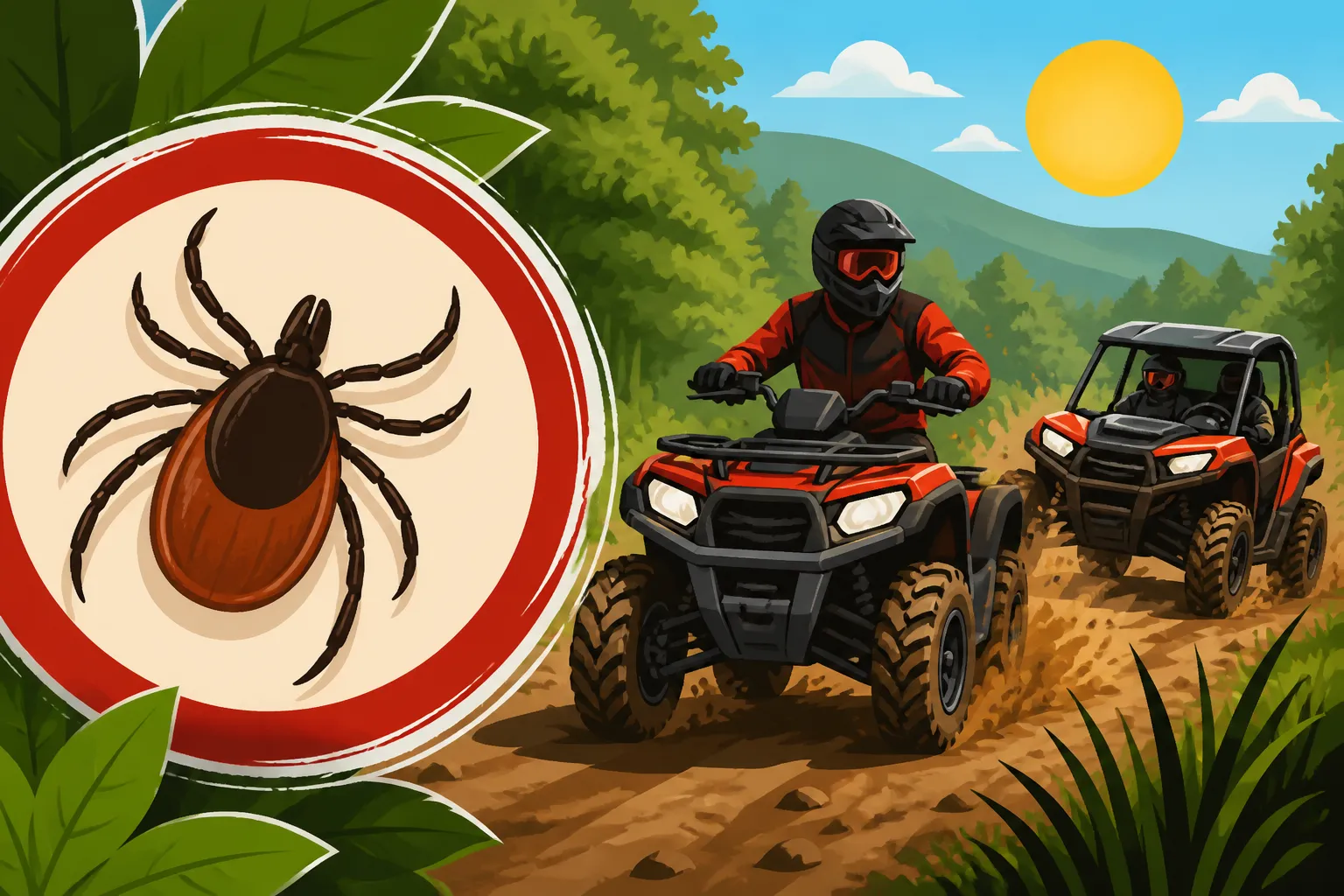
Ticks on a Kentucky Summer Trail
A hot ride through Kentucky’s woods can leave you thinking about mud, dust, and a machine that needs washing—not ticks. But brushy trail edges, tall grass, and shady stopping spots can put ticks on clothing or skin before you notice. This guide explains how to prepare, reduce exposure while riding, check yourself afterward, and respond if you find a tick.
Why ticks are a concern on Kentucky summer trails
Where ticks can meet riders
Ticks are more likely to be picked up around vegetation than from the open center of a well-used trail. Tall grass, brush, leaf litter, and overgrown edges deserve extra attention, especially when you stop to take a break or step off the trail. A machine can carry you through an exposed stretch quickly, but walking through roadside growth to take a photo or retrieve dropped gear creates a different kind of contact.
Kentucky riding areas include a mix of wooded slopes, shaded hollers, gravel roads, and grassy openings. Conditions vary from one trail system to another, and even within the same park. A dry, open section may feel very different from a damp, brushy pull-off. Before heading out, it helps to understand the day’s terrain and recent conditions; Kentucky Trail Conditions Before You Ride is a useful place to start.
Ticks do not need to bite immediately after reaching you. One may crawl on clothing or gear before finding exposed skin, which is why a quick glance at your arms is not a complete check. Pay particular attention to clothing seams, boot tops, waistbands, and places where gear presses close to the body.
Why a casual stop can increase exposure
Riders often lower their guard once the machine is parked. You might sit in grass to eat, lean against a brushy bank, or walk a short distance from the trail to get a better view. Those small decisions can create more contact with vegetation than the ride itself. If you need to stop, choose a clear, durable spot rather than sitting or placing bags in tall grass.
Narrow trails require attention for another reason: brushing against vegetation may be hard to avoid. Keep your body and loose clothing inside the machine’s profile where you can, and avoid reaching into brush to move branches unless necessary. On shared routes, stay on the marked trail and yield thoughtfully rather than pushing into overgrown edges. Kentucky Trail Etiquette on Narrow Benches offers related guidance for navigating tight trail sections.
Prepare before you leave home
Choose clothing and repellent deliberately
Long sleeves and long pants create a barrier between skin and vegetation. Light-colored clothing can make crawling ticks easier to spot, while closed shoes and socks help protect ankles. Tuck pants into socks or boots if practical, and check that gloves, cuffs, and shirt hems sit securely. These steps may feel warm in Kentucky summer weather, so choose breathable layers and take heat management seriously as well.
Some products are intended for clothing or gear, while others are labeled for skin. Read and follow the product label rather than assuming one type can be used everywhere. Permethrin products, for example, are intended for treating clothing or equipment according to their directions, not for applying directly to skin. Skin repellents should also be used only as directed, including any instructions for children.
A quick clothing check before loading the trailer is worthwhile. Look for loose cuffs, open gaps around boots, and exposed skin at the waist or neck. If you are riding with children, help them adjust clothing and explain that they should tell an adult if they see a tick crawling on them. For family-specific trail planning, see Riding With Children at a Kentucky Park.
Pack a small tick-check kit
A practical kit does not need to be complicated. Pack fine-tipped tweezers, a small sealable bag or container, and a clean cloth or wipes for after removal. Keep the kit somewhere accessible rather than buried under riding gear. A first-aid pouch is a sensible place, but tell everyone in the group where it is.
It also helps to bring a spare shirt or light layer. If someone brushes heavily against vegetation, changing out of the exposed clothing later can make a check easier. Put worn clothing in a separate bag instead of tossing it loose onto seats, bedding, or clean gear. When you return to camp or home, inspect those clothes and follow garment-care directions for washing and drying.
Before you set off, decide where you can stop safely for a check. A clear staging area or maintained rest spot is preferable to stepping into brush. If you are using a navigation tool such as onX Offroad, review the route and identify sensible stopping points before the ride. Do not rely on a map to tell you whether a specific patch of vegetation is tick-free; it cannot replace visual checks and basic precautions.
Reduce tick exposure during the ride
Stay on established routes and choose stops carefully
Riding on marked routes helps limit unnecessary contact with roadside vegetation and reduces damage to the trail. Avoid cutting across grassy edges or taking unofficial shortcuts, even if they look easier. If a trail is blocked or overgrown, follow posted directions and park guidance rather than forcing a way through. Closures and reroutes can change, so check Kentucky Trail Closures to Check before hauling out.
At a rest stop, look for a bare, stable surface away from tall grass and brush. Keep helmets, jackets, and bags off the ground when possible. If someone needs to walk away from the machine, have them use a maintained path instead of stepping through vegetation. A scenic overlook can be a great place to pause, but the immediate edge may be brushy; enjoy the view without wandering into growth.
Navigation can help a group stay oriented and avoid accidental detours into rough margins. onX Offroad may be useful for reviewing a route before leaving, particularly when you are unfamiliar with a trail network. Check the map information and park rules together, and carry an appropriate backup plan for areas with limited reception. Kentucky Trail Maps Worth Carrying covers why a map should be part of ride preparation.
Make checks part of the day, not just the end
A mid-ride check is especially useful after a stop in tall grass or a section where vegetation brushed against riders. In a clear area, look over sleeves, pant legs, socks, and the outside of boots. Ask children and passengers to mention any crawling sensation or tick they notice rather than brushing it off.
Do not turn the check into a reason to stop in an unsafe location. Move the group to a wide, stable place away from traffic and other riders first. Keep machines parked where they will not block the trail, and stay aware of people approaching from either direction. Good group habits are useful for more than tick prevention; review Kentucky Trail Etiquette on Narrow Benches if your route includes tight, shared sections.
Use an offline map or another reliable navigation option where appropriate, because cell service can be uneven in wooded or mountainous terrain. onX Offroad can be one planning tool for checking your intended route, but it is not a substitute for posted signs, park staff, or local trail notices. If your group is heading into an area where coverage may be unreliable, Kentucky Trails With Cell Coverage can help you think through communications before you go.
Check for ticks after the ride
Do a careful body and gear check
Once you are away from trail vegetation, inspect clothing and gear before settling into a vehicle or cabin. Look over pants, socks, cuffs, and seams. Check helmets, gloves, packs, and seat surfaces too, especially if they were placed on the ground or against brush. Remove any crawling tick promptly and avoid carrying exposed clothing into sleeping areas.
Then check your body carefully. Ticks can be small and easy to miss, so take your time and use a mirror or ask someone you trust to check areas you cannot see. Pay attention to the scalp and hairline, behind the ears, under the arms, around the waist, behind the knees, and other places where clothing fits closely. A shower can help with a check, but it should not replace looking over your skin.
Children may need an adult’s help, and pets should be checked according to veterinary guidance. A tick brought home on a dog or a bag can still become a household concern. Keep the check routine calm and matter-of-fact: it is simply part of cleaning up after a summer ride, like checking for scrapes or washing off trail dust.
| Check area | What to look for | Helpful habit |
|---|---|---|
| Clothing | Crawling ticks, especially at cuffs and seams | Inspect before getting into a vehicle |
| Gear | Ticks on packs, gloves, helmets, and seats | Keep bags off grass and brush |
| Skin | Attached ticks or small bumps that need a closer look | Use a mirror or ask for help with hard-to-see areas |
| Children | Ticks in hair, behind ears, and under clothing edges | Make the check gentle and thorough |
| Pets | Ticks in fur or around ears and collars | Follow your veterinarian’s prevention advice |
Remove an attached tick carefully
If you find an attached tick, use fine-tipped tweezers to grasp it as close to the skin as possible. Pull upward with steady, even pressure. Avoid twisting, crushing, or squeezing the tick’s body. After removal, clean the bite area and your hands. Do not use a hot match, petroleum jelly, nail polish, or other methods intended to make the tick detach.
If the mouthparts remain in the skin and cannot be removed easily, avoid digging aggressively. Keep the area clean and seek medical guidance if you are unsure what to do. You can save the tick in a sealed container or bag if a healthcare professional recommends it; avoid handling it with bare fingers.
Note the date and where on the body the tick was attached. Watch the bite area and pay attention to how you feel afterward. A rash, fever, headache, muscle aches, or other concerning symptoms after a tick bite warrant prompt medical advice. Symptoms and appropriate next steps can vary, so contact a qualified healthcare professional rather than trying to diagnose an illness from a photograph or an online description.
Build a routine that works for your group
A reliable routine is easier to follow when everyone knows what happens at the end of the ride. At the staging area, check visible clothing and gear. At home or camp, change out of riding clothes, inspect skin, and keep worn items separate until they can be checked and handled appropriately. If you are camping, make the check before getting into a sleeping bag or settling onto bedding.
For a larger group, one person can remind riders to check clothing while each person remains responsible for their own body check. Keep the tone practical rather than alarming. The goal is not to avoid every brushy trail or worry through the whole day; it is to reduce avoidable contact and catch a tick before it goes unnoticed.
A little planning also makes the ride smoother. Review your route, know where the group can stop, pack tweezers, and make sure riders have clothing and repellent suited to the trip. onX Offroad can help with route planning when used alongside park information and trail signs, but the final tick check remains a hands-on job. If you are camping near the trail system, Camping at a Kentucky Trail Park can help with the other details of preparing for an overnight ride.
Disclaimer
This article is for general informational purposes only and does not constitute professional advice. Laws, prices and regulations vary by location and change over time. Consult a qualified professional for guidance on your specific situation.