Kentucky Helmet Rules at a Trail Park
Kentucky ATV helmet rules at trail parks depend on public-property status; riders 16 or older generally need approved headgear, with work exceptions.
Your sticker stops at the state line.
Non-resident permits, what they cost and how long they last, and which states honor each other’s — or, increasingly, none at all.

Kentucky ATV helmet rules at trail parks depend on public-property status; riders 16 or older generally need approved headgear, with work exceptions.

Kentucky rental company policies, age rules, machine labels, and trail permits determine if teenagers can rent ATVs.

Night riding at a Kentucky trail park depends on current hours, open trails, permit terms and lighting rules, so confirm access before you unload.
Kentucky rules for an electric machine on trails depend on site access, vehicle fit and local permits; battery power does not replace permission.
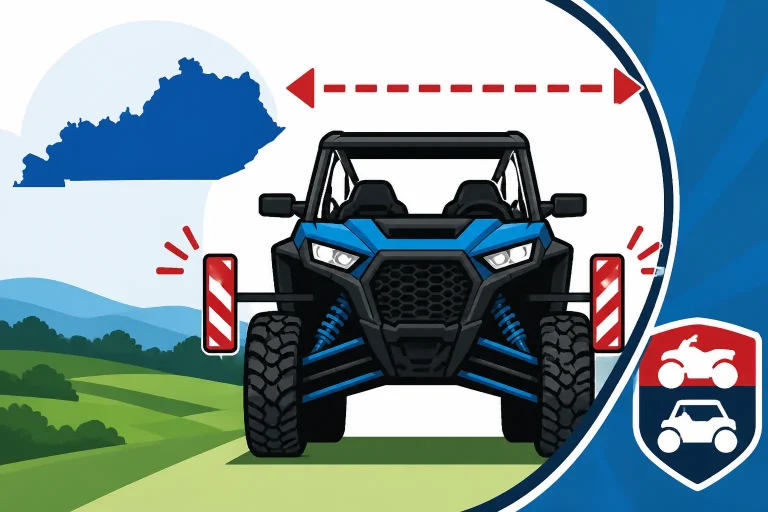
Kentucky has no single width rule for every ATV trail: check the land manager’s limit, measure your machine, and confirm route access before hauling.

Kentucky Spark Arrester Rules require spark arrestors on public OHV trail systems; verify your equipment and trail access rules before riding.
Kentucky ATV and UTV sound rules can vary by trail park. Check each park’s current policy, inspect the exhaust, and avoid unnecessary revving.
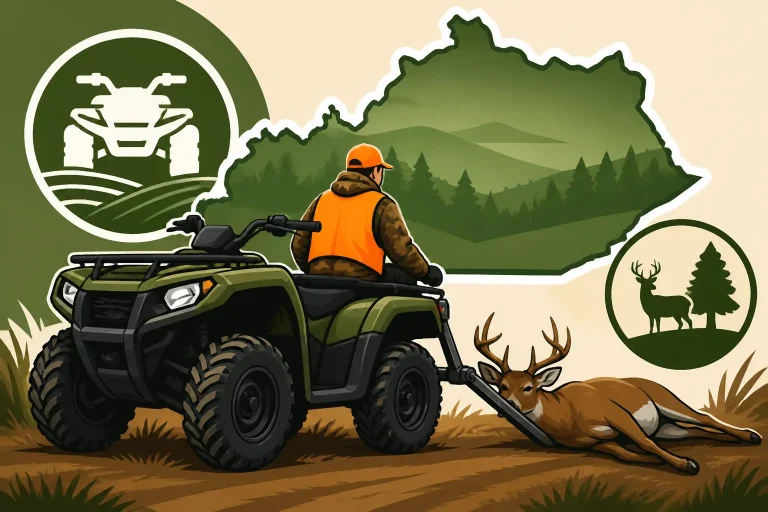
Kentucky rules for retrieving game by ATV depend on the land and hunter eligibility; know WMA limits, access exceptions, and route requirements before riding.

Kentucky rules for riding with a firearm distinguish lawful ATV carry and storage from hunting or shooting from the vehicle.

Kentucky trail park campfires depend on site rules and current conditions; confirm permission, use designated areas, and fully extinguish every fire.