Kentucky Rules for Campfires at a Trail Park
A campfire can be a welcome end to a day on Kentucky’s trails, but permission depends on where you’re camping and the conditions on the ground. A riding permit does not automatically authorize a fire, and rules can change with weather or local restrictions. Check the park’s current fire policy before you load the machine, then plan to use a designated site and fully extinguish the fire.
Check the park’s rules before you build a fire
Kentucky does not have one campfire rule that applies to every ATV or UTV trail park. A park operator may set rules for its own campground, while a different land manager may control nearby public land. Even within one riding area, overnight campsites, picnic areas, and trail corridors can have different rules.
Start with the park where you intend to camp, not a general rule you saw for another campground. Ask whether campfires are allowed at your specific site, whether they must be in a provided ring, and whether there are temporary restrictions. Confirm whether the policy covers wood fires, charcoal, and portable gas stoves separately. If you are staying at a private campground near a trail system, check with that campground too; its rules may not match the riding park’s.
A trail permit and permission to make a fire are separate things. A permit may cover access to trails or a riding area but not camping, and camping permission may not include permission to burn wood. Kentucky Trail Permits Explained is useful background on what a park permit does and does not cover. For the same reason, a permit from one riding area should not be treated as permission to camp or build a fire at another. Why a Kentucky Park Permit Is Not a State Permit explains why park rules are not automatically interchangeable.
Ask the park these practical questions before you leave:
- Are campfires allowed at my campsite on the dates I plan to visit?
- Must I use a park-provided fire ring, or is a portable contained fire pit permitted?
- Are charcoal grills or gas stoves covered by the same restriction?
- Are there current fire-weather restrictions, and where will updates be posted?
- Is firewood available or permitted, and are there rules about bringing it in?
- What are the required steps for putting out a fire, and whom should I contact if conditions change?
If you cannot reach someone before departure, do not assume that a fire is allowed because a ring is visible or because other campers have fires going. A fire ring is a designated place to burn when fires are permitted; it is not a guarantee that burning is allowed under every condition.
Look for temporary restrictions as well as standing rules
A park may prohibit fires temporarily during dry, windy weather or when staff judge conditions unsafe. A county or other authority may also impose a restriction that affects an area beyond the park. Those rules can change after you have made a reservation, so check again close to your trip and when you arrive.
A park’s front desk, gate, campground notice board, official site, or direct phone line may provide updates. Follow the latest notice from the relevant land manager or local authority rather than an old social post, a previous visitor’s advice, or a rule remembered from last season. Kentucky Trail Closures to Check offers a similar reminder for riding: conditions and access notices need a fresh check before heading out.
Pay attention to what a restriction actually covers. “No open fires” may not answer whether a gas appliance is allowed, and “fire ban” can mean different things depending on who issued it. Ask the park or the authority named in the notice instead of guessing. If staff say no fire, don’t try to get around the restriction with a small wood fire, a charcoal setup, or another device the rule clearly covers.
Use a designated fire site and keep it controlled
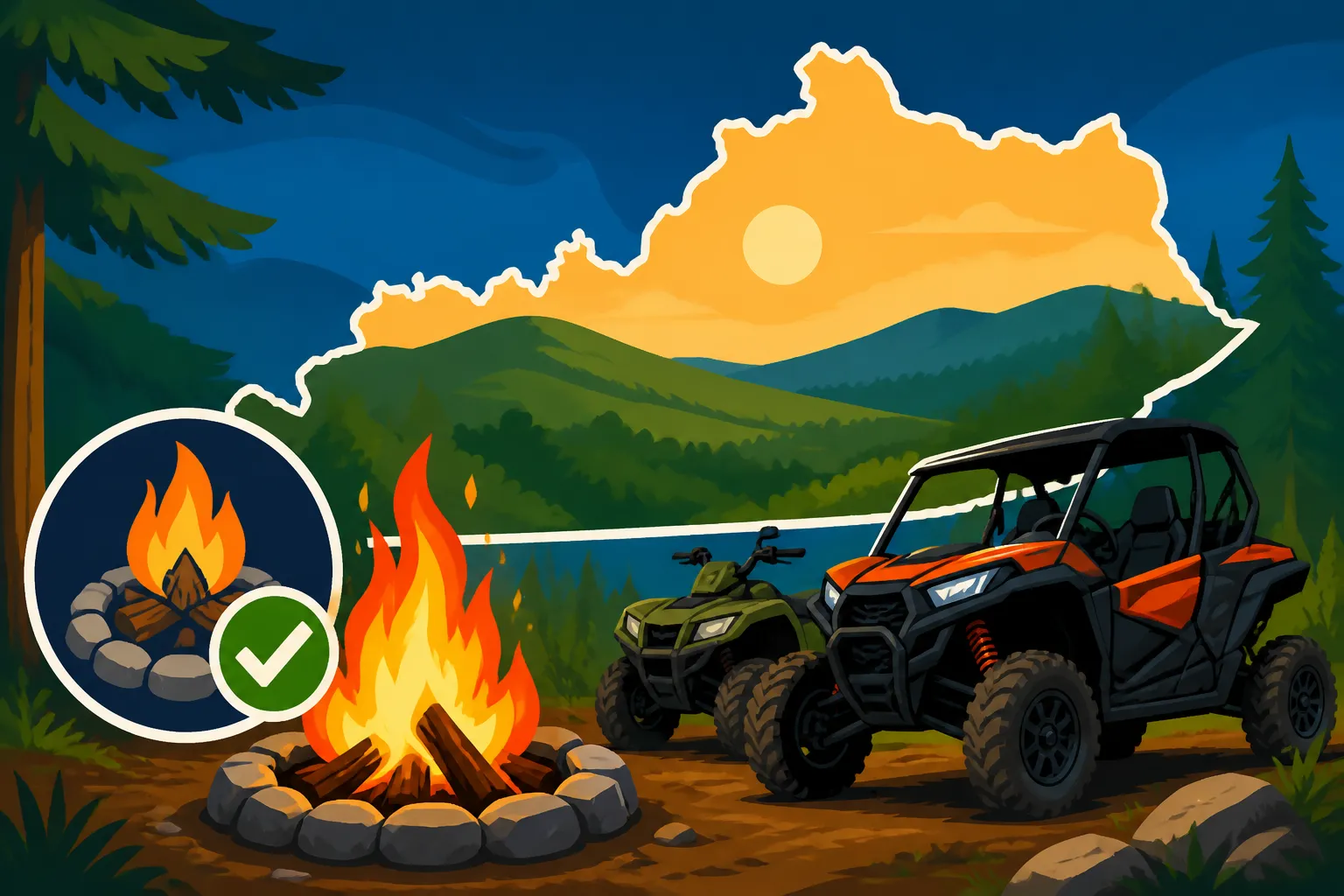
When fires are allowed, use only the location and setup the park authorizes. A built-in ring or designated fire area helps keep flames and embers contained and away from dry grass, leaves, tents, vehicles, and wooded edges. Do not make a new fire ring, scrape away vegetation to create one, or move a park’s fire equipment without permission.
Keep the fire small enough to manage. A large flame can throw sparks farther, heat nearby gear, and become difficult to control if wind picks up. Keep children and other campers at a safe distance, and do not leave the fire unattended—even briefly. Someone responsible should remain at the site while the fire is burning and be ready to put it out if the wind rises or conditions become unsafe.
Make a clear space around the fire area. Move loose leaves, dry grass, firewood, camp chairs, fuel containers, and other flammable items away from the ring. Never use gasoline or another liquid fuel to start or revive a campfire. Don’t burn garbage, plastic, cans, treated wood, or food packaging; they can create hazards and leave harmful debris. Use only fuel the park permits, and keep the amount of wood on hand manageable rather than building a high stack beside the flames.
A basic fire-safety kit can make a permitted fire easier to manage. Bring water in a container you can pour, a shovel if the park allows or recommends one, and a working flashlight for checking the site after dark. Some campers keep a small extinguisher or fire blanket with their cooking gear; those tools are useful backups, not substitutes for water and proper extinguishing. Amazon is one place to find compact camping fire-safety gear, but check that any item is suitable for the intended use and keep it accessible rather than packed deep in a vehicle.
Be especially careful around fuel used for machines. Keep gasoline cans and other flammable liquids well away from the fire, cooking area, and hot equipment. A recently ridden ATV or UTV may have hot components; park it at a safe distance from flames and never use the fire area to store gear that could ignite. Kentucky Rules for Carrying Fuel can help with planning how to transport spare fuel safely, but fuel storage at camp still needs careful separation from ignition sources.
Don’t assume a portable fire pit is automatically allowed
A raised, portable fire pit may reduce contact with the ground, but it does not override a park’s rules or a temporary fire restriction. Some sites allow only a provided ring; others may permit certain contained devices, or prohibit all fires during dry conditions. Ask before bringing one.
The same goes for a cooking appliance. A small gas stove may be treated differently from a wood fire, but it is still a heat source and may be restricted. Use it only where permitted, on a stable surface, away from tents and dry vegetation, and according to its instructions. Never operate a stove inside an enclosed tent or vehicle.
A fire that is permitted at your campsite is not permission to burn along a trail, in a pull-off, or at an overlook. Keep fire use within the designated camping area and follow park directions about where riders may leave machines. For broader planning around where overnight stays fit into a riding trip, see Camping at a Kentucky Trail Park.
Put the fire out completely before you leave
A fire is not out just because visible flames have disappeared. Hot coals and buried embers can remain dangerous, and wind can uncover or rekindle them. Plan to stop adding wood early enough that you have time to extinguish the fire properly before bed or before leaving the site.
If park staff have given a specific extinguishing method, follow it. Otherwise, use water carefully: pour it over the coals and embers, stir the material, and wet it again until everything is cold. Check the bottom and edges of the fire ring, where heat can linger. Do not rely on covering the fire with dirt or sand; embers can remain hot underneath. Avoid carrying burning or smoldering material out of the ring.
Use caution when pouring water, because hot steam can rise. Keep your face and hands back, and stir with a tool rather than reaching into the fire area. Once the fire is extinguished, hover a hand near the ashes without touching them to check for remaining heat. If any part still feels warm, add more water and stir again. Keep children away until the site is fully cold.
If the park has a closed or restricted fire area, do not relight a fire after staff have put it out or a notice has changed. If a fire escapes the ring, spreads to grass or brush, or cannot be controlled immediately, alert park staff or emergency services as appropriate. Don’t wait to see whether it dies down on its own.
Before packing up, leave the ring and surrounding area clean. Let ashes cool completely and dispose of them only where the park directs; do not scatter them into vegetation, dump them in a creek, or put warm ashes in a trash can. Pack out food scraps and litter. A tidy site reduces the chance of attracting wildlife and makes the space safer for the next camper.
Plan for dry weather, wind, and riding conditions
Even when a park allows campfires, weather can make a fire unwise. Dry leaves, dead grass, and brush can catch from a stray ember. Wind can carry sparks beyond the ring or blow smoke toward tents and neighboring campsites. If the conditions feel difficult to manage, choose a permitted cooking alternative or skip the fire.
Check the forecast and park updates before leaving, then pay attention again when you arrive. Mountain weather and wind can change during a ride, and a site that seemed calm at check-in may not be later. Keep a clear path to water and the fire area, and make sure whoever is tending the fire knows where the extinguishing supplies are. If you are returning to camp after dark, do not leave a fire burning while the group rides away.
Trail conditions matter to the trip too. Wet ground, recent rain, or a closed trail may affect where you can ride, but none of those conditions automatically make a campfire safe or allowed. Check Kentucky Trail Conditions Before You Ride for the riding side of your plan, and treat fire guidance as a separate check with the campground or land manager.
A simple pre-trip routine helps avoid last-minute uncertainty:
- Confirm your campsite and the manager responsible for it.
- Ask whether fires are allowed at that site and what equipment is permitted.
- Recheck official fire notices and local restrictions shortly before traveling.
- Bring only the firewood and safety equipment the park allows.
- On arrival, read posted notices and ask staff if anything is unclear.
- Keep the fire small, attended, and within the designated area.
- Extinguish it fully, dispose of ashes as directed, and leave the site clean.
If the answer about fires is unclear, the safest choice is not to burn. You can still enjoy the campsite without a campfire, and avoiding an unauthorized or poorly controlled fire protects other visitors, the park, and the land around the trail.
Disclaimer
This article is for general informational purposes only and does not constitute professional advice. Laws, prices and regulations vary by location and change over time. Consult a qualified professional for guidance on your specific situation.