A Gate Board With Today’s Rules in Kentucky
A gate board can answer the question that matters most when you reach a Kentucky riding area: what rules apply today? But posted notices can cover different things, from trail closures to permit instructions, and they do not all mean the same thing. Here’s how to read them, check what applies to your machine and group, and avoid treating a park permit as statewide permission.
What a gate board can tell you
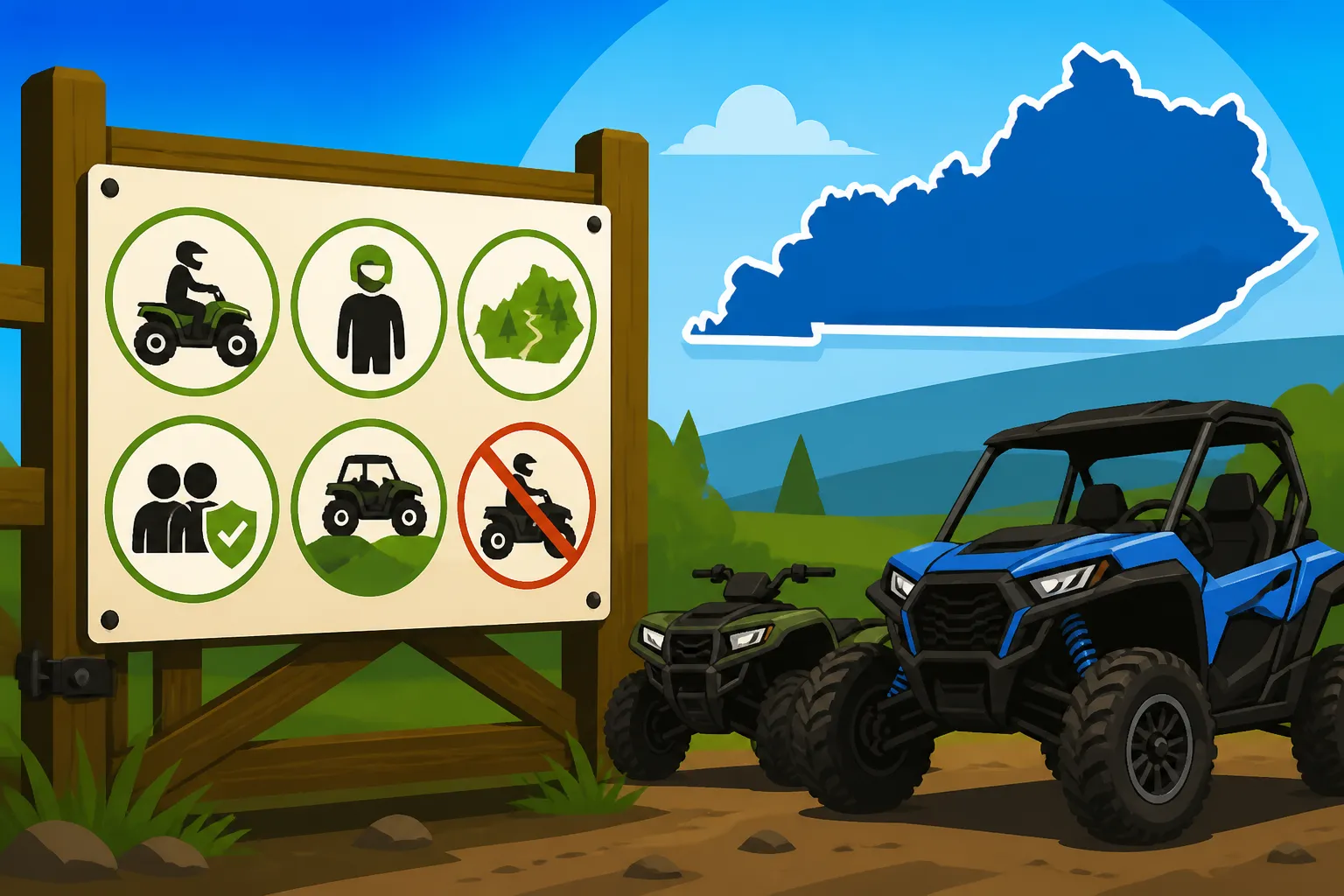
A gate board is a useful last check before unloading, not a substitute for planning ahead. It may display notices about access, trail conditions, safety, permits, operating hours, or temporary closures. The exact information varies by riding area, so read the whole board rather than relying on one sign or a quick glance.
Separate the notices into three practical groups:
| Notice type | What it may affect | What to do |
|---|---|---|
| Access or closure | Whether an area or trail is open | Confirm the route you planned to ride is available |
| Permit or entry | What authorization or payment is required at that location | Check whether each rider, machine, or passenger is covered |
| Safety or operating rule | How and where you may ride | Follow the posted instruction and ask staff if its scope is unclear |
A closure notice can change the route you intended to take, even if the park itself is open. A safety notice might apply to a particular trail, feature, or condition rather than every route. A permit notice can explain how to enter that riding area, but it does not automatically establish that your machine is allowed everywhere else in Kentucky.
Pay close attention to words that limit the scope of a notice: a specific trail name, a particular area, a time period, or a type of vehicle. If the notice is hard to understand, do not guess. Ask an attendant or contact the park using its current official information. Checking a Kentucky Trail Notice First can help you think through what to verify before riding.
The board may also be the most immediate source of information about conditions that changed after you left home. Rain, maintenance, an event, or another local issue could affect access. A route shown as available in an older map or trip plan may not be rideable that day. Check for updates again at the gate, and follow any instructions about staying off closed routes.
Treat every notice as location-specific unless it clearly says otherwise. A rule posted at one private park, public riding area, or trail system does not necessarily apply at another. Similarly, a sign at the entrance may summarize important requirements without listing every rule that governs the area. Read the available park information as a whole and ask about anything that affects your planned ride.
How to check permits and local rules
Permit rules are easy to misunderstand because the word “permit” can refer to permission for one particular riding area. Kentucky does not have one statewide trail permit that automatically covers all riding locations. Each park or managed area can have its own entry requirements, sales process, and conditions. The broad distinction is explained in Why a Kentucky Park Permit Is Not a State Permit and Why Kentucky Has No Statewide Trail Sticker.
Before you ride, find out exactly what the permit covers. Depending on the location, the relevant questions may include:
- Is a permit needed for this area and this date?
- Is it issued per rider, per machine, per group, or under another arrangement?
- Does a passenger need separate authorization?
- Does the permit cover the routes you intend to use, or only a designated part of the site?
- Where and how must it be purchased or displayed?
- Are there separate rules for rented machines, organized rides, or special events?
Do not assume the answer is the same from one riding area to the next. A permit purchased for one park generally should not be treated as permission to ride at another. For an overview of why requirements differ, see Kentucky Trail Permits Explained. Confirm current instructions with the riding area before you travel, especially if your plans depend on buying a permit at a specific location or during particular hours.
A gate board may explain what to do when you arrive, but it is not wise to make arrival your first check. If the office is closed, the payment process has changed, or the site has a temporary restriction, you could be left unable to ride. Check the official park information before loading, then compare it with the notices on arrival. For practical pre-trip questions, see Calling a Kentucky Park Before You Load.
Also keep the permit question separate from the machine question. A permit does not necessarily mean every ATV or UTV is suitable or allowed on every route. Width, route design, local restrictions, and posted directions can matter. If you are taking a wide machine, ask specifically whether your intended routes accommodate it instead of interpreting a general entry notice as approval.
Visiting from another state
An out-of-state registration or permit may help establish information about your machine, but it should not be assumed to replace a Kentucky riding-area permit. These are separate issues: one concerns your machine’s paperwork, while another concerns permission to use a particular trail system. Does Kentucky Honor Out-of-State Registration? addresses the paperwork question; the gate board or the park’s current information addresses local access.
If you are traveling in from another state, check rules for both your destination and your route. A permit accepted at one site may not be accepted elsewhere, and an out-of-state document does not necessarily grant access to privately managed trails. Kentucky Rules for a Visiting Rider is useful context, but verify the requirements of the specific riding area you plan to use.
A practical arrival routine
Use the gate as a deliberate pause before riding. A few minutes spent checking notices can prevent an unnecessary trip down a closed route or a misunderstanding about what your permit covers.
- Stop where signs direct you to stop. Do not block traffic or unload in a place that is not designated for staging. If the entrance procedure is unclear, ask before moving farther into the area.
- Read every current notice. Look for closure information, temporary conditions, route restrictions, operating instructions, and permit directions. Check dates or other limits if they are shown.
- Match the notice to your plan. Confirm that your machine, passengers, and intended route fit the posted instructions. A notice about one trail may not describe the whole riding area.
- Confirm permit coverage. Make sure you have the authorization required for the location and that it covers the people or machines in your group as applicable.
- Ask about anything ambiguous. If a sign conflicts with an online description, map, or older information, do not decide on your own which one to ignore. Ask park staff or use the site’s current official contact information.
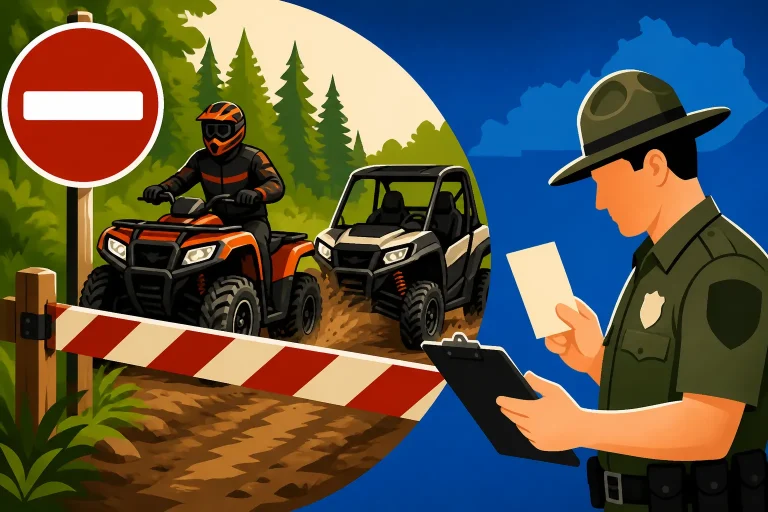
- Adjust the ride plan. If a route is closed or a requirement cannot be met, choose an available option or do not ride there. Do not go around a barrier or treat a closure as optional.
This routine is especially useful when conditions or operating arrangements can change. Before setting out, check Kentucky Trail Closures to Check and contact the riding area if the status is uncertain. At the gate, use the most current local notice to confirm that your planned route remains available.
Keep the information you rely on accessible. A phone may be useful for checking a park’s official updates, but reception can be unreliable in some riding areas. Save essential details before leaving service, and do not depend on a web page loading once you are at the entrance. If you are riding with a group, make sure everyone understands the route changes and permit instructions before the machines are moving.
If you rent a machine, ask the rental provider what is included and what remains your responsibility. Do not assume the rental automatically includes a riding-area permit or covers every passenger. Confirm those details with both the rental provider and the park. If the gate board gives different or newer instructions, pause and resolve the difference before entering.
What the board does not settle
A gate board is not a universal rulebook for every kind of ATV or UTV use in Kentucky. It tells you about the local area and the notices displayed there; it does not make a private trail permit valid on public roads, authorize riding on land without permission, or replace applicable state and local requirements.
Likewise, a permit for one trail system is not proof that you may ride on another property. If your trip involves more than one park, check each destination independently. Plan for separate permits or entry procedures where required, and allow time to comply with them. The same approach applies if your route crosses from a managed trail area onto other land: do not assume that permission carries across a boundary.
A board also cannot answer every equipment or paperwork question. If you are unsure whether your machine meets local requirements, ask the park before you travel. If the issue concerns ownership documents or registration, verify it separately rather than relying on a trail sign. The gate board is most useful when treated as one layer of the check: confirm legal and property access, verify the site’s permit process, then read current local instructions before riding.
When in doubt, use a conservative interpretation. A closed route is closed unless the responsible operator clarifies otherwise. A vague permit notice is a reason to ask, not a reason to assume. And if staff cannot confirm that your machine or group is authorized to use a route, choose another option rather than risking a citation, a denied entry, or damage to a trail.
Disclaimer
This article is for general informational purposes only and does not constitute professional advice. Laws, prices and regulations vary by location and change over time. Consult a qualified professional for guidance on your specific situation.