Kentucky Rules for Riding a Holler Road
Venturing out on an ATV or UTV in Kentucky often brings up questions about where you can and cannot ride, especially when those tempting dirt paths or gravel stretches twist through the rural landscape we lovingly call "holler roads." It's a common frustration to see a perfect-looking trail disappear onto what seems like a public-access road, leaving you wondering if you're about to break the law. This guide will meticulously break down the specific rules and nuances of riding your off-road machine on Kentucky's holler roads, helping you navigate the legalities and enjoy your rides responsibly.
Understanding "Holler Roads" in Kentucky
When we talk about "holler roads" in Kentucky, we're usually referring to those often narrow, winding, and sometimes unpaved or poorly maintained routes that snake through the valleys and hollows of our beautiful state. These aren't typically the main state highways or even well-paved county roads, but rather the more secluded arteries that connect homesteads, lead to logging operations, or simply provide access deep into the countryside. From a legal standpoint, however, the term "holler road" doesn't have a specific definition in Kentucky statutes, which can make things incredibly confusing for riders.
What Exactly Is a "Holler Road" from a Legal and Practical Perspective?
Legally, a "holler road" usually falls into one of two categories: it's either a public road or a private road. A public road, even if it's just a gravel track maintained by the county (sometimes minimally, sometimes not at all), is subject to Kentucky's general laws regarding vehicle operation. This means that if the county has accepted responsibility for its maintenance, or if it's been historically used by the public and therefore considered a public right-of-way, it's treated like any other road in the eyes of the law. The challenge is that many of these roads aren't clearly marked, and locals might have a different understanding of their status than the law dictates.
On the other hand, many holler roads are unequivocally private. These might be old logging roads, access roads to private hunting grounds, or driveways that serve multiple properties but are not maintained by any public entity. If a road is truly private, then riding your ATV or UTV on it requires explicit permission from the landowner. Without that, you're trespassing, regardless of how welcoming the path might look. The distinction isn't always obvious, and sometimes a road might start as public and then transition to private without any clear signage. This ambiguity is a source of constant headaches for off-road enthusiasts who just want to explore our stunning natural landscapes without running afoul of the law.
The Unique Challenges and Charm of These Roads
Holler roads offer a unique blend of challenges and undeniable charm. They often provide access to breathtaking views, secluded fishing spots, or routes that avoid heavily trafficked areas. For many, they represent a connection to Kentucky's rural heritage and a way to experience the state's natural beauty up close. The charm lies in their quiet isolation and the feeling of discovery they offer.
However, these same characteristics present significant challenges for ATV and UTV riders. Their unpaved nature often means mud, ruts, loose gravel, and steep grades, especially after heavy rains or during certain seasons. Maintenance can be sporadic at best, leading to washouts, fallen trees, or impassable sections. Visibility can be limited on blind curves or steep hills. When you're dealing with conditions like those found on a holler road, having robust parts and reliable accessories, such as those offered by SuperATV, can make all the difference in navigating rough terrain and ensuring your machine can withstand the rigors. Furthermore, the limited cell service in many hollers means that breakdowns or accidents can become much more serious without immediate help. Riders need to be prepared for self-reliance and exercise extreme caution.
General Kentucky ATV/UTV Road Rules (The Default)
Before we dive into the specifics of holler roads, it's crucial to understand the foundational rules that govern ATV and UTV use on public roads in Kentucky. Unfortunately, the general rule isn't what most riders hope to hear.
Why Most Kentucky Roads Are Closed to ATVs/UTVs by Default
The vast majority of public roads in Kentucky, including those county-maintained gravel roads winding through hollers, are generally off-limits to ATVs and UTVs. The state statute defines ATVs as "all-terrain vehicles" and typically restricts their operation to private property or designated off-road trails. This default closure is primarily due to safety concerns, as ATVs and UTVs are designed for off-road performance, not for the speeds, traffic patterns, and surfaces of public roads. They lack many of the safety features, like sealed cabins, seatbelts, and specific lighting, common to road-legal vehicles. This can be incredibly frustrating when a public holler road is the only way to connect two sections of private land or reach a legitimate trail system. It often feels like the law isn't quite caught up with the reality of how these machines are used in rural communities. You can find more detail on this in [Why Kentucky Roads Are Closed by Default].
The Critical Exceptions: Crossing, Farm Use, Snow Removal
While the default rule is restrictive, Kentucky law does carve out some specific exceptions that are particularly relevant to holler roads. Understanding these exceptions is key to legal riding:
-
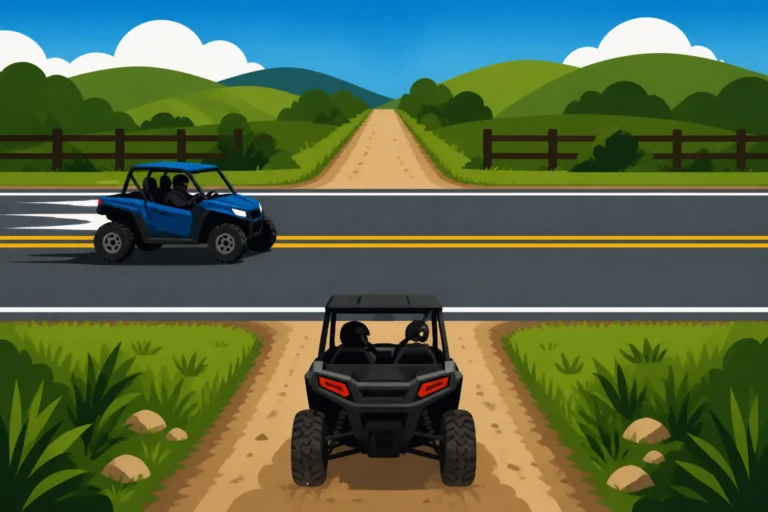
The 0.2-Mile Crossing Rule: This is one of the most important exceptions for riders in rural areas. It allows you to operate an ATV or UTV on a public road, including a holler road, for a distance not exceeding two-tenths of a mile (0.2 miles) to cross a highway or connect two parcels of land. This crossing must be made at a ninety-degree angle to the road, and it can only be done during daylight hours. This is not an open invitation to ride down the road, but a very specific, limited allowance to get from point A to point B when your route is interrupted by a public road. For those quick 0.2-mile crossings, ensuring your machine is equipped with proper lighting or durable tires from a brand like SuperATV can give you peace of mind, even if it's only for a short hop. Remember, it's a "crossing" and not a "travel" allowance. You can learn more about the specifics in [Crossing a Two-Lane at Ninety Degrees in Kentucky].
-
Farm Use Exception: This is another crucial exception for many rural Kentuckians. If you're operating an ATV or UTV for agricultural purposes, you are permitted to use it on public roads, including holler roads, to travel between tracts of land. There's no mileage cap on this exception, but the key is that the operation must be directly related to farming. This means hauling feed, checking fences, moving equipment, or tending to livestock. It does not mean recreational riding while simply commuting to a farm. This exception recognizes the vital role these machines play in modern agriculture. For those who rely on their UTVs for heavy farm work down a holler road, investing in heavy-duty components from companies like SuperATV can help your machine stand up to the rigorous demands of daily chores. This exception is thoroughly explained in [Why Kentucky's Farm Exception Has No Limit].
-
Snow Removal: ATVs and UTVs can be used on public roads for the purpose of removing snow, often a lifesaver for residents on secluded holler roads during winter months. This is another practical exception that addresses immediate community needs.
These exceptions, while helpful, are quite narrow. They don't permit leisurely rides on public holler roads. If you're not actively crossing, engaged in farm work, or plowing snow, you're generally still subject to the prohibition.
Specific Rules for Riding Holler Roads
Given the general prohibitions, how do these exceptions and nuances specifically apply to the unique environment of Kentucky's holler roads?
When a Holler Road Might Be Considered Private vs. Public
The biggest legal tightrope for riders on holler roads is determining their status. Is it a public road, even if it looks like a private driveway? Or is it truly private property?
- Public Holler Roads: If a holler road is maintained by the county (even just grading it once a year) or has been formally dedicated and accepted as a public right-of-way, it's a public road. This means the default "no ATV" rule applies, with the limited exceptions for crossing, farm use, or snow removal. Even if locals have always ridden it, if it's public, those rules apply. It's not uncommon for riders to receive citations on roads they thought were private because they were so minimally maintained. Always assume a road is public unless you have clear, undeniable proof that it is private.
- Private Holler Roads: These are roads on private property that are not dedicated to public use. They are owned and maintained by individuals or groups. Riding on these is perfectly legal with the explicit permission of the landowner. Without written or verbal consent, you are trespassing. Many landowners are happy to grant permission, especially to neighbors or friends, but it's crucial to ask first. Don't assume implied permission just because a gate is open or there are no "No Trespassing" signs. It's your responsibility to know whose land you're on and to have permission. This topic is covered in more detail in [Kentucky Landowner Permission Rules].
Navigating the "0.2-Mile Crossing Rule" in Hollers
The 0.2-mile crossing rule is often misunderstood, especially in the context of winding holler roads. It's not meant for you to ride down a holler road to reach a destination 0.15 miles away. It's strictly for crossing.
Imagine you have private land on both sides of a public holler road. You can ride your ATV from your property on one side, directly across the road at a ninety-degree angle, to your property on the other side. This crossing must be as direct as possible and completed during daylight hours. It cannot be used to travel along the road for any significant distance, even if that distance is less than 0.2 miles. The intent is to facilitate access between parcels, not to provide a shortcut on public thoroughfares. Deputies and law enforcement are well-versed in this distinction, and attempting to stretch the definition of a "crossing" is a sure way to incur a fine. [0.2 Mile and Not a Yard More] explains this rule further.
Farm Exceptions and Their Applicability in Hollers
The farm use exception is a lifeline for many in Kentucky's rural hollers. If your property is a working farm and you need to use your ATV or UTV to conduct legitimate agricultural activities, you can operate it on public holler roads to move between different parts of your farm. This could involve:
- Hauling Feed Down a Holler Road: Taking hay or grain from one barn to a field or another outbuilding located down a public holler road.
- Checking Livestock: Riding your machine along the road to access pastures or check on cattle.
- Equipment Transport: Moving small pieces of farm equipment from one field to another.
The key here is "agricultural purposes." If you're using the machine for personal recreation or simply as a means of personal transportation not tied to farming, this exception does not apply. The law is designed to support farming operations, not recreational riding. So, while you might be riding the same holler road, your purpose dictates legality. [Hauling Feed Down a Holler Road] offers a scenario for this rule.
Legal Implications and Safety Considerations
Ignoring Kentucky's ATV and UTV road rules, especially on holler roads where enforcement can sometimes feel less consistent, can lead to serious consequences. Beyond the legal aspect, safety should always be paramount.
Fines and Consequences for Illegal Holler Road Use
Operating an ATV or UTV illegally on a public holler road can result in significant fines and penalties. While the exact amount can vary depending on the county and the specific charge, you're looking at a citation that can quickly sour your day. Beyond monetary penalties, repeat offenses could lead to more severe legal issues. Getting ticketed is a definite possibility, especially if you're riding in areas known for enforcement or if you draw attention to yourself by riding recklessly. Law enforcement officers, particularly county deputies and Kentucky Fish and Wildlife officers, are generally aware of the nuances of ATV laws in their rural jurisdictions. [Kentucky Fines for Illegal ATV Road Use] provides a general overview of the financial impact.
Furthermore, if you're involved in an accident on a public road while illegally operating your ATV or UTV, you could face immense liability. Your personal insurance policies may not cover incidents that occur during illegal activities, leaving you personally responsible for damages, medical bills, and legal fees. It's a risk simply not worth taking.
Essential Safety Practices for Holler Road Riding
Even when riding legally on private holler roads or utilizing one of the state's exceptions, safety should be your top priority. Holler roads, by their very nature, are often more hazardous than groomed trails.
- Know the Terrain: Be intimately familiar with the holler road you're on. Is it prone to washouts? Are there hidden dips or large rocks? Always assume the worst around blind turns and over crests.
- Ride Defensively: Expect the unexpected. Other vehicles, pedestrians, children, or even livestock might be around the next bend. Keep your speed appropriate for conditions and maintain a safe following distance if riding in a group.
- Wear Proper Gear: A helmet is non-negotiable, even on private property or for short legal crossings. Eye protection, gloves, long sleeves, long pants, and sturdy over-the-ankle boots should always be worn. While Kentucky's helmet law has specific exemptions for farm, mining, and logging work, it's always safer to wear one. [Kentucky Helmet Law for ATV Riders] details this further.
- Maintain Your Machine: Ensure your ATV or UTV is in excellent working order. Check tires, brakes, lights, and fluid levels before every ride. When traversing unpredictable holler roads, reliable parts and accessories are key. Safety is paramount, especially on unpredictable holler roads. Always ensure your machine is in top condition, and consider upgrades like enhanced protection or reliable accessories from SuperATV to keep you safe.
- Ride with Others: It's always a good idea to ride with at least one other person, especially in remote holler areas with limited cell service. If something goes wrong, you'll have help.
- Tell Someone Your Route: Inform a non-rider of your intended route and estimated return time. This way, if you don't check in, someone knows where to start looking.
- Respect Private Property: If a holler road is private, always have permission. Leave no trace, close gates behind you, and be a good neighbor. Our ability to enjoy these areas depends on respectful relationships with landowners.
Summary of Holler Road Riding Rules in Kentucky
To help clarify the often-confusing rules surrounding ATV and UTV use on Kentucky's holler roads, here's a quick overview:
| Scenario | Legality | Key Conditions |
|---|---|---|
| Private Holler Road | Permitted | Requires explicit permission from the landowner. |
| Public Holler Road (Recreational Use) | Generally Prohibited | Not permitted for casual recreational riding. |
| Public Holler Road (0.2-Mile Crossing) | Permitted (Limited) | Max 0.2 miles, 90-degree angle, daylight only, connecting two parcels. |
| Public Holler Road (Farm Use) | Permitted | Must be for legitimate agricultural purposes, no mileage cap. |
| Public Holler Road (Snow Removal) | Permitted | Must be for the specific purpose of removing snow. |
| Public Holler Road (Street Legal SPV) | Permitted in Opt-In Cities (Limited) | Requires Special Purpose Vehicle (SPV) registration, inspection, and city ordinance allowing. |
| Without Proper Identification/Title | Prohibited for Public Use | You must be able to prove ownership if stopped by law enforcement. |
Remember, this table is a summary. Always consult the full statutes and, if in doubt, contact your local county clerk or sheriff's office for clarification. Riding an ATV without a title, even on private land, can raise questions about ownership if there's a dispute or if the machine is ever stolen, though the focus for road rules is the act of riding itself. [Kentucky Fines for an Untitled ATV] touches on related issues.
Disclaimer
This article is for general informational purposes only and does not constitute professional advice. Laws, prices and regulations vary by location and change over time. Consult a qualified professional for guidance on your specific situation.