Kentucky Supervision Rules for Minors
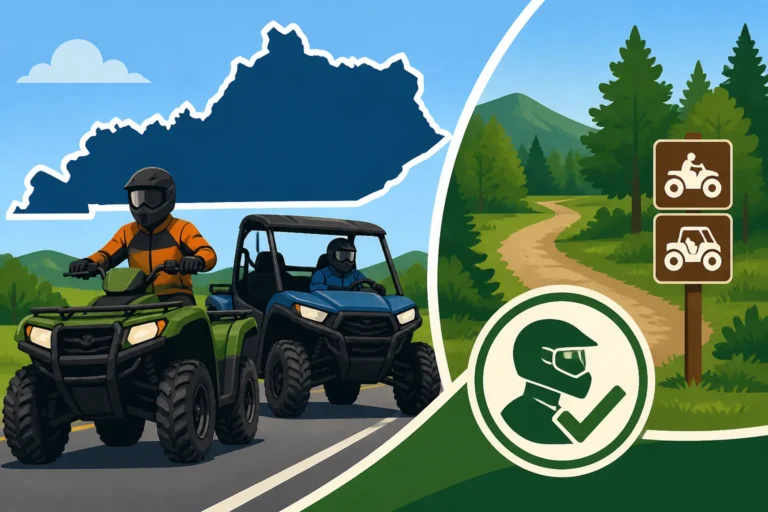
When you're trying to figure out how to let your kids enjoy the thrill of riding an ATV or UTV in Kentucky, it can feel like you're trying to navigate a dense holler blindfolded. The rules around minors and off-road vehicles aren't always crystal clear, leaving many parents worried about doing something wrong or, more importantly, putting their children at risk. This comprehensive guide is here to shed light on Kentucky's specific supervision rules for minor ATV and UTV riders, helping you understand the legal landscape and ensure a safe, compliant experience for your family.
Understanding Kentucky's Foundation for Minor ATV Riders
Kentucky's approach to minors riding ATVs and UTVs is rooted in a fundamental concern for safety. The state doesn't just pull arbitrary age limits out of thin air; instead, it often defers to manufacturers' guidelines and common-sense safety practices. This means that as a parent or guardian, you're not just dealing with the law, but also with the inherent design and safety recommendations of the machines themselves. It's a blend of legal requirements and responsible ownership.
The Manufacturer's Age Label as the Guiding Principle
One of the most crucial elements in Kentucky's regulations for minor ATV riders is the manufacturer's age label. Unlike some states that set rigid age cutoffs for all machines, Kentucky law often points directly to the age recommendations affixed by the manufacturer onto the ATV or UTV itself. This is a big deal because it means the "legal" age for a child to ride a particular machine can vary depending on the specific model and its design. If a manufacturer states "for riders 16 and older," then that's the standard Kentucky expects you to follow, even if the rider is technically "old enough" by a general state minimum for some machines. This can be particularly frustrating when you have an eager young rider who might be capable, but their machine's label says otherwise. It's about ensuring the rider's size, strength, and developmental readiness align with the vehicle's characteristics. Remember, peeling off that label doesn't change the law, and can actually make things worse if an incident occurs. You can learn more about this by reading [The Manufacturer's Age Label in Kentucky Law].
How Kentucky Defines "ATV" in Relation to Minors
It's also essential to understand what Kentucky considers an "ATV" when these rules apply. The state has a fairly specific definition that generally encompasses motorized off-road vehicles designed to travel on four low-pressure tires, with a seat designed to be straddled by the operator, and handlebars for steering. UTVs, or side-by-sides, often fall under similar regulations, though their multi-passenger design and steering wheel can sometimes put them in a slightly different category for certain rules, especially if modified for street-legal status. However, for general off-road use, the spirit of the law around minor supervision usually applies broadly to both types of machines. This distinction matters because a small dirt bike, for instance, might not be subject to the exact same "ATV" rules, though similar safety considerations for minors would certainly apply. This comprehensive guide focuses primarily on ATVs and UTVs as typically defined for recreational off-road use in Kentucky, as this is where most supervision questions arise. If you're wondering what precisely falls under the ATV definition, you might find [What Kentucky Counts as an ATV] helpful.
Navigating Age Restrictions and Direct Supervision in Kentucky
Kentucky's rules for minors riding ATVs aren't a one-size-fits-all directive. Instead, they often create a tiered system, where the level of supervision and permissible riding areas become less restrictive as a child ages and gains experience. However, "less restrictive" never means "no supervision," especially when public access is involved. It's a balancing act between fostering independence and ensuring safety.
Riders Under 12: Strict Supervision and Designated Areas
For the youngest riders, typically those under the age of 12, Kentucky maintains a strict stance on supervision. This age group often corresponds with machines explicitly designed for youth, which typically have lower engine displacements and lighter frames. The law, often echoing manufacturer recommendations, dictates that children in this age bracket must be under direct supervision while operating an ATV or UTV. "Direct supervision" isn't just about being in the same general area; it means being close enough to immediately intervene if a problem arises. Imagine watching your child ride in a field: if you're inside the house, that's not direct supervision. If you're standing 20 feet away, actively observing and ready to step in, that's closer to what's expected. These young riders should also generally be limited to private property or designated off-road parks with explicit permissions for youth riding, away from the unpredictable dangers of public roads. Furthermore, all riders under 16, regardless of the supervision level, are required to wear a helmet, which is a critical safety measure that cannot be overlooked. For more detail on these specific requirements, check out [Kentucky Rules for Riders Under 16].
The 12-16 Age Bracket: Increased Freedom, Continued Oversight
As riders enter the 12-16 age bracket, there's a subtle shift in the legal expectations. While the need for adult oversight doesn't disappear, the definition of "supervision" can become slightly less hands-on, depending on the specific context. This is the age where many young people are transitioning to larger, more powerful machines, often those rated for riders 16 and older by the manufacturer. If the machine is rated for 16+, then the 16+ rule still applies. However, for machines specifically designed for the 12+ age group, the supervision might evolve from constant, immediate proximity to a more general oversight, where the adult is still present on the property and actively monitoring the riding activity. For example, if you're on a large private farm, a 14-year-old might be allowed to ride a designated loop while you're working in a nearby field, as long as you can still keep an eye and ear on them. This age group is often seen as a crucial period for developing advanced riding skills and judgment, but still requires the watchful eye of a responsible adult. It’s also crucial to remember that Kentucky does not typically mandate an ATV safety course, but it's highly recommended, especially for this developing age group, to ensure they learn safe riding practices. You can learn more about this by reading [Kentucky ATV Safety Course Requirements].
Kentucky's Stance on Passengers Under 16
The rules aren't just for the operator; they also extend to passengers, especially minors. Kentucky generally follows the safety recommendations that prohibit passengers on ATVs not specifically designed for two riders. Even on two-up ATVs or multi-passenger UTVs, any passenger under the age of 16 must also wear an approved helmet. This is a non-negotiable safety point. Furthermore, the supervision rules that apply to the operator often indirectly apply to the passenger as well; if a minor is operating a machine with a minor passenger, the entire operation falls under the umbrella of requiring proper adult supervision. It’s a common mistake to think that if a vehicle has a second seat, it’s automatically safe for anyone to ride there. Always check the manufacturer's guidelines for passenger capacity and age recommendations. A prime example is seeing a youth-sized ATV, clearly marked for a single rider, with two small children crammed on it. This is not only illegal but extremely dangerous. For detailed rules on passengers, consult [Kentucky Rules for a Passenger on an ATV].
Practical Implications of Kentucky's Supervision Rules
Understanding the letter of the law is one thing, but applying it in real-world situations, especially when out on the trails or a buddy's farm, is where things can get tricky. Kentucky's rules aim for practicality, but they also place a significant burden of responsibility on parents and guardians. This means actively engaging with the rules and making informed decisions about where and how your children ride.
What "Direct Parental Supervision" Truly Means on the Ground
The term "direct parental supervision" can feel a bit vague, but in Kentucky, it generally implies immediate proximity and active oversight. It's not enough to be in the same county, or even just in the same house while your child is riding in the yard. It means being there, observing, and ready to act if a situation arises. Think of it this way: if your child unexpectedly swerves, gets stuck, or falls off, could you reach them within a matter of seconds? If the answer is no, then you're likely not providing "direct" supervision. This is especially critical for younger riders (under 12) or those new to riding. For example, if you're at a popular riding area like Black Mountain Off-Road Adventure Area, and your 10-year-old is on a youth ATV, you should be riding a separate machine, just ahead or behind them, maintaining visual contact. This isn't just a legal requirement; it's a fundamental safety practice. Many parents choose to invest in safety accessories like a SuperATV horn or flag to ensure visibility, but these don't replace direct supervision. For advice on teaching, refer to [Teaching a Young Rider in Kentucky].
Who Can Supervise a Minor ATV Rider in Kentucky?
While the term is "direct parental supervision," Kentucky law doesn't always specify that it must be the biological parent. Generally, a legal guardian or another responsible adult designated by the parent/guardian can provide the necessary supervision, as long as they meet the criteria of being actively present and capable of intervening. This often applies to grandparents, older siblings (who are adults), or other trusted adults. However, it's critical that the supervising adult understands their responsibility and the specific rules that apply to the minor rider. They must be mature, attentive, and knowledgeable about ATV operation and safety. Letting a 16-year-old supervise an 8-year-old, for instance, would almost certainly not meet the "responsible adult" standard in Kentucky, regardless of how well-intentioned the older teen might be. The intent is for a seasoned, responsible individual to be accountable for the minor's safety and adherence to the rules.
Landowner Permission and Designated Riding Areas for Minors
The rules of supervision for minors are intricately linked to where they are riding. On private property, with the explicit permission of the landowner (which, if it's your own land, is implicit), the direct supervision rules apply. However, on public lands, such as state parks or national forests that allow ATV riding, additional regulations might come into play regarding age-specific trails or required permits. Even if your child meets Kentucky's general age and supervision requirements, specific parks might have their own more stringent rules. For example, a youth trail at Turkey Bay OHV Area might have different guidelines than a general trail in the Daniel Boone National Forest. Always check the specific rules of any public riding area before you haul your machines out. If you're considering private land, ensure you have explicit [Kentucky Landowner Permission Rules] in place. It’s important to instill in young riders the importance of respecting private property boundaries, which is covered further in [Kentucky Trespass Rules for Riders].
The Risks and Realities of Non-Compliance
Ignoring Kentucky's supervision rules for minor ATV riders isn't just about bending a few guidelines; it carries significant legal and, more importantly, safety risks. The state puts these rules in place to protect young riders, and non-compliance can lead to serious consequences, both for the child and for the supervising adult. It's a sobering reminder that while ATVs are fun, they are powerful machines that demand respect and adherence to safety protocols.
Potential Fines and Legal Consequences for Violations
If you or a designated adult fail to properly supervise a minor riding an ATV or UTV in Kentucky, you could face penalties. While specific fines can vary depending on the county and the exact nature of the violation, law enforcement officers have the authority to issue citations. These fines can add up, and in more severe cases involving accidents or repeated violations, there could be more serious legal ramifications, including potential liability issues. Beyond the monetary cost, a citation can also impact your reputation and future interactions with local authorities. Imagine getting ticketed at Black Mountain for allowing your child to ride unsupervised; it's an avoidable hassle and expense that no one wants. For a broader understanding of what fines might look like, consider [Kentucky Fines for Illegal ATV Road Use].
The legal consequences extend beyond mere fines, particularly if an accident occurs. If a minor is injured while riding unsupervised, or if they cause damage or injury to another person or property, the supervising adult (or parent/guardian) could face civil lawsuits for negligence. This is why understanding and strictly adhering to the "direct parental supervision" rule is so paramount. While SuperATV might sell top-of-the-line protective gear, no helmet or roll cage can fully protect a child from the consequences of being in an unsupervised, unsafe situation.
Safety Concerns Beyond the Letter of the Law
Beyond the legal implications, the most significant risk of not following Kentucky's supervision rules is the potential for serious injury or even fatality. ATVs and UTVs are heavy, powerful machines that require mature judgment and quick reflexes to operate safely, especially in unpredictable off-road environments. Minors, particularly younger children, often lack the physical strength, coordination, and cognitive development to handle these vehicles without constant adult oversight.
An unsupervised child might:
- Encounter unexpected terrain, like a steep drop-off or deep water, and not know how to react.
- Get stuck in a remote area, unable to call for help.
- Collide with other riders, obstacles, or even wildlife.
- Attempt stunts or maneuvers beyond their skill level, leading to rollovers or ejections.
These scenarios highlight why direct supervision is not just a legal formality but a life-saving measure. It's about being there to guide, instruct, and intervene before a minor mistake turns into a major tragedy. The goal is always to create a safe, controlled environment where young riders can learn and develop their skills responsibly. As parents, we want our kids to enjoy the outdoors and the thrill of off-roading, but never at the expense of their well-being. Knowing [What a Parent Risks Letting a 6-Year-Old Ride] can truly put these rules into perspective.
Here's a quick reference table outlining general guidelines for minors:
| Age Group | Manufacturer Age Label | Supervision Requirement | Helmet Mandate | Common Riding Areas |
|---|---|---|---|---|
| Under 12 | Follow Label | Direct Parental/Adult | Yes (Under 16) | Private Land, Youth Parks |
| 12-15 | Follow Label | Active Adult Monitoring | Yes (Under 16) | Private Land, OHV Parks |
| 16 and Older | Follow Label | No State Supervision Rule | No (16+) | All Legal Areas |
| Minor Passengers | N/A | Accompanies Supervised Operator | Yes (Under 16) | Multi-Passenger Machines Only |
Disclaimer
This article is for general informational purposes only and does not constitute professional advice. Laws, prices and regulations vary by location and change over time. Consult a qualified professional for guidance on your specific situation.