Why Logging Work Exempts a Kentucky Helmet
It’s a common frustration for ATV and UTV riders in Kentucky: trying to make sense of all the rules, especially when it comes to something as basic as helmet use. You're out there, trying to get work done, and it feels like the laws were written without your specific daily grind in mind. This guide will meticulously break down why, under specific circumstances, Kentucky law provides an exemption from helmet requirements for individuals actively engaged in logging work, helping you understand when you can legally operate your machine without a helmet and, just as importantly, when you absolutely cannot.
Understanding Kentucky's General ATV Helmet Law
When you first dive into Kentucky's ATV and UTV regulations, one of the most immediate things you'll notice is the strong emphasis on helmets. For the vast majority of recreational riders, and even those using their machines for general purposes, wearing a helmet is not just a good idea for safety – it's often a legal requirement. This baseline rule is crucial because the logging exemption isn't a blanket pass; it's a very specific carve-out from a generally applied safety measure.
The Baseline Expectation for Riders
For most Kentuckians hitting the trails, whether it's at Black Mountain Off-Road Adventure Area or just cruising on private property, the expectation is that a helmet should be on your head. This isn't just about protecting yourself from a nasty fall; it's a fundamental part of responsible riding. Picture a group of friends heading out for a weekend ride: everyone's geared up, helmets fastened, ready for whatever the trail throws at them. This image reflects the general spirit of Kentucky's ATV safety statutes. The law aims to prevent serious head injuries, which, as anyone who has taken a tumble knows, can be catastrophic even at low speeds. It's designed to protect riders across various terrains and conditions, from rocky climbs to muddy creek beds. [Kentucky Helmet Law for ATV Riders] outlines these general requirements in detail.
This isn't to say every single bump on a back forty requires a helmet, but when you're thinking about general use, especially on designated trails, public lands, or even when crossing public roads where allowed, the default assumption is that a helmet is mandatory. Breaking this general rule can lead to citations and fines, which nobody wants when they're just trying to enjoy their ride or get from point A to point B. It’s about creating a standard level of safety that applies broadly to the ATV and UTV community, acknowledging the inherent risks of off-road operation.
Why Helmets Are Generally Mandated
The reasons behind mandating helmets are pretty straightforward and rooted in basic physics and injury prevention. Helmets are incredibly effective at absorbing impact energy during a crash or tip-over. An ATV or UTV, despite its robust appearance, can be unstable in certain conditions, and unexpected obstacles are always a possibility, whether you're navigating a tight trail or an open field. A branch might suddenly appear, a tire could hit a hidden rock, or a rut could cause you to lose control. In any of these scenarios, the rider's head is highly vulnerable.
Without a helmet, even a seemingly minor fall can result in concussions, skull fractures, or worse. The cost of such injuries, both personal and financial, is immense. Hospitals and rehabilitation centers see the tragic consequences firsthand. Mandates, while sometimes feeling restrictive, are born from this understanding and a desire to reduce the severity and frequency of these kinds of injuries. For instance, children under 16 almost always need a helmet, regardless of the activity, reflecting their increased vulnerability. [Kentucky Helmet Rules on Public Property at 16] highlights how consistent this rule is for younger riders. The law essentially tries to strike a balance between personal freedom and public safety, with helmets generally falling on the side of public safety given the demonstrable risks of ATV and UTV use.
The Special Case for Occupational Use
While the general rule in Kentucky leans heavily towards helmet use for ATV and UTV operators, the law wisely acknowledges that not all riding is recreational. There are many individuals who depend on these machines as essential tools for their livelihood, performing strenuous and often repetitive tasks in specific work environments. For these dedicated workers, strict helmet mandates can sometimes be impractical, or even counterproductive, depending on the precise nature of their duties. This recognition forms the basis for certain occupational exemptions, including those for logging work.
Recognizing the Demands of Work Environments
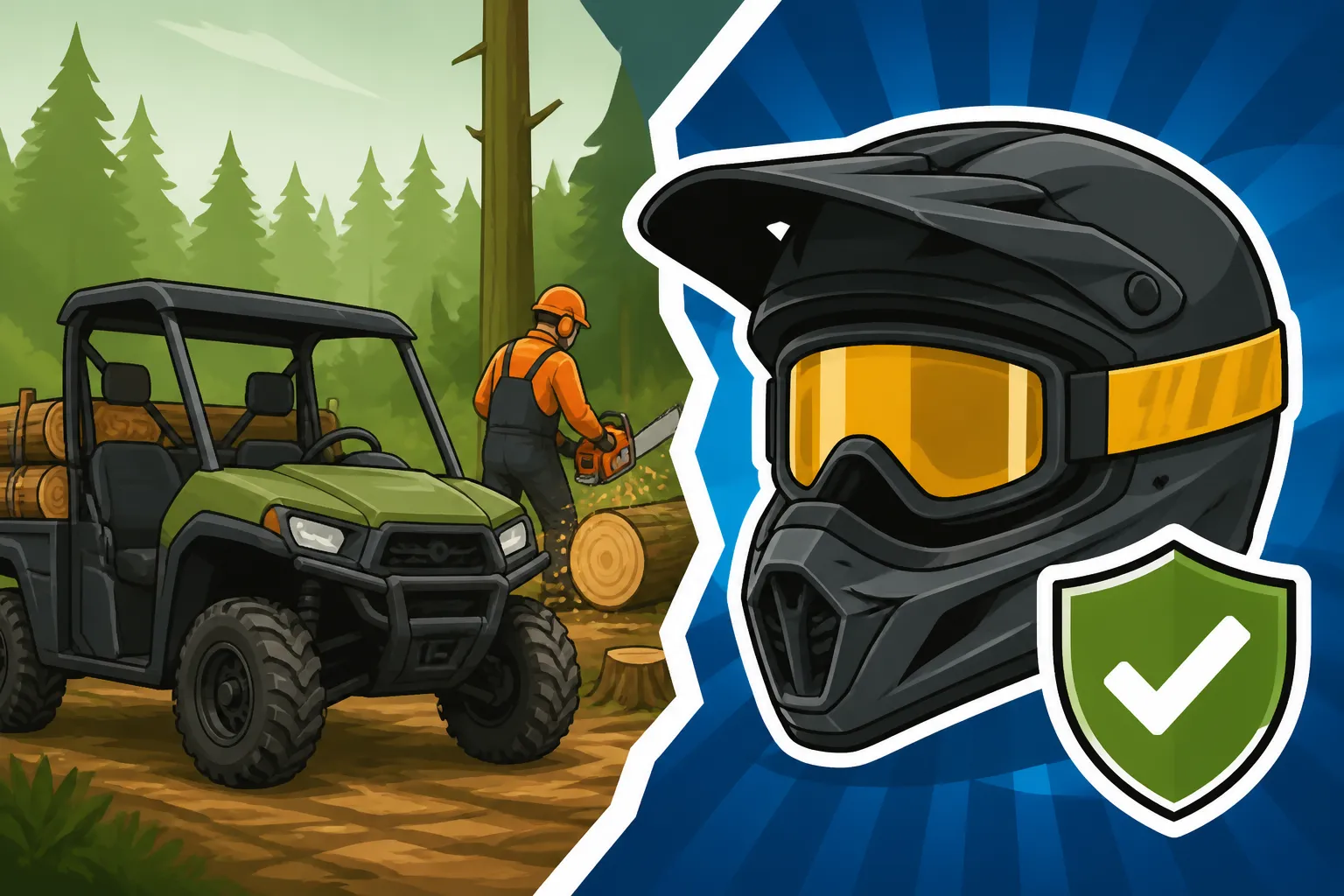
Imagine a logger maneuvering a UTV through dense timberland, perhaps pulling a small trailer loaded with chainsaws, fuel, and other heavy equipment. Their focus is intently on the terrain, the trees, and the safe execution of their task. They might be frequently dismounting and remounting the machine, checking equipment, marking trees, or clearing brush. In such a dynamic and often physically demanding environment, continuously donning and doffing a helmet can become a significant impediment. It can obstruct peripheral vision, limit hearing vital for safety warnings from coworkers or machinery, and even contribute to heat exhaustion during long, strenuous shifts in warmer weather.
The work environment itself often presents different kinds of risks and requires different kinds of protective gear. A logger might be wearing a hard hat, chaps, steel-toed boots, and hearing protection – specialized equipment designed for the immediate hazards of falling timber and heavy machinery. An ATV or UTV is just one piece of the puzzle, and the need to interact with other equipment, climb over obstacles, or maintain constant communication might make a traditional ATV helmet less suitable than other forms of head protection already required for the job. Lawmakers, understanding these practical realities, have made provisions to ensure that the law doesn't create unnecessary burdens for essential industries.
The Common Thread: Farm, Mining, and Logging
Kentucky law draws distinct lines for certain occupations, providing exemptions for farm, mining, and logging work. This isn't a coincidence; these three industries share a common operational characteristic: they frequently involve the use of ATVs and UTVs as working vehicles within controlled, often private, or semi-private, industrial environments. The machines are integral to transportation, hauling, and accessing remote areas on properties dedicated to these specific commercial activities.
For instance, [Kentucky Helmet Exemption for Farm Work] details how farmers can often operate their machines without a helmet when engaged in bona fide agricultural activities on their own land. Similarly, [Kentucky Helmet Exemption for Mining] outlines parallel provisions for those working in the mining sector. The legislative intent behind these exemptions is generally to facilitate productive work in critical Kentucky industries, recognizing that the specific risks and safety protocols within these controlled work environments differ significantly from recreational riding on public trails or roads. The key is that these exemptions are tied directly to the nature of the work and where it's being performed, not merely to the ownership or type of machine.
Diving Deep into the Logging Work Exemption
The logging work exemption for ATV and UTV helmet use in Kentucky is a crucial detail for anyone involved in the timber industry. It's not a suggestion; it's a specific legal provision. However, like all exemptions, it comes with boundaries. Understanding these nuances is vital to ensure you're operating within the confines of the law, avoiding unnecessary risks, and preventing potential fines. It’s about being smart and safe, even when the helmet isn't a legal must-have.
What "Logging Work" Truly Means in Practice
The exemption specifically applies to individuals who are "actively engaged in logging work." This isn't just a casual term; it implies a direct, hands-on involvement in the commercial harvesting, processing, or transportation of timber products. Think about the full spectrum of activities that fall under logging: felling trees, limbing, bucking, skidding logs to a landing, loading timber onto trucks, or even maintaining the logging roads themselves. A UTV might be used to scout timber stands, carry equipment like chainsaws and fuel, or transport workers from one part of the logging site to another. A worker might be dragging small logs with a specialized attachment, using their ATV to access areas too steep for larger equipment, or hauling supplies to remote crews.
It's important to differentiate "logging work" from simply owning property with trees or casually clearing brush. The intent here is commercial activity. For example, if you're a professional timber cutter employed by a logging company, or an independent contractor providing logging services, your use of an ATV or UTV on the job would typically fall under this exemption. However, if you're just cutting firewood for personal use on your own land, or clearing a few trees for a new home construction project, that generally wouldn't be considered "logging work" in the eyes of the law, and the helmet requirement would still apply. The critical factor is the established commercial purpose and regular nature of the timber harvesting operation.
Where the Exemption Applies: On-Site vs. Public Roads
This is perhaps the most critical distinction to grasp. The logging work exemption primarily applies within the confines of the logging operation itself. This means on private timberland, leased forest land, or other areas where active logging is taking place. You could be riding a robust SuperATV machine equipped for heavy-duty tasks deep in the woods, scouting out new felling areas or supervising a crew, and legally be without a helmet. The moment your wheels touch a public road, however, the rules often change dramatically.
Kentucky's default stance is that public roads are generally closed to ATVs and UTVs. [Why Kentucky Roads Are Closed by Default] explains this clearly. There are very limited exceptions for short, direct crossings or specific municipal ordinances. If you're using an ATV or UTV to cross a state highway to get from one part of a logging site to another, even if it's for logging work, you're now interacting with public road regulations. While a brief crossing of 0.2 miles or less might be permitted under certain conditions, a helmet might still be required depending on the specific road use statute. [Crossing a 55 mph Road Without a Helmet] illustrates the gravity of this situation. The exemption is for logging work, not for general travel, especially on public thoroughfares where the risks and legal framework are entirely different. This is a common pitfall where people accidentally break the law, thinking their work exemption covers all scenarios.
Operational Realities That Inform the Exemption
The logging exemption isn't just a random act of legislative kindness; it's rooted in practical considerations about how logging operations function and the equipment utilized. Loggers often rely on a clear field of vision and unobstructed hearing to safely operate heavy machinery and navigate hazardous environments. A helmet, while protective, can sometimes impede these senses. Imagine operating a chainsaw or communicating with a skidder operator: every visual cue and auditory signal is critical. The constant need to dismount, perform manual tasks, and remount the vehicle would make continuous helmet use cumbersome and potentially reduce efficiency without necessarily increasing overall safety in that specific context.
Furthermore, loggers typically wear other forms of head protection, such as hard hats, which are designed to protect against falling objects, a primary hazard in timber operations. While not providing the same kind of impact protection as an ATV helmet in a crash, a hard hat is often a more appropriate piece of PPE for the immediate dangers of the logging site. The law, therefore, recognizes that specialized work environments demand specialized safety protocols, which may not always align perfectly with recreational vehicle safety standards. The goal is to allow workers to use the most effective and appropriate safety gear for their primary task, even if it means foregoing a traditional ATV helmet under strictly defined conditions.
Navigating the Nuances: When the Exemption Ends
Understanding the logging work exemption isn't just about knowing when you don't need a helmet; it's crucially about recognizing the precise moments when that exemption ceases to apply. Misinterpreting these boundaries can lead to legal issues, fines, and, more importantly, put your safety at risk. The law is quite specific, and it doesn't offer a broad blanket coverage just because you work in the timber industry.
Transitional Zones: Moving Between Work Sites and Public Paths
This is where many riders get tripped up. The logging work exemption is tightly tied to the activity and location. If you're deep in the timber stand, actively performing logging tasks, the exemption applies. However, what happens when you need to move your UTV from one logging tract to another, and that journey requires traversing a county road or even a state highway? This "transitional zone" is where the exemption often falls away.
Consider a scenario: you've finished felling trees on one side of a ridge and need to move your SuperATV UTV, perhaps equipped with a heavy-duty winch for log pulling, to a new location a mile down the road. That mile of travel on a public road is no longer strictly "logging work" in the eyes of the law. While your destination is still logging-related, your activity on that public road is now subject to general road use laws for ATVs and UTVs in Kentucky. As we've discussed, these vehicles are generally prohibited from public roads, with only very specific, limited exceptions like direct crossings. If such a crossing is allowed (like the [Kentucky's 0.2-Mile Crossing Rule]), it’s likely that any standard helmet requirements or other road-specific rules would kick back in, even for a brief moment. You’re no longer operating within the logging site; you're traveling to a logging site on public property. This distinction is vital for avoiding citations and ensuring you're legally compliant. [Kentucky Rules for ATVs on Public Roads] provides critical context for these situations.
The Importance of "Actively Engaged" in Logging
The language "actively engaged in logging work" is not just legal jargon; it's the core of the exemption. This means you must be in the process of performing a task directly related to the commercial harvesting of timber. If you're taking your ATV out for a joyride during a lunch break on the logging property, or if you're using it to run into town for groceries, you are no longer "actively engaged in logging work." In those moments, you revert to being a general ATV/UTV operator, and the standard helmet requirements would apply.
Think of it this way: the law isn't saying that all people who log are exempt from helmets. It's saying that when you are doing the act of logging, the exemption applies. If you're using your ATV to haul some personal camping gear to a remote spot on the logging property during off-hours, that's not logging work. If you're transporting a relative who isn't involved in the logging operation, that’s also not "actively engaged." This narrowly defined scope is intentional to prevent misuse of the exemption. The purpose is to facilitate the industry's work, not to provide a loophole for general riding without safety gear. Law enforcement will look at the specific activity you are performing at the time of observation to determine if the exemption applies.
Comparing Logging with Other Work Exemptions
Kentucky law doesn't just single out logging; it also provides similar exemptions for other essential industries. Understanding the commonalities and distinctions between these different work-related exemptions—specifically farm and mining—can offer a clearer picture of the legislative intent behind these carve-outs and reinforce when the logging exemption applies. While the spirit of facilitating work is similar, the specifics of each exemption are tailored to the unique operational realities of that industry.
Similarities and Differences with Farm Work Exemptions
The farm work exemption is arguably the most recognized parallel to the logging exemption. Like logging, it allows an individual actively engaged in farming operations to operate an ATV or UTV on their farm property without a helmet. This makes perfect sense: a farmer might be constantly getting on and off their machine to check fences, herd livestock, inspect crops, or carry tools and supplies. The repetitive nature and the need for quick dismounts and clear situational awareness make a full-face helmet often impractical.
However, there are subtle differences. Farm work is typically tied to agricultural land, which often includes fields, pastures, and barns. Logging work, by its nature, involves dense forestland and rugged terrain, often with its own unique hazards like falling trees and steep grades. Both exemptions generally apply on the property where the work is being performed and for tasks directly related to the commercial enterprise. Neither exemption, for instance, typically grants free rein to ride on public roads without a helmet, except for very specific and limited crossings. [Kentucky's Farm Exception With No Mileage Cap] further clarifies that on private farm roads, the mileage isn't capped, but this is distinct from public road use. The underlying principle for both is to acknowledge the ATV/UTV as an indispensable tool in a specific commercial work setting.
How it Differs from Mining Operations
Mining operations in Kentucky also have a helmet exemption for ATVs and UTVs used by workers actively engaged in mining duties. This exemption again recognizes the unique environment and safety protocols of the mining industry. Miners on an active site are typically required to wear hard hats and other specialized personal protective equipment (PPE) designed for hazards like falling rock, confined spaces, and heavy machinery. An ATV or UTV might be used to transport personnel, equipment, or materials across a vast mine site, often on private haul roads or through underground tunnels where a standard recreational helmet might interfere with other mandatory safety gear or communication systems.
The distinction from logging often comes down to the nature of the terrain and the specific risks. While logging faces dangers like falling trees and steep, unstable ground, mining deals with potential collapses, dust inhalation, and heavy earth-moving equipment. Both are highly regulated, but the specific regulations and PPE requirements are different. The constant need for clear communication, the wearing of specialized breathing apparatus, or the integration with other vehicle systems might necessitate a different head protection strategy than what's typical for recreational riding. So, while a logger and a miner might both be exempt from wearing a recreational ATV helmet while working, they are both almost certainly required to wear other forms of head protection appropriate for their respective, highly hazardous, industries.
Compliance and Best Practices Even with Exemptions
Just because Kentucky law provides an exemption for helmet use during logging work doesn't mean safety should ever take a back seat. In fact, due to the inherent dangers of logging, prioritizing safety becomes even more critical. The exemption is a legal allowance, not a license to be careless. Adhering to best practices and understanding your responsibilities is paramount, not only to avoid accidents but also to ensure you remain within the bounds of the law.
Even Exempt, Safety Remains Paramount
Logging is one of the most dangerous professions, and operating ATVs and UTVs in this environment adds another layer of risk. Even without a specific legal mandate for a helmet, common sense and good practice dictate that you should always consider the most appropriate safety gear for the task at hand. This might mean wearing a hard hat, which is often mandatory on logging sites anyway, to protect against falling debris. It could also mean investing in high-quality eye protection, hearing protection, and sturdy work boots, regardless of the helmet rule.
Think about the conditions: you're navigating rough, often unstable terrain, potentially through mud, over stumps, and around heavy equipment. Visibility can be poor due to weather or dense foliage. A sudden shift in ground, an unexpected obstacle, or a moment of distraction could lead to a tip-over. While the law grants you the discretion not to wear an ATV helmet, a severe head injury could still occur. Organizations like the Forest Resources Association and various state forestry agencies consistently advocate for comprehensive safety protocols that often go beyond minimum legal requirements. Your physical well-being and ability to continue earning a living are far more valuable than the convenience of not wearing a helmet.
Understanding Liability and Personal Responsibility
Operating under an exemption also means you assume a greater degree of personal responsibility. If an accident occurs while you are operating an ATV or UTV without a helmet, even if you are legally exempt, questions of liability can become complex. While you might not face a citation for not wearing a helmet, the severity of any injuries sustained could be greater, potentially impacting your worker's compensation claims, personal health insurance, or even liability in third-party situations. For example, if you're injured due to a mechanical failure of your SuperATV UTV, your lack of a helmet, even if legally permissible for logging work, might become a factor in how your injury is perceived or compensated.
Furthermore, employers have a general duty to provide a safe working environment. Even if the state law has an exemption, a specific company's internal safety policies might still require helmet use for ATV/UTV operators on their property. It's crucial to be aware of and comply with both state law and any employer-specific rules, as these often have stricter guidelines. Always err on the side of caution. Review your company's safety manual, discuss protocols with your supervisor, and ensure you're making informed decisions about your personal protective equipment. Your vigilance and commitment to safety are the best ways to protect yourself and those around you in the demanding world of logging. [Kentucky Rules for Riding a Logging Road] highlights additional considerations for this specific environment.
Comprehensive Look at Kentucky ATV/UTV Helmet Rules
To help clarify the various helmet requirements and exemptions in Kentucky, especially when it comes to work-related activities versus general riding, here's a quick overview. Remember, laws can be complex, and specific details always matter, so this table serves as a general guide.
| Scenario / User | Helmet Required? | Key Details / Conditions | Applicable Law Focus |
|---|---|---|---|
| Recreational Riding | YES | Generally on public trails, parks, or private land (unless owner's rules differ). | General Safety, Public & Private Land Use |
| Riders Under 16 | YES | Almost always, regardless of location or activity (farm, logging, mining work excluded under specific conditions if they are employees). | Youth Safety, Manufacturer's Age Labels |
| Actively Engaged in Farm Work | NO | On farm property, during bona fide agricultural tasks. | Agricultural Exemption |
| Actively Engaged in Mining Work | NO | On mining property, during bona fide mining tasks. | Mining Exemption |
| Actively Engaged in Logging Work | NO | On logging property, during bona fide timber harvesting tasks. | Logging Exemption |
| Crossing a Public Road (Short Distance) | Varies | May be required; general road use laws typically apply, overriding work exemptions. Always check local ordinances. | Public Road Use, [Kentucky's 0.2-Mile Crossing Rule] |
| General Travel on Public Roads/Highways | YES | ATVs/UTVs generally prohibited. If an exception applies (e.g., SPV), helmet is typically required. | Public Road Legality, [Kentucky Rules for ATVs on Public Roads] |
| Passengers | YES | General rule, especially for minors. Work exemptions may extend to workers as passengers on site. | Passenger Safety |
This table provides a snapshot of the major distinctions. It's clear that Kentucky aims for comprehensive helmet use but makes specific allowances for industries where ATVs and UTVs are crucial tools. The key takeaway is always to confirm you meet all the criteria for an exemption before riding without a helmet.
Disclaimer
This article is for general informational purposes only and does not constitute professional advice. Laws, prices and regulations vary by location and change over time. Consult a qualified professional for guidance on your specific situation.