Why Kentucky’s Pilot Program Sunset in 2024
Oh, Kentucky and our ever-evolving relationship with ATVs and UTVs on public roads! It's enough to make your head spin, especially when you think you've finally got a handle on the rules, only for them to change. Many folks felt a real glimmer of hope when the state introduced its pilot program for street-legal machines, picturing easier access to trailheads or even just running a quick errand. But then, as quietly as a whitetail deer slipping through the woods, that program came to an end in 2024, leaving a lot of riders scratching their heads and wondering what happened. This guide is here to shed some light on what that pilot program was, why it concluded, and what it all means for you and your machine now.
Understanding Kentucky's Street-Legal Pilot Program
For years, the idea of legally riding an ATV or UTV on Kentucky's public roads felt like a pipe dream for many off-road enthusiasts. The default rule was pretty clear: keep 'em off the blacktop. But as these machines grew in popularity, particularly side-by-sides, and their utility expanded beyond just farm work or deep woods exploration, a push grew to allow some limited road access. This desire eventually led to a legislative effort to explore the possibility, culminating in the creation of a temporary pilot program.
The Vision: What Kentucky Was Trying to Achieve
At its heart, the pilot program was an attempt by the state legislature to balance the growing demand from ATV and UTV owners with the need for public safety and order on Kentucky's roads. Lawmakers recognized that many people used these machines for legitimate purposes that occasionally required road use, whether it was getting to a hunting camp, accessing trails, or even performing light duty in rural communities. The vision was to create a framework where these machines could, under strict conditions, operate legally on designated public roads, hopefully reducing instances of illegal road use and providing a safer, more regulated environment for everyone. It was about finding a middle ground, seeing if a controlled environment could work for a broader application of these vehicles.
They wanted to see if specific equipment requirements, speed limits, and local opt-in provisions could effectively integrate these vehicles into the road network without creating undue hazards. It was a forward-thinking approach, acknowledging the evolving landscape of off-road vehicle use and trying to provide a structured solution rather than just a blanket prohibition.
How It Worked: The Basic Mechanics for Riders and Cities
The pilot program was designed with a layered approach. It wasn't a free-for-all, allowing ATVs and UTVs on every street in the Commonwealth. Instead, it introduced the concept of a "Special Purpose Vehicle" (SPV) registration. For a machine to qualify, it first had to meet a rigorous set of equipment standards, including things like turn signals, mirrors, an illuminated speedometer, and proper lighting. Think of it as essentially making your off-road machine street-ready, much like outfitting a motorcycle for the road.
Even after meeting these requirements and getting the SPV registration, riders still couldn't just hit any road they pleased. The crucial next step involved local control: cities and counties had to actively "opt-in" to the program through local ordinances. This meant that the decision to allow SPVs on local streets was left up to the communities themselves. If a city opted in, they would then designate specific roads or areas where SPVs could operate, often with speed limits imposed, such as [Kentucky Cities That Opted Into Street Riding]. This local control aspect was key, as it allowed communities to assess their own unique needs and concerns, rather than having a statewide mandate.
Key Provisions: What Special Rules Did It Introduce?
The pilot program introduced several specific rules that distinguished SPVs from typical off-road use or even other street-legal vehicles. For instance, there was a [Kentucky's 20-Mile Limit for Street-Legal Machines] for how far these machines could travel on a designated road without crossing another public road. This wasn't a continuous 20 miles, but rather a limit to connecting trails or other approved sections. It was meant to facilitate short hops, not long-distance travel. Speed limits were generally capped at 45 mph, even on roads where cars might go faster, ensuring that SPVs operated at a more cautious pace.
Riders were also required to have a valid driver's license and carry motorcycle-level insurance. Helmets were often required, though this could vary slightly based on age and local ordinances, similar to general motorcycle helmet laws. The intent was to impose a level of responsibility and safety comparable to other road-going vehicles, recognizing the inherent differences in ATVs and UTVs compared to cars or trucks. These provisions were quite distinct from the limited farm use or emergency crossing exceptions that still apply to regular ATVs and UTVs, as detailed in [Kentucky Rules for Riding a County Road] or [Kentucky Rules for Crossing a Highway].
Why It Was a "Pilot" Program to Begin With
The very name "pilot program" signals its temporary nature. It wasn't intended to be a permanent fixture in Kentucky law from day one. Instead, it was an experimental phase, a testing ground to see how street-legal ATVs and UTVs would integrate into the existing transportation network. When legislators introduce a pilot program, they're essentially saying, "Let's try this for a bit, see how it goes, gather some data, and then decide if it's something we want to make permanent or expand."
Testing the Waters: The Experimental Nature of the Law
Imagine you're building a bridge, but you're not entirely sure if the new material you're using will hold up under heavy traffic. You'd build a smaller, temporary bridge first, test it out, monitor its performance, and then decide whether to use that material for the full-scale project. That's essentially what the pilot program was for street-legal UTVs and ATVs in Kentucky. Lawmakers were testing the waters, trying to gauge the practical implications of allowing these machines on public roads.
They wanted to observe how riders adapted to the new rules, how law enforcement handled the enforcement, and what kind of impact it had on road safety. This experimental phase was crucial because it allowed the state to dip its toe in without committing to a statewide policy that might have unforeseen negative consequences. It provided a window into potential challenges and successes that a permanent law would face, without the pressure of an immediate, irreversible decision.
Data Collection and Evaluation: What Information Was Being Gathered?
A pilot program isn't just about trying something out; it's about learning from the experience. During its operational period, there was an expectation that data would be collected to evaluate its effectiveness. This would ideally include information on accident rates involving SPVs, compliance with equipment and registration rules, the number of cities and counties opting in, and public feedback. The Kentucky Transportation Cabinet, along with local law enforcement agencies, would have been monitoring these factors.
The goal was to provide concrete information that legislators could then use to make an informed decision about the program's future. For instance, if accident rates spiked dramatically, or if enforcement proved to be a nightmare for deputies in small counties, that data would weigh heavily against extending the program. Conversely, if SPVs operated smoothly with minimal issues and strong community support, it would make a case for continuing or even expanding the initiative. Without solid, measurable data, it's difficult for lawmakers to justify extending a program, especially one dealing with public safety.
The Limited Lifespan: Understanding the Expiration Date From the Start
Perhaps the most critical aspect of the pilot program was its built-in expiration date. From the moment it was signed into law, everyone involved knew it wasn't forever. Legislation is often written with sunset clauses, meaning a law is designed to expire automatically on a specific date unless legislative action is taken to renew or make it permanent. The Kentucky street-legal UTV/ATV pilot program was no exception. It had a finite lifespan, with 2024 marked as its conclusion.
This wasn't a surprise or an abrupt cancellation; it was the plan all along. This built-in expiration gave legislators a deadline to review the program's performance and decide its fate. If no further action was taken by that date, the program would simply cease to exist, and the rules would revert to the previous state. For riders who participated or planned to, understanding this limited lifespan was crucial from the outset, highlighting the temporary nature of the street-legal permissions.
Factors Leading to the Sunset of the Pilot Program
So, what happened? Why didn't Kentucky decide to extend or make permanent a program that many riders found useful? The decision for any pilot program to sunset is usually a multifaceted one, often involving a mix of practical challenges, community concerns, and legislative priorities. It's rarely a single, isolated issue but rather a cumulative effect of various factors.
Safety Concerns: Accidents, Rider Behavior, Public Perception
One of the most significant hurdles for any program allowing off-road vehicles on public roads is safety. While proponents argue that properly equipped and responsibly operated ATVs and UTVs can be safe on certain roads, critics often point to their design, which is inherently less stable and protective than a passenger car. Reports of accidents, even minor ones, can quickly fuel public apprehension. If data suggested an increase in incidents involving SPVs, or if the perception among the general public was that these machines were creating dangerous situations, it would naturally lead to questions about the program's viability.
Furthermore, rider behavior always plays a role. Even with strict rules, a few instances of irresponsible riding – speeding, riding in unauthorized areas, or operating a modified machine that no longer met safety standards – could taint the entire program. Public perception, often driven by a few negative examples, can be a powerful force in shaping legislative decisions, even if the majority of riders are following the rules to the letter.
Enforcement Challenges: How Difficult It Was for Local Law Enforcement
Another practical challenge that often plagues pilot programs like this is enforcement. For police departments and county sheriff's offices, especially in rural areas, differentiating between a legally registered SPV and an illegally operated ATV can be tricky. Officers need to be familiar with the specific equipment requirements, the designated road networks in their jurisdiction, and the intricacies of the state law. This requires training and a consistent understanding across various agencies.
Moreover, the local opt-in nature of the program meant that rules could vary significantly from one town or county to the next. What was legal in one municipality might be illegal just a few miles down the road, creating a confusing patchwork of regulations for both riders and law enforcement. This inconsistency could lead to enforcement difficulties, frustrated riders, and potentially inconsistent application of the law, making it harder for the program to achieve its intended goals smoothly.
Legislative Priorities: Other Issues Taking Precedence, Lack of Broad Support
The legislative process is a complex dance of competing priorities. During any given session, lawmakers are juggling hundreds of bills addressing everything from education and healthcare to infrastructure and economic development. If the street-legal UTV/ATV program didn't garner significant, broad-based support across the legislature, it could easily fall by the wayside as other, more pressing or widely supported issues took precedence.
Perhaps the political will simply wasn't there to push for its extension. There might have been strong opposition from certain groups, or simply not enough enthusiastic champions to see it through. Without a concerted effort to re-introduce, amend, and pass new legislation to continue the pilot, it was always destined to sunset. Sometimes, it's not even active opposition, but simply a lack of sustained interest or perceived urgency compared to other legislative matters.
Community Feedback: Both Positive and Negative Input From Residents
Any local opt-in program relies heavily on community acceptance. While many ATV and UTV enthusiasts might have cheered the program, not all residents shared that enthusiasm. Some communities may have experienced increased noise, dust, or traffic in areas where SPVs were permitted, leading to complaints. Concerns about property values, environmental impact, or general disruption to quiet neighborhoods could also have surfaced.
Conversely, there might have been positive feedback from communities that found the program beneficial, perhaps for tourism or local commerce. However, for a pilot program to be extended, the positive feedback generally needs to significantly outweigh the negative, or at least demonstrate that the issues are manageable. If the scales tipped towards more negative community sentiment or unaddressed concerns, it would have been a strong signal to legislators that the program wasn't universally embraced or needed further significant retooling.
The Impact on Riders Post-Sunset
For those who had invested in an SPV-compliant machine or had come to rely on the ability to legally use certain roads, the sunset of the pilot program was undoubtedly a blow. It created a sudden shift back to the pre-pilot rules, causing confusion and frustration for many. The hard work and expense put into making a machine compliant suddenly felt moot for road use.
Stranded Machines: What About Those Who Invested in Modifications?
Imagine you just spent good money installing turn signals, mirrors, a horn, and an illuminated speedometer on your side-by-side, all to comply with the pilot program's requirements. Maybe you even sourced some of these parts from a reputable company like SuperATV, known for quality aftermarket accessories. You went through the hassle of inspection and obtained your SPV registration, envisioning trips to the store or connecting two trail systems legally. Then, the program sunsets. Your machine, while still perfectly capable off-road, is now essentially "stranded" in terms of its road-legal status.
These modifications, while potentially useful for off-road safety, no longer grant you permission to use public roads under the relaxed pilot program rules. This can be a significant financial and practical burden for riders who made these investments in good faith, believing they were preparing their machines for a long-term change in the law. It underscores the risk inherent in participating in any pilot program with a finite end date.
Confusion and Frustration: The Immediate Aftermath for Riders
When a law expires, especially one that many people found beneficial, it inevitably leads to confusion and frustration. Riders might have seen others continuing to use roads and wondered if the rules had truly changed, or if enforcement was simply lax. There's a natural period of adjustment and uncertainty as the public catches up to the new (or rather, reverted) legal landscape.
Many riders likely felt let down by the state, having hoped the pilot program would become a permanent solution. The convenience of legally crossing a road or accessing a small town briefly on an SPV was a significant benefit for some, and losing that capability without a clear alternative can be incredibly frustrating. It often leaves riders feeling like they're back to square one, trying to navigate a complex set of rules for off-road use while public roads remain largely off-limits.
Limited Riding Opportunities: Where Can These Machines Go Now?
With the sunset of the pilot program, the options for street-legal ATV and UTV riding in Kentucky largely revert to the more restrictive statutory exceptions. This means that, for most riders, the only legal times an ATV or UTV can be on a public road are for very specific, short-distance crossings or for certain agricultural, emergency, or utility purposes. We're talking about exceptions like [Kentucky's 0.2-Mile Crossing Rule] to get from one private property to another, or for legitimate farm work as outlined in [Kentucky's Farm Exception With No Mileage Cap].
For the recreational rider, this primarily means focusing on designated off-road parks and private land. Places like Black Mountain Off-Road Adventure Area, Leatherwood, or Rush Off-Road remain excellent options. The dream of using your UTV to commute or connect large swaths of public roads for recreational touring is largely unfulfilled outside of these very narrow exceptions. This shift significantly narrows the scope of where and how these machines can be legally enjoyed, pushing riders back to dedicated off-road environments.
What Now for Street-Legal Machines in Kentucky?
So, if the pilot program is gone, what are the current rules, and is there any hope for future changes? It's important to understand the landscape as it stands today and recognize that while one door closed, the conversation about off-road vehicle use on public roads isn't necessarily over forever.
The Default Rule: Back to the Strict "No Roads" Policy
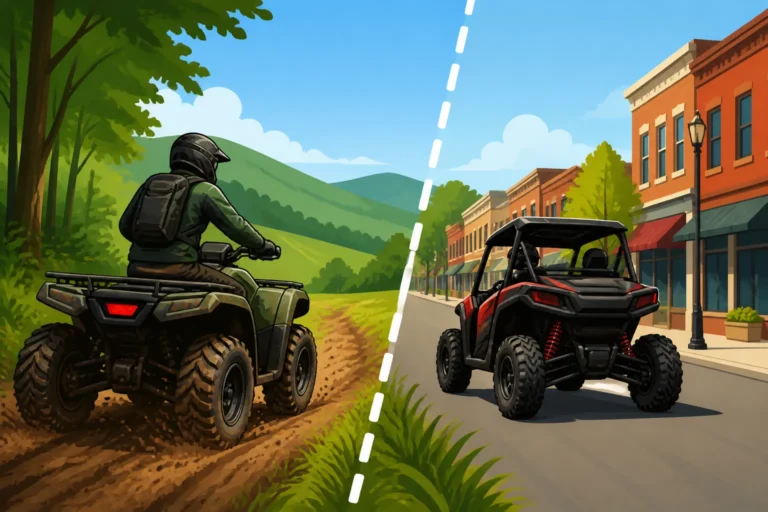
With the pilot program's sunset, Kentucky reverts to its long-standing default position: ATVs and UTVs are generally prohibited from operating on public roads, streets, or highways. This means that unless a very specific and narrow exception applies, taking your machine onto state highways, county roads, or city streets is illegal. This is a fundamental principle in Kentucky law, and it's why many of us who've been riding here for years have always operated with the understanding that public asphalt is largely off-limits. [Why Kentucky Roads Are Closed by Default] pretty much sums it up.
This isn't to say that all road use is impossible, but the bar is set much higher. The general public-facing aspect of "street-legal" for ATVs and UTVs, as envisioned by the pilot program, is no longer in effect. Any road use must now fall strictly within the established, more limited exemptions that predate the pilot program, and these typically do not apply to recreational riding.
Limited Exceptions: Farm Use, Crossing Roads, Emergency Work
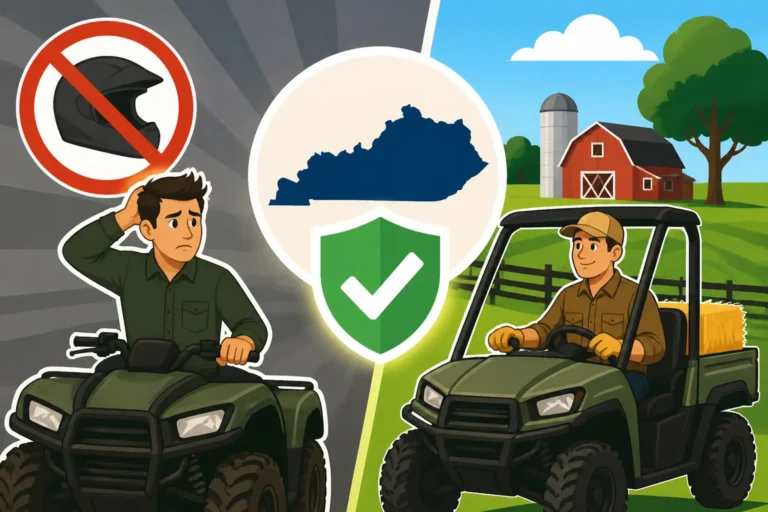
While the broad street-legal option is gone, some specific exceptions for road use still exist. These are crucial for many rural Kentuckians and are often overlooked in the general "no roads" discussion. For example, farmers can still use ATVs and UTVs on public roads for agricultural purposes, such as hauling feed or inspecting fence lines, as long as they adhere to certain safety guidelines and lighting requirements. This farm exception often has no mileage cap, recognizing the necessity for agricultural operations.
Additionally, operators can still cross certain public roads, such as two-lane highways, at a ninety-degree angle to get from one piece of private property to another, provided the crossing is made safely and directly, and only for a maximum of 0.2 miles. This is a quick and direct traverse, not an extended ride. Emergency personnel and utility workers may also operate these machines on public roads when performing official duties. These are not recreational allowances; they are very practical, task-specific permissions designed to facilitate necessary work, not casual riding.
Looking Ahead: Potential for Future Legislation or Local Ordinances
Even though the pilot program has ended, it doesn't mean the conversation around street-legal ATVs and UTVs is finished. Legislative efforts can always be renewed. Lawmakers might revisit the issue in future sessions, perhaps with a modified proposal that addresses the concerns that led to the pilot's sunset. They might consider new models based on other states' experiences or focus on even stricter local control.
Furthermore, some local governments might still explore their own ordinances for very limited street access, though these would have to operate within the bounds of existing state law, which is currently quite restrictive. It's a complex legal area, and any future changes would likely require significant advocacy from riding communities and careful consideration from legislators. Keep an eye on local and state legislative news if this issue is important to you; change often happens incrementally.
Aftermarket Solutions and Compliance: How SuperATV and Others Fit In
Even without a statewide street-legal pilot program, aftermarket companies like SuperATV still play a vital role in the ATV and UTV community. While their street-legal conversion kits might have less immediate applicability in Kentucky for public road use, their products are still invaluable for enhancing off-road performance, safety, and utility. Think about durable bumpers, winches, lift kits, upgraded suspension components, and robust lighting — all crucial for serious trail riding and utility work.
Many of these accessories, while not enabling road use, significantly improve the experience and safety of riding on private land, at designated trail parks, or under the existing farm-use exceptions. So, even if your machine can't legally hit the main highway, investing in quality parts from a brand like SuperATV can still make your off-road adventures safer, more enjoyable, and more capable, ensuring your machine is ready for whatever the Kentucky wilderness throws its way.
Here's a quick look at the program's journey:
| Aspect | Pilot Program (Pre-2024) | Post-Sunset (2024 Onward) |
|---|---|---|
| Legal Status on Roads | Conditional, with SPV registration and local opt-in | Generally prohibited |
| Registration Type | Special Purpose Vehicle (SPV) registration available | No specific SPV registration for road use |
| Equipment Requirements | Strict SPV equipment list (turn signals, mirrors, etc.) | Basic requirements for off-road use; none for road |
| Local Control | Cities/counties had to opt-in for road use | Local ordinances cannot override state prohibition |
| Road Use Purpose | Recreational, connecting trails, errands (if opted-in) | Limited to farm, utility, emergency, 0.2-mile crossing |
| Required License | Driver's License required | Driver's License for certain exceptions (e.g., farm) |
| Insurance | Motorcycle-level insurance required | Not generally required for off-road; specific for farm use |
Disclaimer
This article is for general informational purposes only and does not constitute professional advice. Laws, prices and regulations vary by location and change over time. Consult a qualified professional for guidance on your specific situation.