Kentucky Rules for ATVs on Public Roads
Riding your ATV or UTV in Kentucky can be an absolute blast, whether you're tackling the rugged trails of Black Mountain or exploring a remote logging road. But for many riders, one of the biggest head-scratchers is figuring out exactly where you can legally ride your machine, especially when it comes to public roads. It's a confusing, often frustrating situation that can lead to unexpected trouble if you're not careful. This guide is here to untangle the web of Kentucky's regulations for ATVs and UTVs on public roads, so you can ride with confidence and stay on the right side of the law.
The Default Rule: Why Kentucky Roads Are Generally Off-Limits
It’s a common misconception that if a road isn't posted "No ATVs," then it must be okay to ride there. Unfortunately, in Kentucky, the opposite is true for most public roads. The default stance of the law is that ATVs and UTVs are not permitted on public highways, streets, or county roads. This can be a tough pill to swallow for folks who just want to get from point A to point B, or even for those who live in rural areas and see their side-by-sides as perfectly reasonable transportation. But the law is clear, and understanding this foundational principle is the first step to avoiding legal headaches. [Why Kentucky Roads Are Closed by Default] explains this in more detail.
Understanding the "Closed by Default" Principle
Imagine the state's roadways as a vast network designed primarily for conventional motor vehicles – cars, trucks, and motorcycles. ATVs and UTVs, by their very design, often lack many of the safety features, signaling capabilities, and speed requirements that are standard for these vehicles. Because of these differences, Kentucky law takes a protective approach, deeming these machines unsuitable for general road use unless specifically exempted or adapted. It's not about punishing riders; it's about public safety, both for ATV operators and for other motorists who might not expect to encounter an off-highway vehicle on a paved road.
This "closed by default" concept means that the burden of proof is on the rider to know where they can ride, rather than assuming they can ride anywhere unless explicitly prohibited. This is particularly relevant in the more populated parts of Kentucky where road traffic is heavy, but it applies universally across the Commonwealth's public roadways unless specific exceptions are met. It’s a crucial distinction that often catches new residents or visiting riders off guard.
The Dangers of Unregulated Road Use
While the convenience of riding your ATV down the road to a neighbor's house or the local store might be appealing, the dangers are very real. ATVs and UTVs handle differently on pavement than they do on dirt, gravel, or trails. Their high center of gravity, narrow wheelbase (for ATVs), and knobby tires designed for off-road traction can make them unstable at higher speeds or during sudden turns on hard surfaces. They are also less visible to other drivers, especially at dusk or dawn, and offer little protection in a collision with a full-sized vehicle.
Furthermore, the design of these machines often means they lack turn signals, proper headlights, taillights, and rearview mirrors necessary for safe integration into road traffic. Even a brief trip can turn tragic if an unexpected hazard arises or another driver fails to see your machine. The state's default closure isn't an arbitrary rule; it's a recognition of these inherent risks. This is why Kentucky's legislature has been very cautious about expanding road access, often opting for targeted solutions rather than blanket permissions.
Consequences of Ignoring the Default Rule
The temptation to take a shortcut on a county road or briefly hop on a state highway can be strong, but the legal consequences for illegal road use can be steep. You could face fines, have your machine impounded, and even incur points on your driver's license. Law enforcement officers, particularly in rural areas where ATV use is common, are often very familiar with these laws and are trained to look for violations. [Kentucky Fines for Illegal ATV Road Use] outlines some of the potential penalties you could face.
Imagine riding your quad to a friend's house just a few miles down a quiet country lane. A sheriff's deputy, knowing the local laws, pulls you over. Not only could you be facing a ticket, but if your machine is impounded, you'll be responsible for towing fees and storage costs, adding significantly to the expense and hassle. It's not just about the monetary cost; it's about the disruption, the stress, and the potential loss of your riding privileges or even your machine. The best approach is always to assume public roads are off-limits unless you're absolutely certain you meet one of Kentucky's specific exceptions.
Limited Exceptions for Crossing and Farm Use
While the general rule is "no public roads," Kentucky law does make some very specific and limited allowances for ATVs and UTVs to operate on public roadways. These exceptions are carved out to address practical needs, primarily for agricultural purposes or for riders who need to briefly traverse a road to get to another section of private land or a trail system. It's critical to understand the narrow scope of these exceptions to avoid inadvertently breaking the law.
The Brief Crossing Rule: Two-Tenths of a Mile
One of the most common exceptions allows an ATV or UTV to cross a public road. This isn't permission to ride down the road, but rather to go from one side to the other. And even this is highly restrictive. Kentucky law typically limits these crossings to a maximum distance of two-tenths of a mile (0.2 miles) and requires the crossing to be made at a ninety-degree angle to the road. This rule is designed for situations where, for example, a trail system is bisected by a road, or you need to get from your property on one side of a road to your property on the other.
Furthermore, these crossings must almost always be made during daylight hours. You can't just zip across a busy highway at night. It's a safety measure, ensuring maximum visibility for the ATV operator and other motorists. For more details on this specific rule, check out [Kentucky's 0.2-Mile Crossing Rule]. It's a short distance, and it means exactly that – a brief, direct path across, not a short ride along the shoulder.
Farm, Mining, and Logging Exemptions: Purpose-Driven Travel
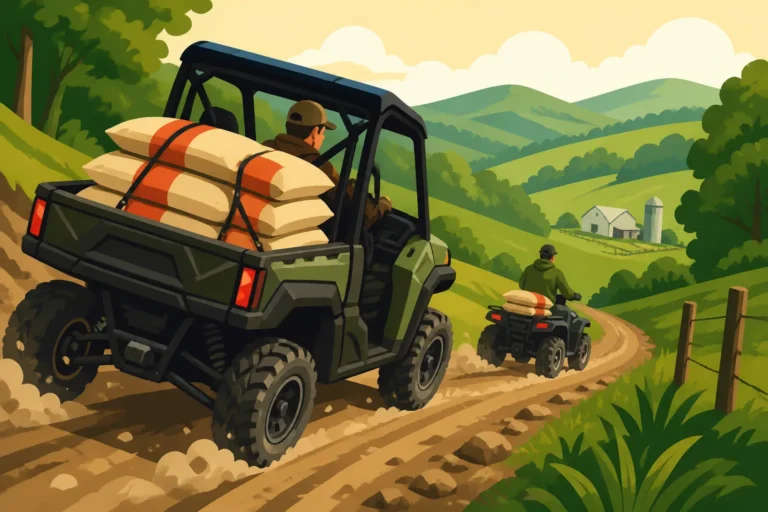
Kentucky law also provides exemptions for ATVs and UTVs when they are being used for legitimate agricultural, mining, or logging purposes. This is a vital allowance for many rural Kentuckians who rely on these machines as workhorses. If you're using your ATV to haul feed to livestock in a distant pasture, checking fence lines, or moving tools between fields, you may be permitted to use certain public roads, like county roads, to facilitate that work. [Kentucky's Farm Exception With No Mileage Cap] dives into this specific scenario.
The key here is "purpose-driven." This exemption isn't a loophole for pleasure riding. The machine must be actively engaged in or directly supporting agricultural, mining, or logging operations. This typically applies to owners, employees, or authorized agents of the farm, mine, or logging company. A farmer driving their UTV from one field to another with a trailer of hay is generally covered, but that same farmer taking their UTV to the local diner for lunch might not be, even if they're still wearing their work boots. These exemptions reflect the practical realities of rural life and industry in Kentucky.
Daylight Operation and Safety Considerations for Exemptions
Even when operating under an exemption, common sense and safety are paramount. For farm, mining, and logging uses, the law often assumes daytime operation, or at least requires adequate lighting if operations extend into low-light conditions. Just because you're exempt from the general ban doesn't mean you're exempt from exercising caution. Visibility is crucial, especially when sharing roads with larger vehicles.
Consider a farmer moving equipment on a county road at dusk. While their activity might fall under the farm exemption, they should still ensure their UTV has functional headlights and taillights, and perhaps even an orange safety flag or reflective tape, to maximize their presence on the road. The spirit of the law, even in exemptions, is to allow necessary work to be done while minimizing risk to all parties. Always err on the side of caution and make yourself as visible as possible.
Special Purpose Vehicles (SPVs): A Path to Limited Road Legality
Kentucky has a specific classification for certain off-road machines, often side-by-sides, that can be made "street legal" under very particular conditions. These are known as Special Purpose Vehicles (SPVs). This isn't a blanket permission for all ATVs and UTVs, but rather a carefully regulated pathway for specific types of machines to gain limited access to certain public roads. The process is involved and requires significant modifications and compliance. [Kentucky Street Legal UTV Requirements] details what you'll need to know.
Defining a Special Purpose Vehicle in Kentucky
An SPV isn't just any UTV or side-by-side. The state has specific criteria for what qualifies. Generally, it's a multi-wheeled vehicle that's not primarily designed for highway use but has been modified and equipped to meet certain safety standards for limited road operation. Think of it as a hybrid category, bridging the gap between an off-road toy and a traditional road vehicle. It's important to differentiate these from standard ATVs (quads), which typically do not fit the SPV definition due to their straddle-seat design and inherent instability on pavement.
The intent behind the SPV designation is often to allow residents in certain communities to use their UTVs for local errands or short commutes on specific public roads. It's a recognition of the growing popularity and utility of side-by-sides, but it comes with a strict set of rules to ensure they can operate safely alongside cars and trucks. If you're considering making your machine an SPV, understanding this core definition is the first step.
The Rigorous Requirements for SPV Certification
Making your UTV an SPV in Kentucky is not a simple matter of slapping a license plate on it. There's a rigorous process involving specific equipment, inspection, and registration. You'll need to ensure your machine is equipped with things like headlights, taillights, brake lights, turn signals, a horn, rearview mirrors (often dual mirrors), a windshield, seatbelts, and tires that meet certain tread depth requirements. The goal is to bring the vehicle's safety features closer to those of a traditional automobile.
After equipping your UTV, it must pass a state-mandated inspection by a certified inspector. This inspection verifies that all the required safety features are present and functioning correctly. Once it passes inspection, you'll need to title and register it as an SPV with your county clerk, and typically carry motorcycle-level insurance. This process ensures that only vehicles that genuinely meet safety thresholds are granted road access. [The $25 Kentucky Inspection] and [Motorcycle-Level Insurance for a Kentucky SPV] are good resources to understand these requirements. Companies like SuperATV offer a range of accessories and parts that can help bring a UTV up to these stringent SPV standards, from lighting kits to mirrors, making the compliance journey a bit smoother.
Local Opt-In: Why SPVs Aren't Road-Legal Everywhere
Perhaps the most confusing aspect of the SPV law is that even if your machine is fully certified as an SPV, it's still not automatically street legal everywhere in Kentucky. The state law created the framework for SPVs, but it leaves the decision to allow them on local roads up to individual cities and counties. This means that an SPV might be perfectly legal to drive on city streets in one Kentucky town, but completely illegal just across the county line in another, even if both machines are identical and fully certified.
This "local opt-in" clause creates a patchwork of regulations across the state. Cities and counties must pass their own ordinances to permit SPVs on their roadways, and they can even set additional restrictions, such as speed limits or which specific roads are allowed. This is why you might see signs in some towns indicating "UTV Permitted Roads" or hear about communities like Corbin or some parts of Harlan County that have embraced local SPV ordinances. Before you ever hit the pavement in your SPV, you must verify that the specific city or county you're in has passed an ordinance allowing them. Without that local approval, your certified SPV is still just an off-road vehicle on public roads. [Kentucky Cities That Allow UTVs on Streets] provides more context.
Driver and Passenger Requirements for Road Use
It's not just the machine that needs to be compliant; the operator and any passengers also have specific requirements when an ATV or UTV is legally operating on a public road, whether it's through an exemption or as a certified SPV. These rules cover everything from licensing to helmets, all aimed at enhancing safety for everyone involved.
Licensing, Insurance, and Safety Gear
If you're operating an SPV on a public road, you absolutely need a valid driver's license. This isn't optional. Just as you wouldn't drive a car without a license, the state considers an SPV on public roads to be a motorized vehicle requiring a licensed operator. [Kentucky Driver's License Rules for ATVs] clarifies this. Furthermore, as mentioned earlier, SPVs typically require specific insurance coverage, often comparable to motorcycle insurance, to cover liability in case of an accident. It’s not just about protecting yourself; it’s about protecting others on the road.
Beyond licensing and insurance, personal protective equipment is crucial. Kentucky has helmet laws for ATV riders, which become even more critical when operating on pavement where speeds can be higher and collision risks with other vehicles are greater. Even if you're on a county road operating under a farm exemption, wearing a helmet is a smart decision. Eye protection, gloves, and sturdy footwear are also highly recommended to prevent injuries in the event of a mishap.
Age Restrictions and Supervision for Minor Riders
When it comes to minors operating ATVs or UTVs, Kentucky has specific age restrictions, particularly on public property. While the law outlines general rules for riding off-road, these become much stricter when any public road use is involved. Minors typically cannot operate an ATV or UTV on a public road under any circumstances, even with adult supervision, unless they are part of a very specific, limited exemption, such as working directly for a farm under strict conditions.
For SPVs, the driver's license requirement inherently means the operator must be at least 16 years old. Allowing a child to operate an ATV or UTV on a public road, even briefly or for an exempted purpose, carries significant legal risk for the supervising adult. It's a direct violation of safety statutes designed to protect young riders, who often lack the experience, judgment, and physical stature to safely navigate public road conditions alongside other traffic.
Understanding Liability and Risks
Operating any vehicle on public roads carries inherent risks, and ATVs/UTVs are no exception. In fact, due to their design, the risks can be elevated. If you're involved in an accident while operating your ATV or UTV on a public road illegally, the legal and financial consequences can be severe. Your personal insurance might not cover you if you're found to be in violation of state law, leaving you personally liable for damages or injuries. This could result in devastating financial ruin.
Even when operating legally as an SPV or under an exemption, understanding your liability is crucial. Motorcycle insurance for an SPV is designed to offer a certain level of protection, but always ensure you understand your policy limits and what it covers. The decision to use an ATV or UTV on a public road should always weigh convenience against the very real risks, both to your physical safety and your financial well-being.
Navigating Local Ordinances and Enforcement
As we've discussed, the rules for ATVs and UTVs on public roads in Kentucky can feel like a labyrinth. A significant part of this complexity comes from the interaction between state law and local ordinances. What's legal in one town might get you a ticket in the next, making it essential for riders to do their homework.
The Patchwork of City and County Rules
Because Kentucky's SPV law requires cities and counties to "opt-in" to allow these machines on their roads, the result is a complex, varied landscape of regulations. You might find that the county roads where you live permit farm-use exemptions without much issue, but the incorporated city within that county has specifically banned all ATV/UTV road use, even for SPVs. Or, a city might allow SPVs on roads with a speed limit under 35 mph, but not on main arteries. This level of granularity means there's no single statewide answer for SPV road legality.
Before you consider riding your SPV on any public road, you absolutely must contact the city clerk or county judge/executive's office for the specific jurisdiction you plan to ride in. Ask directly if there's an ordinance permitting SPVs and, if so, what the specific restrictions are (e.g., speed limits, road types, hours of operation). Don't rely on hearsay or what a friend "thinks" is allowed. This due diligence can save you a lot of trouble down the line. [Kentucky Rules for Riding a County Road] and [Kentucky Rules for Riding a City Street] are key considerations.
What to Do If You're Stopped by Law Enforcement
Even if you believe you're operating legally, you might still encounter law enforcement, especially if you're in an area where ATV/UTV road use is uncommon. If you are stopped, remain calm and cooperative. Turn off your machine, keep your hands visible, and follow the officer's instructions. Present your driver's license, proof of insurance, and SPV registration (if applicable) when requested.
Politely explain your understanding of the law or exemption under which you are operating. For example, "Officer, I'm currently using my UTV to move feed to my cattle in the next field, which I understand falls under the agricultural exemption." Or, "Officer, my UTV is registered as an SPV, and I am on a road designated by the city ordinance." Having copies of relevant documentation or even a printout of the specific local ordinance can sometimes help clarify the situation, though it's ultimately up to the officer's discretion and understanding of the law.
Checking Before You Ride: Resources for Local Laws
The best offense is a good defense. Always research the specific local rules for any area you plan to ride, especially if you intend to touch public roads.
Online Resources: Many county and city governments maintain websites where you can find copies of local ordinances. Look for sections related to motor vehicles, traffic, or recreation.
Direct Contact: As mentioned, calling the city clerk or county judge/executive's office is often the most reliable way to get up-to-date information.
Local Law Enforcement: Sometimes, contacting the local sheriff's department or police department (on their non-emergency line!) can also provide clarification on enforcement practices in their jurisdiction.
Remember, laws can change, and interpretations can vary. What was permitted last year might not be this year, or what one officer understands, another might not. Staying informed is your best protection.
Equipment and Maintenance for Road-Legal Operation (SPV)
If you're going through the effort and expense to make your UTV a Special Purpose Vehicle, ensuring it meets all the equipment requirements isn't just about legality—it's about genuine safety. Proper maintenance and the right gear are non-negotiable for operating on public roads.
Essential Lighting and Signaling for Visibility
For an SPV, visibility is king. This means your machine needs a full complement of functional lighting:
- Headlights: Must be sufficient to illuminate the road ahead, similar to a car.
- Taillights: Required for visibility from the rear, especially at night.
- Brake Lights: Absolutely essential to signal when you're slowing or stopping.
- Turn Signals: Crucial for indicating your intentions to other drivers, both front and rear.
- Horn: A working horn for alerting others to your presence or hazards.
These aren't just cosmetic additions. They are critical safety features that allow you to communicate with other motorists and ensure you can see and be seen, particularly during low-light conditions or inclement weather. [One Headlight and Two Taillights in Kentucky] refers to the general requirement, but for SPVs, turn signals are usually a must. Many manufacturers and aftermarket companies, including SuperATV, offer complete street-legal kits that provide all the necessary lighting and signaling components, simplifying the process of upgrading your UTV for compliance.
Tires, Brakes, and General Machine Condition
Beyond lighting, other mechanical aspects of your SPV must be in top condition for road use.
- Tires: While off-road tires are great for mud and rocks, they can wear quickly and handle poorly on pavement. SPV laws often require tires to have a certain tread depth (e.g., at least two-thirty-seconds of an inch) and be in good condition, free from excessive wear or damage. You might consider specific DOT-approved UTV tires designed for mixed-use if you plan to spend significant time on roads.
- Brakes: Your brakes must be fully functional and capable of stopping your vehicle safely. This means checking pads, rotors, and fluid regularly.
- Mirrors: Dual rearview mirrors are typically required, allowing you to see traffic approaching from behind without turning your head.
- Seatbelts: Must be installed for all occupants and be in good working order.
An SPV inspection will thoroughly check all these components. Regular maintenance isn't just for passing inspection; it's about ensuring your safety every time you venture onto a public road. A machine that barely passes inspection but is poorly maintained is a hazard waiting to happen.
Customizing for Compliance
For many UTV owners, the journey to SPV status involves some level of customization. While many newer UTV models come with some of these features already installed, older machines or those primarily designed for off-road use will need upgrades. This is where companies specializing in aftermarket parts become invaluable. As mentioned, SuperATV, for instance, provides a wide array of accessories from full street-legal kits that include lights, horns, and mirrors, to windshields and DOT-approved tires, all designed to help UTV owners meet the rigorous demands of SPV laws.
When selecting aftermarket parts, always prioritize quality and ensure they meet or exceed any specific legal requirements. Don't just buy the cheapest option; invest in reliable components that will perform when you need them most. The safety of yourself, your passengers, and other motorists depends on it.
| Road Use Scenario | ATV/UTV Status | Key Conditions/Rules | Relevant Link |
|---|---|---|---|
| General Public Roads | Generally Illegal | Closed by default, no specific exemptions met | [Why Kentucky Roads Are Closed by Default] |
| Brief Road Crossing | Limited Exception | Max 0.2 miles, 90-degree angle, daylight only | [Kentucky's 0.2-Mile Crossing Rule] |
| Farm/Mine/Log Use | Exempt | Actively engaged in operations, owner/employee, daylight recommended | [Kentucky's Farm Exception With No Mileage Cap] |
| SPV on Designated Roads | Limited Legal | Certified as SPV, meets equipment, inspection, registration, insurance; local opt-in required | [Kentucky Street Legal UTV Requirements] |
| Riding Without a License | Illegal | Driver must possess a valid driver's license for any road use | [Kentucky Driver's License Rules for ATVs] |
| Riding Without a Helmet | Often Illegal | Helmet required for riders under 16, strongly recommended for all on roads | [Kentucky Helmet Law for ATV Riders] |
| Illegally Riding | Penalties Apply | Fines, impoundment, points on license, potential liability | [Kentucky Fines for Illegal ATV Road Use] |
Disclaimer
This article is for general informational purposes only and does not constitute professional advice. Laws, prices and regulations vary by location and change over time. Consult a qualified professional for guidance on your specific situation.