Street Legal ATVs in Kentucky: The Short Answer
It's a question every ATV and UTV owner in the Bluegrass State eventually asks, usually with a mix of hope and frustration: "Can I ride my machine on the road in Kentucky?" The short answer, the one that often leads to a sigh of disappointment, is generally no, not in the way you might imagine cruising down a highway. However, the longer, more nuanced answer involves a patchwork of state laws, local ordinances, and specific machine classifications that can feel as winding and unpredictable as some of our best mountain trails. This guide is here to untangle that knot, offering a clear, comprehensive look at Kentucky's rules for ATVs and UTVs on public roads, from quick crossings to the dedicated Special Purpose Vehicle designation.
The Baseline: Why Kentucky Roads Are Closed to ATVs by Default
Let's start with the hard truth that often catches new owners off guard: Kentucky, like many states, broadly prohibits the operation of ATVs and UTVs on public roads. This isn't just about high-speed interstates; it extends to most state highways, county roads, and city streets. The law views these machines primarily as off-road vehicles, designed for trails, fields, and private property, not for mixing with cars, trucks, and motorcycles on paved surfaces.
Understanding the Legal Framework Behind the Ban
The core reason behind this default prohibition lies in the very definition and design of an ATV or UTV. These machines are typically not manufactured with the safety features, signaling equipment, or structural components required for safe on-road operation alongside other traffic. Think about it: no turn signals, often no brake lights, no mirrors, no enclosed cabin, and tires designed for traction in mud and dirt, not for stability and grip on asphalt at speed. The state's transportation statutes are designed to ensure public safety, and traditionally, ATVs just don't fit that mold. It's not personal; it's about classification and preventing accidents involving machines ill-equipped for road conditions. Many riders wish they could just zip down the street to the gas station or connect two sections of trail, but the law's broad stroke aims to protect everyone.
The Dangers of Mixing Off-Road Machines and Pavement
The dangers of operating an off-road vehicle on a public road are very real and significant. ATVs and UTVs have a higher center of gravity, which can make them prone to rollovers, especially during sharp turns or evasive maneuvers at higher speeds. Their suspension systems are built for absorbing impacts off-road, not for smooth, stable handling on pavement. The tires, with their aggressive tread patterns, wear quickly on asphalt and can provide unpredictable traction, especially in wet conditions. Visibility is another major concern; these machines can be lower to the ground or simply less conspicuous than other vehicles, making them harder for motorists to see, especially at dawn, dusk, or in heavy traffic. The law, in its default stance, is trying to prevent serious accidents that could result from these inherent design mismatches. It's a common frustration to have a powerful machine and feel restricted, but these safety concerns are at the heart of the regulations.
The Small Exceptions: Brief Road Crossings and Farm Use
While the general rule is "no roads," Kentucky law does carve out a few very specific and limited exceptions. These aren't loopholes to exploit for extended joyrides on pavement, but rather narrow allowances to accommodate practical needs for land access or agricultural operations. It's crucial to understand the precise boundaries of these exceptions, as stepping even slightly outside them can lead to a ticket.
Crossing a Highway: The 0.2-Mile Rule
One of the most frequently asked questions revolves around simply crossing a road to get from one section of property to another, or to access a different trail. Kentucky law allows for this, but with extremely tight restrictions. You can operate an ATV or UTV on a public highway for the purpose of crossing it, but only if the crossing is made at an angle of approximately ninety degrees to the road and at a location where it's safe to do so. Crucially, the law specifies a maximum distance: you cannot operate the machine for more than 0.2 miles. That's just over 1,000 feet – a very short distance indeed. This isn't for connecting two long trails by road; it's for literally crossing from one side to the other. You can learn more about this strict limit by reading [Kentucky's 0.2-Mile Crossing Rule]. If you're caught riding even slightly further than that, a deputy at a Kentucky roadside stop could issue a citation, and it won't matter that you were "just trying to get to the other side." This rule means you pretty much have to load your machine onto a trailer for anything but the briefest, most direct crossing.
Kentucky's Farm Exception With No Mileage Cap
Farmers in Kentucky get a bit more leeway, and for good reason. Agricultural operations often require moving machinery from one field to another, or from a barn to a distant parcel of land. Kentucky law recognizes this necessity and provides an exception for ATVs and UTVs used for agricultural purposes. When an ATV or UTV is being used for legitimate farm work, it can be operated on a public highway. The important distinction here is that there's [Kentucky's Farm Exception With No Mileage Cap]. This means a farmer can haul feed down a holler road or travel a few miles between farm properties without being restricted to the 0.2-mile crossing rule. However, this exception is strictly tied to agricultural use. You can't just slap a hay bale on the back of your UTV and go for a joyride through town. The machine must be actively engaged in or directly supporting farm operations. For example, clearing snow from a neighbor's lane might fall under this if it's part of a mutual aid agreement between farmers, but taking your machine to the local diner for breakfast would not.
Other Limited Exceptions: Mining, Logging, and Emergency Use
Beyond farming, there are a couple of other industry-specific exceptions worth noting, though they won't apply to the average recreational rider. Machines used in mining or logging operations can sometimes be operated on specific sections of public roads or haul roads that are integral to their work. These are typically private industrial roads that might briefly intersect or run alongside public thoroughfares. Similarly, emergency personnel might use ATVs or UTVs on roads in specific emergency situations where other vehicles cannot access an area. These are highly specialized circumstances, however, and do not provide any general allowance for the public to operate their machines on roads. The takeaway for most riders is clear: unless you're a farmer actively working your land, the opportunities to legally ride your ATV or UTV on a Kentucky road are extremely narrow and limited to quick, direct crossings.
The Big Exception: Kentucky's Special Purpose Vehicle (SPV) Law
For many years, the brief crossing and farm use rules were all Kentucky had. But as UTVs, especially, grew in popularity and sophistication, a demand grew for a more comprehensive way to legally use these machines on certain roads. This led to the creation of the Special Purpose Vehicle (SPV) designation, which offers the most significant pathway for some UTVs (and in very specific cases, certain ATVs) to become street legal in Kentucky. It’s important to understand that this is not a blanket "street legal" status; it comes with stringent requirements and geographical limitations.
Kentucky's 2025 Special Purpose Vehicle Law
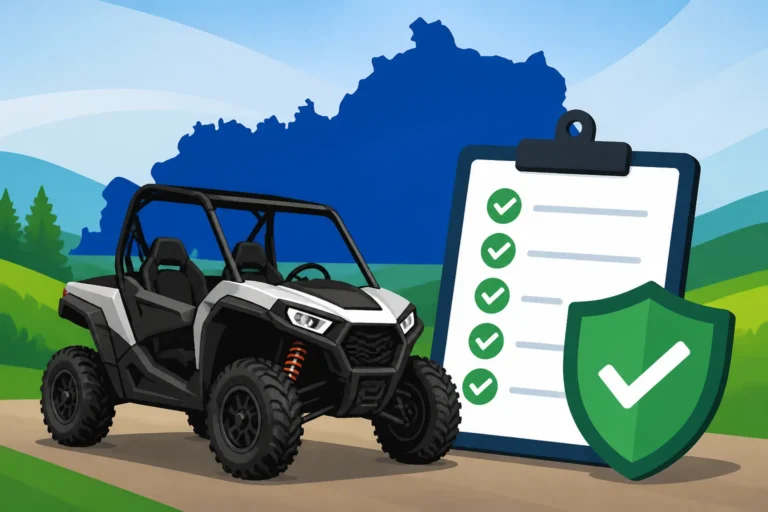
Kentucky's SPV law is designed to allow certain off-road machines, after meeting strict equipment and inspection criteria, to be registered for limited road use. While the general structure of the SPV law has existed for a while, there have been updates and nuances to keep in mind, including those relating to [Kentucky's 2025 Special Purpose Vehicle Law]. This legislation defines an SPV as a motor vehicle that is not an ATV, is not designed for off-road use, and is not a golf cart, but is similar in design and intended for operation on public highways. This definition often points directly at modern UTVs, which can be modified to meet many on-road safety standards. To qualify as an SPV, a machine must pass a rigorous inspection and be registered with the county clerk's office. This isn't a one-time thing, either; SPV registrations generally need to be renewed annually, similar to a car or motorcycle.
Who Can Drive an SPV and Where?
Even if your machine qualifies as an SPV, you can't just jump in and drive it anywhere. There are specific rules about who can operate an SPV and on which roads. First, the operator must possess a valid driver's license. This is not like riding an ATV on private property where a license isn't always required. For road use, even in an SPV, you need a full, valid driver's license. [A License for Kentucky Highway Operation] is a must. Second, and perhaps most crucially, SPVs are only permitted on roads where the local governing body (the city or county) has opted in to allow their use. This means a city must vote before you ride your SPV on its streets. If a city or county hasn't passed an ordinance specifically allowing SPVs, then even your fully compliant SPV cannot be operated on those public roads. You might find that [Kentucky Cities That Allow UTVs on Streets] are still relatively few and far between, though the number is growing. It's vital to check with local authorities before assuming you can ride.
The Original Pilot Program and Its Evolution
It’s worth noting that Kentucky initially implemented a pilot program for street-legal UTVs, which allowed for limited operation in participating cities and counties. This pilot program helped inform the current SPV legislation. However, many pilot programs have sunsetted or been replaced by more permanent statutes. For instance, [A Pilot Program That Ended in 2024] might have previously governed SPV use in some areas. The lessons learned from these programs helped refine the requirements and restrictions. The current law aims to provide a consistent framework, but the local opt-in clause remains a significant hurdle for widespread use. Understanding this historical context helps explain why the rules can sometimes feel complex and why local ordinances play such a critical role in your ability to legally drive an SPV on public roads.
Converting Your ATV/UTV to an SPV: What It Takes
So, you've decided you want to take advantage of Kentucky's SPV law. This isn't a simple decision, and it certainly isn't a cheap one. Converting an off-road machine to meet SPV standards involves significant modifications, a thorough inspection process, and ongoing costs. It's about bringing an off-road vehicle up to a level of safety that makes it comparable to other road-legal vehicles.
The $25 Kentucky Inspection: What It Covers
The first major hurdle in converting your machine into a street-legal SPV is passing a specific inspection. This is not just a quick visual check; it's a detailed assessment to ensure your vehicle meets all the required safety and equipment standards. You’ll need to schedule [The $25 Kentucky Inspection] at a certified inspection station, which is often a sheriff's office or a state police post. This inspection will verify that your machine has all the necessary modifications in place. They'll be looking for things like proper lighting, working brakes, a horn, and other safety features. If your machine fails, you'll need to make the necessary repairs or additions and then get it re-inspected. It’s not uncommon for owners to go through this process more than once, especially if they're doing the modifications themselves or overlooking specific details.
Essential Equipment for SPV Status
The list of equipment an SPV must have is extensive and designed to bring it closer to the safety standards of a motorcycle or car. You can't just throw on a couple of blinkers and call it a day. Key requirements include:
- Headlights: At least one, but often two are preferred for visibility, and they must be able to illuminate the road ahead. [One Headlight and Two Taillights in Kentucky] are the basic requirements, but often more comprehensive lighting is better.
- Taillights and Brake Lights: These are non-negotiable for visibility from the rear and signaling when you're slowing down or stopping.
- Turn Signals: Both front and rear, indicating your intentions to other drivers. Many riders turn to aftermarket suppliers like SuperATV for the necessary components to fit these often-missing pieces of equipment.
- Dual Mirrors: To give you a clear view of traffic behind you, similar to a car. [Turn Signals and Dual Mirrors on a Kentucky SPV] are critical safety features.
- Horn: A working horn is essential for warning other drivers or pedestrians.
- Windshield: While not explicitly required for all motorcycles, many UTVs will benefit greatly from one for safety and debris protection, often a prerequisite for a comfortable road ride.
- Wipers: If your SPV has a windshield, it will likely need functional wipers for rain.
- Speedometer: An illuminated speedometer is needed so you can monitor your speed, especially important since speed limits often apply to SPVs. [An Illuminated Speedometer on a Kentucky SPV] ensures you can see it day or night.
- Tires: Tires must have adequate tread depth, usually at least [Two Thirty-Seconds of Tread in Kentucky], to ensure proper grip on paved surfaces. Off-road tires might need to be swapped for more street-friendly options.
- Seat belts: If your machine has seats, it will require functional seat belts. For many UTVs, [Roll Cage and Seat Belt Rules for an SPV] are paramount for occupant safety.
- Roll Cage: Most UTVs come with a factory roll cage, which is generally acceptable for SPV use.
Meeting these requirements often means a significant investment in parts and labor, and companies like SuperATV offer a wide array of accessories that can help in this conversion process.
Motorcycle-Level Insurance and Annual Renewals
Once your machine has passed inspection and is properly equipped, there are still ongoing financial and legal obligations. An SPV must carry [Motorcycle-Level Insurance for a Kentucky SPV]. This means you'll need a policy that meets the state's minimum liability requirements for operating on public roads, just like any other vehicle. This is a crucial step that often gets overlooked by riders who are used to only carrying insurance for private property damage or theft. Additionally, the SPV registration is not a one-and-done deal. You will need to renew your registration annually, just as you would with a car or motorcycle. This ensures that the state continues to track these vehicles and that they remain compliant with all regulations. Forgetting to renew could lead to fines and the loss of your street-legal status.
Where You Can Ride an SPV: City Opt-In Rules
This is arguably the most critical and often misunderstood aspect of Kentucky's SPV law. It's not enough for your machine to be an SPV; the roads you intend to ride on must also be open to SPVs by local choice. Without a local ordinance, your street-legal SPV is still essentially an off-road vehicle on public roads.
Why a Kentucky City Must Opt In
Kentucky state law provides the framework for SPVs, but it defers the decision of where these vehicles can operate to local governments. This means that [Why a Kentucky City Must Opt In] is baked into the statute. A city council or county fiscal court must actively pass an ordinance, a local law, to allow SPVs on its streets. If they haven't done so, then SPVs are still prohibited within that jurisdiction, even if you have a shiny SPV plate. This creates a patchwork of regulations across the state. You might be able to legally ride your SPV in one city but not in the next town over, even if they share a county line. It's a huge source of confusion and frustration for riders, as it requires diligent research into the specific rules of every locality they plan to visit.
Cities and Counties That Have Adopted SPV Ordinances
While I cannot provide a real-time list of every single Kentucky city or county that has opted in, you will find that some communities, particularly those with a strong tourism draw for off-road enthusiasts or those in more rural areas, have embraced the SPV concept. These localities see the benefit of allowing riders to access local businesses or connect to trail systems without having to constantly load and unload their machines. It's common to see towns near major trail systems, like those in Eastern Kentucky's coal country, exploring or implementing such ordinances. Reading Louisville Metro's ordinance or those from other larger cities will likely reveal specific road types where SPVs are allowed or restricted. For example, some cities may cap roads at 45 mph, as explored in [Kentucky Cities That Cap SPV Roads at 45 mph]. It's always best to check the official website or contact the city clerk's office directly for the most current information on their specific SPV ordinances.
Speed and Road Restrictions for SPVs
Even in areas that have opted in, there are typically restrictions on how and where SPVs can be operated. The most common restriction relates to speed limits. Many local ordinances will only permit SPVs on roads with a speed limit of 45 mph or less. This means you generally won't be able to take your SPV onto higher-speed state highways or major arterial roads, even if you're in an "opt-in" area. The law often specifies [20 Miles on a Centerline Road] as a common limit. Additionally, some ordinances might restrict SPVs to specific types of roads, such as secondary county roads or only within city limits. You'll need to pay close attention to posted signs and specific language in the local ordinances. The intent is usually to allow for local travel and trail access, not high-speed commuting. Understanding these nuances is crucial to avoid getting ticketed for illegal road use, even with an SPV plate.
Helmet Laws and Age Restrictions for Road Use
Safety is paramount, especially when operating any vehicle on public roads. When it comes to ATVs and UTVs, whether under a limited exception or as a fully fledged SPV, Kentucky has specific rules regarding helmets and the age of operators and passengers. These rules are designed to protect riders and are strictly enforced.
Kentucky Helmet Law for ATV Riders
For the most part, when riding an ATV on private property or designated off-road trails, Kentucky does not have a universal helmet law for adults. However, the moment your wheels touch a public road, even for a brief crossing or as an SPV, the rules change dramatically. [Kentucky Helmet Law for ATV Riders] mandates helmet use for all riders and passengers when an ATV is operated on a public road, regardless of age. This means if you're making that 0.2-mile crossing or operating an SPV in an approved city, everyone on the machine must wear a DOT-compliant helmet. There are specific exemptions for farm work, mining, and logging, as detailed in [Kentucky Helmet Exemption for Farm Work], [Kentucky Helmet Exemption for Mining], and [Kentucky Helmet Exemption for Logging]. These exemptions are tied to the specific type of work being performed and do not apply to recreational road use. For example, crossing a fifty-five road bareheaded is absolutely a recipe for a citation if you're not actively engaged in one of those exempted activities.
Helmet Rules for Passengers, Especially Minors
The helmet requirement extends to all passengers as well. It's not just the operator who needs head protection. Furthermore, there are specific rules for minors. While the universal helmet law for public roads covers everyone, Kentucky also has explicit rules for riders under 16, regardless of where they are riding. [Kentucky Helmet Rules for Riders Under 16] require anyone under the age of 16 to wear a helmet at all times when operating or riding an ATV. This rule applies even on private property or off-road trails. So, if your child is riding with you on an SPV on an approved street, or even just crossing a county road, they must have a helmet on. This reinforces the state's commitment to protecting its youngest riders from serious head injuries.
Minimum Age to Operate on Roads
When it comes to operating an ATV or UTV on public roads, the minimum age requirements are strict and directly tied to the licensing laws. As previously mentioned, anyone operating an SPV on a public road must possess a valid driver's license. This means, by default, the minimum age to operate an SPV on a road is 16, consistent with Kentucky's minimum age for obtaining a learner's permit for a motor vehicle. For the limited exceptions like the 0.2-mile crossing or farm use, the age rules can be a bit more nuanced, but generally, operating any motorized vehicle on a public roadway typically implies a level of maturity and understanding of traffic laws that aligns with licensed drivers. Allowing a 15-year-old to ride under a parent's supervision on a street is generally not permitted, even if they're experienced off-road. The law distinguishes between private land riding and public road operation quite clearly on this point.
Practical Considerations and What to Watch Out For
Navigating the world of street-legal ATVs and UTVs in Kentucky isn't just about understanding the law; it's also about practical realities, potential pitfalls, and smart choices. From local enforcement to the very real costs involved, there are many factors to consider before you ever turn the key and hit the pavement.
Enforcement and Potential Fines
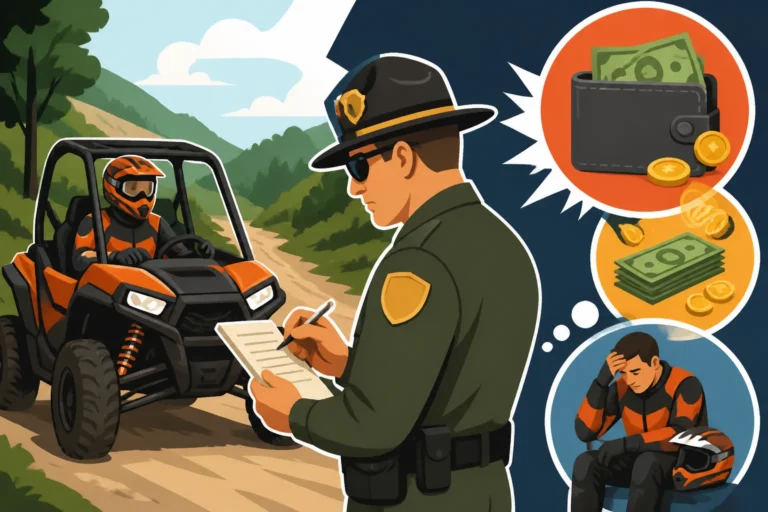
Law enforcement in Kentucky, whether state police or county deputies, are generally well-versed in the state's ATV laws. They know the difference between private land and public roads, and they are typically aware of the limited exceptions and the SPV designation. Getting ticketed at Black Mountain for an untitled quad or riding on a prohibited road can be a costly mistake. [Kentucky Fines for Illegal ATV Road Use] can range from moderate citations to more serious charges, especially if you're found operating recklessly or without a license or insurance. It’s not just the fine itself; repeated offenses can lead to increased penalties or even impoundment of your machine. The best advice is always to assume you cannot ride on public roads unless you are absolutely certain your machine, your actions, and the specific road you are on are all in full compliance with the law. Ignorance of the law is never a valid defense.
The Cost of Going Street Legal
The financial commitment to making your machine street legal as an SPV is substantial. It starts with the cost of all the necessary modifications – headlights, taillights, turn signals, mirrors, horn, windshield, wipers, speedometer, and potentially new tires. Many riders find that parts from companies like SuperATV are excellent for this purpose, but they still represent an investment. Then there are the inspection fees, the registration fees (which need annual renewal), and the ongoing cost of motorcycle-level insurance. When you tally it all up, the expense of converting a machine can be several hundred to well over a thousand dollars, depending on the starting condition of your UTV and how much work you do yourself. This doesn't even count the potential for a new set of road-friendly tires. For many, this cost outweighs the convenience, especially if they only plan to use the machine occasionally on roads.
Alternatives to Road Use: Trailering and Designated Trail Systems
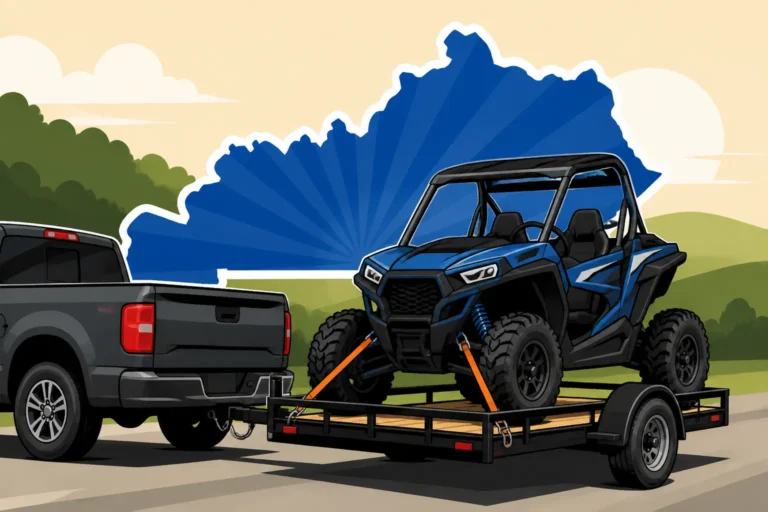
Given the complexity and cost of street-legal conversion, many riders opt for the simpler, safer, and often more enjoyable alternative: trailering their machines to designated off-road riding areas. Kentucky boasts some incredible trail systems, such as Black Mountain Off-Road Adventure Area, Leatherwood Off-Road Park, and Turkey Bay OHV Area at Land Between the Lakes. These parks offer hundreds, even thousands, of miles of trails specifically designed for ATV and UTV riding, often with amenities like staging lots, campgrounds, and even fuel. By trailering your machine, you avoid all the hassle and expense of road legality, reduce the risk of accidents with on-road traffic, and get to enjoy your machine in its intended environment. It’s also often a more social experience, as these parks are designed for communities of riders. For instance, [Riding a Strip Mine Bench in Harlan County] is a much more thrilling experience than puttering down a paved road. While the desire to ride a machine to the store is understandable, the reality is that Kentucky's off-road parks are the true home for these vehicles.
The Future of Street-Legal ATVs in Kentucky
The landscape of ATV and UTV laws is constantly evolving. As these machines become more popular and sophisticated, there's ongoing discussion and legislative activity at both state and local levels regarding their use. What's true today might change tomorrow, which is why staying informed is crucial. Keeping an eye on proposed legislation, attending local public meetings, and engaging with rider advocacy groups can help you stay ahead of any changes. However, for the foreseeable future, the core principles of Kentucky law regarding ATVs and UTVs on public roads remain: generally prohibited, with very specific exceptions for agricultural use and brief crossings, and a more comprehensive but geographically limited pathway for qualified Special Purpose Vehicles. Always ride responsibly, safely, and within the bounds of the law.
Disclaimer
This article is for general informational purposes only and does not constitute professional advice. Laws, prices and regulations vary by location and change over time. Consult a qualified professional for guidance on your specific situation.