Guiding Riders for Pay in Kentucky
Guiding ATV or UTV riders for pay in Kentucky involves more than choosing a trail and collecting a fee. A rider’s permit may let them use a particular riding area, but it does not automatically authorize a business to lead tours there. Separate questions about land access, commercial approval, insurance, rentals, and local rules need answers before you advertise or accept bookings.
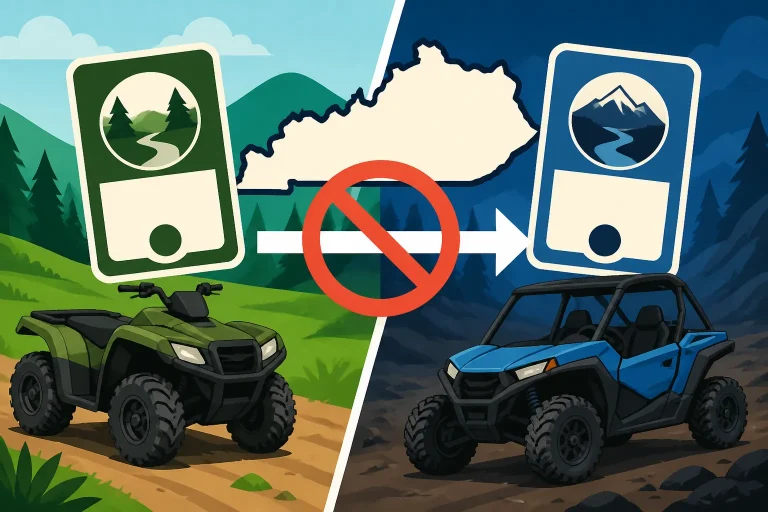
Separate the riding permit from permission to guide
A permit that allows a customer to ride at a park or trail system is not necessarily permission for a paid guide to operate a business there. The land manager may have separate rules for commercial tours, organized rides, rental machines, or groups led for compensation. Those rules can differ between private parks, public lands, and other managed property.
Kentucky does not have one trail permit that automatically grants access across riding areas. A permit is generally tied to a particular place and its rules, so avoid treating a customer’s trail pass as the guide’s business authorization. Kentucky Trail Permits Explained and Why a Kentucky Park Permit Is Not a State Permit explain why location-specific permission matters.
The practical starting point is to ask the entity that controls the land whether paid guided rides are allowed and what approval is needed. Depending on the location, that may mean contacting a park operator, landowner, agency, or another manager. Ask directly about commercial guiding, not only whether ATVs or UTVs can ride there.
| Question | Why it matters | What to confirm |
|---|---|---|
| Is riding allowed at this location? | A trail pass cannot make a closed or restricted route open. | Access rules, operating hours, closures, and permitted vehicle types. |
| Are paid guided rides allowed? | Public riding access may not include commercial use. | Whether the manager requires written authorization, a permit, or an agreement. |
| Who needs a trail permit? | A guide and each customer may have different obligations. | Whether permits are required per rider, machine, or group, and whether the guide is covered. |
| Can the business bring rental machines? | Rental use may have separate rules from customer-owned machines. | Whether commercial rentals are permitted and what conditions apply. |
| What insurance or safety documents are required? | The land manager may set conditions beyond general riding rules. | Required coverage, proof, waivers, emergency procedures, and training. |
When contacting a land manager, describe the business plainly: whether you charge per person or per trip, how many riders you expect, whether you provide machines, and whether the guide will ride along. Ask for requirements in writing and keep the response with your business records. A general answer such as “ATVs are allowed” is not enough if your actual plan is to lead paying customers.
This is especially important where riding rights are connected to private or leased property. A property owner may allow recreational access but not commercial operations, and the person you speak with may not control every trail or activity. On leased coal property, for example, do not assume that one party’s permission covers all land or uses; clarify who controls the route and commercial access. [Kentucky Landowner Permission Rules] and Who Holds Riding Rights on Leased Coal Land are useful background.
If the operator says commercial guides are not permitted, do not try to work around the restriction by calling the tour an informal group ride. The substance of the activity matters: taking payment to lead customers is different from friends riding together. Kentucky Rules for a Commercial Guide addresses the distinction to investigate before setting up a paid service.
Check the rules for the place where you plan to operate
A guide’s obligations depend heavily on the riding area. There is no safe assumption that approval at one park carries over to another, or that an individual trail pass covers a business. Before choosing routes, identify who manages each trail segment and whether the entire planned ride stays within the authorized area.
For a privately operated park, contact the operator about its commercial-use policy, group limits, routes, check-in process, and any conditions for guides. For public land, contact the relevant managing office and ask whether guided commercial use is allowed under its current rules. If access crosses multiple properties, confirm each part rather than relying on the first gate or trailhead’s sign.
Ask questions that will produce operational answers:
- Does the manager allow tours for compensation, and is written approval required?
- Does the approval apply to the guide, the company, the route, or a particular date?
- Are there limits on group size, machine type, operating hours, or trail selection?
- Must the guide carry proof of authorization or show it at check-in?
- Does each customer need a separate permit, and how should the guide handle that?
- Are rental machines allowed, or must riders arrive with their own vehicles?
- What happens if the trail closes or weather makes the route unsafe?
Do not assume that one customer’s ticket, annual pass, or reservation covers the entire group. A land manager may require every rider to obtain a separate pass, may handle groups differently, or may require a commercial operator to arrange access through a separate process. Confirm the details with the operator instead of basing your booking terms on another rider’s experience.
Trail conditions can change the plan even after access is approved. Rain, maintenance, special events, seasonal rules, and temporary closures may affect the route. Build a check-in step into the operation and review current notices before each ride. Kentucky Trail Closures to Check First offers a useful reminder to verify conditions rather than relying on an old map or a past visit.
An organized group is not automatically a commercial tour, but the rules for groups may still apply. If you advertise a ride, coordinate a large group, or charge for participation, ask how the manager classifies the activity. The requirements for a private outing, an organized event, and a paid guided service may not be the same. See Kentucky Rules for an Organized Ride for related considerations, and do not use an event category as a substitute for commercial authorization.
Prepare the business, customers, and machines
Once a location confirms that paid guiding is allowed, put the operating details in order. The guide’s responsibilities include more than knowing the route. Customers need clear information about what the booking includes, which rules they must follow, and what happens if the ride cannot go as planned.
Set out the booking terms clearly
Before taking payment, explain whether the charge covers only the guide’s service or also includes trail access, a machine, fuel, safety gear, or other items. If the customer must buy a separate permit, say so in advance and identify where to confirm the current requirement. Do not imply that a guided-tour booking includes a trail pass unless the operator has confirmed that it does.
For rentals, explain who supplies and maintains the machine, what equipment is provided, and what the customer must bring. If a rental company is involved, confirm that its agreement permits use on the intended trails and that the machine is suitable for the route. A customer’s rental agreement and the trail operator’s commercial-use rules are separate matters. Kentucky Rental Insurance and Waivers is relevant when machines are rented as part of the experience, while Guided UTV Tours in Kentucky can help readers compare guided offerings and arrangements.
Use written booking terms to address cancellations, late arrivals, changes to the route, weather, and closures. Make the terms understandable before payment. Avoid promising that a tour will run in every condition; muddy or damaged trails may be unsafe or closed, and a guide should have a practical way to postpone, reroute, or cancel.
Plan for safety and responsibility
A waiver is not a replacement for permission to operate, insurance, or reasonable safety practices. Ask the land manager what documentation it requires, and speak with an insurance professional about coverage appropriate to a paid guiding business. Describe the actual activity accurately, including whether you transport customers, provide machines, lead rides on private land, or operate on managed trails.
Prepare a pre-ride briefing that covers the route, spacing, hand signals or communication method, stopping points, speed expectations, passenger rules, and what to do if someone becomes separated or a machine breaks down. Match the route to the least experienced rider and the capabilities of the machines. A challenging trail may be inappropriate even when every participant says they are comfortable.
A guide should also know how to respond when conditions change. Set a turnaround point, carry a way to contact help where practical, and establish a plan for injuries, breakdowns, and delayed riders. Tell customers what clothing and protective gear are expected. If the land manager has specific safety rules, include them in the briefing rather than leaving customers to infer them from signs.
Do not promise that a guide can take customers onto any nearby road or connect trails across property boundaries. Road access and trail access are different questions, and an open route on a map does not prove that a commercial group may use it. Stay within the route authorized by the land manager and explain boundaries to customers before departure.
A practical process before accepting bookings
Use this sequence for each riding location, and repeat it when the route, machine arrangement, or business model changes.
- Identify the land manager. Determine who controls every property and trail segment on the proposed route. If ownership or authority is unclear, resolve that before advertising the ride.
- Describe the paid service. Explain how the business charges, who leads, how many customers may attend, and whether machines or equipment are provided.
- Request commercial-use requirements. Ask whether paid guided rides are permitted and whether the operator requires written approval, an agreement, insurance documents, or other conditions.
- Confirm individual rider requirements. Find out whether each guide, customer, or machine needs a permit, reservation, check-in, or other documentation.
- Check the route and vehicle limits. Confirm that the planned machines and route are allowed, and ask about group size, operating times, closures, and special restrictions.
- Prepare customer documents and procedures. Make booking terms, rental arrangements, safety briefings, and emergency plans consistent with the land manager’s rules.
- Recheck before each ride. Verify that access is still available and that the route has not been closed or changed. Tell customers promptly if the plan must change.
Keep copies of approvals, insurance documents, customer terms, and communications with the land manager. This makes it easier to confirm what was authorized and helps prevent a mistaken assumption from turning into a problem at the trailhead.
If you cannot get a clear answer about commercial access, pause bookings for that location. A customer’s permit, a general statement that riding is allowed, or another guide’s past practice is not a substitute for confirmation from the entity that controls the land. The sound approach is to secure permission for the business activity first, then build the tour around the rules that actually apply.
Disclaimer
This article is for general informational purposes only and does not constitute professional advice. Laws, prices and regulations vary by location and change over time. Consult a qualified professional for guidance on your specific situation.