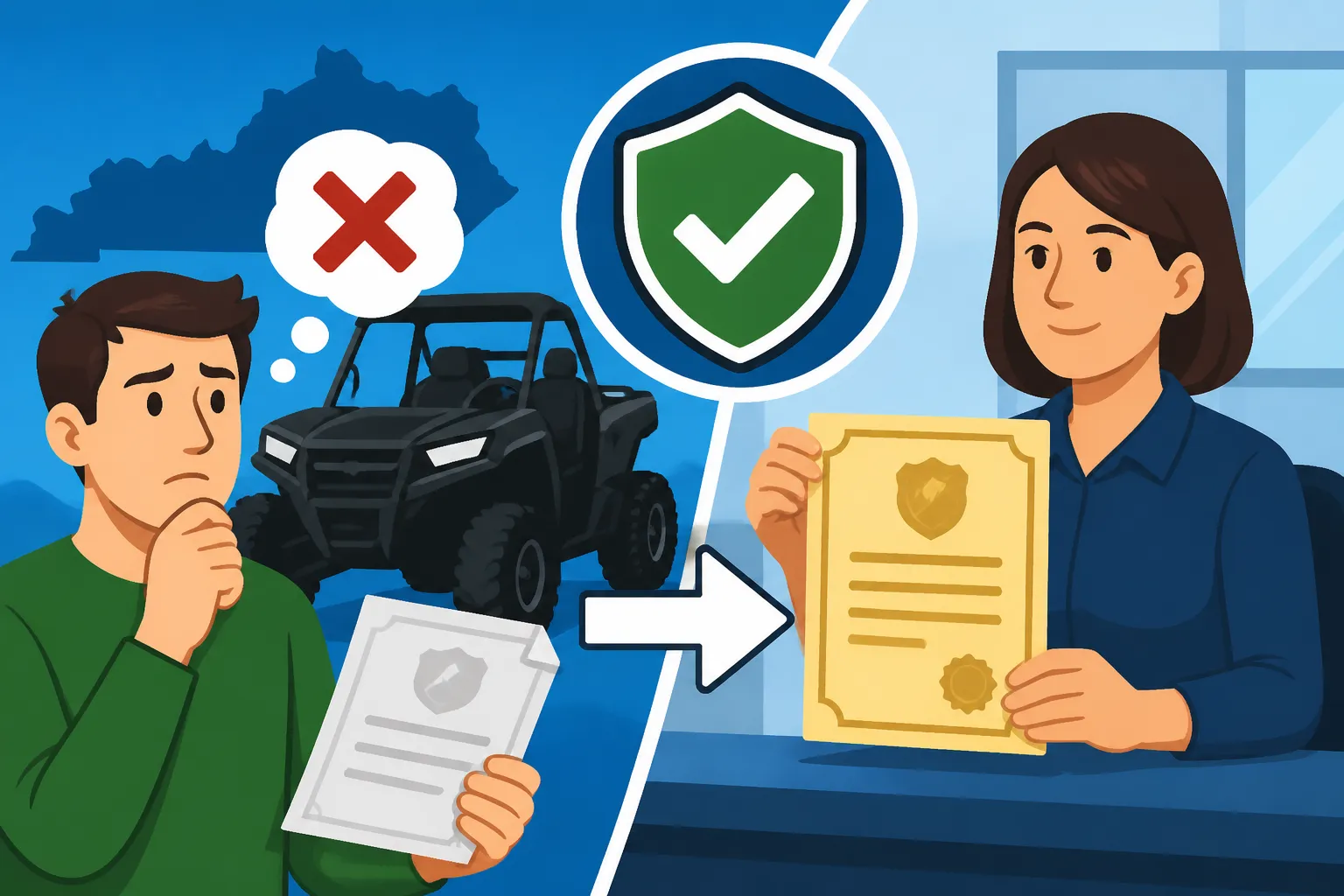
Why the Clerk Will Only Accept the Original Title
There’s nothing quite like the excitement of buying a new-to-you ATV or UTV. You’ve found the perfect machine, shaken hands on the deal, and now you’re ready to make it officially yours by getting that Kentucky title in your name. But then you head to your local county clerk’s office, feeling prepared with your paperwork, only to be met with a polite but firm "I'm sorry, we can only accept the original title." It's a frustrating moment that can derail your plans and leave you wondering why a photocopy or a digital image just won't cut it. This guide will walk you through the reasons behind this strict rule, what your options are if you don't have the original, and how to avoid this headache in the future.
The Core Reason: Proving Unquestionable Ownership and Preventing Fraud
When you’re dealing with something as valuable as an ATV or UTV, especially one that can be titled, the stakes for proving ownership are quite high. The Kentucky County Clerk’s office isn't just being difficult when they insist on the original title; they’re upholding a vital legal standard designed to protect you, future buyers, and the integrity of ownership records across the state.
Why an Original Document is Crucial for Ownership Transfer
Think of your ATV's title not just as a piece of paper, but as the legal deed to your machine. Just like a property deed for your house or the title to your car, it’s a foundational document that legally establishes who holds ownership. These original titles often contain specific security features—think watermarks, unique serial numbers, or even special paper—that are designed to prevent counterfeiting and tampering. A photocopy, no matter how clear, simply can’t replicate these security measures, making it impossible for the clerk to verify its authenticity.
The county clerk's office has a significant responsibility: to accurately record every legal transfer of ownership. If they were to accept copies, it would open a massive loophole for fraud. Imagine a scenario where someone makes multiple copies of a single title and tries to "sell" the same ATV to several different unsuspecting buyers. Without the requirement of a single, original document, proving who the legitimate owner is would become a nightmare, leading to endless legal disputes and financial losses for innocent parties. The original title ensures that there's one clear record, one legal owner, and one verifiable transfer.
The Chain of Title and Its Integrity
Every titled ATV or UTV has a "chain of title," which is essentially its complete ownership history from the moment it was manufactured until its current owner. Each time the machine changes hands, that transfer is typically documented directly on the original title certificate itself, usually by the seller signing it over to the buyer. This creates a continuous, unbroken record of ownership.
When you present an original title that has been properly signed over, you're providing the clerk with the critical link in this chain. It shows them unequivocally who owned the machine before you and that they legally transferred their ownership rights to you. If there’s a break in this chain—for example, if a previous owner lost the original title and never obtained a duplicate, or if you only have a copy—the clerk cannot verify the legitimacy of your ownership claim.
This is why a properly executed [A Signed-Over Title for a Kentucky Purchase] is so incredibly important. It's the physical manifestation of that legal transfer. Without it, the integrity of the ownership record is compromised, and the clerk cannot complete the titling process. They need that tangible, original document to add your name to the official record and ensure the chain remains intact and verifiable for everyone involved.
What Happens When You Don't Have the Original Title?
It’s a common predicament, often born from misunderstanding or an oversight during the purchase. You’ve got the machine, you’ve paid for it, but the critical piece of paper – the original title – is nowhere to be found, or you only have a digital version. This can bring your titling efforts to a screeching halt at the county clerk’s counter.
Common Scenarios and the Clerk's Stance
Let's look at some typical situations that lead to this roadblock and how the clerk's office will respond:
- You have a photocopy or scan: This is perhaps the most frequent scenario. You might have received a photo of the title via text, or a scanned document via email, thinking it would be sufficient. Unfortunately, as discussed, the clerk will immediately reject these. They are not legal instruments for transferring ownership. While they might show you what the title looks like, they don't prove it's the authentic document being transferred. It's not about being unhelpful; it's about adherence to strict legal requirements.
- The seller never gave you the original: This is a big red flag and a situation to avoid. If you completed a purchase and the seller never handed over the physical original title, you're in a tough spot. It's crucial to insist on receiving the original title at the very moment you exchange money for the machine. Without it, you truly don't own the ATV in the eyes of the law, even if you have possession of it.
- The original is lost or damaged: Accidents happen. Perhaps the title was misplaced during a move, or a pet decided it made a tasty snack. While the clerk will be sympathetic, a lost or severely damaged original title still means they cannot process your ownership transfer directly. You'll need to go through a specific process to obtain a valid replacement before you can title the machine in your name.
- You have a bill of sale but no title: This scenario can be a bit trickier because Kentucky's titling laws have changed over time. If the machine was purchased brand new before July 2010, or if it came from a state that does not issue titles for ATVs, then a properly executed bill of sale might sometimes be accepted as proof of ownership. However, for machines that do require a title (especially those purchased after July 2010), a bill of sale alone, even a meticulously drafted one from a service like LawDepot, generally won't suffice for transfer purposes if an original title should exist. This guide's core focus is on situations where an original title should be available but isn't. For more on older machines, you might want to read [Machines Bought Before July 2010 in Kentucky] or [Using a Bill of Sale From a Non-Titling State].
The Repercussions of an Incomplete Titling Process
The inability to present an original title at the county clerk’s office carries significant consequences that extend far beyond a simple inconvenience:
- No Legal Ownership in Your Name: Most importantly, you will not be able to legally title the ATV or UTV in your name. This means that, according to Kentucky state records, the machine is not officially yours, even if you’ve paid for it and it's sitting in your garage.
- Difficulty Selling or Transferring Later: When you eventually decide to sell the machine, you’ll face the exact same problem, but from the seller's perspective. No buyer will want to purchase an ATV that can't be legally titled in their name, making your machine incredibly difficult to sell and significantly devaluing it.
- Lien Issues: If there was a loan or [Titling a Machine With a Lien in Kentucky] on the ATV, the original title is where the release of that lien is typically recorded. Without the original document, it can be extremely challenging to prove that any outstanding debts have been satisfied, potentially leaving you on the hook or complicating future transactions.
- Compliance Concerns: While Kentucky doesn't require ATVs to be registered or have a decal for off-road use, having a title is still proof of ownership. While it doesn't mean you'll be ticketed for not having a title to ride on private land, if you ever need to prove ownership for insurance, theft recovery, or crossing certain public roads legally (which are strict in Kentucky), lacking a proper title can be a major hurdle. Even if you only plan to use it on your private property, you still need to be aware of the implications of [Riding Without a Title in Kentucky].
Your Options When the Original Title is Missing
Finding yourself without the original title can feel like hitting a brick wall. But don't despair! There are definite steps you can take to rectify the situation, though they may require patience and persistence.
Contacting the Previous Owner for the Original
This is, without a doubt, your first and best course of action. The person who sold you the ATV is the last registered owner, and they are the only one who can truly resolve the immediate issue of the missing original title.
- Direct Request: Politely contact the seller and explain the situation. Clearly state that the Kentucky County Clerk requires the physical, original paper title for you to complete the transfer of ownership. Ask if they still have it or if they might have simply overlooked handing it over.
- Requesting a Duplicate: If the seller genuinely can't find the original title, they will need to apply for a duplicate. Emphasize that they must do this, as they are still the legal owner on record. The process typically involves them visiting their local [Titling at a Kentucky County Clerk] office, filling out a form, and paying a small fee (often around [Kentucky's $10 Duplicate Title]). They'll need to provide their ID and sometimes the VIN of the machine. Once they receive the duplicate, they can then properly sign it over to you.
- Documenting Communication: It's a good idea to keep a record of all your communication with the seller. If you're dealing with a difficult or unresponsive seller, having documentation can be helpful, especially if you had a bill of sale prepared through a service like LawDepot that clearly states the seller's obligation to provide a title. While LawDepot can't magically produce a title, it can help create strong legal agreements between parties.
Applying for a Duplicate Title in Kentucky
Let's clarify who can apply for a duplicate title:
- If the Previous Owner Lost It: As mentioned above, if the seller lost the title before transferring it to you, they are the ones who must apply for the duplicate. You cannot apply for a duplicate if you are not yet the titled owner on record. Once they receive the duplicate, they will then sign it over to you. The form they'll likely use is a variant of [Kentucky Form TC 96-182 Explained], which handles various title-related requests.
- If You Lost It (and you were already the titled owner): If you were the legal owner of record, and you misplaced or damaged your original title, then you absolutely can apply for a duplicate yourself.
- Visit Your County Clerk: Head to your local county clerk’s office. This is the same office where you would typically title your ATV.
- Fill Out the Form: You'll need to complete the appropriate application for a duplicate title. This is usually a straightforward form where you'll provide your information, the ATV's VIN, and attest that the original title is lost or destroyed.
- Pay the Fee: There will be a fee for the duplicate title, which is usually quite modest.
- Provide Identification: Always bring your valid Kentucky photo ID, as clerks will require it to verify your identity. [A Kentucky Photo ID at the Clerk's Counter]
- Wait for It: The duplicate title will typically be mailed to you within a few weeks. It's not usually issued on the spot. Planning ahead is key here, especially if you're up against the [Kentucky's Fifteen-Day Titling Deadline] for a recent purchase.
- For a deeper dive into this process, you can refer to [Replacing a Lost Kentucky ATV Title].
Legal Recourse and Alternative Proof of Ownership (Rare Cases)
In some rare and truly difficult circumstances, such as an uncooperative seller, an extremely old machine with no clear title history, or even cases where the seller has passed away, you might need to explore more complex options.
- Machines That Never Had a Title: As a reminder, ATVs purchased new before July 2010 were generally not titled in Kentucky, so an original title might genuinely not exist for older machines. In these instances, a comprehensive [Kentucky Bill of Sale for an ATV] combined with an affidavit of ownership might be accepted. Services like LawDepot can help you draft these legal documents to bolster your claim.
- Court Order: For the most intractable situations, if all attempts to get an original or duplicate title from the previous owner fail, and the machine should have a title, you might have to consider pursuing a court order to establish ownership. This is a significant step, can be costly, and is generally a last resort, especially for an ATV. A judge would review the evidence you present (bills of sale, payment records, etc.) and, if satisfied, issue an order that the clerk can then use to issue a new title in your name.
- Inherited Machines: If you've inherited an ATV and the original title is missing, you'll generally need to follow the rules for [Titling an Inherited Machine in Kentucky], which often involves probate court documents or an affidavit of heirship, along with applying for a duplicate title in the estate's name, or directly in yours if the estate is settled.
Best Practices for Future ATV Purchases in Kentucky
To avoid the frustration of a rejected title application, it pays to be prepared and thorough during the purchasing process. A little due diligence upfront can save you a lot of headaches later on.
Insist on the Original Title at the Point of Sale
This is the golden rule for buying a titled ATV or UTV in Kentucky. Make it a non-negotiable part of your purchase agreement. If the seller cannot produce the original title, walk away or insist that they obtain a duplicate before you finalize the purchase.
- Examine the Title Carefully: When the seller presents the original title, take a moment to inspect it.
- Verify the VIN: Ensure the 17-character Vehicle Identification Number (VIN) on the title matches the VIN physically stamped on the ATV's frame. This is crucial for verifying the machine's identity and avoiding a stolen vehicle. [Checking a VIN Before a Kentucky Purchase] is a critical step.
- Check for Alterations: Look for any signs of tampering, erasures, white-out, or suspicious handwriting. A legitimate title should be clean and clearly legible.
- Confirm Seller's Name: Make sure the name on the title matches the seller's identification. If it doesn't, ask for a clear explanation and documentation of how they came to own the machine.
- Ensure Proper Sign-Over: Watch the seller sign the title over to you in the designated area. Many clerks prefer this to be done at the time of sale.
- Use a Bill of Sale: Even when you have a perfectly signed-over original title, it's wise to create a separate [Kentucky Bill of Sale for an ATV]. This document serves several purposes:
- It clearly records the purchase price, which is essential for calculating sales tax when you title the machine.
- It documents the date of sale, which is important for adhering to Kentucky's titling deadline.
- It can include "as-is" clauses or other agreements made between buyer and seller. Services like LawDepot offer templates for comprehensive bills of sale that can provide an extra layer of protection.
Understand the Titling Deadline
Kentucky law establishes a clear timeframe for titling a recently purchased ATV or UTV. You have [Kentucky's Fifteen-Day Titling Deadline] from the date of purchase to get the title transferred into your name at the county clerk’s office.
- Why the Deadline Matters: This isn't just a suggestion; it's a legal requirement. Missing this deadline can result in late fees or other complications, making an already straightforward process more expensive and frustrating.
- Plan Your Visit: As soon as you complete the purchase and have the properly signed-over original title in hand, make it a priority to visit your county clerk's office. Don't wait until the last minute, as unforeseen issues (like discovering you don't have the original title after all!) can delay you.
- Gather Your Documents: Before you go, ensure you have the following:
- The original, signed-over ATV title.
- Your Kentucky photo ID.
- Proof of purchase (bill of sale) if required or desired.
- Money for the titling fee and sales tax.
Here's a quick reference for what the clerk expects:
| Document Type | Clerk's Action | Why |
|---|---|---|
| Original Paper Title | Accepts | Legal proof, security features, chain of title |
| Photocopy of Title | Rejects | Not legally authentic, fraud risk |
| Scanned Image of Title | Rejects | Not legally authentic, fraud risk |
| Bill of Sale (Post-2010 titled machine) | Rejects (for transfer) | Not a title, only supplementary proof |
| Bill of Sale (Pre-2010 or non-titling state machine) | May Accept (for new title) | Depends on specific circumstances and age of machine |
| Duplicate Title | Accepts | Official replacement for lost original |
| Affidavit of Ownership | May Accept (rarely) | Only in specific legal scenarios, usually with court order or for very old machines |
By understanding why the original title is so crucial and taking proactive steps during your purchase, you can ensure a smooth and hassle-free titling experience for your Kentucky ATV or UTV.
Disclaimer
This article is for general informational purposes only and does not constitute professional advice. Laws, prices and regulations vary by location and change over time. Consult a qualified professional for guidance on your specific situation.