Titling a Quad Kept at a Hunting Camp
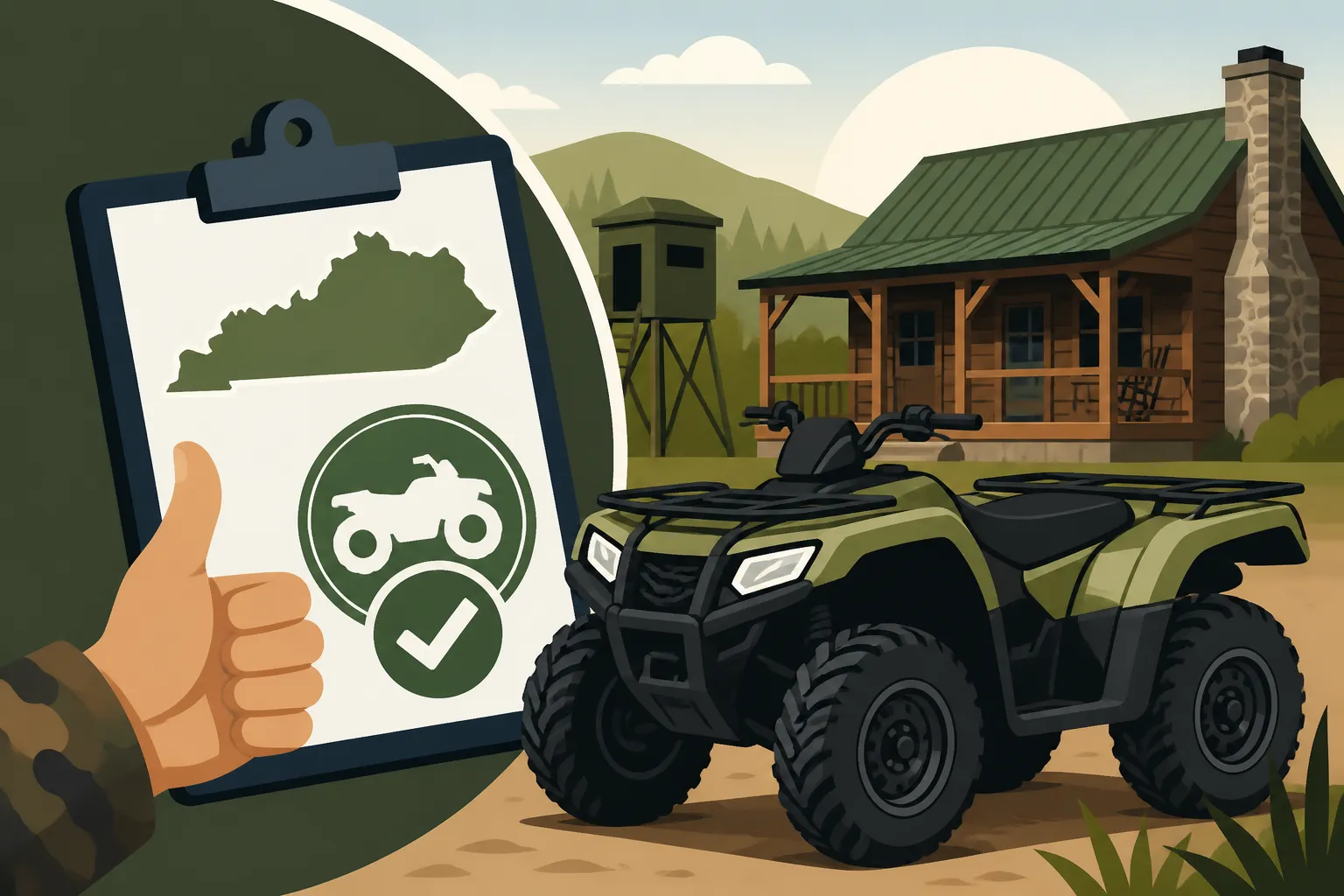
It's a common scenario in Kentucky: you've got a quad that's practically part of the family at your beloved hunting camp. Maybe it helps haul feed, clear trails, or just gets you to your favorite deer stand. You might have bought it years ago from a buddy, inherited it, or picked it up privately without much thought about paperwork. Now, the question pops up: do I actually need to title this machine, even if it hardly ever leaves the camp property? This guide is here to untangle the confusion and walk you through the process of titling your quad that lives primarily at your Kentucky hunting camp, ensuring you're squared away legally and protecting your valuable investment.
Why Titling Your Hunting Camp Quad Matters in Kentucky
It’s easy to think of a hunting camp ATV as a tool that exists outside the formal legal system, especially if it stays tucked away on private land. But Kentucky law has a clear stance on ATV ownership, and simply residing at a hunting camp doesn't exempt your machine from these rules. Ignoring the titling process, even for a quad used exclusively on private property, can lead to some significant headaches down the road.
The Legal Requirement for Ownership Proof
Kentucky's General Assembly made a significant change in 2010, mandating that most ATVs and UTVs purchased after July 15, 2010, must be titled. This isn't just a suggestion; it's a legal requirement designed to formally establish ownership. The title serves as the official, government-backed document that proves you are the rightful owner of that machine. Without it, your claim to the ATV is essentially just a handshake and a memory, which unfortunately doesn't hold much weight in the eyes of the law. You can dive deeper into this with [Why Kentucky Titles Machines Bought After July 2010].
Consider a situation where you decide to sell your trusty camp quad to upgrade to a newer model. When a prospective buyer, especially one who is savvy about Kentucky's ATV laws, asks for the title, what will you tell them? A lack of a title can immediately raise red flags, making your machine incredibly difficult to sell and significantly reducing its market value. Furthermore, if your ATV is ever stolen from your hunting camp, having a title is absolutely critical for reporting it to law enforcement and for any hope of recovery. Without that official proof of ownership, authorities have a much harder time identifying the machine as yours, and insurance claims become a bureaucratic nightmare, if they're even possible at all.
Protecting Your Investment
Even if your ATV never sees a public road and its life is spent navigating muddy trails or hauling timber on your hunting lease, it still represents a tangible financial asset. This machine wasn't free, and protecting that investment goes beyond just parking it in a shed. A title provides a layer of security that you might not consider until an unfortunate event occurs.
Imagine your camp quad is involved in an accident, even a minor one, or suffers significant damage. Whether it's a fender bender with a friend's machine or an unforeseen issue, a title helps establish who is financially responsible and who has the right to make decisions about repairs or replacement. If your machine is uninsured, as many private land quads are, the title becomes even more vital as the sole document proving its value and your ownership claim. Additionally, while we hope it never happens, accidents can lead to disputes. If someone else is injured by your machine, or if there's a disagreement over ownership or damage, the title is your indisputable evidence. It can also simplify matters if you ever need to use your ATV as collateral or if you plan to transfer ownership as part of a will or estate plan.
Gathering Your Paperwork for a Hunting Camp Quad Title
Getting your hunting camp quad titled in Kentucky might seem like a daunting task, especially if its history is a bit murky. Many of these machines change hands informally, meaning you might not have a neatly organized folder of documents. However, the process is straightforward once you understand what's required and how to handle less-than-perfect scenarios. The key is to gather as much official documentation as you possibly can to establish the machine's history and your ownership.
The All-Important Manufacturer's Certificate of Origin MCO or Prior Title
For any ATV purchased new from a dealership, you should have received a Manufacturer's Certificate of Origin (MCO). This is essentially the birth certificate of your machine and is the gold standard for original titling. If your quad was bought used, the seller should have provided you with the previously issued Kentucky title, signed over to you. This signed-over title is crucial for a smooth transfer of ownership. You can learn more about this specific requirement in [A Signed-Over Title for a Kentucky Purchase].
However, the reality for many hunting camp quads is that they've been around for a while, perhaps even before Kentucky started mandating titles for ATVs. Machines bought before July 2010 often fall into this category, and you might find yourself with [Why an Older Machine May Have No Title]. In such cases, the county clerk will typically look for a strong chain of evidence of ownership. This might involve a well-documented bill of sale, especially if the previous owner was from a state that does not issue ATV titles. For these situations, using a comprehensive bill of sale is critical, and resources like LawDepot can provide templates to ensure all necessary details are included, covering buyer, seller, machine details, and purchase price. Sometimes, a formal affidavit of ownership might be required, attesting to how and when you acquired the machine. You'll also likely need to complete Kentucky Form TC 96-182, which serves multiple purposes, including an affidavit of ownership in certain circumstances and an application for title. Understanding [Kentucky Form TC 96-182 Explained] is key here.
Proof of Identity and Residency
When you head to the County Clerk's office to title your quad, you won't just need paperwork for the machine itself; you'll also need to prove who you are. This means bringing a valid form of identification. Typically, a current driver's license or state-issued photo ID is sufficient. This is a standard requirement for any transaction involving official state documents and helps prevent fraud. Knowing you'll need [A Kentucky Photo ID at the Clerk's Counter] will save you a trip.
It's important to remember that the ATV title will be issued to your official residence address, not necessarily the address of your hunting camp, unless that is your legal primary residence. This is a common point of confusion for owners whose machines are kept in a different county than where they live. The titling process is tied to the owner's legal domicile, which is where your driver's license or other official documents list you as living. If you share ownership of the hunting camp quad with a buddy, then [Kentucky ATV Title With Two Owners] might be relevant, and all owners typically need to be present or provide notarized consent. Ensure your ID is current and matches the name you'll be using on the title application. Any discrepancies could cause delays in the titling process.
Verifying the Vehicle Identification Number VIN
One of the most crucial elements of titling any vehicle, including an ATV, is the Vehicle Identification Number, or VIN. Kentucky law is very specific about the format and integrity of this number. For any machine you're looking to title, it must have a valid, un-tampered, and clearly readable [Kentucky's Seventeen-Character VIN Rule]. This seventeen-character alphanumeric code is unique to your machine and is the primary way authorities identify it.
Before you even visit the clerk's office, you should locate the VIN on your ATV and make sure it's clear and complete. It's usually stamped on the frame, often near the steering column, on a front frame rail, or in some other easily accessible but protected location. It’s a good idea to write it down accurately to avoid errors on the paperwork. In many cases, the county clerk's office will require a VIN verification. This might involve an employee visually inspecting the VIN at the counter or, for machines lacking proper documentation, requiring a certified inspector (like a police officer or designated clerk staff) to physically inspect the machine and verify the VIN. This is especially true for older machines or those without a clear title history, and it's a critical step in [Checking a VIN Before a Kentucky Purchase]. A successful VIN verification ensures that the machine is legitimate and not stolen, and that the number on your paperwork matches the number on the vehicle itself.
The Titling Process at Your County Clerk's Office
Once you have your paperwork in order, the actual titling process happens at a specific location, and there are a few things to keep in mind, especially for machines with unique histories, as is often the case with hunting camp quads. It’s important to remember that this isn't a state-level bureaucracy you're dealing with, but rather your local county government.
Where to Go and What to Expect
In Kentucky, all ATV titling is handled at your local County Clerk's office. This is a common point of confusion for many, as some states centralize vehicle administration. However, Kentucky delegates this responsibility to the counties. So, you won't be mailing documents off to Frankfort; you'll be making a trip to your county seat. For more on this, check out [Titling at a Kentucky County Clerk] and [Why a County Clerk and Not a State Office]. The most important thing to remember is that you generally go to the County Clerk's office in the county where you, the owner, legally reside. Even if your hunting camp (and the quad) is in, say, Leslie County, but your primary residence is in Fayette County, you'll process the title through the Fayette County Clerk. This distinction is important for [Which Kentucky County Clerk Handles Your ATV Title].
When you arrive at the clerk's office, be prepared for a few things. You'll hand over your assembled paperwork, including any MCO, previous title, bill of sale, and your completed TC 96-182 form. The clerk will review everything, verify your identity, and ensure all information is correct. There will be fees involved, which typically include a titling fee and, often, a sales tax based on the purchase price or the machine's value. While I can't give specific figures, be prepared for these costs, which you can research under [What a Kentucky ATV Title Costs] and [Kentucky ATV Sales Tax at Titling]. Payment methods vary by office, but most accept cash, checks, and often debit/credit cards (though a processing fee might apply for cards). The clerk will usually process your application on the spot and provide you with a temporary registration or a receipt. Your official title document will then be mailed to you, usually within a few weeks.
Dealing with Unique Hunting Camp Scenarios
The informal nature of many hunting camp quad purchases can present challenges when it comes to titling. You might have bought a quad from a friend years ago for cash, with no formal paperwork ever exchanged. Or perhaps the original owner passed away, leaving the quad to you without a clear paper trail. These situations require a bit more legwork but are not insurmountable.
If you find yourself with [Titling a Machine With No Papers], meaning you have no MCO, no previous title, and maybe just a hastily written bill of sale or no bill of sale at all, the process becomes more about proving continuous, undisputed ownership. You'll likely need to complete a detailed affidavit on the TC 96-182 form, attesting to how and when you acquired the machine, who you bought it from, and why no official documents exist. A strong, detailed bill of sale, even if created after the fact using templates from resources like LawDepot, can bolster your claim. The clerk may also require additional sworn statements or a VIN inspection to ensure the machine isn't stolen. For [Titling an Inherited Machine in Kentucky], you'll typically need a copy of the death certificate, the will (if applicable), and possibly an affidavit from the estate executor or next of kin proving your legal right to inherit the machine. If the machine had a previous title, that title would be signed over by the executor. Finally, if you bought your quad from a neighbor just across the state line, perhaps in Tennessee or West Virginia, then [Buying an Out-of-State Machine for Kentucky] will guide you. You'll generally need the out-of-state title (if one was issued) or a bill of sale, plus proof that the previous state did not require titles for ATVs if that's the case.
Comparison of Required Documents for ATV Titling in Kentucky
To help clarify what you'll need, here's a quick comparison of documents for common scenarios related to your hunting camp quad:
| Scenario | Primary Ownership Proof | Secondary Documents (As Needed) | Identity Proof (Always) |
|---|---|---|---|
| New from Dealer | Manufacturer's Certificate of Origin (MCO) | Original purchase invoice, Completed TC 96-182 | Valid Photo ID |
| Used with Clear Kentucky Title | Previous Kentucky Title (signed over) | Completed TC 96-182, Bill of Sale (recommended) | Valid Photo ID |
| Used, Out-of-State Title | Out-of-State Title (signed over) | Completed TC 96-182, Proof of prior state's titling laws (if applicable) | Valid Photo ID |
| Used, Bill of Sale Only (No Prior Title/MCO) | Detailed Bill of Sale | Completed TC 96-182 (often as affidavit), VIN inspection, Supplemental affidavits | Valid Photo ID |
| Inherited Machine | Death Certificate, Will/Affidavit of Heirship | Previous title (if available), Completed TC 96-182 | Valid Photo ID |
Maintaining Your Title and Avoiding Pitfalls
Once you've successfully navigated the titling process and received your shiny new Kentucky ATV title, your responsibilities don't end there. Proper management of this document and awareness of ongoing requirements are crucial to avoid future problems and ensure your continued peace of mind regarding your hunting camp quad.
Safekeeping Your Kentucky ATV Title
The physical title document is a critically important piece of paper. It's not something you want to keep rattling around in the glove box of your ATV or stuffed under a seat. Instead, treat it like any other vital document, such as your house deed or car title. The best practice is to store the original title in a secure location, like a fireproof safe, a safe deposit box, or another protected spot in your home. This prevents it from being lost, damaged, or stolen. Remember, your title proves ownership, so losing it can be as disruptive as losing the machine itself. For more advice on this, refer to [Where to Keep an ATV Title Between Rides].
While it might seem convenient to carry a copy of your title on the machine or in your wallet, law enforcement and county clerks will almost always require the original document for any official transaction or verification. A photocopy simply doesn't hold the same legal weight. If, despite your best efforts, your title does go missing, don't panic. You can apply for a duplicate title at your County Clerk's office. This process typically requires filling out an application (often another TC 96-182 form), providing proof of identity, and paying a small fee. While not ideal, it's a straightforward process to get [Replacing a Lost Kentucky ATV Title].
Important Deadlines and Penalties
Kentucky law isn't just about getting the title; it's also about getting it done in a timely manner. If you purchase an ATV, you generally have a [Kentucky's Fifteen-Day Titling Deadline] from the date of purchase to transfer the title into your name. Failing to meet this deadline can result in penalties, often in the form of late fees added to your titling costs. While these fees might not break the bank, they are an unnecessary expense that can easily be avoided by promptly addressing the titling process.
Furthermore, operating an untitled ATV can lead to complications beyond just transfer deadlines. While Kentucky doesn't require ATVs to be registered or display decals for off-road use, the title is still your fundamental proof of ownership. If you're ever stopped by law enforcement on public property (even for just crossing a road, which has very strict rules), or if your machine is involved in an incident, you'll need to prove you own it. Although Kentucky specifically does not register ATVs for general operation, the title is still required. Riding an ATV without a title, especially if it's new to you, could be seen as questionable ownership and could lead to [Kentucky Fines for an Untitled ATV] or other legal issues. While you might keep your hunting camp quad exclusively on private land, understanding these timelines and potential penalties is a crucial part of responsible ATV ownership in Kentucky.
Disclaimer
This article is for general informational purposes only and does not constitute professional advice. Laws, prices and regulations vary by location and change over time. Consult a qualified professional for guidance on your specific situation.