Titling a Youth Machine in Kentucky
Navigating the world of ATV ownership can be confusing, and when it comes to youth machines in Kentucky, many parents find themselves scratching their heads, wondering if the same titling rules apply to these smaller, often less powerful vehicles. It’s a common misconception that because a machine is intended for a younger rider, it might fly under the radar of state regulations. This guide is here to clear up that confusion, walking you through everything you need to know about successfully titling a youth ATV in the Bluegrass State, ensuring your young rider's machine is legal and accounted for.
Understanding Kentucky's ATV Titling Rules for Youth Machines
It's natural to assume that a smaller, "youth" designated ATV might have different rules, perhaps being exempt from titling requirements because of its size or intended rider. However, Kentucky law doesn't make that distinction. If it meets the definition of an ATV, it needs a title, regardless of who rides it. This can be a point of frustration for parents who bought a mini-quad thinking it was just a toy, only to find out later it has the same legal standing as a full-sized machine.
Why Youth Machines Need Titles in the First Place
The primary reason youth ATVs in Kentucky need titles boils down to legal ownership and accountability. In Kentucky, any All-Terrain Vehicle (ATV) purchased new or transferred after July 15, 2010, is required to have a title. This isn't just a bureaucratic formality; it's about establishing a clear chain of ownership, which is incredibly important for several reasons. For one, it provides indisputable proof that you or your child (through you, as the legal owner) are the rightful owners. This becomes invaluable if the machine is ever stolen, helping law enforcement track and return it. Without a title, proving ownership can be an uphill battle, often involving receipts, bills of sale, and sometimes even affidavits, none of which carry the same legal weight as a state-issued title.
Beyond theft, a title is crucial for resale. When it's time to upgrade your child to a larger machine, or if they simply outgrow the sport, prospective buyers will almost certainly demand a clear title. Trying to sell an untitled ATV can significantly reduce its value and limit your pool of potential buyers, as most savvy purchasers understand the risks involved. It also helps prevent the sale of stolen machines. Think of it this way: your youth machine, despite its size, is a significant investment. A title protects that investment and simplifies any future transactions. You can learn more about the broader context in [Why Kentucky Titles Machines Bought After July 2010].
What Defines a "Youth Machine" in Kentucky Titling Terms?
This is where things can get a little nuanced, but it's important to clarify. While manufacturers market machines specifically as "youth ATVs" based on engine displacement, top speed, or physical size, Kentucky's titling laws don't typically distinguish between adult and youth machines in their definition of an ATV. The law generally looks at the characteristics of the vehicle itself. According to Kentucky law, an ATV is generally defined as a motorized, off-highway vehicle designed to travel on four low-pressure tires, having a seat designed to be straddled by the operator, and handlebars for steering. The key takeaway here is that if a youth ATV meets these criteria, it falls under the same titling requirements as any other ATV.
This means that whether it's a 50cc mini-quad for a five-year-old or a 90cc model for a pre-teen, if it fits the ATV description, it needs a title. The "youth" designation primarily relates to safety recommendations, manufacturer age labels, and sometimes specific riding regulations, rather than whether or not it needs to be titled. For titling purposes, the engine size or target demographic isn't the primary factor; the vehicle's design and how it's legally classified are. For a deeper dive into the state's classification, check out [What Kentucky Counts as an ATV].
The Role of the County Clerk in Titling Youth ATVs
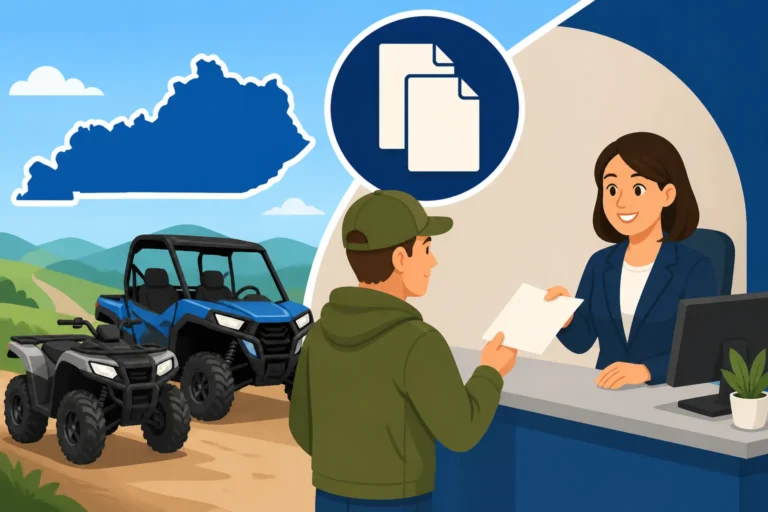
When it comes to titling any ATV in Kentucky, including youth models, your first and only stop will be your local County Clerk's office. Unlike some states where vehicle registrations or titles are handled by a central state agency, Kentucky decentralizes this process to the county level. Each of Kentucky's 120 counties has a County Clerk, and it's their office that manages all vehicle titling and registration processes within their jurisdiction.
This means you won't be mailing documents off to Frankfort or dealing with a state-level Department of Motor Vehicles. Instead, you'll visit the clerk's office in the county where you reside. This localized approach often makes the process more personal, but it also means that while the core rules are statewide, individual county offices might have slightly different ways of handling specific situations or might require certain documents to be presented in a particular order. It’s always a good idea to call your local County Clerk’s office ahead of time to confirm their specific hours, accepted payment methods, and any unique local requirements they might have for titling a youth machine. They are the gatekeepers of the titling process, and a quick phone call can save you a wasted trip. For more details on this process, see [Titling at a Kentucky County Clerk].
The Specifics of Titling a Youth ATV
Now that we've established why a youth ATV needs a title, let's dive into the practical aspects of how to actually get one. This process, while seemingly straightforward, requires careful attention to detail and the right paperwork to avoid unnecessary delays or frustrating repeat visits to the County Clerk's office. Being prepared is half the battle won, and having all your ducks in a row will make the experience much smoother.
Essential Paperwork for a Youth Machine Title
The foundation of successfully titling any ATV in Kentucky, including a youth model, is having the correct documentation. Think of these documents as the puzzle pieces that prove ownership, identify the vehicle, and facilitate the legal transfer.
- Original Manufacturer's Certificate of Origin (MCO) or Previous Title:
- If you're buying a brand-new youth ATV from a dealership, the most critical document you'll receive is the Manufacturer's Certificate of Origin (MCO). This is essentially the birth certificate for your ATV, proving it's never been titled before. It will contain all the vital information about the machine, including its Vehicle Identification Number (VIN).
- If you're purchasing a used youth ATV, the seller should provide you with the properly signed-over Kentucky title. If the machine was previously titled in another state that issues ATV titles, that out-of-state title, properly assigned to you, will be necessary. Make sure the seller's signature matches the name on the title exactly.
- Bill of Sale:
- Whether new or used, a comprehensive bill of sale is absolutely crucial. For a new machine, the dealership will typically provide one that details the purchase price, taxes paid, and your information. For a private party sale of a used youth ATV, a well-drafted bill of sale is your primary proof of purchase. This document should include the seller's and buyer's full names and addresses, the date of sale, the purchase price, a clear description of the ATV (make, model, year, and VIN), and signatures from both parties. A professionally prepared bill of sale, perhaps using a template from a resource like LawDepot, can provide invaluable protection and clarity, especially for private transactions. This document confirms the transaction and helps establish the taxable value of the machine.
- Kentucky Form TC 96-182, Application for Kentucky Certificate of Title:
- This is the official form you'll need to complete to apply for your title. It requires information about you (the applicant), the vehicle, and the purchase details. You can often download this form from the Kentucky Transportation Cabinet website or pick one up at your County Clerk's office. Filling it out accurately and completely before you go can save time. For a full breakdown, refer to [Kentucky Form TC 96-182 Explained].
- Photo Identification:
- The person applying for the title (which will be the parent or legal guardian for a youth machine) must present a valid Kentucky photo ID, such as a driver's license. This confirms your identity as the legal owner and applicant.
- Proof of Sales Tax Paid or Exemption:
- If you bought the machine new from a Kentucky dealer, the sales tax is usually collected at the time of purchase and noted on your bill of sale. If you bought it from a private party, you'll pay the 6% Kentucky sales tax on the purchase price (or the ATV's trade-in value, whichever is higher, as determined by the clerk or NADA guide) directly at the County Clerk's office when you title it. There are specific exemptions, such as for gifts or certain farm uses, but these require their own specific documentation.
The Step-by-Step Titling Process
Once you have all your documents gathered, the process itself is fairly straightforward, though patience can sometimes be a virtue, especially on busy days at the clerk's office.
- Gather All Required Documents: Double-check that you have the MCO or signed-over title, a complete bill of sale (consider using a LawDepot template for private sales), your filled-out TC 96-182 form, and your photo ID.
- Visit Your Local County Clerk's Office: Head to the clerk's office in the county where you reside. Remember, it's not the county where you bought the ATV, but your home county.
- Present Your Paperwork: A clerk will review your documents to ensure everything is in order. They will verify the VIN, check the MCO or title assignment, and confirm the sales information on your bill of sale. If you're bringing an out-of-state title, they may also perform a VIN verification.
- Pay Applicable Fees and Sales Tax: You'll be required to pay the titling fee, and if applicable, the 6% Kentucky sales tax on the ATV's purchase price. Sales tax applies even to used machines purchased from a private party. You can inquire about the current titling fee by checking [Kentucky ATV Title Cost]. Make sure you know what forms of payment your specific County Clerk's office accepts (cash, check, debit/credit card).
- Receive Your Temporary Registration and Wait for Title: Once everything is processed and fees are paid, the clerk will often provide you with a temporary registration document. Your official Kentucky Certificate of Title for the youth machine will typically be mailed to you within a few weeks. It's important to understand that you cannot operate the ATV on public land where a title is required until this process is complete, even if you have a temporary document, as Kentucky does not register ATVs.
What If the Machine Has No Prior Title?
This is a common scenario, particularly with older youth machines. If you've purchased a youth ATV that was manufactured before July 15, 2010, or one from a state that does not issue ATV titles, you might find yourself with no existing title to transfer. This can seem like a hurdle, but it's not insurmountable.
For machines bought before July 15, 2010, they were simply not required to be titled under Kentucky law at that time. If such a machine changes hands now, you will need to apply for a title for it. The most crucial document in this situation will be a strong, detailed bill of sale. This bill of sale must clearly demonstrate the chain of ownership from the previous owner (or the person who originally owned it if you're buying it secondhand) to you. It should include all the standard information: buyer and seller details, date, price, and a full description of the ATV, including the VIN. If possible, having the bill of sale notarized adds an extra layer of legal legitimacy. Resources like LawDepot offer templates for comprehensive bills of sale that can be vital in these scenarios. You might also be required to provide an affidavit of ownership, stating how you came into possession of the machine and affirming that it is not stolen. The clerk may also request a VIN inspection to verify the machine's identity. For more insights into older machines, refer to [Machines Bought Before July 2010 in Kentucky].
Common Challenges and Solutions When Titling a Youth Machine
Even with all the right intentions, parents can run into snags when trying to title a youth ATV. Knowing what these common issues are ahead of time can help you prepare and potentially avoid a frustrating delay. The County Clerk's office is there to help, but they can only work with the information and documentation you provide.
Missing or Incomplete Paperwork
This is perhaps the most frequent hurdle. You've just bought a used youth ATV, perhaps from an online listing or a local classified ad, and the seller didn't have the original title or provided a very sparse bill of sale. This scenario is incredibly common, but it does make the titling process more complex.
- Lost Original Title: If the previous owner lost the title, they should ideally obtain a duplicate title before selling it to you. If they haven't, and you're already in possession of the machine, you might need to try and contact them to assist in applying for a duplicate. If that's not possible, your county clerk may require you to file an Affidavit of Ownership (sometimes called a "Statement of Fact"). This sworn statement explains how you came into possession of the machine and why a title isn't available. It's not a guaranteed solution, but it's the standard procedure for proving ownership without a title. Having a robust bill of sale from LawDepot or a similar service becomes even more critical in these cases, providing a clear paper trail of your purchase.
- Incomplete Bill of Sale: A handwritten note with a price and a signature might feel sufficient, but for the County Clerk, it often isn't. An incomplete bill of sale lacking the VIN, full names, addresses, or a clear purchase price can cause delays. Always insist on a detailed bill of sale. If you're buying privately, consider bringing a pre-printed form (like one from LawDepot) to the sale to ensure all necessary information is captured. If you already have an incomplete one, you might need to track down the seller for a more comprehensive version or submit an affidavit explaining the situation.
VIN Issues and Inspections
The Vehicle Identification Number (VIN) is the unique identifier for every ATV. It's like the machine's fingerprint, and any issues with it can bring the titling process to a screeching halt.
- Short VINs on Older Youth Machines: Modern ATVs, regardless of size, typically have a 17-character VIN. However, older youth machines, especially those manufactured before the federal VIN standardization, might have shorter VINs. Kentucky law typically requires a 17-character VIN for titling. If your youth machine has a shorter VIN, the County Clerk might reject your application. In some instances, the Kentucky Transportation Cabinet may be able to assign a Kentucky VIN, but this is a more involved process. It's a good idea to physically locate and verify the VIN on the machine before you attempt to title it. Read [Kentucky's Seventeen-Character VIN Rule] for more context.
- VIN Verification: In certain situations, particularly when dealing with an out-of-state title, a missing or obscured VIN, or applying for a title with no prior record, the County Clerk may require a VIN inspection. This means a law enforcement officer or an authorized official will physically inspect the ATV to verify that the VIN on the machine matches your paperwork and that it hasn't been tampered with. This is a measure to prevent theft and ensure proper identification. Don't skip this step if it's requested, as your title won't be issued without it.
Navigating Sales Tax on Used Youth Machines
Sales tax is a part of almost every vehicle transaction, and youth ATVs are no exception. Understanding how it's calculated can prevent surprises at the County Clerk's counter.
- Calculating Sales Tax: In Kentucky, a 6% sales tax is levied on the purchase price of an ATV. If you bought a new machine from a Kentucky dealer, this tax is usually collected at the point of sale. For private party purchases of used youth ATVs, you will pay this 6% tax directly to the County Clerk. The tax is based on the actual selling price you list on your bill of sale. However, clerks often use the National Automobile Dealers Association (NADA) guide as a reference. If your stated sale price is significantly lower than the NADA value for that make, model, and year, the clerk may question it and could decide to base the sales tax on the NADA value instead, to prevent undervaluation. Always be prepared to justify your stated purchase price, especially if it seems unusually low.
- Handling Gifting a Machine: If a youth ATV is genuinely gifted (e.g., from a grandparent to a grandchild, or parent to child), it can sometimes be exempt from sales tax. However, you'll still need proper documentation. This typically involves a notarized Affidavit of Gift, clearly stating that no money or other valuable consideration was exchanged. Simply writing "$1" on a bill of sale usually won't circumvent the sales tax, as clerks are wise to such attempts and will likely apply the NADA value.
Proof of Ownership and Age Considerations
When titling a youth machine, the legal intricacies of ownership, especially involving minors, and how those intersect with riding regulations, can add another layer of complexity. It's important to differentiate between who legally owns the machine and who is legally allowed to operate it.
Who Should Be on the Title: Parent or Child?
This is a frequently asked question, and for good reason. While the ATV is for a child, practically speaking, the parent or legal guardian should almost always be the one listed as the owner on the Kentucky title.
- Minors Cannot Legally Own Property: In Kentucky, as in most states, minors generally lack the legal capacity to enter into contracts or legally own titled property like an ATV. This means a child cannot legally sign the necessary paperwork or be held responsible for the titling requirements. Therefore, the title must be in the name of a responsible adult, typically a parent or legal guardian.
- Custodial Responsibility: By having the title in your name, you maintain legal control and responsibility for the machine. This is critical for insurance purposes, future sales, and liability. If the ATV were involved in an incident, the titled owner would be the one held accountable. Putting the title in your name simply acknowledges your legal and financial responsibility for the machine and its operator. You can still explain to your child that it is "their" machine for all intents and purposes, but on paper, it's yours.
Age-Specific Riding Rules vs. Titling Rules
It's crucial to understand that titling an ATV is about establishing legal ownership, not about regulating who can ride it. Kentucky has separate, distinct rules governing the age and supervision required for ATV operators, especially minors.
- Titling Does Not Grant Riding Permission: Obtaining a title for your youth ATV doesn't automatically mean your child can legally ride it. The titling process is purely administrative, focused on the vehicle's legal status. Riding regulations, on the other hand, are focused on rider safety and competence.
- Kentucky's Age Restrictions: Kentucky law specifies age limits for ATV operation and mandates supervision for younger riders. For instance, children under 16 generally cannot operate an ATV on public lands, and even on private property, they are often restricted to machines that are appropriately sized and powered for their age and skill level, often guided by the manufacturer's age label. Supervising parents are usually required. You can find more comprehensive details on these regulations in [Kentucky Rules for Riders Under 16]. It's vital for parents to be fully aware of these riding laws and ensure their child complies, separate from the titling process. The title simply proves you own the machine your child is riding; it doesn't give them a green light to ride anywhere or anytime.
Protecting Your Investment: Secure Documents
Even a youth ATV represents a financial commitment, and protecting that investment means safeguarding your important documents.
- Storing the Title Safely: Once you receive your official Kentucky Certificate of Title in the mail, treat it like gold. It's a vital legal document. Store it in a secure location, such as a fireproof safe, a safe deposit box, or a locked file cabinet, separate from where the ATV is stored. Do not keep the original title on the ATV itself or in a glove compartment; if the machine is stolen, the title goes with it, making recovery even harder. A copy, digital or physical, can be useful for your records, but the original is what's legally required for any transfer of ownership.
- The Value of a Clear Paper Trail: Maintaining clear records of your purchase, including the bill of sale (especially if you used a detailed template from LawDepot), receipts for any major repairs or upgrades, and insurance documents, adds another layer of protection. This paper trail can be incredibly useful for future sales, insurance claims, or proving ownership if the title is ever lost or damaged and needs to be replaced. It’s all about creating an undeniable record of your ownership and the machine's history.
Key Documentation for Titling a Youth ATV in Kentucky
To help you keep track of the crucial paperwork, here's a quick summary of what you'll typically need, depending on whether you're buying new or used:
| Document Type | New Youth ATV Purchase | Used Youth ATV Purchase |
|---|---|---|
| Manufacturer's Cert. of Origin (MCO) | Required from the dealer. | Not applicable; if the machine was titled, you'll need the previous title. If not, rely on a robust bill of sale. |
| Previous Title (Signed Over) | Not applicable. | Required, if the previous owner had one and the machine was titled in Kentucky or another titling state. |
| Bill of Sale | Required, typically provided by the dealer and includes purchase details and sales tax. | Highly Recommended for private sales. Should be detailed and include buyer/seller info, date, price, VIN, and signatures. Consider a template from LawDepot. |
| Kentucky Form TC 96-182 | Required. This is your application for a Kentucky Certificate of Title. | Required. |
| Photo ID of Parent/Guardian | Required for the adult who will be listed as the legal owner on the title. | Required for the adult who will be listed as the legal owner on the title. |
| Proof of Sales Tax Paid/Due | Typically shown on the dealer's bill of sale. | Paid at the County Clerk's office, based on sale price or NADA value. |
| VIN Verification (if requested) | Usually not needed for new machines with clear MCOs. | May be required for out-of-state titles, older machines, or if VIN is unclear. |
| Affidavit of Ownership/Gift (if applicable) | Not typically needed. | Essential if there's no prior title, or if the machine was a gift. |
Disclaimer
This article is for general informational purposes only and does not constitute professional advice. Laws, prices and regulations vary by location and change over time. Consult a qualified professional for guidance on your specific situation.